



Edwardian Cluster Pin
An edwardian cluster pin brings together brilliant diamonds and coloured stones in tight geometric harmony, offering a refined lapel ornament from the early twentieth century.
Edwardian Cluster Pin
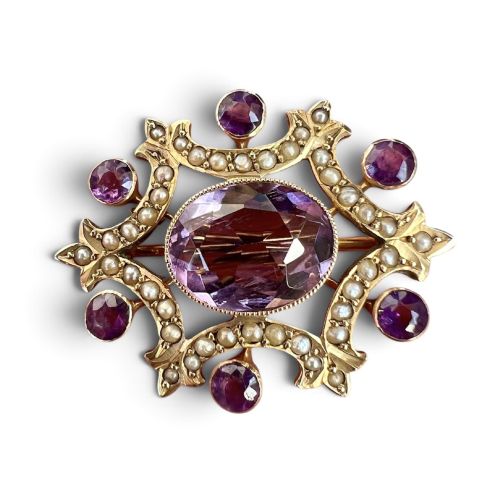
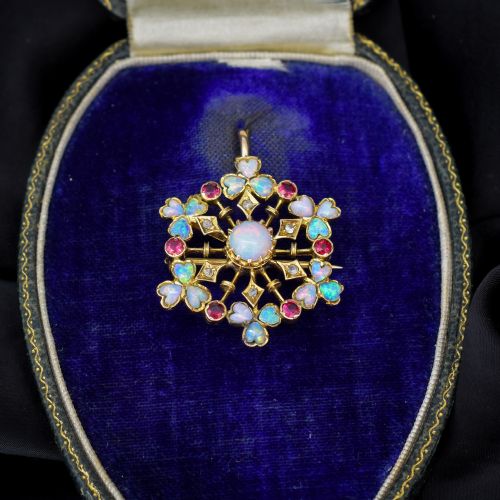
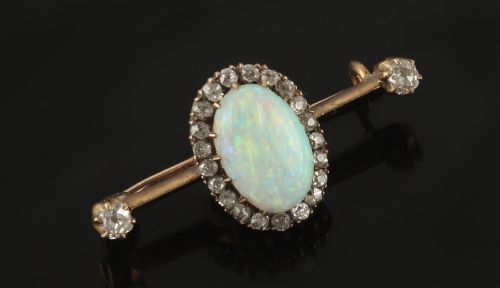
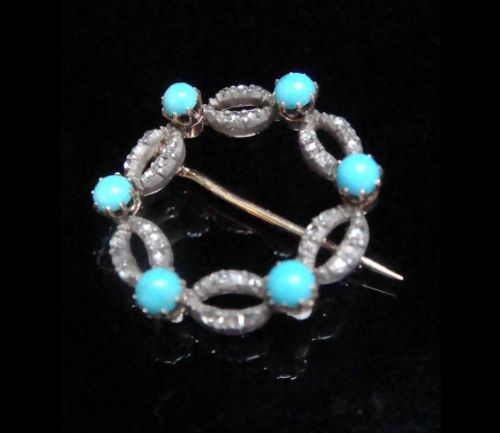
The term edwardian cluster pin describes compact ornamental brooches and bar pins built around a central gem surrounded by smaller stones. These pieces most frequently emerge from the Edwardian period, complemented by related Victorian, Art Deco, and mid-century examples.
Makers shaped these jewels into floral motifs, target arrangements, and swirling geometric patterns designed to catch the light from every angle. While the archive records similar cluster formations in rings, current listings consist entirely of brooches and pins.
How they were made
Goldsmiths combined yellow and rose gold with silver settings, a technique that placed bright silver at the front to maximise the brilliance of diamonds while retaining the warmth of gold beneath. Platinum also appears in later Edwardian work, providing the strength needed for delicate wirework.
Stones such as diamonds, amethysts, opals, seed pearls, and sapphires were secured in close clusters using claw or collet settings. The reverse often reveals hand-pierced gallery work designed to lighten the weight of the brooch.
Current listings feature diamond, gold, silver, platinum, amethyst, seed pearl, opal, ruby, garnet, turquoise, sapphire, and aquamarine across multiple styles.
What varies in quality
Quality rests in the harmony of the stones and the precision of the metalwork. Superior examples feature well-matched natural gems, such as evenly coloured sapphires or clean diamonds, set into balanced symmetrical patterns without excessive solder.
The refinement of the pin mechanism and the crispness of any floral or foliate engraving further distinguish finer pieces from standard production. Weight and substance in the gold or silver backing also signal higher craftsmanship.
The Edwardian Cluster Pin Glossary
- Cluster
- A stone setting arrangement where a central gem is encircled by a border of smaller stones. This format maximises visual impact and light reflection.
- Seed pearl
- Very small natural or cultured pearls, typically under two millimetres in diameter. They are frequently drilled and strung or set closely together to form delicate floral borders.
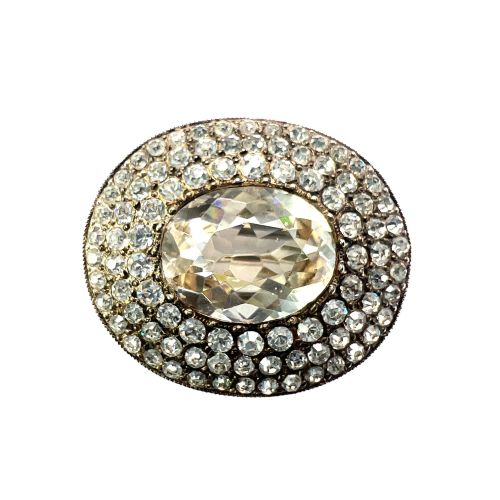
- Paste
- Faceted glass cut and polished to imitate gemstones. It appears in period pieces to provide bright colour or sparkle.
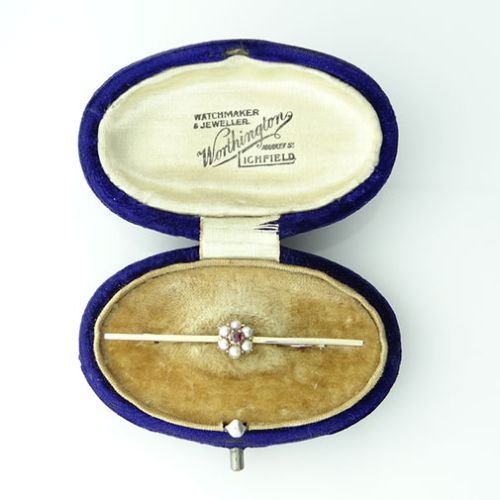
- Bar brooch
- A narrow horizontal pin featuring a central ornament or cluster. This form became popular for securing lightweight fabrics during the late nineteenth and early twentieth centuries.
- Target brooch
- A circular brooch design featuring concentric rings of contrasting gemstones around a central point. The concentric tiers resemble a traditional archery target.
Edwardian Cluster Pin: Frequently Asked Questions
How do I wear an edwardian cluster pin?
These brooches sit comfortably on lapels, heavy scarves, or pinned near the collar of a jacket. The pin stem is designed to pass securely through woven fabrics without causing damage.
Ensure the safety catch or clasp is functioning properly before wearing the piece out. Heavier pieces require thicker fabrics to prevent the brooch from sagging.
Are these pins made of platinum or gold?
Makers used a variety of metals depending on the period, including nine carat gold, fifteen carat gold, eighteen carat gold, silver, and platinum. Many Edwardian pieces combine silver fronts with gold backs.
Silver was favoured for the top setting because its white colour enhanced the appearance of diamonds, while gold provided structural strength to the pin stem.
How do I tell an Edwardian pin from a Victorian one?
Edwardian pieces tend to feature lighter, airier metalwork often utilising platinum or silver-topped gold alongside bright diamonds and pearls. Victorian designs frequently employ heavier yellow gold settings with richer coloured stones like garnets, amethysts, and opals.
Stylistic overlaps occur, particularly around the transition from late Victorian to Edwardian eras, making the overall lightness of design the primary visual clue.
What stones are typically found in these clusters?
Diamonds form the most common focal point or border, paired frequently with seed pearls, amethysts, sapphires, turquoises, and opals. Natural coloured gems feature prominently in pieces from the nineteenth and early twentieth centuries.
Almandine garnets and peridots also appear in regional and period variations, offering deep reds and vibrant greens.