



Edwardian Chippendale Tea Table
An edwardian chippendale tea table brings together 18th-century revival forms and domestic utility, offering a refined surface for serving or display.
Edwardian Chippendale Tea Table
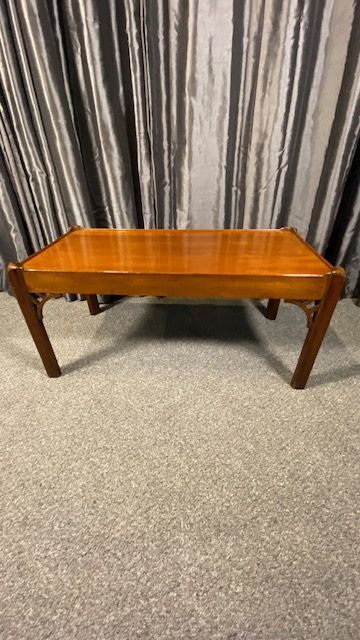
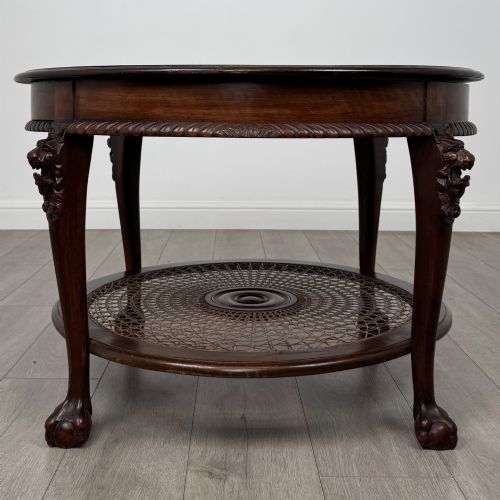
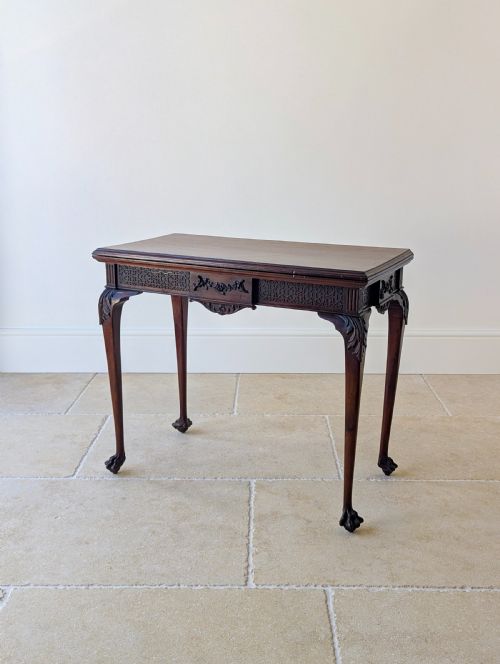
When you search for an edwardian chippendale tea table, you encounter pieces spanning the Edwardian period, 1900, 1910, and 1920, alongside earlier Victorian and 18th-century examples in revival styles. These tables function as occasional tables, side tables, games tables, coffee tables, card tables, and centre tables.
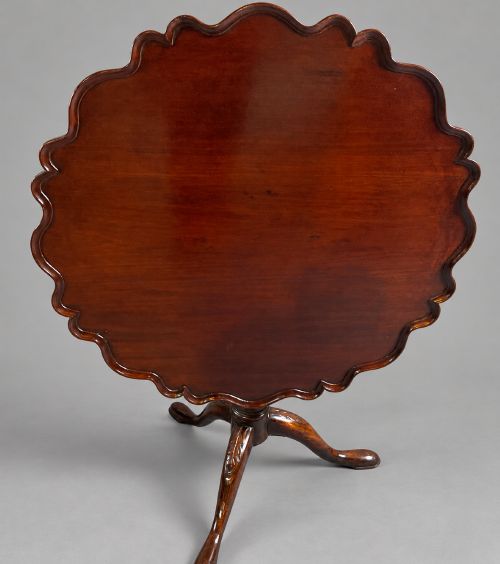
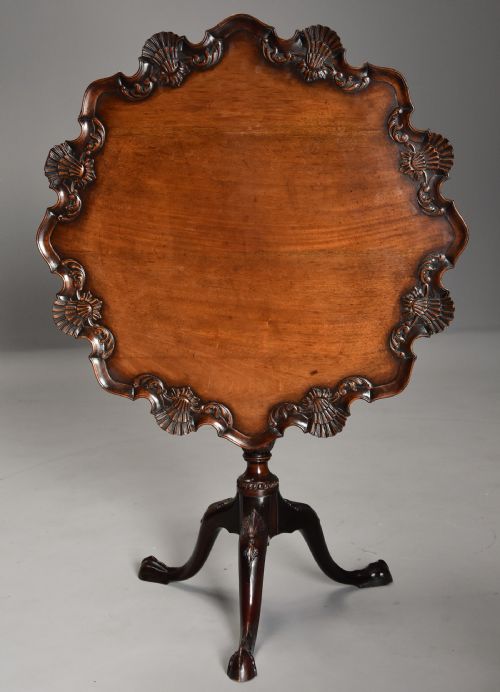
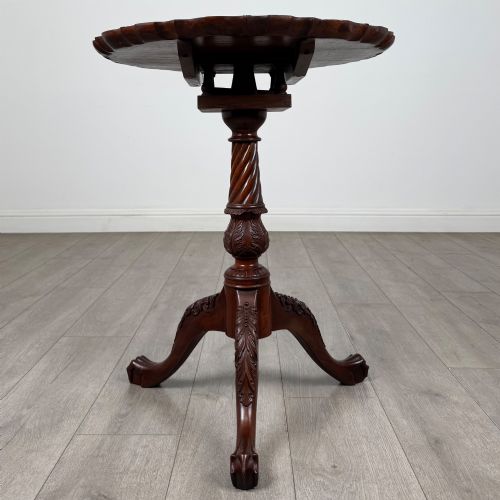
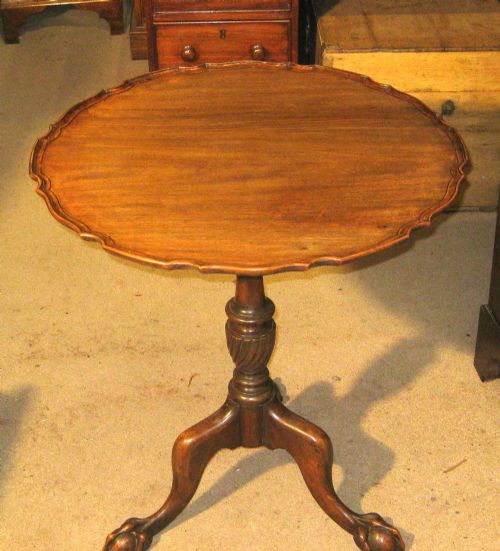
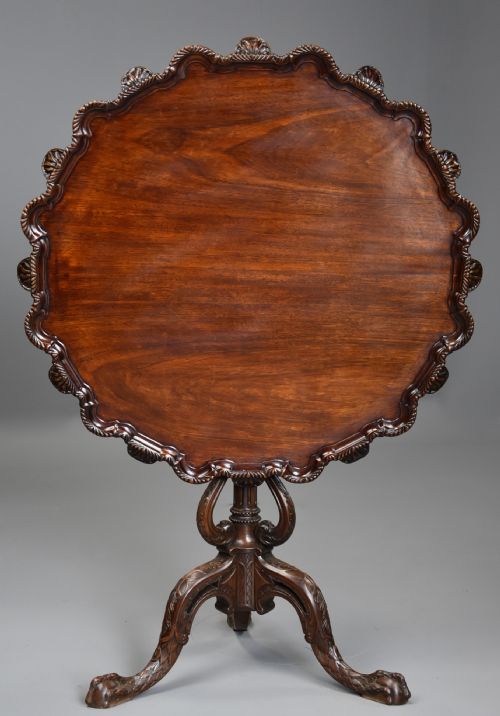
The most common form you meet on this page is the Edwardian mahogany occasional table or tripod table featuring a shaped pie crust rim. Many pieces adopt the Chippendale Revival or Georgian style, echoing the proportions and carving of the 18th century while serving modern domestic spaces.
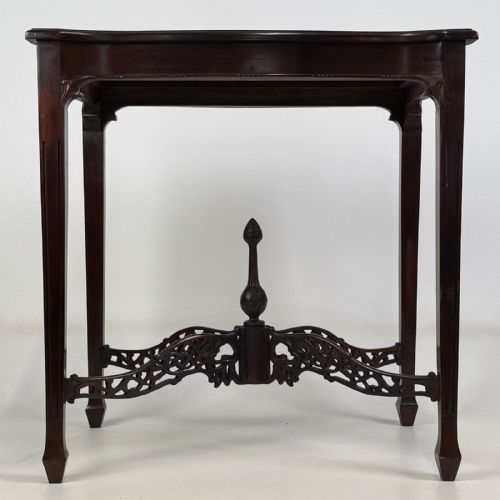
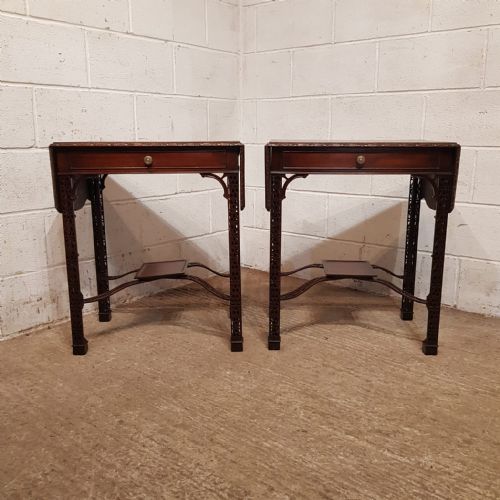
Makers and workshops of the era produced variations including drop-leaf side tables, fold-over card tables, and two-tier stands. The design draws directly on historical precedents, adapting silver tables and tilt-top tripod tables for early 20th-century interiors.
Factors of quality
The distinction between standard production and the top of the range rests on the crispness of the timber carving and the fidelity of the revival style. Tables with hand-carved pie crust rims and balanced tripod bases demonstrate superior workshop execution compared to simpler, flat-edged tops.
Structural integrity in moving parts, such as tilt mechanisms and fold-over card table hinges, separates fine examples from utilitarian ones. Well-fitted joints and thoughtful timber selection ensure that tables designed for display or games retain their balance over time.
Edwardian Chippendale Tea Table Retail Price Guide 2026
Typical asking prices for edwardian chippendale tea table among the pieces listed under this phrase on Sellingantiques today, from the lower quarter to the upper quarter. They describe what is for sale here now, not the wider market.
Many a tilt-top tea table spent its resting hours tucked flat against a wall like a polite wooden sentinel waiting for afternoon guests.
Edwards and Roberts
The Edwardian Chippendale Tea Table Glossary
- Piecrust rim
- A raised, decoratively carved edge shaped like pastry crust, commonly found on round tripod tables. This moulding requires skilled hand-carving from a solid timber blank.
- Tripod table
- A small occasional table supported by a central pillar above three splayed legs. This form gained popularity in the 18th century and remained a staple of revival design.
- Tilt-top
- A mechanism allowing the table top to pivot vertically when not in use, saving space in smaller rooms. The pivot is usually secured with a brass catch or block.
- Card table
- A folding table designed for gaming or social play, often lined with baize. The top unfolds to reveal a flat surface supported by a swing leg or frame.
- Chippendale Revival
- A late 19th and early 20th-century style copying the 18th-century designs of Thomas Chippendale. It is characterised by carved mahogany, cabriole legs, and gadroon moulding.
Edwardian Chippendale Tea Table: Frequently Asked Questions
What is an edwardian chippendale tea table used for?
These tables were originally designed for serving afternoon tea, displaying silver, or hosting card games in the drawing room. Today, they function primarily as decorative occasional tables, side tables, or coffee tables in traditional and contemporary interiors.
The smaller tripod and tilt-top versions suit corners or beside armchairs, while larger centre and card tables anchor a room. Their adaptable forms mean they transition easily between practical daily use and display surfaces.
How do I tell an Edwardian piece from an 18th-century original?
Differentiating between an Edwardian revival piece and an 18th-century original involves examining the construction methods, timber maturity, and secondary woods used inside the frame. Edwardian makers often utilised machine-assisted joinery alongside hand carving, and the mahogany shows a uniform colour and grain typical of later import practices.
By contrast, 18th-century pieces display historical tool marks, hand-cut dovetails where drawers are present, and timber ageing consistent with centuries of use. Examining the underside and hinge mechanisms usually clarifies the true period of manufacture.
How do I care for a mahogany tea table?
Maintenance requires keeping the timber away from direct heat sources and strong sunlight, which can dry out the mahogany and fade the polished finish. A soft, dry cloth is sufficient for routine dusting.
Applying a quality beeswax periodically helps nourish the wood and maintain its sheen without building up a heavy residue. Avoid placing unprotected hot cups or liquids directly onto the polished surface to prevent water rings.
What does Chippendale Revival mean?
Chippendale Revival describes furniture made during the Victorian and Edwardian eras that imitates the designs published by Thomas Chippendale in the 18th century. These pieces borrow classical motifs such as carved ball-and-claw feet, ribbon backs, and pie crust edges.
Rather than exact forgeries, these items are conscious revivals created by skilled workshops to satisfy a renewed Victorian and Edwardian appetite for Georgian elegance.