

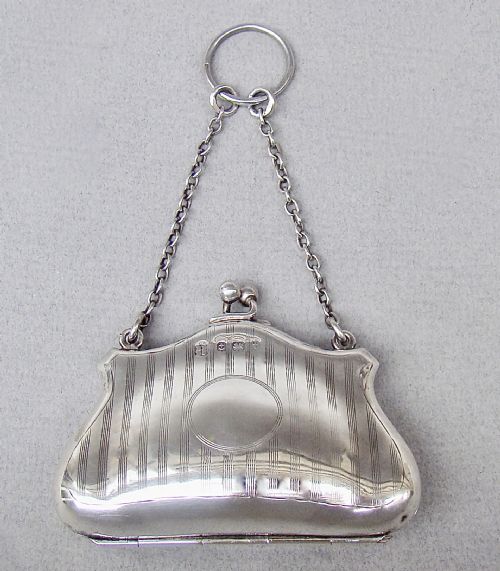
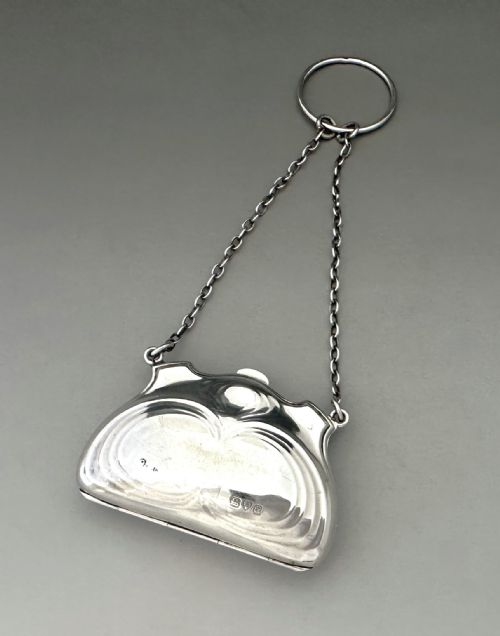

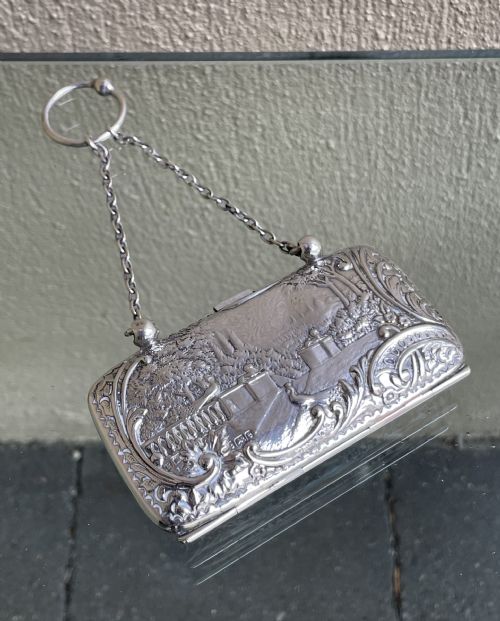

Edwardian Chatelaine Coin Purse
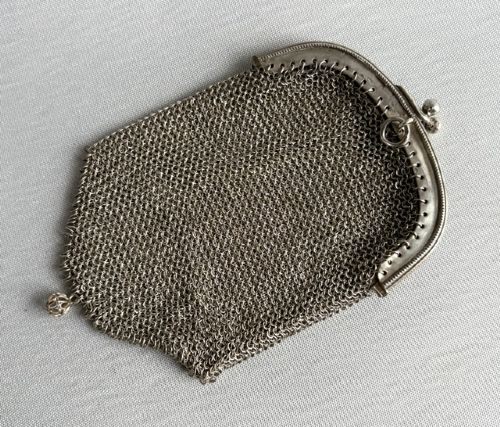
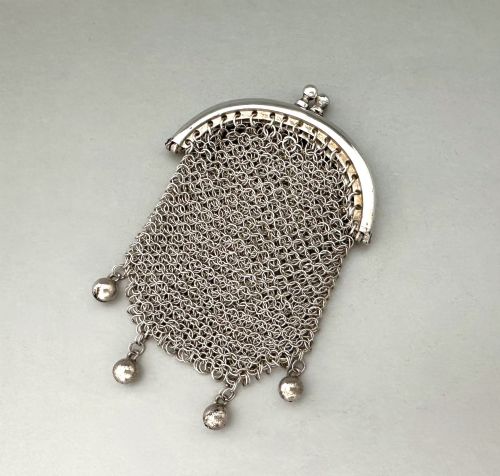
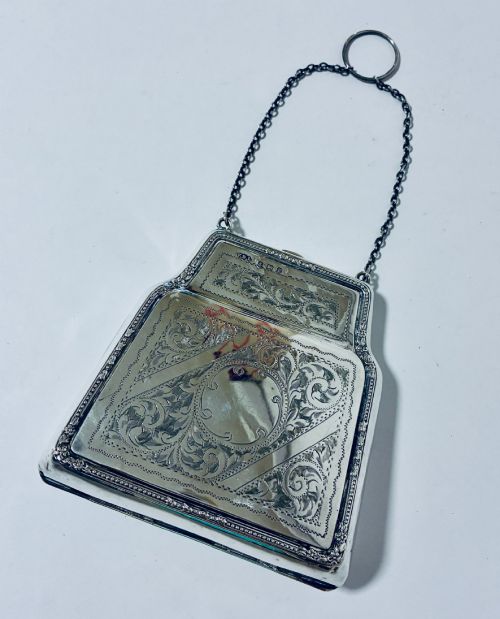
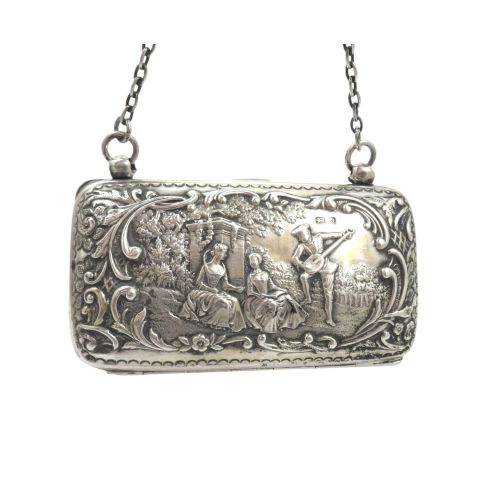
An edwardian chatelaine coin purse brings tactile elegance to the waist, offering a miniature receptacle crafted for coinage during social engagements.
Edwardian Chatelaine Coin Purse
When you search for an edwardian chatelaine coin purse, you are looking at small personal accessories designed to suspend from a belt or chatelaine hook. The selection spans the Edwardian era alongside pieces from the late Victorian period, George V reign, and the nineteen twenties.
You are most likely to meet silver coin purses and evening bags on this page, including Continental silver mesh designs and petite chain link cocktail purses. Formats range from simple metal pouches to intricate examples featuring blue guilloche enamel or petit point textile panels.
Origins vary across domestic and continental workshops, with English assay offices such as Birmingham and Chester represented alongside French and other continental makers. These items combine practical pocket storage with decorative metalwork intended to complement period attire.
How they were made
Makers utilised sterling silver and standard silver as the primary structural material, shaping metal into solid frames, linked chains, and flexible mesh. Textile components like petit point needlework were integrated into frames to provide patterned body panels for evening use.
Enamelling techniques such as guilloche added coloured geometric patterns beneath translucent layers of glass paste on metal surfaces. Metal components were stamped, engraved, and linked by hand to achieve durable yet flexible receptacles suitable for daily suspension.
Edwardian Chatelaine Coin Purse Retail Price Guide 2026
Typical asking prices for edwardian chatelaine coin purse among the pieces listed under this phrase on Sellingantiques today, from the lower quarter to the upper quarter. They describe what is for sale here now, not the wider market.
Listings span the late Victorian period through the Edwardian era and into the nineteen twenties, uniting silver, enamel, and textile materials.
What varies in quality
The distinction between standard items and superior examples lies in the crispness of the metal engraving and the complexity of the assembly. Finer pieces display intricate chain link formation and flawless application of guilloche enamel without structural distortion.
The presence of clear hallmarks indicating specific makers and assay towns elevates an item's documentary interest. Integration between textile panels like petit point and the metal frame also distinguishes masterwork accessories from simpler production.
The Boots Company·G. Norman
The Edwardian Chatelaine Coin Purse Glossary
- Chatelaine
- A decorative belt hook or clasp from which a lady suspended small utilitarian items such as scissors, keys, and coin purses. It served both a practical function and a social indicator of household management.
- Guilloche Enamel
- A decorative technique where a metal surface is mechanically engraved with repetitive patterns beneath a translucent enamel glaze. This creates shimmering light effects across the decorated area.
- Petit Point
- A needlepoint embroidery style executed on fine mesh canvas using diagonal tent stitches. It allows for highly detailed pictorial scenes and geometric borders on evening purses.
- Hallmark
- An official stamp applied to precious metals indicating the purity standard, the assay office, and the year of manufacture. These marks provide verifiable historical context for silver items.
- Sterling Silver
- An alloy of silver containing ninety-two point five percent silver and seven point five percent other metals, usually copper. It provides the standard durability required for portable metal accessories.
Edwardian Chatelaine Coin Purse: Frequently Asked Questions
How were coin purses worn?
These accessories hung directly from a waist-mounted belt hook or chatelaine alongside other daily necessities.
This method kept small currency accessible without requiring pockets in fashionable dresses of the period.
What materials were used?
Metals such as sterling silver and continental silver formed the structural frames, mesh bodies, and suspension chains.
Decorative elements occasionally incorporated textile panels like petit point or coloured guilloche enamel over engraved metal.
How do I date these purses?
Assay office hallmarks stamped onto silver frames provide precise years of testing and manufacture for many pieces.
Stylistic indicators such as Art Nouveau motifs or Edwardian proportions help place unmarked examples within their respective eras.
Were these items purely decorative?
While highly ornamental, these purses functioned as secure containers for small coins and calling cards during social calls.
Their robust metal construction ensured contents remained protected while suspended from the wearer's waist.