
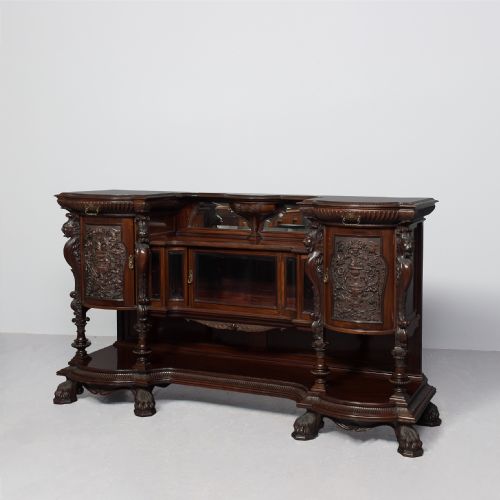
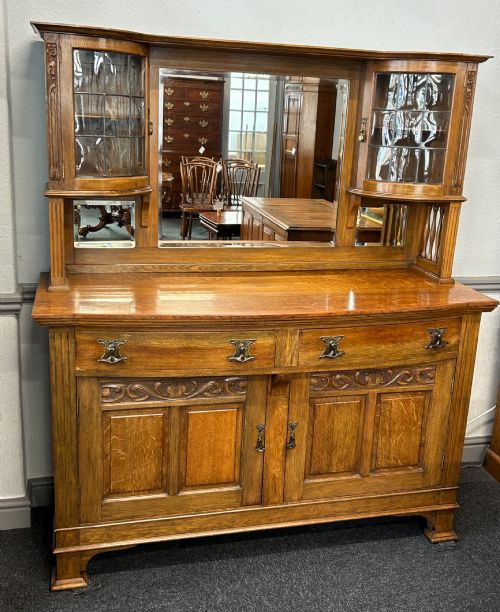
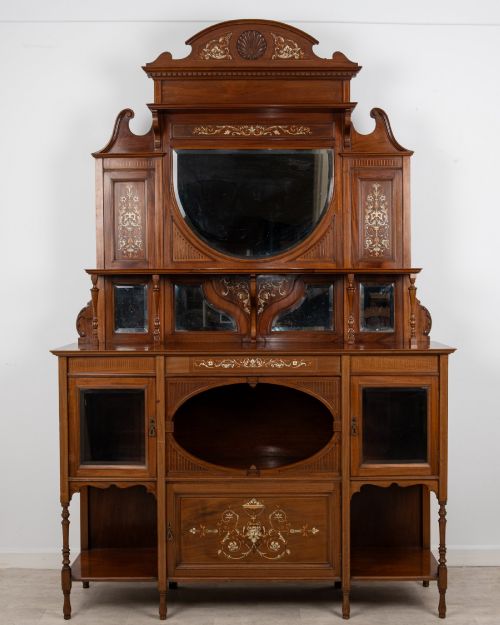
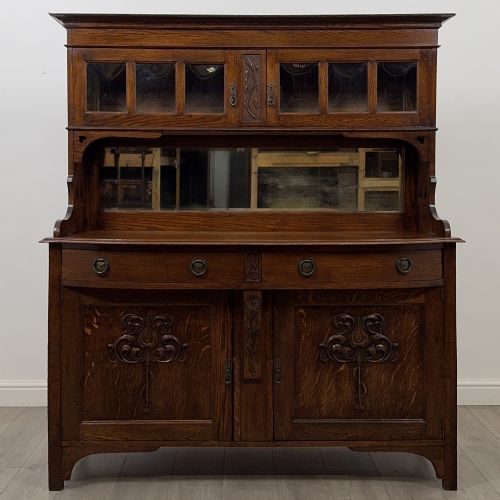

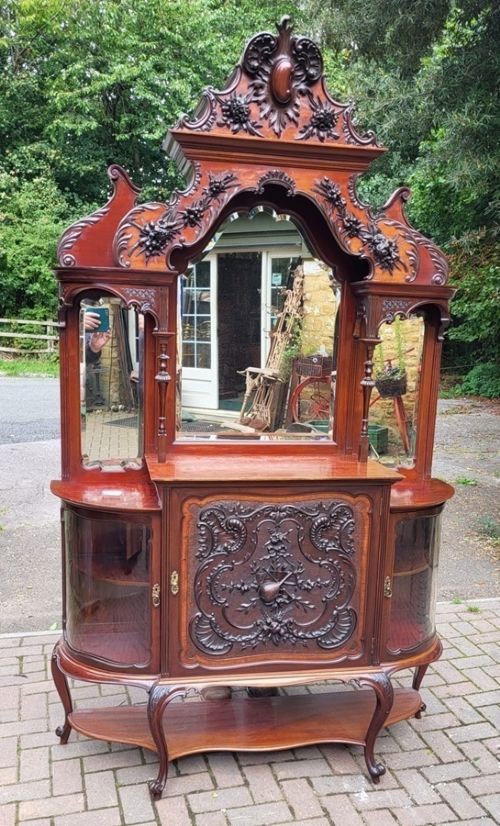


Edwardian Carved Sideboard Mirror
An edwardian carved sideboard mirror brings deep timber frames and bevelled glass together to anchor a dining room.
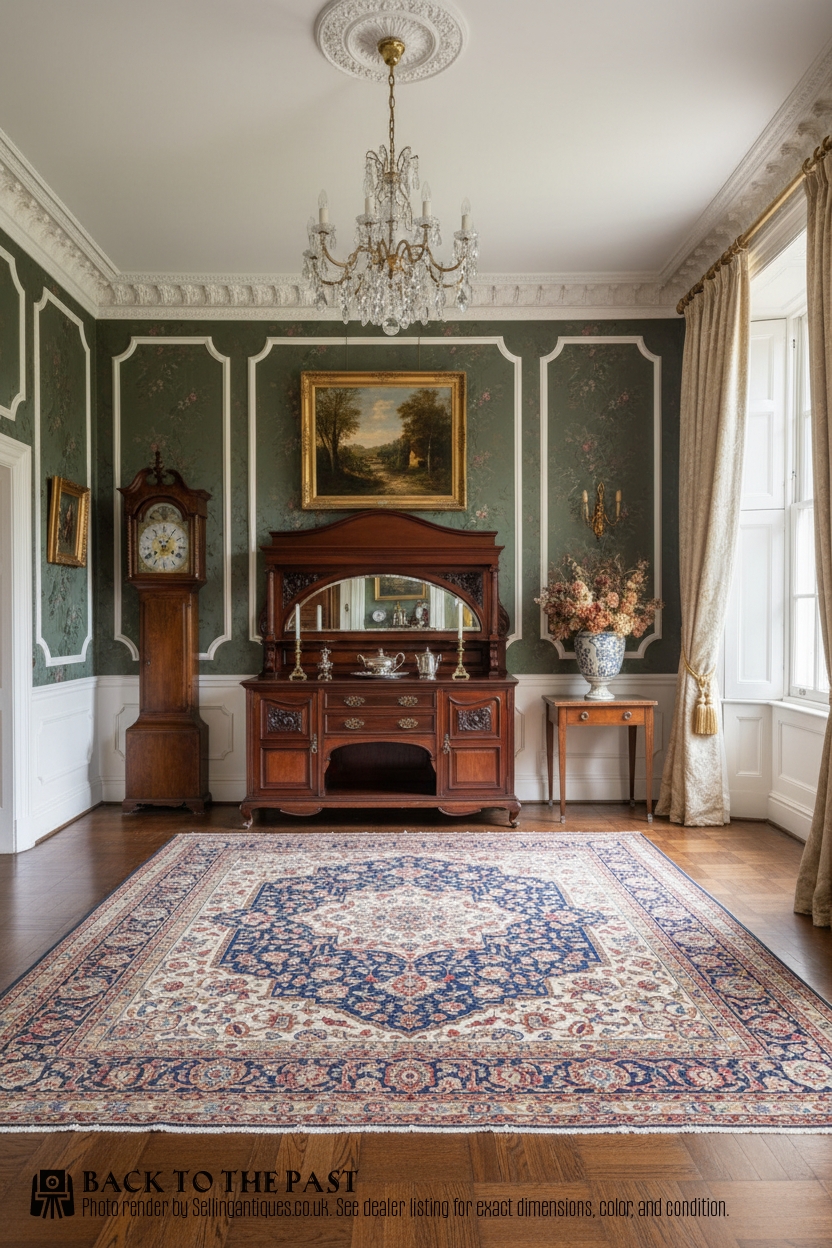
Edwardian Carved Sideboard Mirror
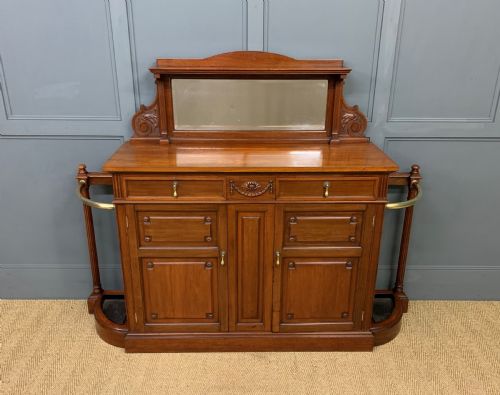
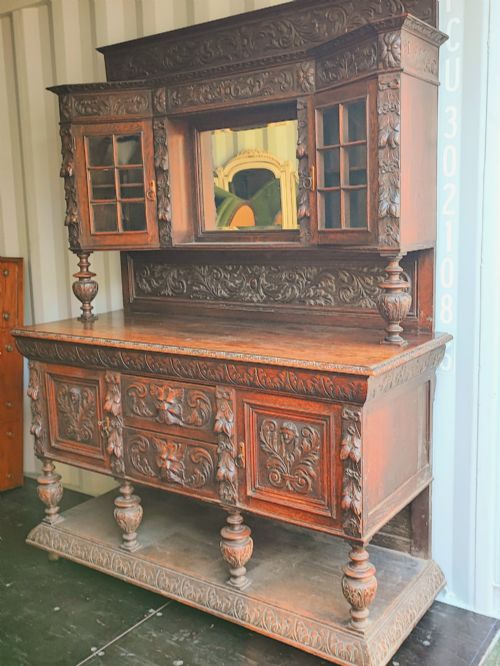
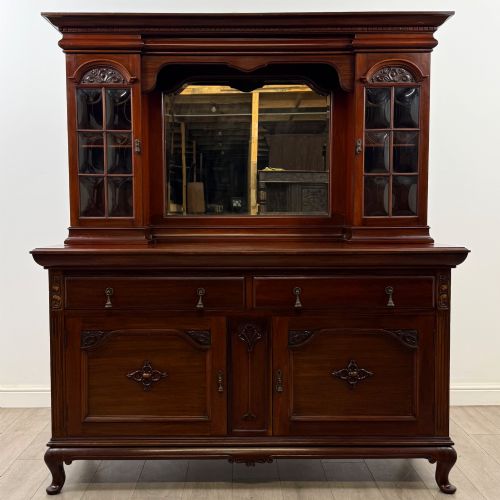
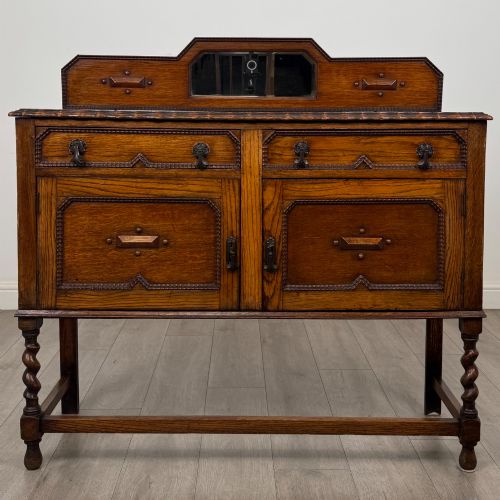
When you examine an edwardian carved sideboard mirror, you are looking at the upper glass superstructure attached to large dining room furniture from the early twentieth century and the late nineteenth century. These pieces combine heavy timber frames with substantial mirror glass, designed to sit above sideboards, chiffoniers, and credenzas.
The versions most common on this page date from the Edwardian era and the Victorian period, frequently constructed in oak or mahogany. Many examples incorporate Arts and Crafts or Art Nouveau decorative motifs carved directly into the wooden crests and framing.
Buyers seek these components either as replacement mirrors for existing base units or as standalone decorative wall pieces. Their scale requires adequate wall space and a sturdy fixing method to support the weight of the timber and glass.
How they were made
Cabinet makers utilised solid woods including oak, mahogany, walnut, and pollard oak to construct the heavy frames supporting the glass. Timber was selected for grain pattern and strength, often finished with polished wax or shellac to bring out the natural figures in the wood.
Carving was executed by hand, displaying floral motifs, geometric patterns, or stylized foliage typical of the Arts and Crafts and Art Nouveau movements. The mirror glass itself was set securely into rebates behind wooden mouldings, backed with protective boards to prevent shifting.
Several mirrors include small carved wooden ledges intended for holding visiting cards or pocket watches.
What varies in quality
The depth and crispness of the timber carving separate standard production from finer workshops. Deeply undercut, detailed foliage reflects a higher allocation of skilled labour than shallow, mechanically stamped patterns.
The clarity and original condition of the mirror glass dictate the visual success of the piece. Heavy foxing, deep silver loss, or replacement modern glass alter the period integrity of the object compared to clear, original reflective plates.
Shoolbred and Co·T Simpson and Son·Maple and Co
The Edwardian Carved Sideboard Mirror Glossary
- Foxing
- Small dark spots or patches that develop on mirror glass as the silver backing degrades over time. This ageing process occurs naturally in antique pieces.
- Rebate
- A recessed channel cut into the edge of the wooden frame to hold the mirror glass securely in place. It ensures the glass sits flush with the woodwork.
- Pollard oak
- Timber taken from trees that were pollarded, creating a dense wood with highly decorative knot clusters and swirling grain patterns. It was favoured for high-end cabinet work.
- Chiffonier
- A low dining room cabinet or sideboard, often fitted with a mirror back in later Victorian and Edwardian iterations. It served for the storage and display of tableware.
Edwardian Carved Sideboard Mirror: Frequently Asked Questions
How do I hang a heavy mirror safely?
These frames require direct anchorage into wall studs or solid masonry using rated metal brackets rather than standard picture wire. The substantial weight of the timber and glass demands professional installation.
Ensure the wall fixings correspond to the weight distribution across the base of the frame to prevent the mirror from leaning forward or pulling away from the plaster.
Can these mirrors be separated from sideboards?
Many mirror frames were originally bolted directly into the rear of dining sideboards and chiffoniers during manufacture. Removing them leaves fixing holes in the timber top of the base unit.
Separated units can function as independent wall mirrors, provided the exposed mounting points on the frame are treated or hidden during hanging.
How should I clean antique mirror glass?
Use a soft microfibre cloth and a mild, ammonia-free glass cleaner applied to the cloth rather than directly onto the glass. This prevents moisture from seeping behind the frame into the silver backing.
Avoid abrasive pads or harsh chemicals that can scratch the aged glass surface or damage the surrounding polished wood frame.
How do I identify Arts and Crafts details?
Look for hand-carved plant motifs, exposed pegged joints, and an emphasis on the natural grain of the oak or mahogany. These design choices prioritize visible craftsmanship over applied ornamentation.
Arts and Crafts pieces often display simpler, rectilinear framework compared to the heavily curved flourishes found in later revival styles.