
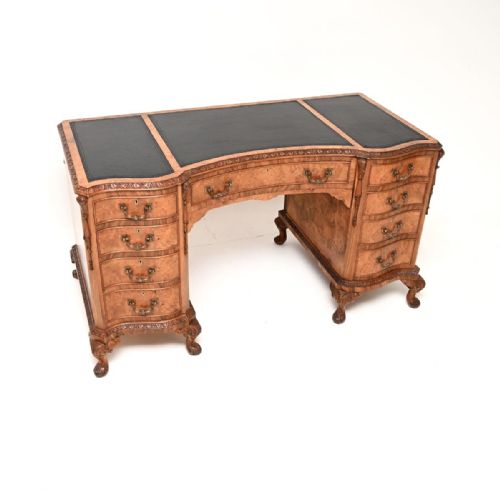
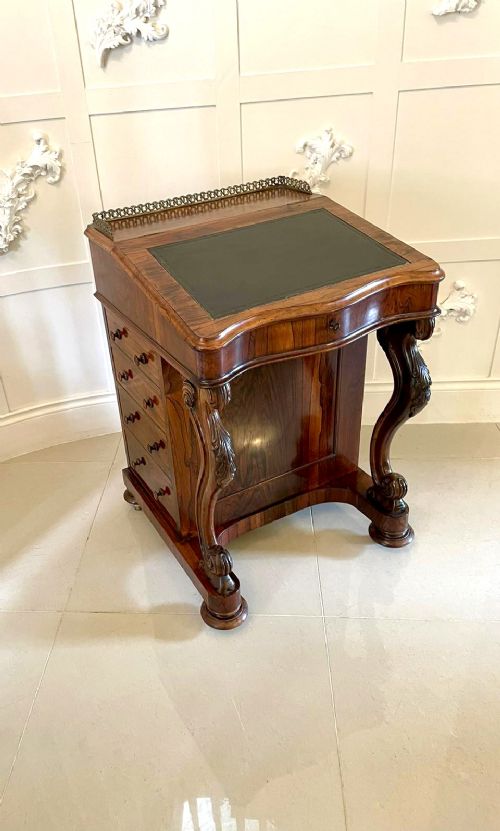
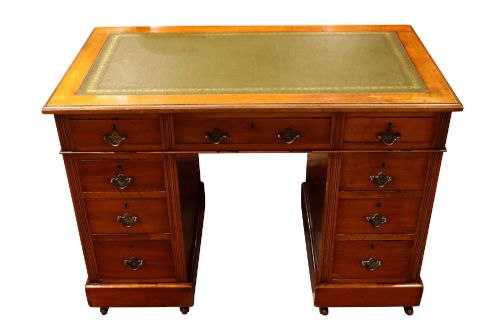
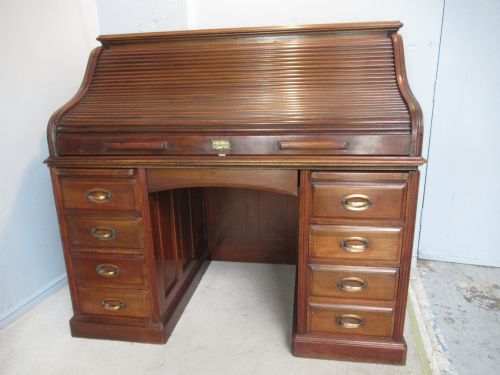
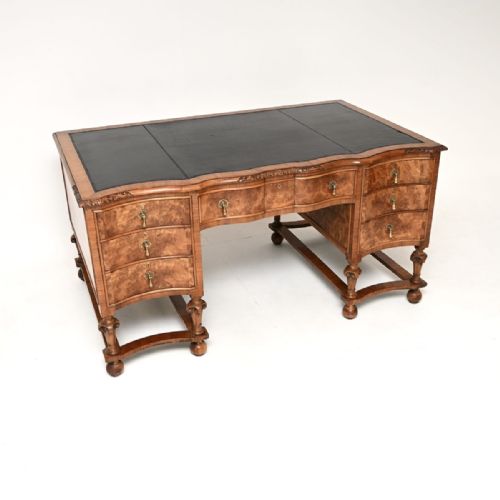
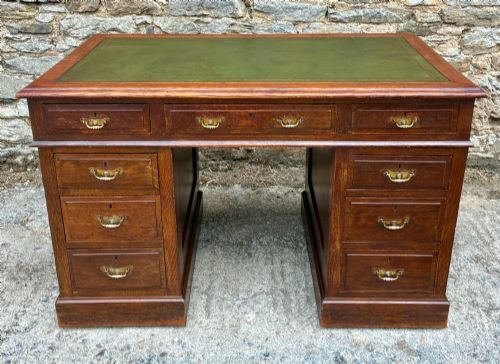
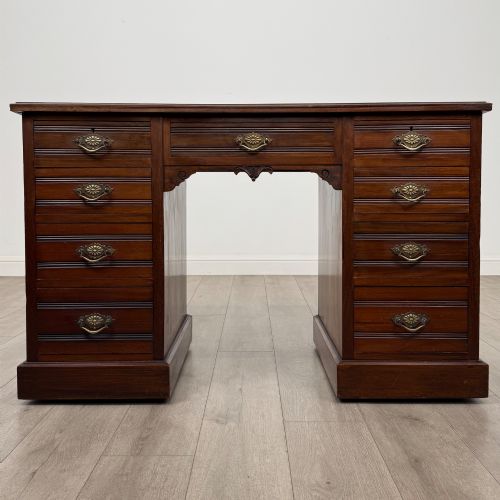

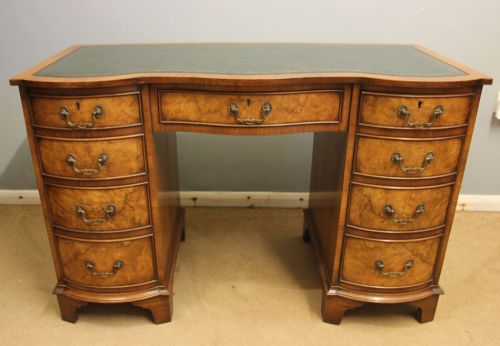
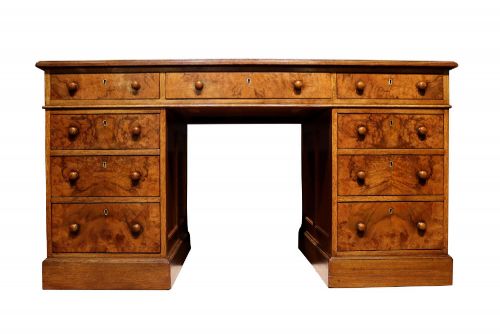
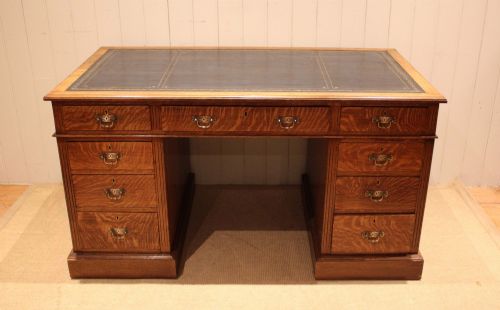
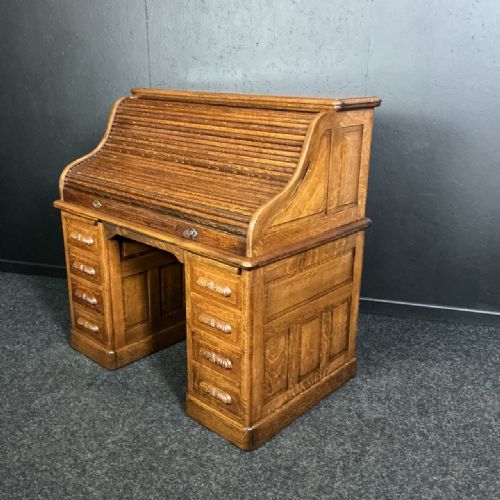
Edwardian Carved Pedestal Desk
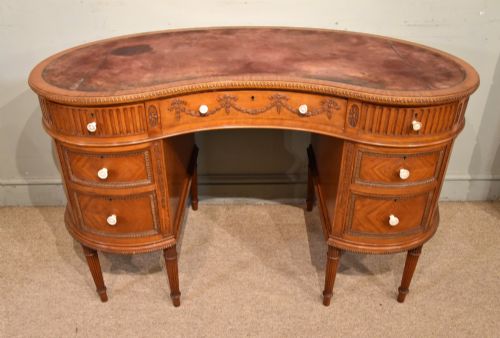
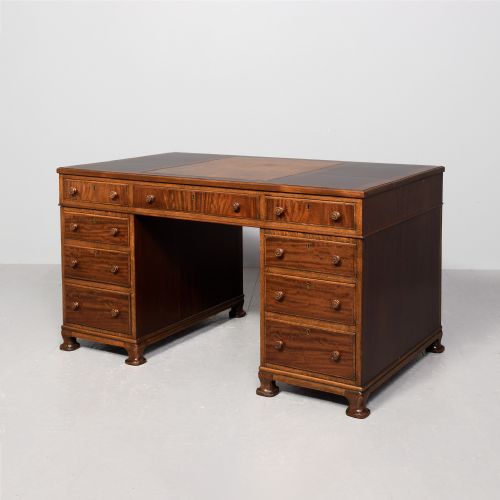
Edwardian carved pedestal desks are substantial writing pieces built for serious study, combining deep cabinet pedestals with generous worksurfaces.
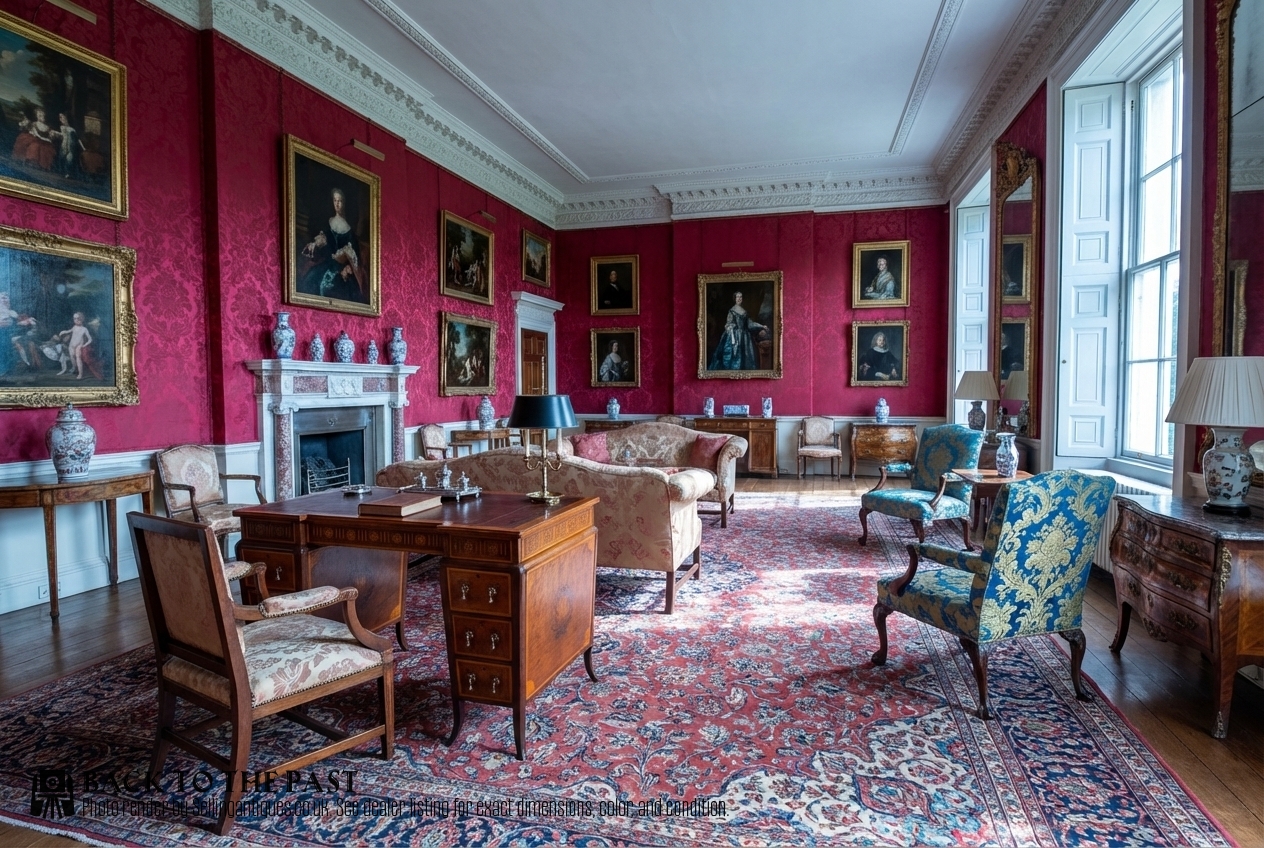
Edwardian Carved Pedestal Desk
An edwardian carved pedestal desk stands as a solid workstation comprising two banks of drawers supporting a heavy top. The pieces appearing here span the opening decades of the twentieth century, often drawing heavily on Georgian and Chippendale revivals for their decorative vocabulary.
Most examples deploy a twin-pedestal layout featuring multiple smaller drawers flanking a central kneehole space. Buyers frequently encounter versions executed in richly figured walnut, mahogany, or oak, complete with inset leather writing surfaces.
Makers of the period also produced freestanding variants finished on all sides for placement away from walls, alongside specialised partner formats designed for simultaneous use from opposite sides.
Materials and Construction Methods
Craftsmen built these desks using sturdy timbers like mahogany, oak, and walnut, frequently applying burr walnut or satinwood veneers to create dramatic grain patterns across drawer fronts and tops. Solid wood formed the internal frames, drawer linings, and structural partitions.
Makers integrated brass hardware such as drop handles and escutcheons alongside hand-tooled leather writing inserts. Structural joinery relied on traditional dovetailing for drawers and secure mortise and tenon connections for the pedestal carcasses.
Several desks include hidden compartments within the pedestals for storing private correspondence away from prying eyes.
Distinctions in Quality and Execution
The degree of hand-carving defines the upper tier of these desks, distinguishing simple geometric mouldings from deeply chased acanthus leaves or gadrooned borders. Cabinetmakers who achieved crisp lines and balanced proportions produced pieces that command greater respect today.
Timber selection equally determines value, with book-matched burr veneers and dense, heavy mahogany representing superior workshop output. The retention of original brasses, smooth drawer actions, and cleanly fitted internal dividers further separate utilitarian office furniture from fine domestic commissions.
Maple and Co·Whytock and Reid of Edinburgh·Gill and Reigate·Edwards and Roberts
The Edwardian Carved Pedestal Desk Glossary
- Pedestal desk
- A heavy freestanding writing table supported by two upright banks of drawers rather than four distinct legs. This form maximises under-desk storage while providing a stable platform.
- Partners desk
- A large double-sided writing table designed for two people to sit opposite one another. The pedestals incorporate drawers and cupboards accessible from both faces.
- Kneehole desk
- A compact pedestal variation featuring a recessed central space for the user's legs, usually accompanied by a single shallow drawer overhead. These units suit smaller studies and private chambers.
- Burl walnut
- Timber taken from the root growths or excrescences of walnut trees, yielding turbulent and highly decorative grain patterns. Cabinetmakers sliced this wood into thin veneers for prominent drawer fronts.
Edwardian Carved Pedestal Desk: Frequently Asked Questions
What is an edwardian carved pedestal desk?
It is a heavy timber writing table supported by two banks of drawers, produced during the early twentieth century. These pieces often feature traditional revival carving along the edges and plinths.
They serve as functional centerpieces for studies and libraries, combining extensive drawer storage with a dedicated writing surface.
How do partners desks differ from standard ones?
Partners desks provide drawers and cupboards accessible from both the front and the back. They were originally built for business associates or banking colleagues to share a single workspace.
Standard pedestal desks place drawers against one side only, requiring placement directly against a wall or in the centre of a room facing one direction.
How should I care for a leather desk top?
The inset leather requires occasional treatment with neutral wax or leather balm to prevent drying and cracking. Avoid using harsh chemical cleaners or placing hot cups directly on the hide.
Quick wiping with a dry or slightly damp cloth protects the gold tooling and preserves the rich surface sheen over decades of daily use.
How can I tell an edwardian desk from a Victorian one?
Edwardian desks tend to exhibit lighter timber tones and cleaner revival styling influenced by Sheraton and Chippendale patterns. They often utilise brighter brass fittings and less ponderous proportions than mid-nineteenth-century items.
Victorian counterparts lean toward darker, heavier mahogany or oak construction with massive mouldings and more robust, utilitarian detailing intended for heavy office use.