
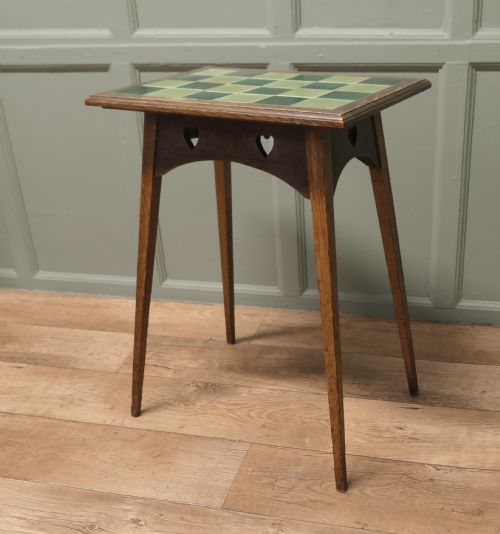
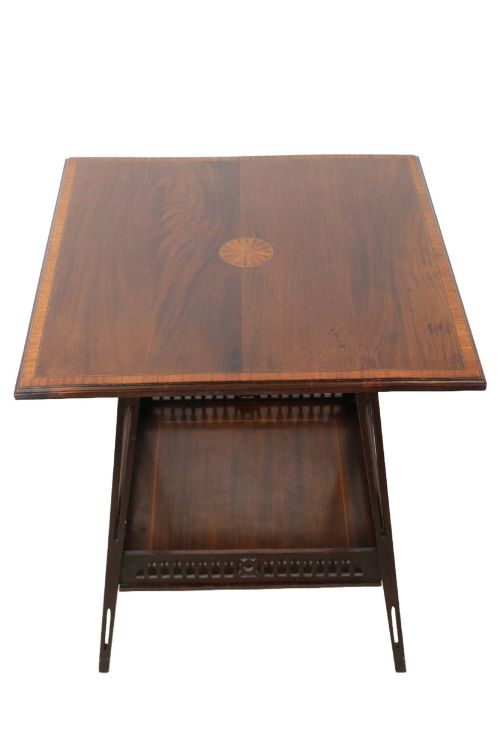
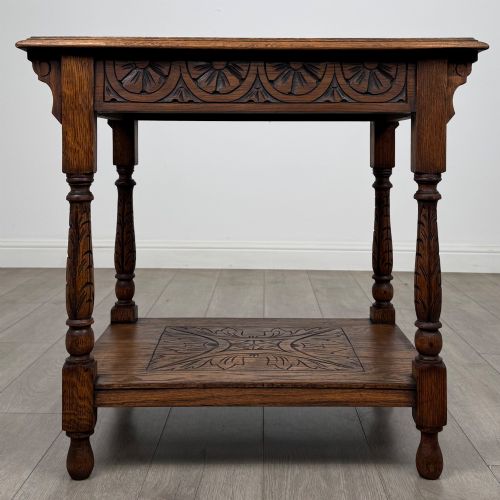
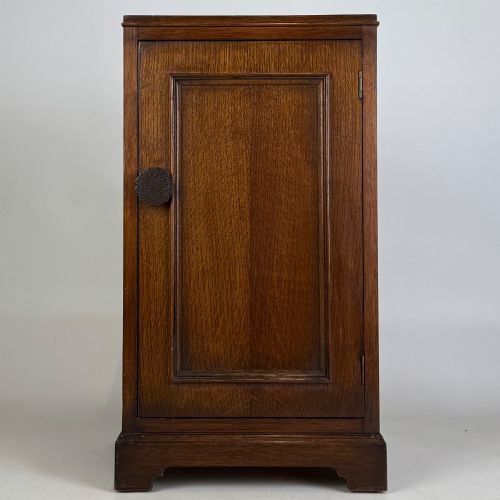
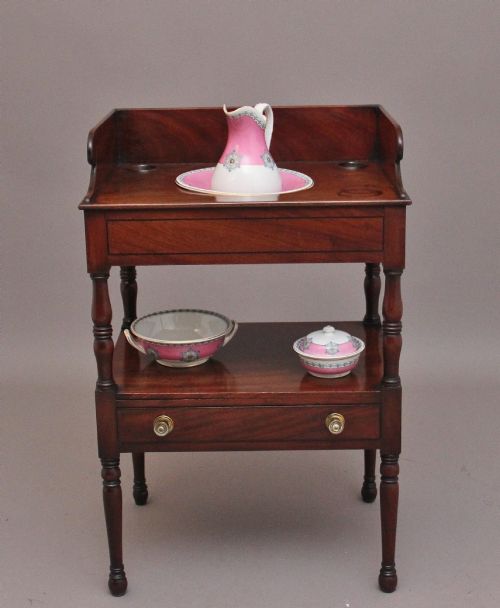
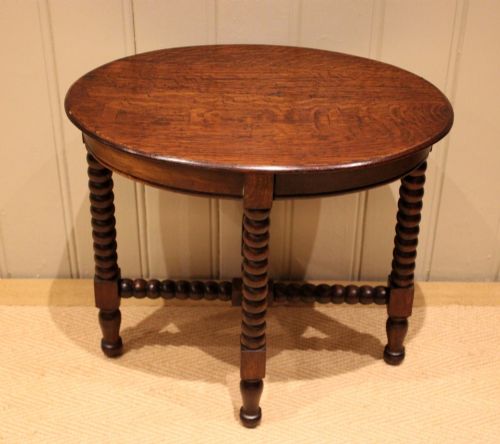
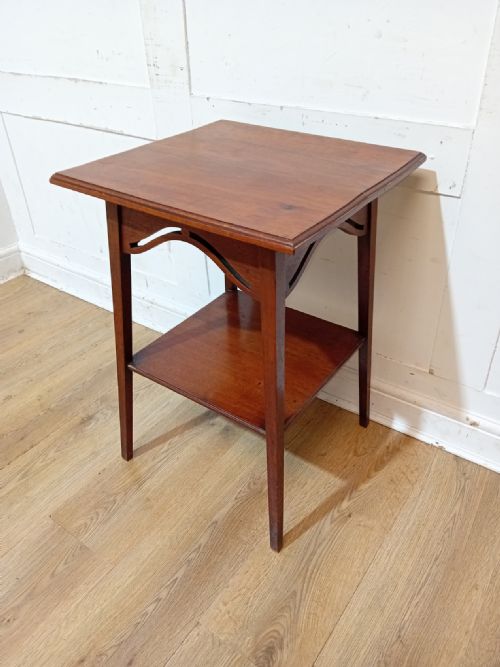

Edwardian Carved Nightstand
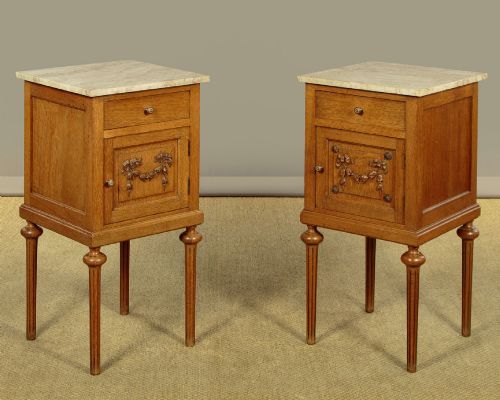
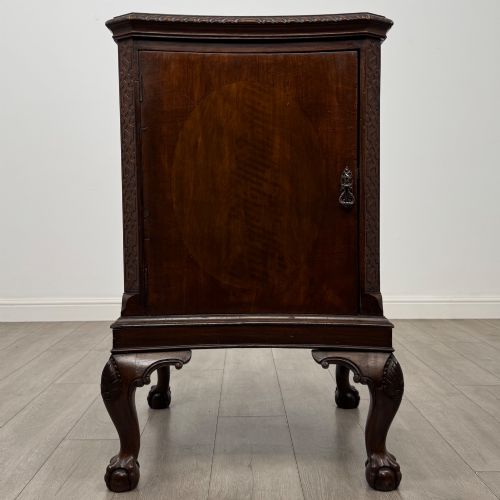
An edwardian carved nightstand brings compact timber storage and period character beside the bed, fashioned largely in mahogany, oak, and walnut.
Edwardian Carved Nightstand
An edwardian carved nightstand serves as a bedside cabinet, pedestal cupboard, or small side table originating from the early twentieth century or late nineteenth century. These pieces provide concealed storage through single doors or drawers alongside open surfaces designed for lamps and nighttime items.
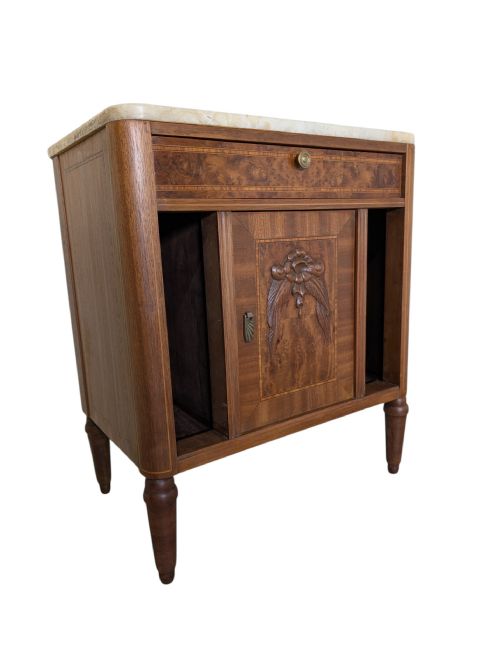
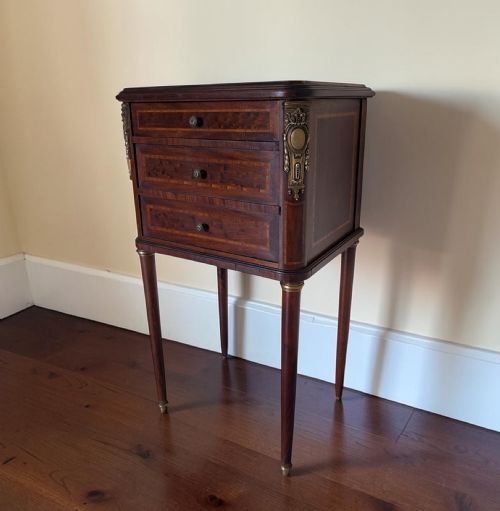
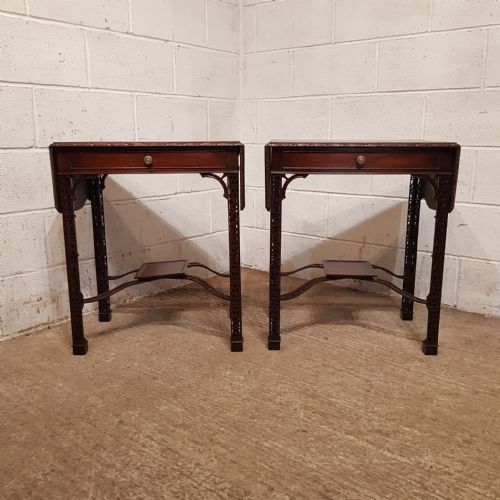
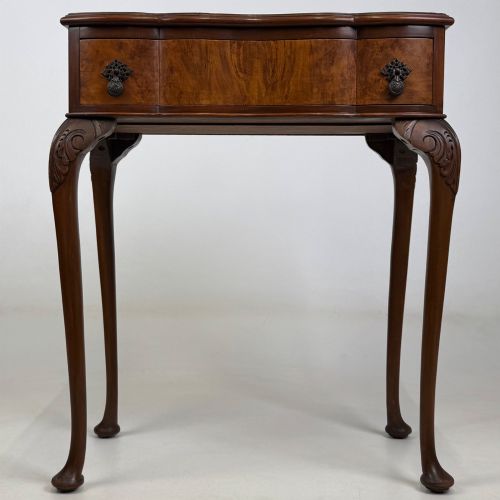
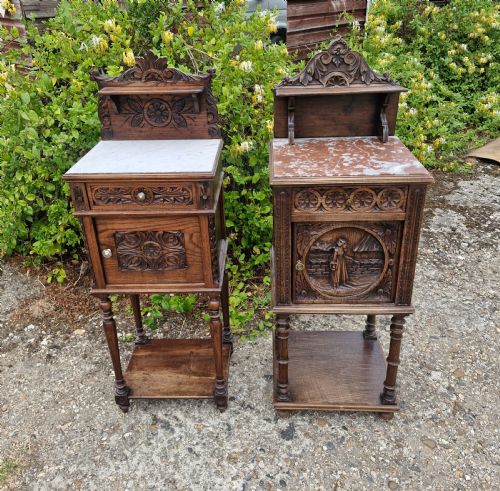
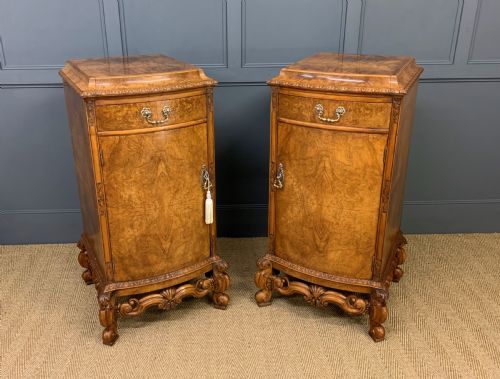
The selections encountered here span straightforward oak cabinets, mahogany Chippendale revival pieces, and figured walnut or burr walnut cupboards. Alongside standard bedside forms, listings include occasional tables, washstands, and marble-topped variants reflecting diverse domestic needs of the period.
While Edwardian examples predominate, related Victorian and early twentieth-century pieces share similar proportions and functions. Buyers select these items to introduce period craftsmanship into contemporary bedrooms without overwhelming limited floor space.
Materials and Construction
Cabinetmakers utilised solid timbers and decorative veneers, choosing mahogany, oak, and burr walnut for their durability and distinct grain patterns. Selected pieces incorporate contrasting inlay in satinwood or brass hardware to accentuate the structural lines.
Marble tops appear on specific walnut and mahogany cabinets, offering a practical, wipe-clean surface alongside decorative appeal. Construction methods rely on traditional joinery techniques, visible in the dovetail joints of drawers and panelled door assemblies.
Listings feature oak, mahogany, walnut, burr walnut, and satinwood alongside marble-topped surfaces across Edwardian and Victorian periods.
Judging Quality
The standard of timber selection and the crispness of carved ornamentation distinguish superior examples from ordinary production. Figured walnut and burr veneers demand precise matching across door panels and drawer fronts to achieve visual balance.
Integration of secondary materials, such as heavy white marble slabs or patinated brass handles, influences the overall heft and finish of a cabinet. Original surfaces and polished wax finishes retain greater character than stripped or heavily restored timber.
Trevor Page & Co·Liberty of London·Simpson Halifax·Gillows
The Edwardian Carved Nightstand Glossary
- Pedestal cupboard
- A tall, narrow cabinet enclosing single storage space behind a door, often paired for opposite sides of a bed.
- Burr walnut
- Timber taken from walnut tree growths, prized for its swirling, highly figured grain patterns on cabinet fronts.
- Inlay
- Decorative technique inserting contrasting woods or materials like satinwood into shallow recesses on the furniture surface.
- Chippendale style
- Revival design aesthetic drawing on eighteenth-century motifs, featuring carved details and substantial mahogany construction.
- Washstand
- Lower predecessor to the bedside cabinet, originally designed to hold a ceramic basin and jug before indoor plumbing became universal.
Edwardian Carved Nightstand: Frequently Asked Questions
What is an edwardian carved nightstand used for?
These small cabinets sit beside a bed to hold reading lamps, books, and personal items while concealing private storage behind a door or drawer.
Their compact proportions suit them to smaller bedrooms where full-sized storage furniture proves impractical.
How do I identify an Edwardian nightstand?
Edwardian pieces date from roughly 1901 to 1910, often displaying lighter timbers, subtle carved motifs, and influences from revival styles like Chippendale or Arts and Crafts.
Construction details such as machine-cut dovetails alongside hand-finishing help separate them from later reproductions.
Are marble top bedside cabinets authentic?
Marble tops appear frequently on late Victorian and Edwardian bedside cabinets, providing a durable and hygienic surface for water jugs and wash accessories.
These stone slabs were set directly into the wooden frame, sometimes resting on a fitted wooden sub-top.
How do I care for antique timber furniture?
Maintain polished wood surfaces by dusting with a dry cloth and applying quality beeswax periodically to nourish the grain.
Keep cabinets away from direct heat sources and strong sunlight to prevent the timber from warping or veneers from lifting.