




Edwardian Carved Mahogany Torchere
These edwardian carved mahogany torchere pieces are slender elevated stands designed to hold lamps or plants, bringing height and proportion to a room.
Edwardian Carved Mahogany Torchere
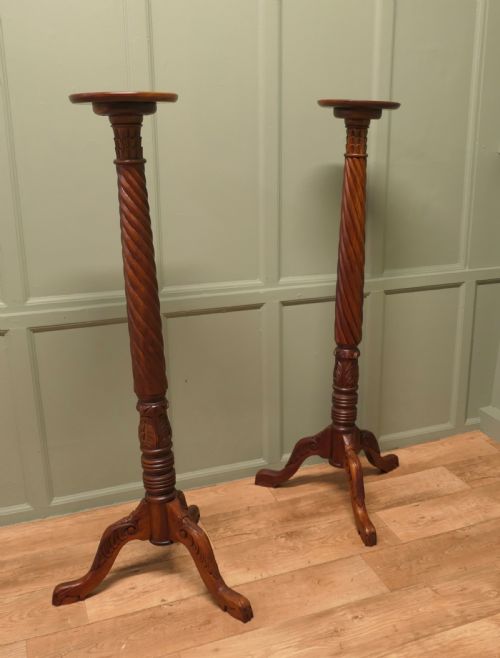
An edwardian carved mahogany torchere is a tall, slender stand traditionally utilised to display a single lamp, vase or plant. When exploring this selection, buyers encounter forms that span the Edwardian period alongside Victorian and early twentieth-century examples, including revival pieces drawing on Georgian, Chippendale and Adam styles.
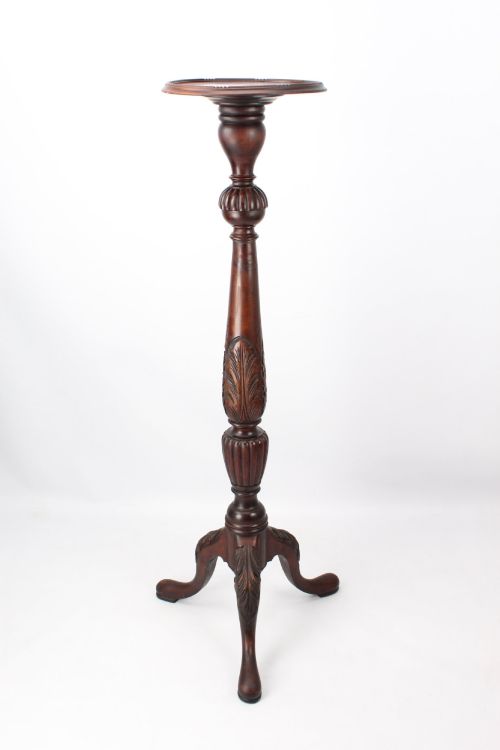
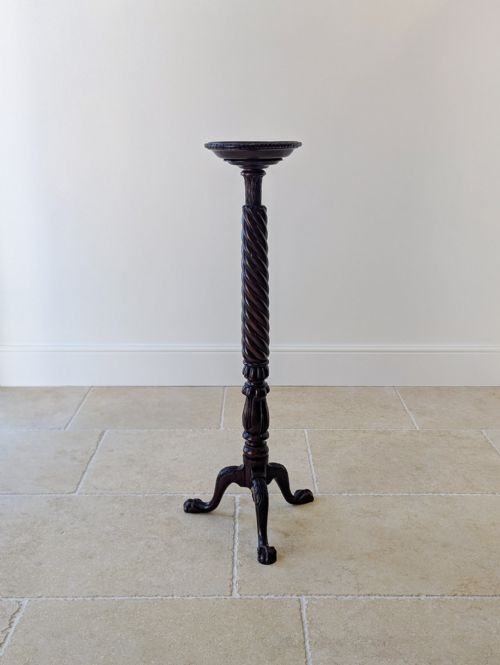
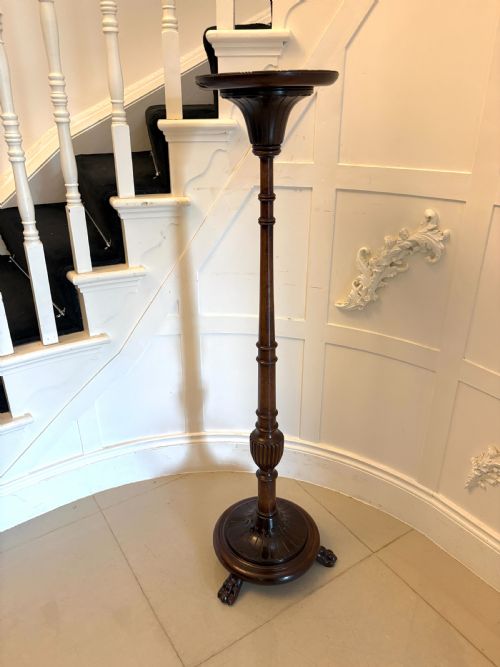
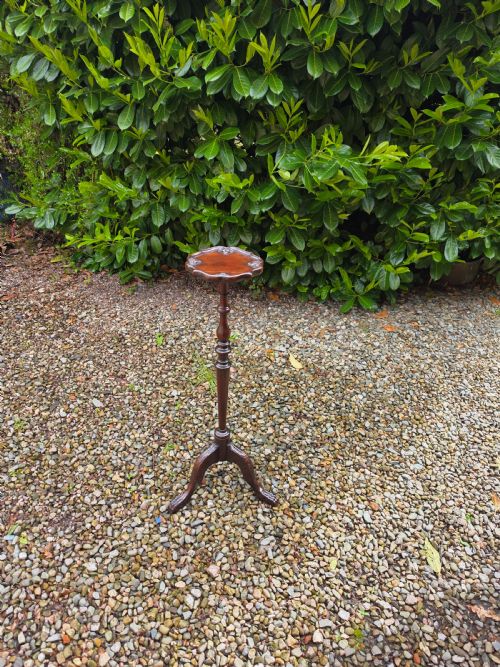
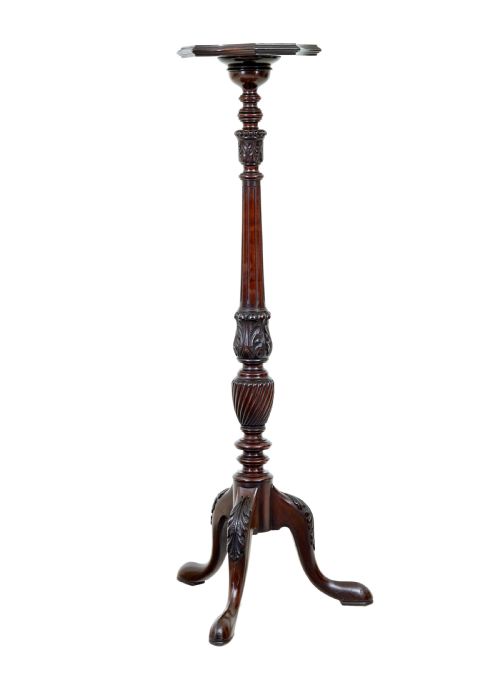
The primary forms appearing on this page include plant stands, jardiniere columns and torcheres. These tall supports elevate decorative objects to create vertical lines within interior spaces, frequently featuring circular tops supported by slender stems and tripod or circular bases.
Construction and materials
The pieces listed on this page rely primarily on mahogany timber, sometimes accompanied by brass details. Cabinetmakers selected this dense hardwood for its strength, which allowed them to turn slender columns and carve delicate decorative motifs without compromising the structural integrity of the stand.
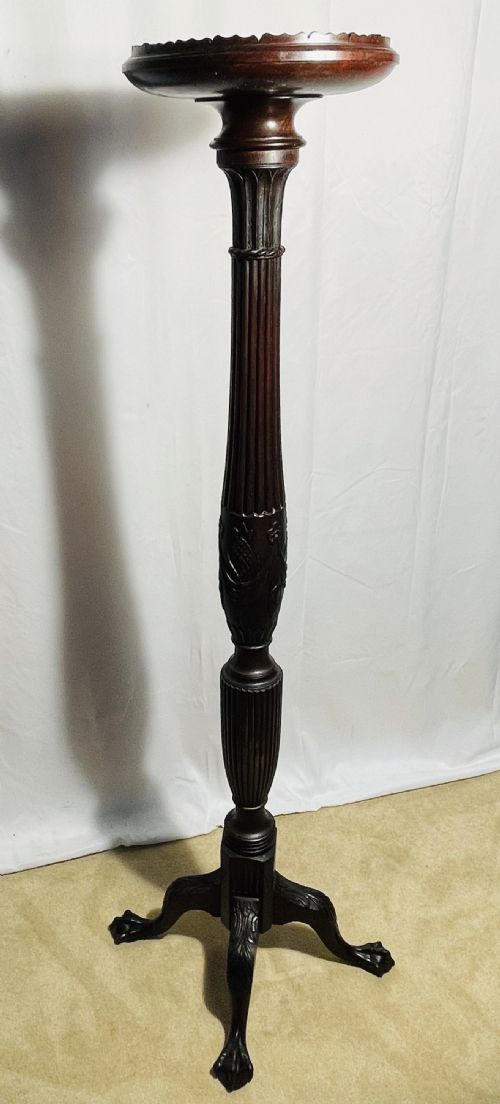
Carving technique defines the surface enrichment of these stands, ranging from subtle gadrooning to elaborate revival motifs. Workshops combined lathe-turning for the central shafts with hand-carved elements on the capitals, stems and feet.
Listings feature mahogany and hardwood structures, occasionally paired with brass fittings across Edwardian, Victorian and early twentieth-century periods.
Assessing quality and craftsmanship
Quality in an edwardian carved mahogany torchere resides in the crispness of the timber carving and the stability of the tall frame. Superior examples display deeply undercut foliage or fluting executed by hand, whereas lesser pieces rely on shallow, mechanical shaping.
Proportion and weight distribution also separate fine stands from ordinary ones. A well-made torchere possesses a weighted or properly spread base that ensures the tall, narrow column remains stable when supporting a heavy jardiniere or lamp.
The Edwardian Carved Mahogany Torchere Glossary
- Torchere
- A tall ornamental stand designed to hold a light or a decorative object. The form originated to carry a torch or candle before adapting to lamps and floral displays.
- Jardiniere
- An ornamental pot or stand for holding plants or flowers. In these listings, the term often appears alongside torchere to describe stands with fitted tops for basins.
- Chippendale Revival
- A style popular in the nineteenth and early twentieth centuries that reinterprets the mid-eighteenth-century designs of Thomas Chippendale. Pieces in this idiom often feature carved ribbon backs or cabriole legs.
- Adam Revival
- A neoclassical style drawing on the eighteenth-century work of the Adam brothers. Stands in this taste typically display symmetrical urn motifs, fluted columns and delicate patera.
Edwardian Carved Mahogany Torchere: Frequently Asked Questions
What is a torchere used for?
A torchere serves as an elevated platform for displaying a single decorative object, such as a potted plant, a bronze figure or a reading lamp. Their height allows them to introduce vertical emphasis into corners or empty wall spaces.
Historically, these tall stands held lighting fixtures to illuminate dark rooms. Today, they function primarily as accent furniture that lifts greenery or lighting to eye level.
How do I distinguish Edwardian stands from Victorian ones?
Edwardian stands generally exhibit lighter proportions and cleaner lines compared to their heavier Victorian predecessors. Makers working in the Edwardian era often favoured restrained neoclassical revival motifs.
Victorian pieces, particularly those from the mid-to-late nineteenth century, tend to feature darker, denser timber finishes and heavier carving. Reviewing the revival styles, such as Chippendale or Adam, helps narrow down the manufacturing period alongside construction clues.
Are these stands stable enough for heavy plants?
Most torcheres are engineered with sturdy tripod or weighted bases to support moderate weight at a height. However, the stability depends on the width of the base relative to the height of the column.
When placing a heavy ceramic jardiniere or large plant on a tall stand, verifying the balance of the specific piece ensures safety. Slender shafts require careful placement away from high-traffic areas.
What distinguishes revival styles on these stands?
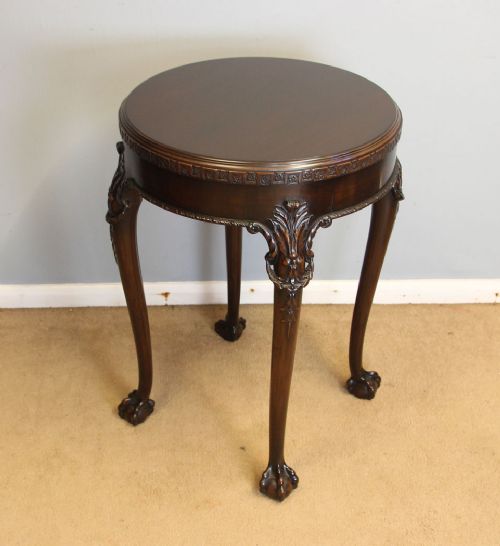
Revival styles reflect later makers drawing inspiration from earlier design vocabularies like Georgian or Adam. A Chippendale Revival stand incorporates specific carved details like ball-and-claw feet or acanthus leaves associated with eighteenth-century pattern books.
Recognising these historical references helps date the furniture accurately. The presence of machine-tooling combined with revival motifs usually points to late nineteenth or early twentieth-century production.