

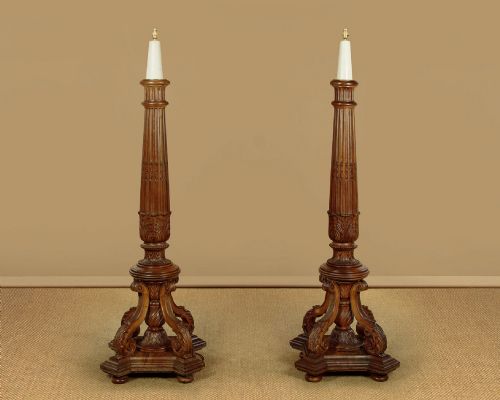
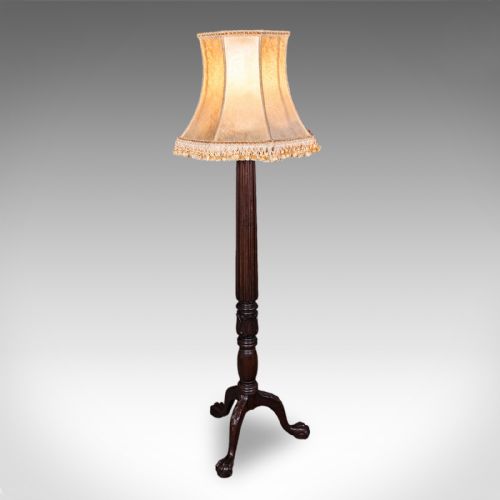
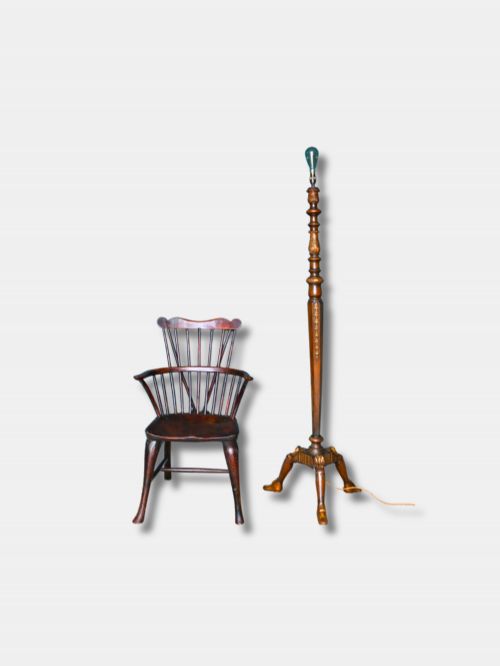


Edwardian Carved Floor Lamp
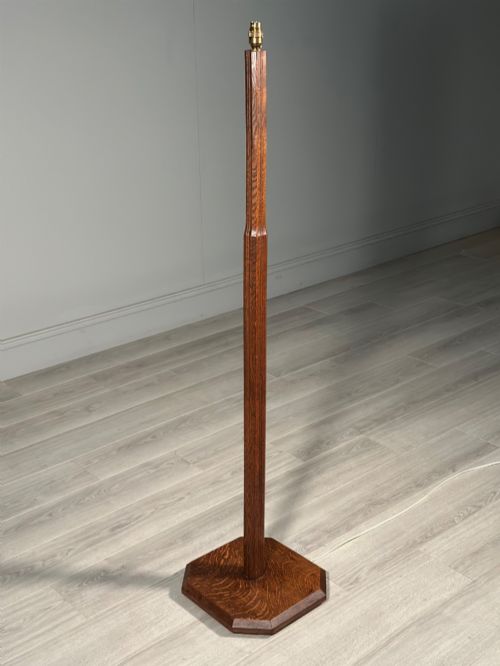
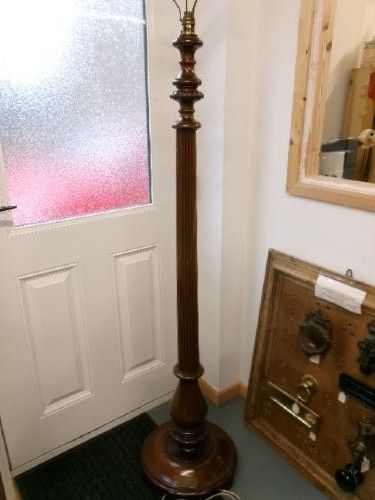
An Edwardian carved floor lamp brings sculptural height and warm illumination to a room, offering both practical light and period presence.
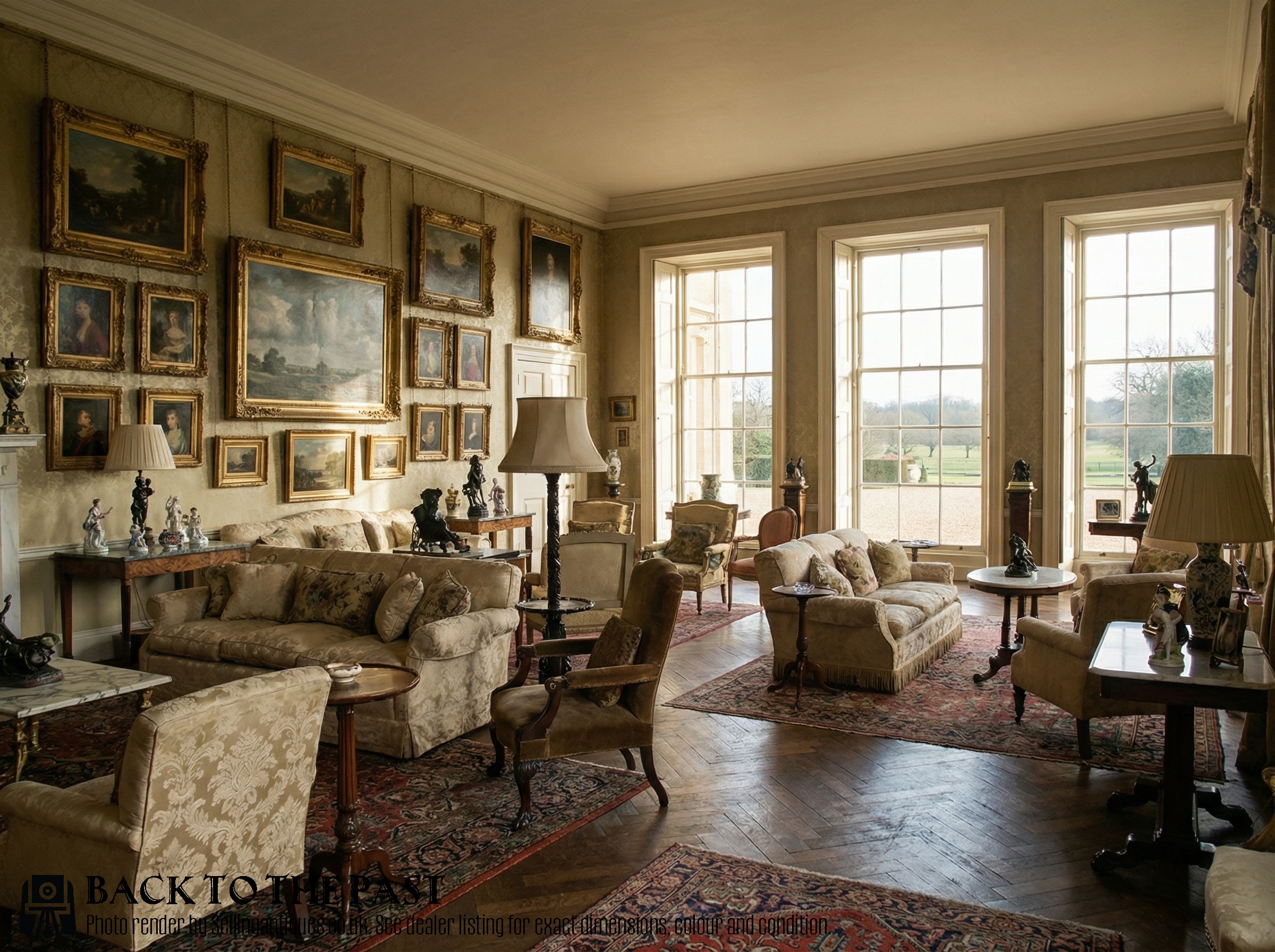
Edwardian Carved Floor Lamp
An edwardian carved floor lamp stands as a tall upright lighting fixture designed to illuminate a room from a fixed floor position. These pieces are often listed interchangeably as floor lamps or standard lamps.
The selection includes examples spanning the Edwardian era, Victorian period, and interwar years, alongside revivals reaching back to William IV, Georgian, and Gothic styles. Makers and workshops drew on diverse decorative traditions, ranging from English cabinetmaking to Anglo-Indian and Kashmiri craftsmanship.
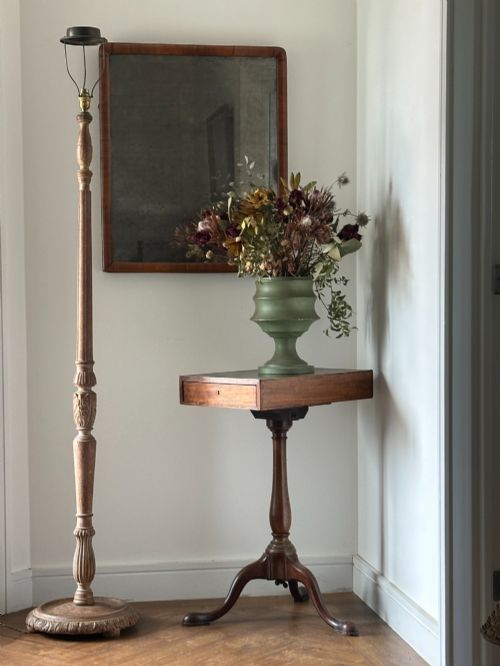
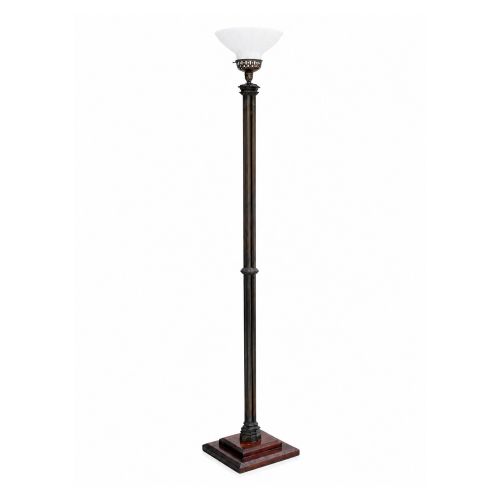
Forms vary from tripod bases to heavy plinths, accommodating materials like carved oak, mahogany, walnut, brass, and marble. Buyers will encounter both simple turned shafts and heavily ornamented carvings featuring gilt or limed finishes.
How they were made
Woods such as oak, mahogany, walnut, and exotic padouk formed the structural shafts and bases, shaped through turning and hand carving. Skilled artisans applied surface treatments including liming, gilding, and fine polish to accentuate the timber grain.
Metal components in brass and bronze provided structural stability and decorative mounts, sometimes paired with marble bases for added weight. Fabric shades completed the construction, diffusing light across the carved woodwork.
Edwardian Carved Floor Lamp Retail Price Guide 2026
Typical asking prices for edwardian carved floor lamp among the pieces listed under this phrase on Sellingantiques today, from the lower quarter to the upper quarter. They describe what is for sale here now, not the wider market.
A Kashmiri artisan carving standard lamps in 1900 could hardly guess an Edwardian floor lamp would one day light a Zoom call.
What varies in quality
Depth and crispness of the hand carving separate standard production pieces from finer studio work. Timber selection also dictates grade, with dense figured walnuts and richly grained mahooganies holding carved detail more sharply than softer woods.
Proportion and stability define the structural tier of each lamp, particularly where tripod bases or heavy marble plinths must support tall shafts securely.
Whytock & Reid
The Edwardian Carved Floor Lamp Glossary
- Standard lamp
- A traditional British term for a floor-standing lamp designed to hold a light bulb and shade at height. It usually sits beside seating to provide reading or ambient illumination.
- Tripod base
- A three-legged support structure used beneath the central shaft for stability. This arrangement appears frequently on wooden standard lamps from the early twentieth century.
- Limed oak
- Timber treated with a specialised white pigment paste to highlight the open grain pattern. This finish gained popularity in interior design during the interwar period.
- Gothic Revival
- An architectural and decorative style drawing inspiration from medieval forms. Pieces in this tradition often feature pointed arches, tracery, and heavy vertical lines.
- Padouk
- A heavy, durable tropical hardwood with a distinct reddish hue. Craftsmen utilised this dense material for intricate carving that retained sharp edges over time.
Edwardian Carved Floor Lamp: Frequently Asked Questions
Where do I put an edwardian carved floor lamp?
These lamps work well beside armchairs, in dark corners, or near sofas where they provide functional downward illumination.
Their substantial height and decorative carving also allow them to stand alone as sculptural furniture pieces within a room.
How do I identify an edwardian floor lamp?
Look for construction characteristics typical of the early twentieth century, including turned timber shafts, hand-carved ornamentation, and traditional wiring channels.
Many examples reflect stylistic revivals from earlier Victorian or Georgian periods while utilising the manufacturing techniques of the Edwardian era.
Are these lamps wired for modern use?
Most antique floor lamps have been adapted for contemporary electrical standards to ensure safe operation in modern homes.
Buyers should inspect the internal wiring and plug type upon acquisition to confirm compatibility with current safety regulations.
What woods were used for standard lamps?
Cabinetmakers utilised domestic and exotic timbers such as oak, mahogany, walnut, and padouk for their strength and responsiveness to carving.
Softer woods were often finished with gesso and gilt, while harder timbers were polished to showcase natural grain patterns.