

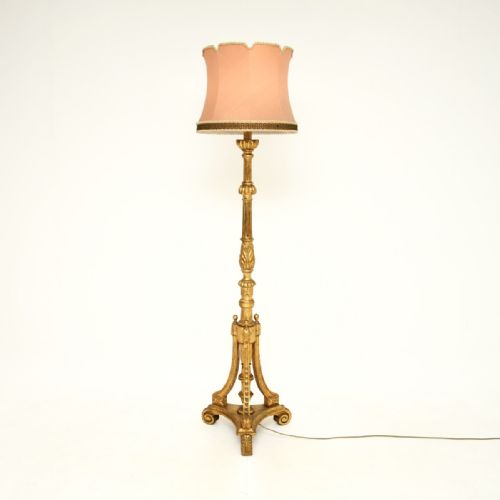
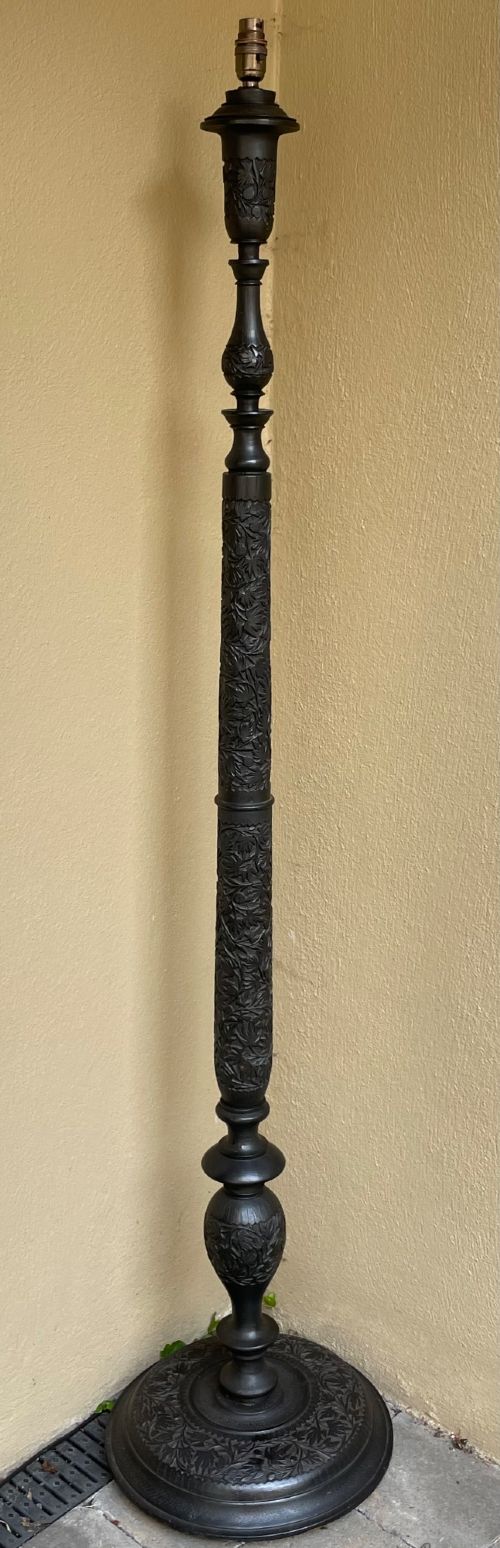


Ornate Carved Standard Lamp
An ornate carved standard lamp brings height and architectural weight to a room, offering warm illumination paired with heavy period craftsmanship.
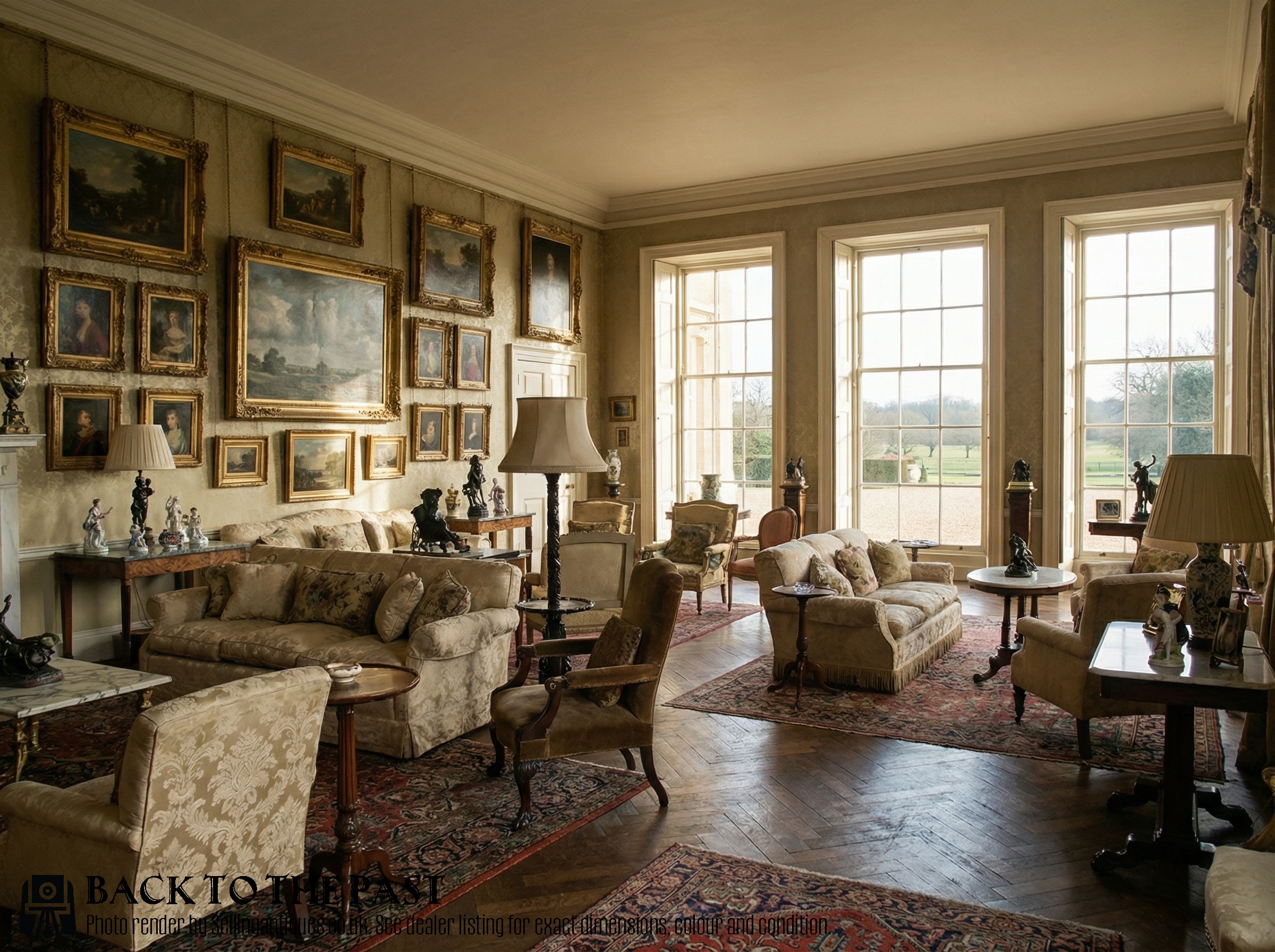
Ornate Carved Standard Lamp
An ornate carved standard lamp is a tall floor-standing lighting fixture designed to anchor a room with substantial presence and intricate surface detail. Buyers hunting for these pieces encounter heavy timber constructions and gilded surfaces, often standing beside armchairs or lighting dark corners.
The versions most likely to meet you on this page span the late nineteenth century through to the interwar decades, taking forms such as standard lamps, floor lamps, and tall lamp bases. Regional variations range from Anglo-Indian and Spanish works to Italian Baroque revivals.
Makers drew on diverse decorative traditions, producing floor lamps dressed in fabric shades, velvet, and bronze alongside traditional woodcarvings. Many examples reflect historical revivals, echoing French Chateau, Florentine Baroque, and Classical styles.
How they were made
Woodcarving forms the structural core of these tall lights, utilising timber varieties such as teak, padouk, and general carved wood shaped by hand. Craftsmen layered gesso and giltwood over timber bases to create brilliant metallic sheens that caught candlelight or early electric bulbs.
Alternative constructions incorporate cast metals and bronze, as seen in Edwardian and continental examples. Makers combined these rigid materials with softer elements like fabric and velvet shades to diffuse the upward-facing light.
Ornate Carved Standard Lamp Retail Price Guide 2026
Typical asking prices for ornate carved standard lamp among the pieces listed under this phrase on Sellingantiques today, from the lower quarter to the upper quarter. They describe what is for sale here now, not the wider market.
Listings feature standard lamps spanning the eighteenth, nineteenth, and twentieth centuries, utilising materials like brass, giltwood, fabric, and padouk.
What varies in quality
The depth and crispness of the carving distinguish ordinary turned timber from exceptional sculptural work, particularly where acanthus leaves, figures, or complex foliate patterns are hand-chiselled. Reliefs that retain sharp undercut edges demonstrate superior handwork compared to softer, more rounded moulding.
The integrity of the gilded surface alters the visual weight of the piece, with genuine gold leaf ageing into a softer patina than heavy paint or modern metallic finishes. Heavier weighted bases also provide structural stability to tall shafts, ensuring the lamp stands plumb without leaning.
The Ornate Carved Standard Lamp Glossary
- Giltwood
- Wood that has been coated with thin gold leaf or powder over a preparation layer. This finish reflects ambient light and gives the lamp a warm glow.
- Gesso
- A plaster-like mixture applied to wood surfaces to create a smooth base for gilding and fine carved detail. It provides the crisp edge necessary for intricate ornamentation.
- Padouk
- A dense tropical timber valued for its rich colour and heavy weight. It allows for sharp, durable carving.
- Baroque Style
- An ornate artistic approach characterised by dramatic curves, rich detail, and dynamic movement. It heavily influences many continental floor lamps from this selection.
- Edwardian
- Pertaining to the reign of King Edward VII, marking a period of lighter, refined interior furnishings. Pieces from this era often balance classical motifs with elegant proportions.
Ornate Carved Standard Lamp: Frequently Asked Questions
Where should I place a standard lamp?
These tall floor lamps work best beside low seating, in dark corners, or framing a fireplace where their height can fill vertical space. They provide ambient upward illumination rather than direct task lighting.
Ensure the heavy timber or bronze base sits on a stable floor surface away from heavy foot traffic to protect the tall shaft.
How do I identify the period of a lamp?
Examine the wood preparation, the style of the carving, and the materials used in the construction, comparing them against known revival periods like the Baroque or Edwardian eras. Eighteenth and nineteenth-century examples often display deeper hand-chiselling and denser timbers.
Later pieces from the nineteen-twenties adopt distinct regional aesthetics, such as Anglo-Indian or Spanish designs, reflecting the prevailing taste of those decades.
Are these lamps wired for modern use?
Most antique floor lamps have been rewired at various points in their long histories to comply with modern electrical standards. Buyers should inspect the internal cord and bulb holder to ensure safety.
Older wiring can easily be updated by a qualified professional without altering the exterior wooden or gilded structure.
How do I care for a gilded wooden lamp?
Dust the carved surfaces gently with a soft, dry brush to prevent dirt from settling into the deep recesses of the gesso and giltwood. Avoid using liquid cleaners or abrasive cloths that can strip the delicate metallic leaf.
Keep the lamp away from direct sunlight and excessive moisture to protect the aged timber and surface finish.