

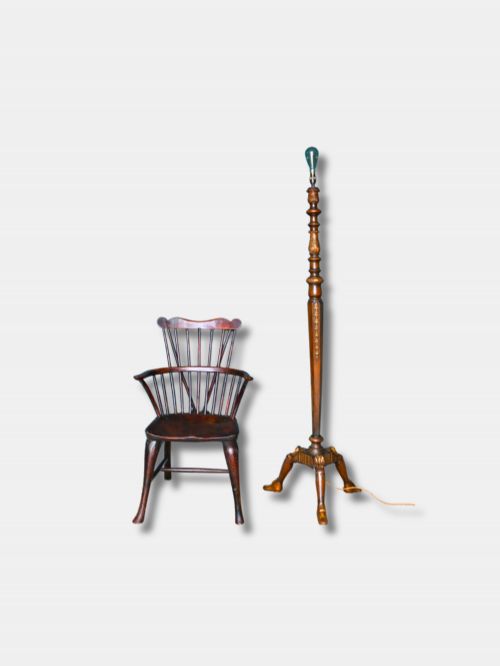
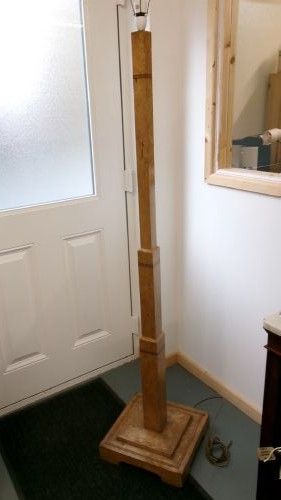
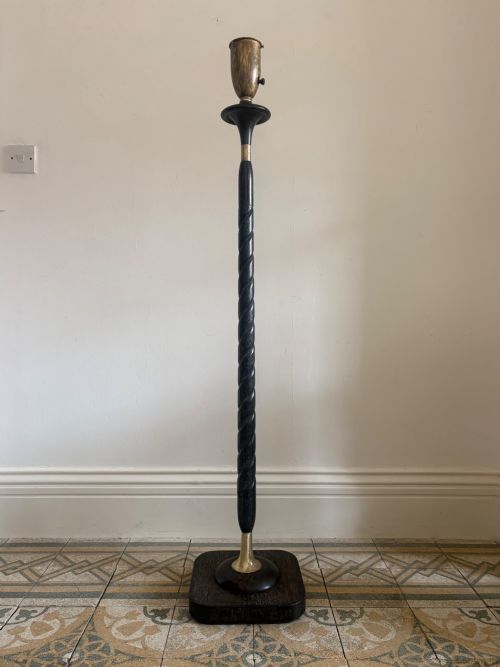
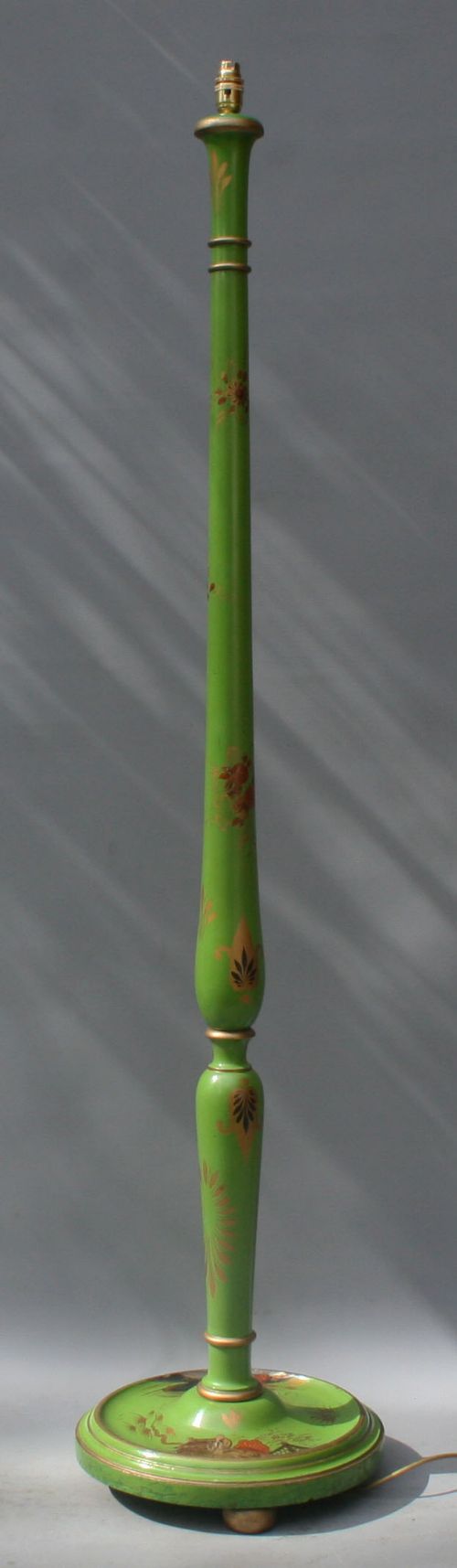


1920s Wooden Floor Lamp
These 1920s wooden floor lamps bring height and warm illumination to a room, offering the sturdy elegance collectors seek.
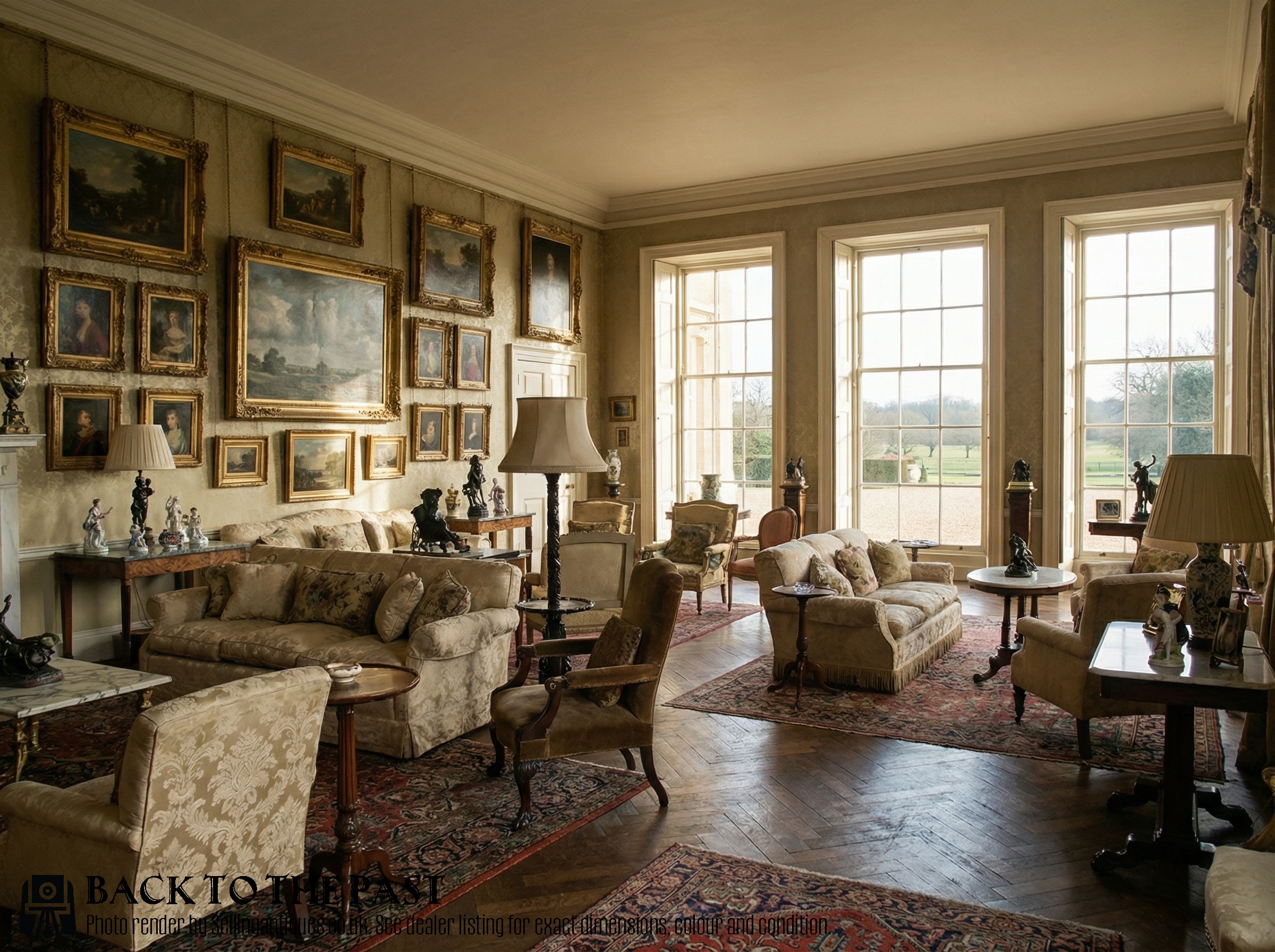
1920s Wooden Floor Lamp
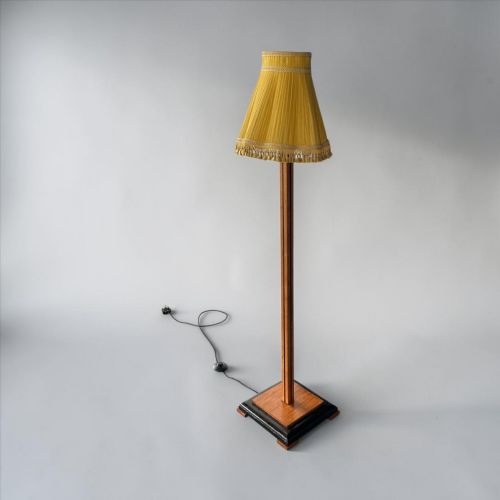
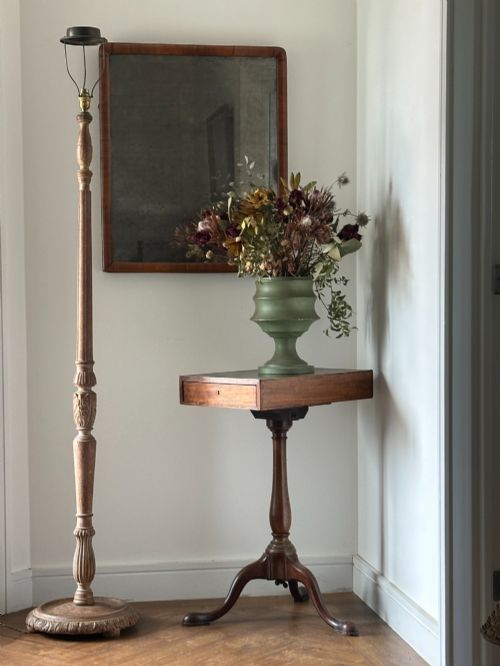
A 1920s wooden floor lamp provides structural height and ambient lighting through tall vertical shafts mounted on stable bases. The inventory on this page ranges across the 1920 and 1930 periods, encompassing both standard floor lamps and combined lamp tables.
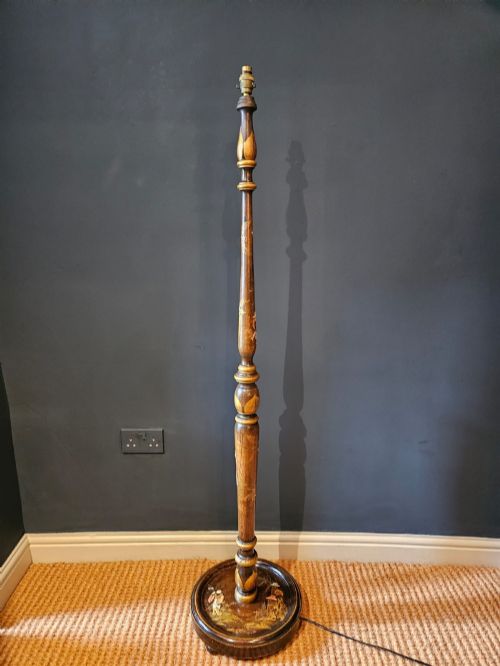
The forms span several distinct aesthetics including Art Deco, Chinoiserie, and Georgian Revival styles. Buyers will frequently encounter French and English examples utilising traditional upright formats as well as tripod bases.
Materials vary from limed oak and walnut to ebonised wood and exotic padouk, occasionally augmented with brass or fabric elements. These pieces function primarily as statement lighting fixtures that anchor period interiors.
How they were made
Carpenters and cabinetmakers constructed these standards from hardwoods such as walnut, oak, and padouk, employing turning techniques for shapes like barley twists. Surface decoration often involved applied lacquer, gilt highlights, or intricate hand carving.
Some variants integrate specialised forms such as torcheres or include auxiliary tabletops built directly into the wooden framework. Metal components like brass typically appear in fittings or bases to provide structural contrast and weight.
1920s Wooden Floor Lamp Retail Price Guide 2026
Typical asking prices for 1920s wooden floor lamp among the pieces listed under this phrase on Sellingantiques today, from the lower quarter to the upper quarter. They describe what is for sale here now, not the wider market.
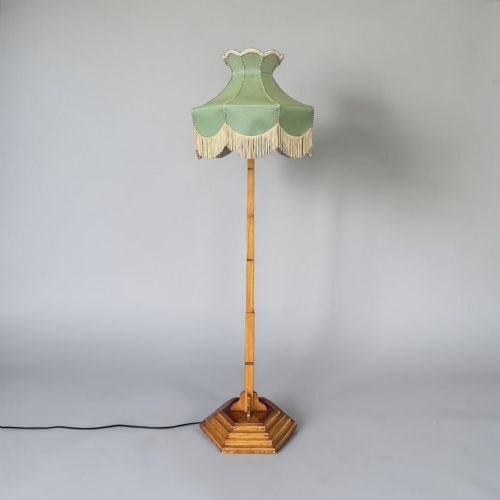
Some standards arrive with surviving fringed shades that rustle gently whenever anyone walks past in the dark.
What varies in quality
Quality rests upon the selection of timber and the precision of the carving or turning work executed on the shaft. Finer examples display deliberate choices in figured walnut or limed oak alongside well-executed decorative schemes like Chinoiserie painting.
The architectural stability of the base, whether tripod or platform, dictates the overall integrity of the standard lamp. Superior pieces maintain proportional harmony between the vertical height and the supporting foot without awkward transitions.
The 1920s Wooden Floor Lamp Glossary
- Standard lamp
- A tall floor-standing lighting fixture designed to hold a bulb and shade at eye level. This term is frequently used interchangeably with floor lamp in British antique listings.
- Torchere
- A tall ornamental stand originally intended to carry a torch or candle, adapted in the twentieth century to hold electric lights. These pieces often feature slender columns and decorative vase-like turnings.
- Barley twist
- A spiral turning resembling a twisted rope, carved into wooden furniture legs and uprights. This decorative technique appears frequently on French and English pieces from the period.
- Ebonised
- Wood treated with a dark stain or finish to imitate the appearance of ebony. It provides a stark, formal contrast to gilt or metallic highlights.
- Tripod base
- A three-legged support system providing stability for tall upright furniture and lighting standards. This configuration prevents the tall shaft from tipping over.
1920s Wooden Floor Lamp: Frequently Asked Questions
How do I wire a vintage floor lamp?
Most vintage standards require modern rewiring to meet current electrical safety standards, which should be performed by a qualified professional. They can retain original wooden components while updating internal flexes and lamp holders.
Collectors usually prefer rewiring that conceals modern cabling discreetly through the central wooden channel or down the exterior without altering the historic timber.
What is the difference between a floor lamp and a standard lamp?
In British antique terminology, standard lamp is the traditional term for a tall wooden lighting column placed directly on the floor. Floor lamp is often used as a modern equivalent for the same lighting format.
Both terms describe upright fixtures designed to illuminate a room from standing height, though older catalogue entries lean towards the word standard.
How do I identify an Art Deco wooden lamp?
Art Deco lighting standards emphasise clean geometric lines, sleek symmetry, and streamlined silhouettes rather than heavy Victorian ornamentation. Blonde walnut and smooth polished surfaces are common indicators of this design movement.
These pieces often avoid excessive carving in favour of natural grain patterns and minimalist stepped forms that reflect interwar modernism.
Where should I place a lamp table?
A lamp table combines a vertical lighting standard with an integrated low surface for holding small objects or drinks. They work effectively beside armchairs or in corners where floor space is limited.
The dual functionality makes them versatile pieces for smaller sitting rooms requiring both surface area and elevated illumination.