



Edwardian Campaign Table
These edwardian campaign table pieces offer clever, portable design built for travel and adaptable to modern homes.
Edwardian Campaign Table
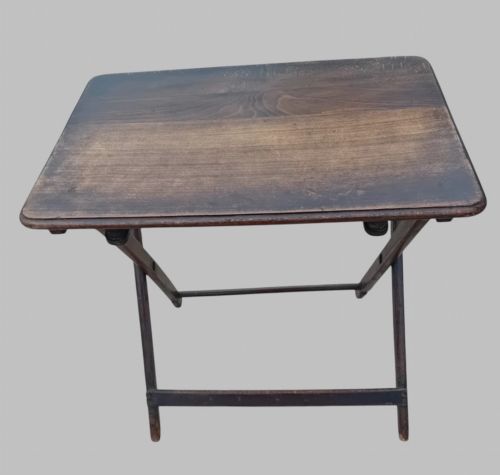
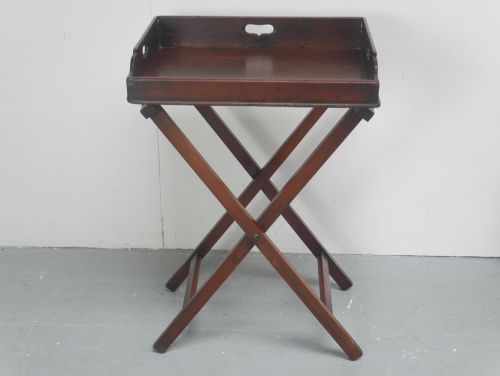
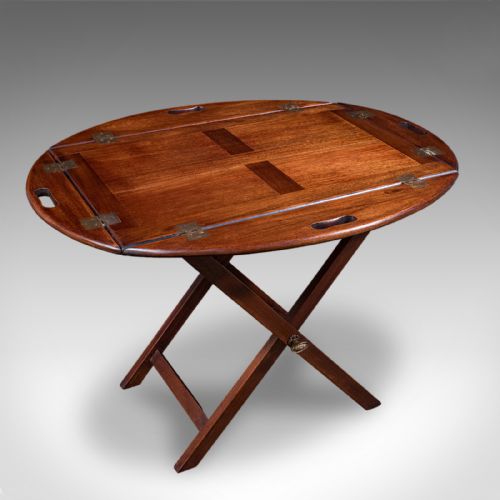
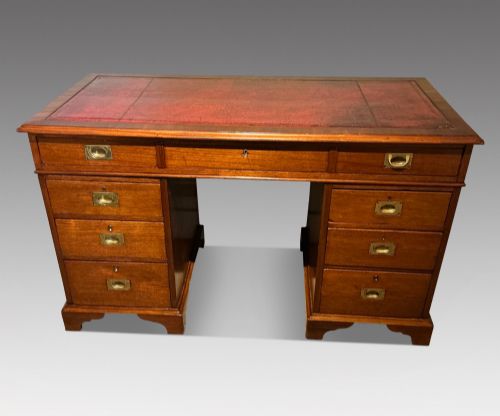
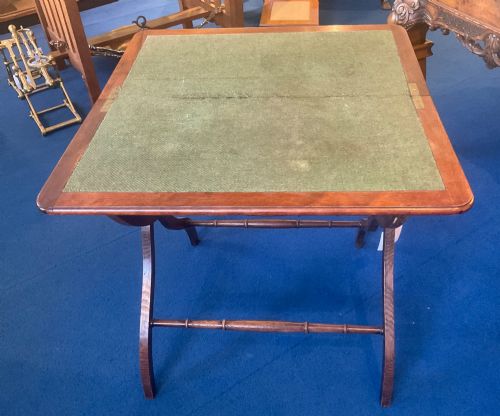
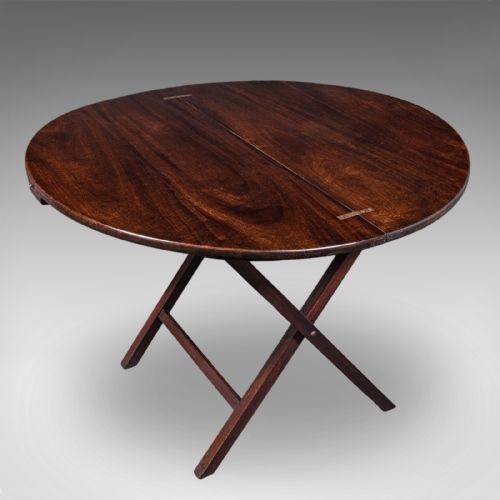
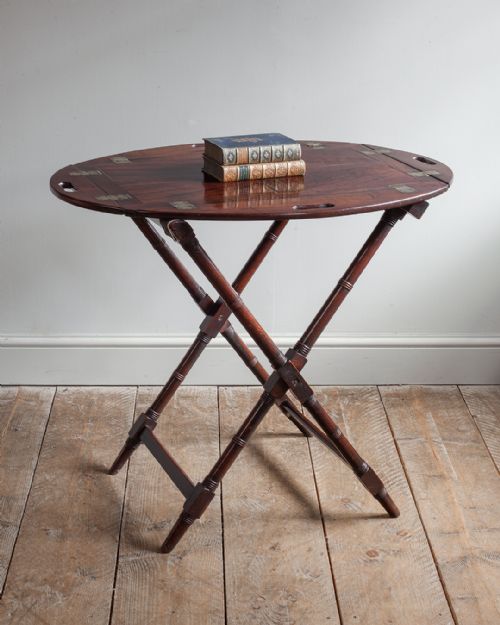
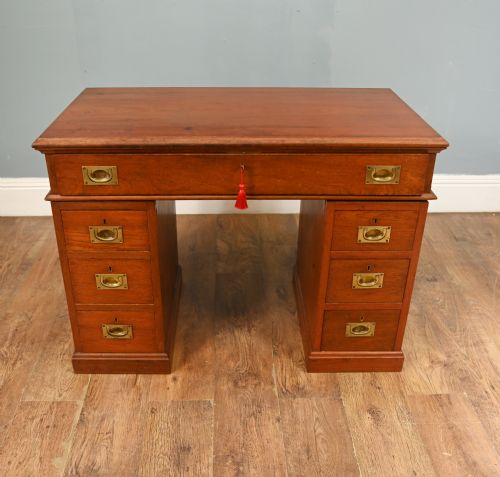
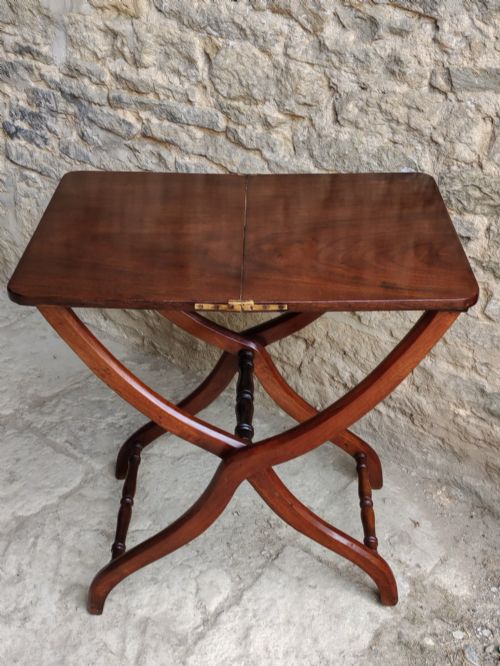
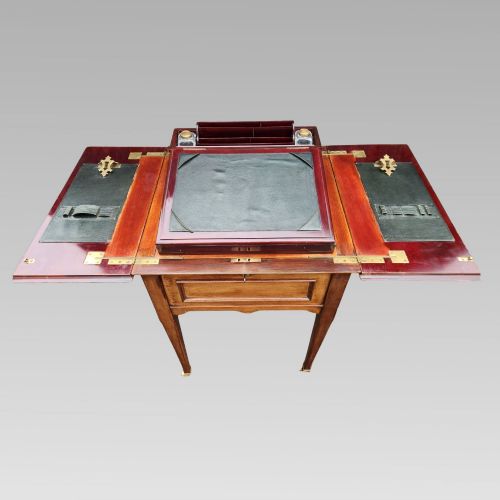
An edwardian campaign table brings together folding mechanisms, practical surfaces, and military utility. These pieces include folding coaching tables, butlers trays on stands, and writing desks produced in the early twentieth century.
The selection ranges from simple beech folding tables and mahogany butlers trays to fitted writing desks and occasional tables. Buyers frequently encounter folding coaching designs alongside occasional and coffee table adaptations.
Origins span standard Edwardian production alongside pieces drawing on nineteenth century military influences. Walnut, mahogany, and oak form the backbone of these functional domestic items.
How they were made
Timbers such as mahogany, oak, beech, and rosewood provide the structural integrity for these transportable surfaces. Cabinet makers utilised brass hinges, corner braces, and handles to reinforce joints intended for frequent dismantling.
Leather, baize, and glass inserts frequently line writing surfaces and serving tops, adding functional texture to timber frames. Folding X-frames and drop-flap supports allow tables to collapse flat for storage and travel.
Materials recorded across these listings include mahogany, oak, beech, rosewood, brass, leather, baize, and glass.
What varies in quality
Timber selection and grain figure separate standard utility examples from finer decorative pieces. Mahogany and figured walnut show superior cabinet making compared to simpler beech or utility pine variants.
The precision of folding hinges, brass corner mounts, and locking mechanisms indicates the standard of original construction. Smooth operation of drop-flaps, drawers, and folding frames distinguishes better workshops.
The Edwardian Campaign Table Glossary
- Campaign style
- Furniture designed for military officers on the move, characterised by portability, folding frames, and protective brass fittings. This aesthetic prioritises practical dismantling and robust construction.
- Butlers tray
- A removable rectangular tray with hinged or fixed sides, traditionally used for serving and placed upon a separate folding stand. They function today as coffee tables and occasional surfaces.
- Coaching table
- A low folding table with an X-frame base, designed to collapse flat when not in use. These pieces often utilise beech, oak, or mahogany.
- Drop-flap
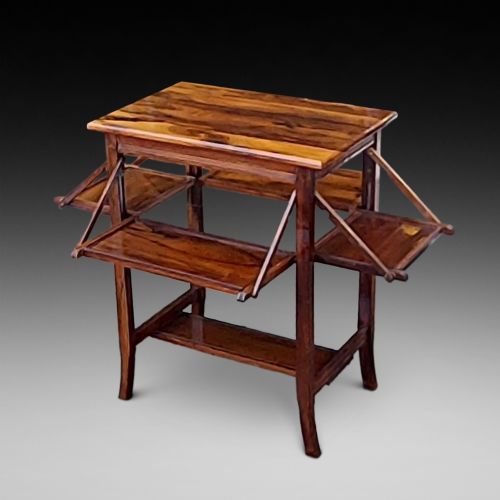
- A hinged table leaf that lowers or raises to alter the surface area. This mechanism maximises utility while keeping the footprint compact when folded.
- Metamorphic
- Furniture engineered to transform from one form or function to another, such as a desk converting into a table. These ingenious designs reward close examination of their hidden joints.
Edwardian Campaign Table: Frequently Asked Questions
How do I use a butlers tray table daily?
Place the removable tray upon its folding stand to create an adaptable surface for drinks or serving. The lightweight construction allows you to move the piece easily between rooms as needed.
Fold the stand flat and store the tray away when you require additional floor space. This versatility suits modern living rooms and smaller apartments particularly well.
Are these tables sturdy enough for regular use?
Original campaign furniture was engineered to withstand rigorous military transport and frequent dismantling. The interlocking frames and brass-reinforced joints provide surprising stability for everyday domestic duties.
Check that folding X-frames lock securely into their proper positions before placing heavy items on top. Routine maintenance of hinges keeps the mechanisms functioning smoothly.
What is the difference between coaching and campaign tables?
Coaching tables specifically feature a folding X-frame base designed to collapse entirely flat for travel. Campaign tables encompass a broader category of portable military furniture, including desks, chests, and side tables.
Many coaching tables double as butlers stands within domestic settings. Both types share an emphasis on space-saving engineering and durable hardwoods.
How do I identify an Edwardian period piece?
Edwardian furniture typically dates from the reign of King Edward VII between 1901 and 1910, though the style extended slightly beyond. Look for lighter timbers, refined brass fittings, and cleaner lines compared to heavier Victorian designs.
Examine secondary woods and construction methods inside drawers or beneath tops to confirm the era. Catalogued pieces often display characteristic Edwardian proportions and satinwood or mahogany grain.