
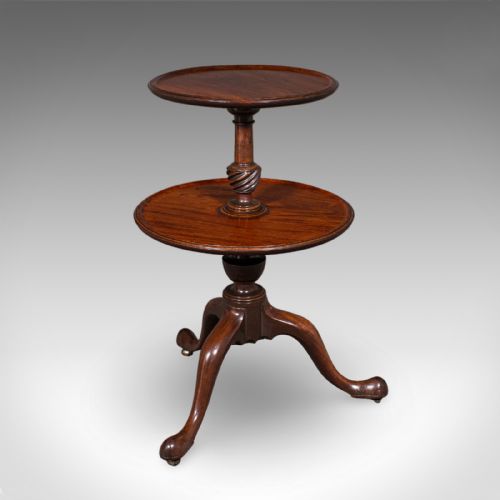


Tiered Cake Serving Stand
A tiered cake serving stand brings classic proportion and tiered utility to any room, offering multiple levels of polished timber for display.
Tiered Cake Serving Stand
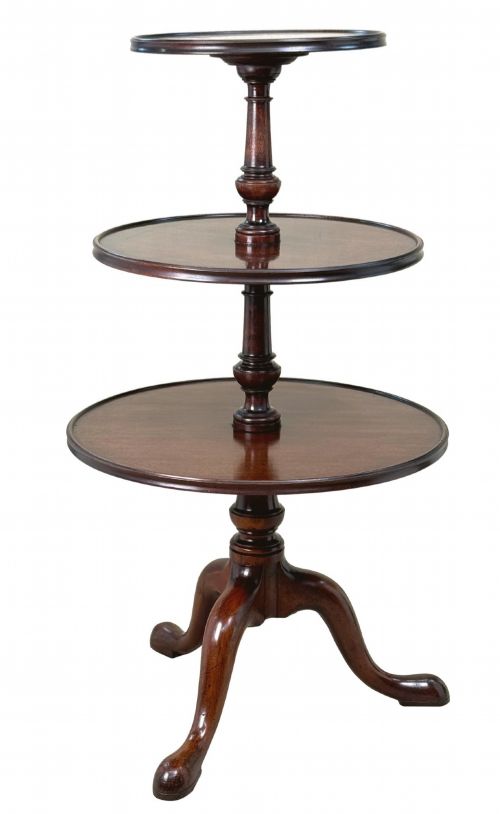
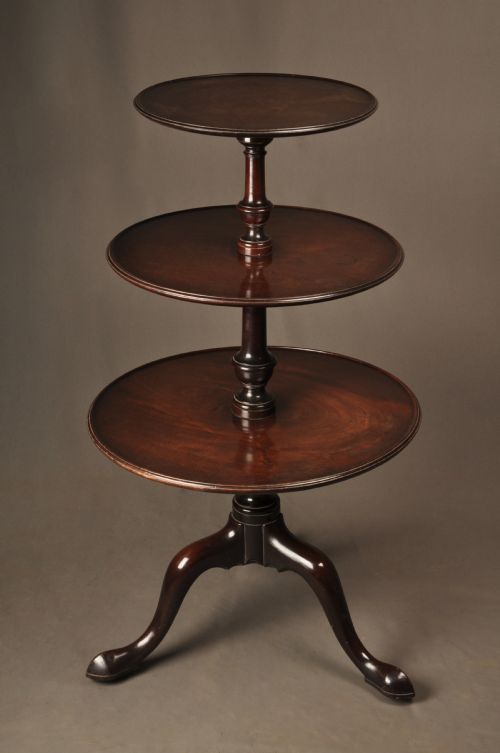
When you search for a tiered cake serving stand, you encounter pieces that historically functioned as dumb waiters or serving tables across the Georgian, Regency, and Edwardian periods. These furnishings typically feature circular wooden tiers graduated in size, supported by central columns and tripod or folding bases.
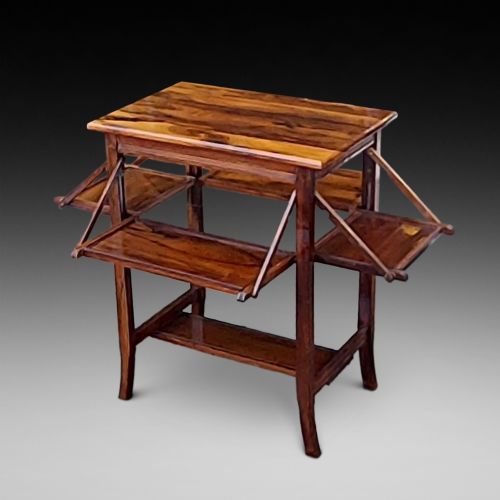
You are most likely to meet mahogany examples on this page, reflecting the dominant material of the 18th century and Regency eras. Occasional tables and dumb waiters from these periods form the core of the selection, alongside Edwardian rosewood interpretations of campaign style.
The forms range from two-tier afternoon tea serving stands to large three-tier revolving dumb waiters. These architectural tiered tables combine practical surface area with the rich grain and warm tones characteristic of period British cabinetmaking.
Materials and Construction
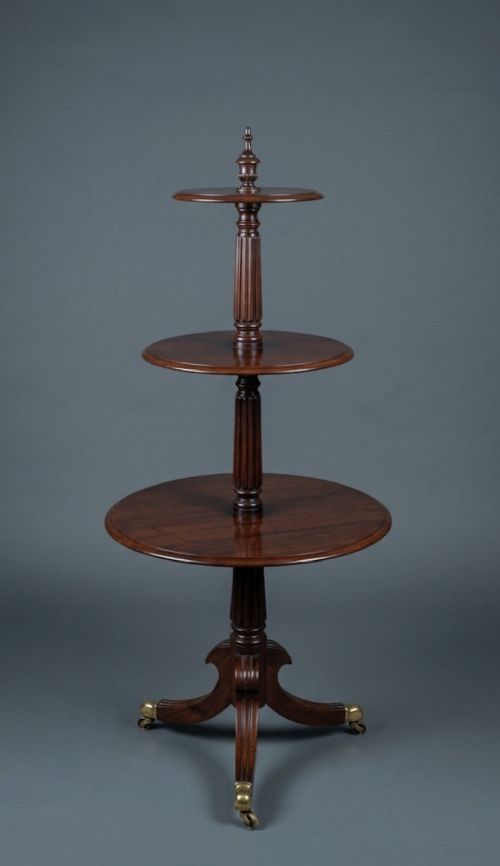
Makers utilised solid mahogany and rosewood for the circular tiers and structural columns, selecting timber for depth of grain and rich natural colour. Brass components, including castors and folding mechanisms, provide functional articulation and structural contrast against the dark hardwoods.
The construction relies on stable pillar-and-base framing, frequently featuring tripod legs that support heavy graduating tiers. Revolving mechanisms and folding actions require precise joinery to ensure the multiple surfaces remain level and stable during use.
The listings here span the 18th century through the Edwardian period, featuring solid mahogany and rosewood alongside brass hardware.
Measures of Quality
Quality reveals itself in the proportion of the graduating tiers and the crispness of the turned central columns. Finer examples display harmonious spacing between levels and balanced timber selection across all individual trays.
The integration of mechanical elements, such as smooth revolving pivots or tight folding joints, separates standard pieces from the finest workshop productions. Original brass hardware and patinated timber surfaces further distinguish superior examples from later replacements.
The Tiered Cake Serving Stand Glossary
- Dumb waiter
- A freestanding piece of furniture with multiple tiers used for serving food or holding tableware without servant assistance. These tiered structures date predominantly from the Georgian and Regency periods.
- Tripod base
- A three-legged support system providing stability on uneven floors. This configuration is standard for the central columns of circular tiered tables.
- Graduated tiers
- Shelves or trays arranged in order of size, typically with the largest tray at the bottom and the smallest at the top. This design creates a stable pyramid silhouette.
- Campaign style
- Portable furniture designed for travel, often featuring folding elements or brass corners. Edwardian interpretations adapt this military aesthetic for domestic serving.
Tiered Cake Serving Stand: Frequently Asked Questions
What is a tiered cake serving stand?
A tiered cake serving stand is a multi-level furnishing designed to hold food, tea, or decorative items across graduating horizontal surfaces.
Historically originating as Georgian and Regency dumb waiters, these pieces utilise central wooden columns to support two or three circular trays.
How were dumb waiters used?
These pieces served dining rooms and parlours by holding dishes, cakes, and tea accessories within easy reach of guests.
By placing multiple levels on a single rotating or stationary column, households saved floor space while multiplying available surface area.
How do I date an antique stand?
Dating relies on identifying timber species, structural joinery, and stylistic markers associated with specific periods like the Regency or Edwardian eras.
Mahogany construction and tripod column forms point toward 18th-century and Georgian workshops, while rosewood campaign details suggest Edwardian manufacturing.
Can I use these stands today?
These tables adapt easily to modern interiors as serving surfaces for afternoon tea, side tables for drinks, or display tiers for decorative objects.
Their robust timber construction and multi-level design continue to provide practical utility alongside period character.