
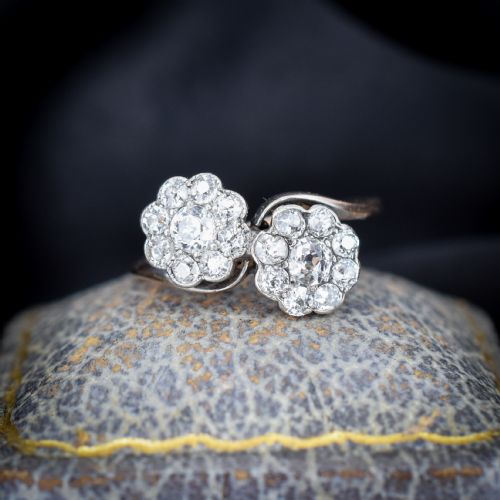


Edwardian Bypass Ring
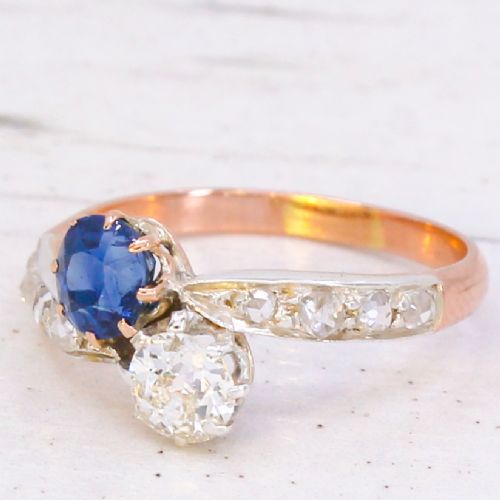
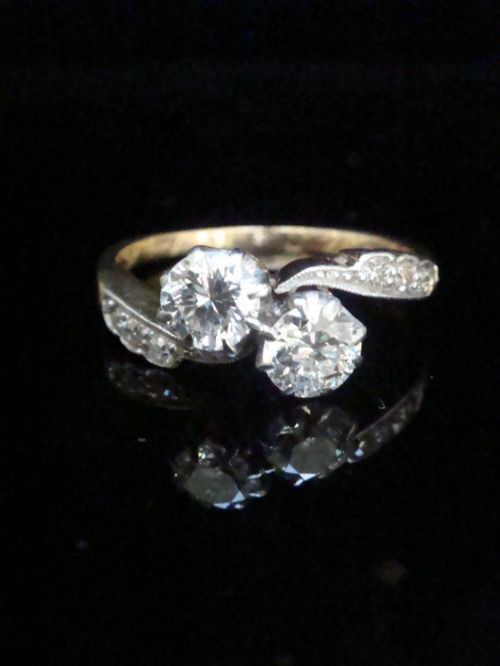
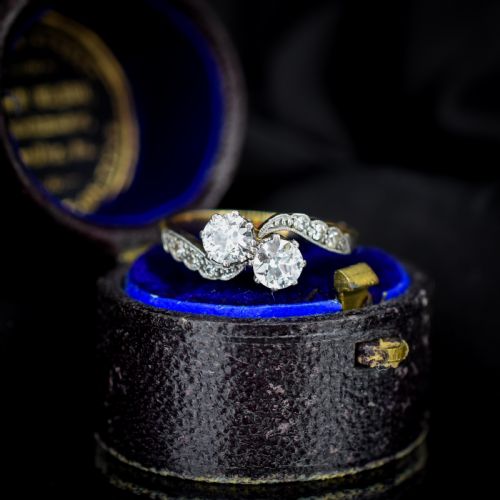
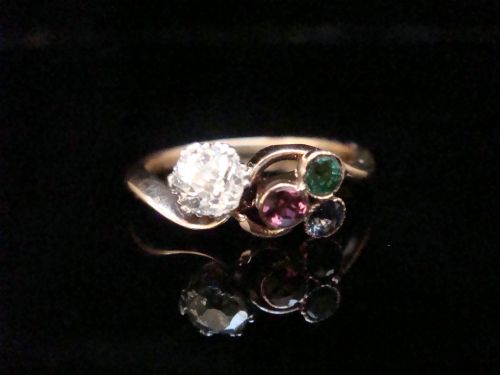
An edwardian bypass ring brings together two distinct gems in a flowing twist, offering a graceful silhouette shaped by early twentieth-century design.
Edwardian Bypass Ring
The edwardian bypass ring is defined by a crossover shank where two opposing stones meet at the centre of the finger. These pieces frequently appear alongside related styles from adjacent decades such as Art Nouveau and Art Deco.
Most examples found here date from the Edwardian era and the early decades of the twentieth century, constructed as distinct twist or crossover rings. The form places two principal gems side by side or in a gentle embrace, creating a balanced visual dialogue.
How they were made
Master jewellers constructed these mounts primarily in 18ct yellow gold and platinum, securing the gems with precise claw settings or delicate milgrain borders. The combination of gold bands with platinum top settings allowed artisans to use minimal metal around the stones.
Stones incorporated into the designs include old cut diamonds, sapphires, rubies, pearls, and turquoise, often shaped by hand during the period. The twist of the shank requires careful metalwork to maintain structural integrity while achieving a fluid line.
Listings feature periods spanning the Edwardian era, 1900, 1910, 1920, 1930, and 1950, alongside Art Nouveau and Art Deco styles.
What varies in quality
The standard of the piece rests upon the calibre of the central gems, particularly the cut and clarity of the old cut diamonds and the depth of colour in the sapphires or rubies. Artisanal execution in the shaping of the crossover shoulders also dictates the overall elegance.
Proportion and symmetry separate finer examples from simpler work, ensuring the two opposing stones balance each other harmoniously on the hand. The preservation of original claw work and shank thickness further distinguishes the better-surviving items.
The Edwardian Bypass Ring Glossary
- Bypass ring
- A ring design where the ends of the shank pass one another rather than meeting in a traditional complete circle. This configuration creates the characteristic twist seen in toi et moi styles.
- Toi et Moi
- French for you and me, describing a ring featuring two principal stones set closely together. The pairing often represents two entities united in design.
- Old cut diamond
- A hand-faceted diamond cut before modern brilliant standards were established in the early twentieth century. These stones typically exhibit smaller tables and open culets.
- Milgrain
- A decorative technique featuring a tiny beaded edge of metal along the setting borders. This finish was widely utilised in Edwardian jewellery to soften geometric lines.
Edwardian Bypass Ring: Frequently Asked Questions
How do I wear a bypass ring safely?
These antique rings benefit from being removed during manual tasks or heavy lifting to protect the delicate claw settings and softer gems like pearls. Store them individually in a lined box to prevent friction against other jewellery.
Regular gentle cleaning with warm soapy water and a soft brush maintains the brilliance of the diamonds and coloured stones. Avoid harsh ultrasonic cleaners, particularly for rings containing pearls or turquoise.
What periods do these rings come from?
The selection spans the early twentieth century, with a strong concentration of pieces originating from the Edwardian period and the surrounding decades. You will also encounter stylistic influences from Art Nouveau and later mid-century revivals.
Date attributions rely on hallmarks, stylistic markers, and the specific cutting styles of the diamonds used by period makers.
How do I identify an Edwardian twist ring?
Look for characteristic design elements such as flowing crossover shoulders, milgrain detailing, and the use of old cut diamonds paired with coloured gems. The integration of platinum atop gold is another strong indicator of the period.
Examining the internal shank often reveals historical hallmarks or stamps that provide clues to the geographic origin and assay office.