


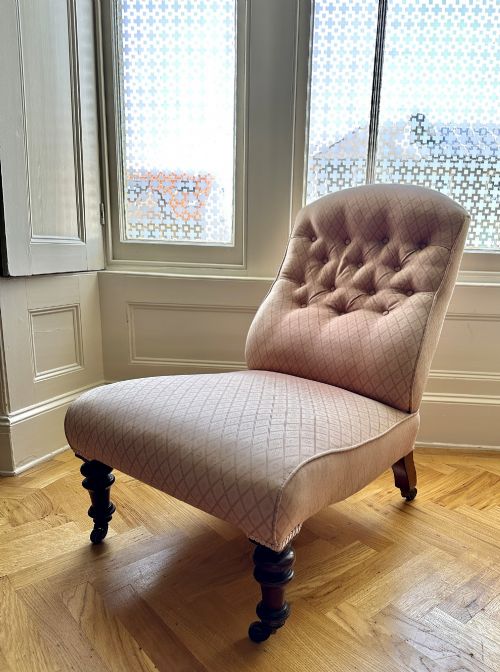


Edwardian Buttoned Armchair
An edwardian buttoned armchair brings deep upholstery and sprung comfort to a drawing room or study, offering a tactile seating piece built to last.
Edwardian Buttoned Armchair
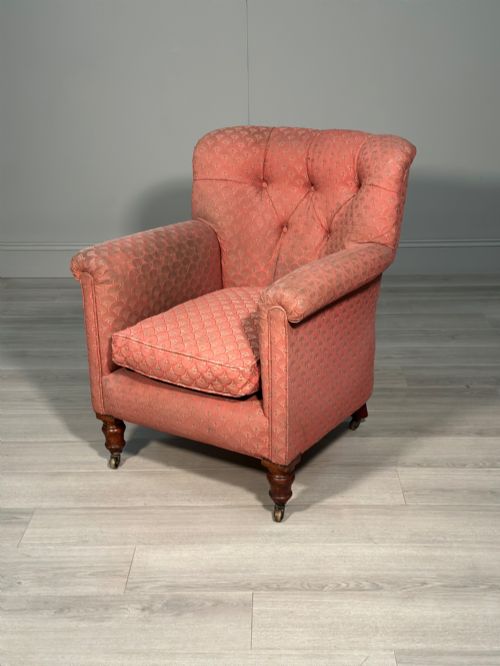
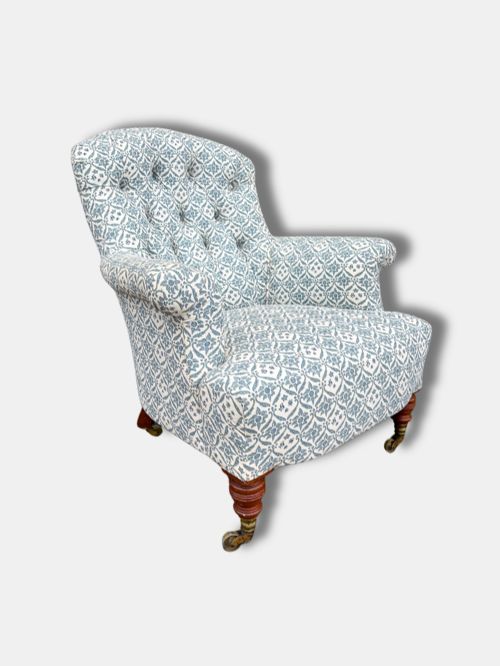
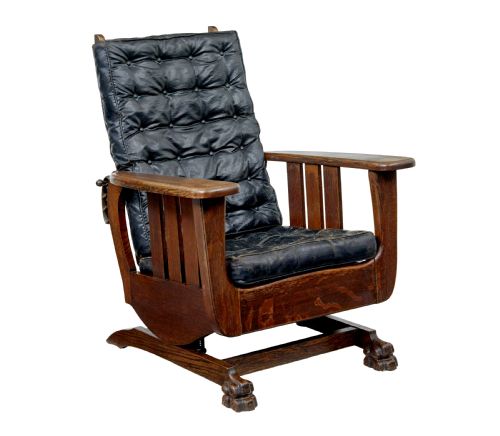
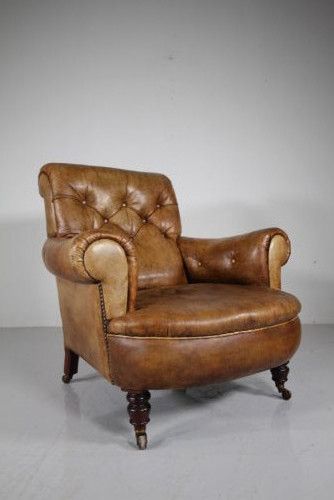
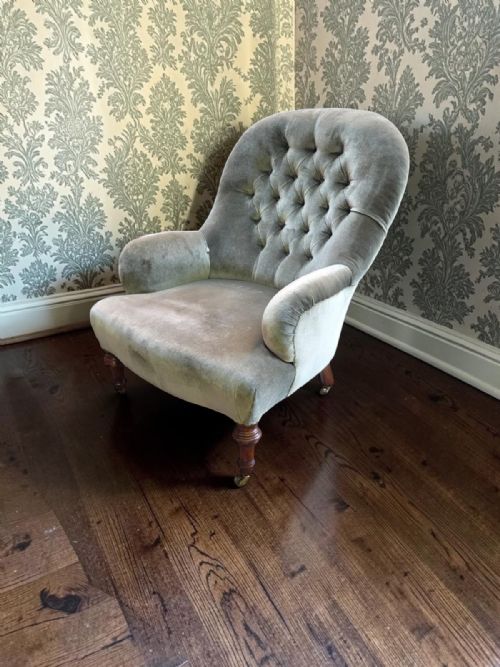
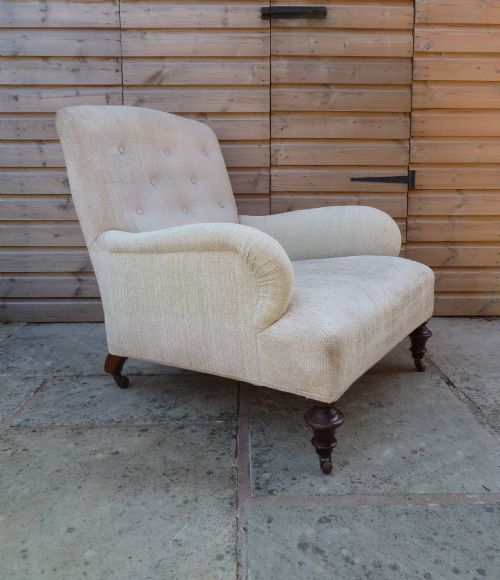
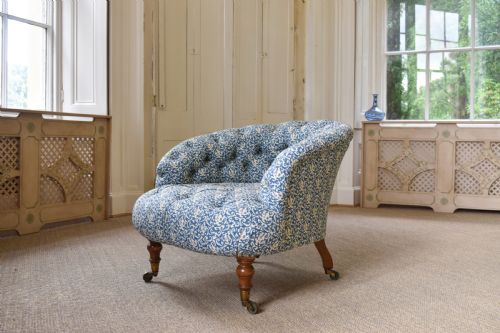
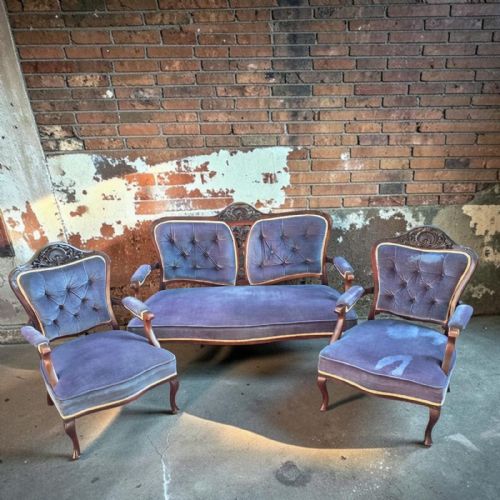
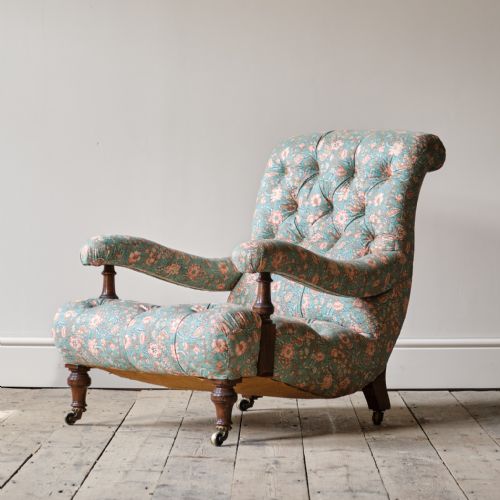
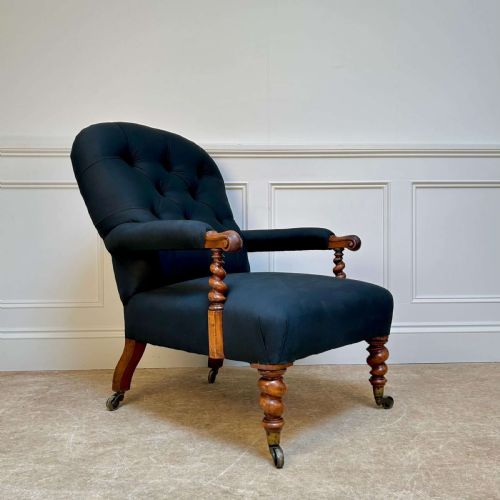
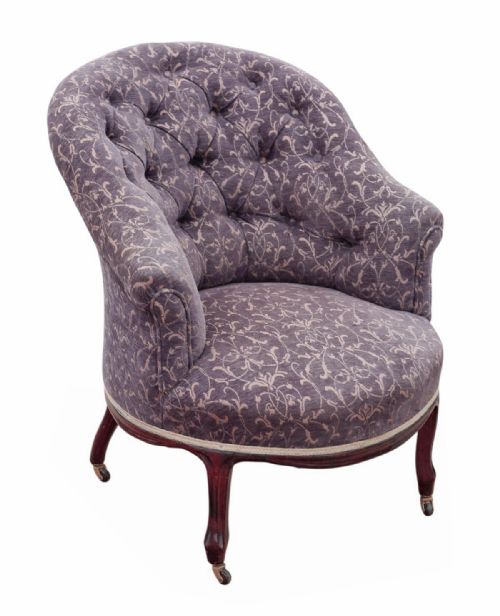
An edwardian buttoned armchair sits within a lineage of nineteenth and early twentieth-century seating, spanning low slipper chairs, compact tub backs and generous wing chairs. When searching for this phrase, buyers encounter examples upholstered in leather, velvet and fabric, reflecting both formal drawing room pieces and comfortable library seating.
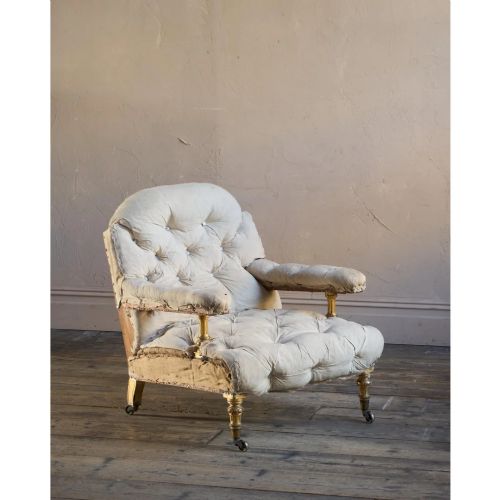
The material mix recorded here includes mahogany, walnut, rosewood and wood frames paired with brass castors and metal springs. Many pieces demonstrate deep tufting on the backrest, securing the stuffing through symmetrical folds that create characteristic padded recesses.
While Edwardian examples date from around the turn of the twentieth century, related Victorian and nineteenth-century pieces share similar low profiles, sprung seats and buttoned upholstery styles. These chairs served various domestic functions, from fireside lounging to reading at a mahogany desk.
How they were made
Framemakers built the structural skeletons from dense hardwoods like mahogany and walnut, employing traditional joinery to support heavy use. Cabinetmakers shaped cabriole legs, turned supports and occasional iron backs to suit the specific requirements of each room.
Upholsterers layered horsehair and wool stuffing over complex coil spring systems, securing the arrangement with durable twine before applying top covers of leather, velvet or woven fabric. Deep buttoning required pulling the upholstery cord tightly through the padding and anchoring it to the wooden frame to maintain tension and shape over decades.
Edwardian Buttoned Armchair Retail Price Guide 2026
Typical asking prices for edwardian buttoned armchair among the pieces listed under this phrase on Sellingantiques today, from the lower quarter to the upper quarter. They describe what is for sale here now, not the wider market.
Listings feature mahogany, walnut, rosewood, leather, velvet and fabric across nineteenth and twentieth-century periods.
What varies in quality
The integrity of the internal webbed frame and the resilience of the original coil springs dictate the structural longevity of each piece. Superior examples retain firm tension across the seat platform and exhibit precise, symmetrical buttoning that resists sagging under daily use.
Material selection marks the distinction between standard production and workshop pieces, particularly in the choice of supple full-grain leather, rich silk velvet or heavy hardwood frames. Maker attribution also influences standing, with stamped workshop numbers or recognizable forms from notable London makers commanding particular attention.
Howard and Sons·Holland and Sons·Hindley and Sons·Gillows
The Edwardian Buttoned Armchair Glossary
- Bergere
- An enclosed armchair with cane or upholstered sides and a loose seat cushion. This form gained popularity during the eighteenth century and saw robust revival periods throughout the nineteenth and early twentieth centuries.
- Buttoned
- An upholstery technique where twine pulls through padding to create recessed tufts in a geometric pattern. This secures the internal stuffing while adding decorative depth to the backrest.
- Slipper chair
- A low-seated upholstered chair designed originally for a bedroom or dressing room. The low profile made it easier to sit down and put on footwear.
- Tub chair
- An armchair featuring a rounded, enclosed backrest that curves continuously into the arms. These pieces often provide a snug, supportive seat for reading rooms and studies.
- Wing armchair
- A high-backed fireside chair featuring protective panels or wings attached to the arms. These extensions shielded the sitter from draughts in large country house rooms.
Edwardian Buttoned Armchair: Frequently Asked Questions
What defines an edwardian buttoned armchair?
These armchairs combine turn-of-the-century proportions with deep tufted upholstery, featuring coil-sprung seats and low wooden frames made of mahogany or walnut.
They offer comfortable domestic seating designed for drawing rooms, libraries and studies.
How do I care for leather upholstery?
Leather surfaces benefit from occasional cleaning with a damp cloth and regular application of suitable wax or balm to maintain suppleness.
Keeping the material away from direct heat sources prevents drying and cracking over time.
Were these chairs used in offices?
Heavier leather examples served as library and desk chairs, providing sturdy seating for reading and writing.
Their robust construction and sprung backs suited long hours of work in period interiors.
How can I tell an Edwardian chair from a Victorian one?
Edwardian seating often displays lighter proportions, simpler lines and brighter wood tones compared to earlier nineteenth-century styles.
Victorian pieces frequently utilise denser rosewood or mahogany frames with heavier ornamentation and darker finishes.