
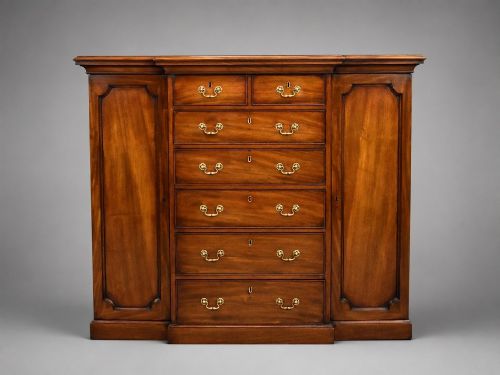
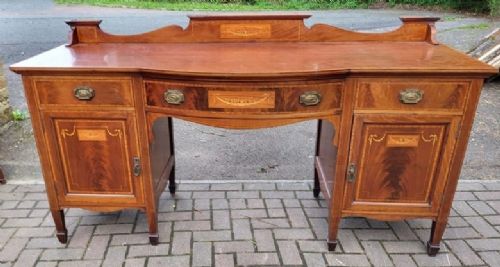
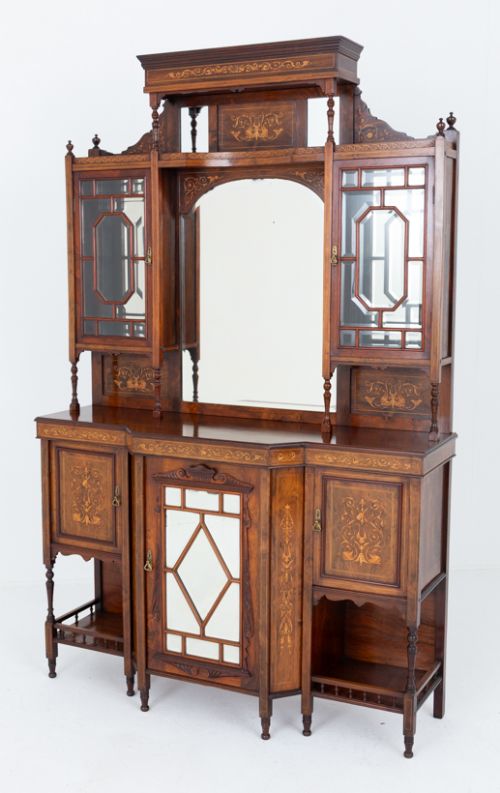


Edwardian Breakfront Sideboard
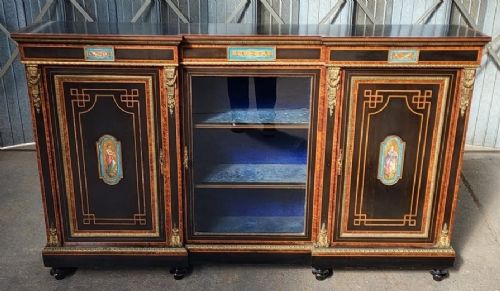
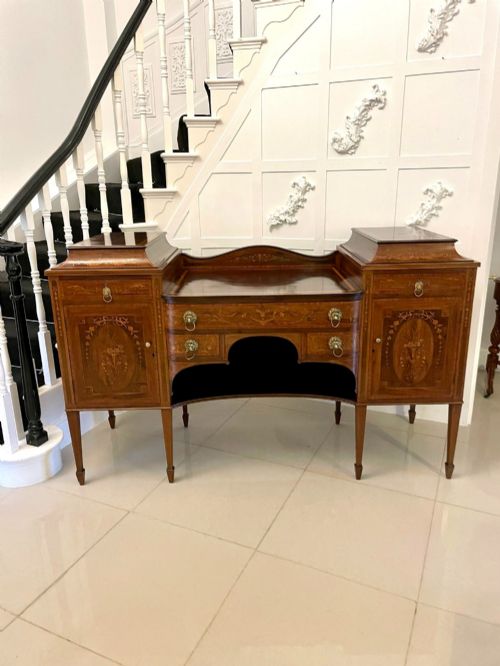
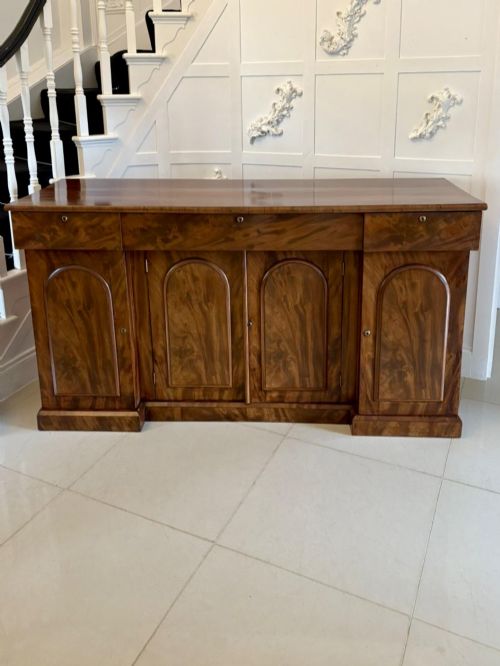
An Edwardian breakfront sideboard brings formal architectural presence and detailed marquetry inlay into a dining room or drawing room.
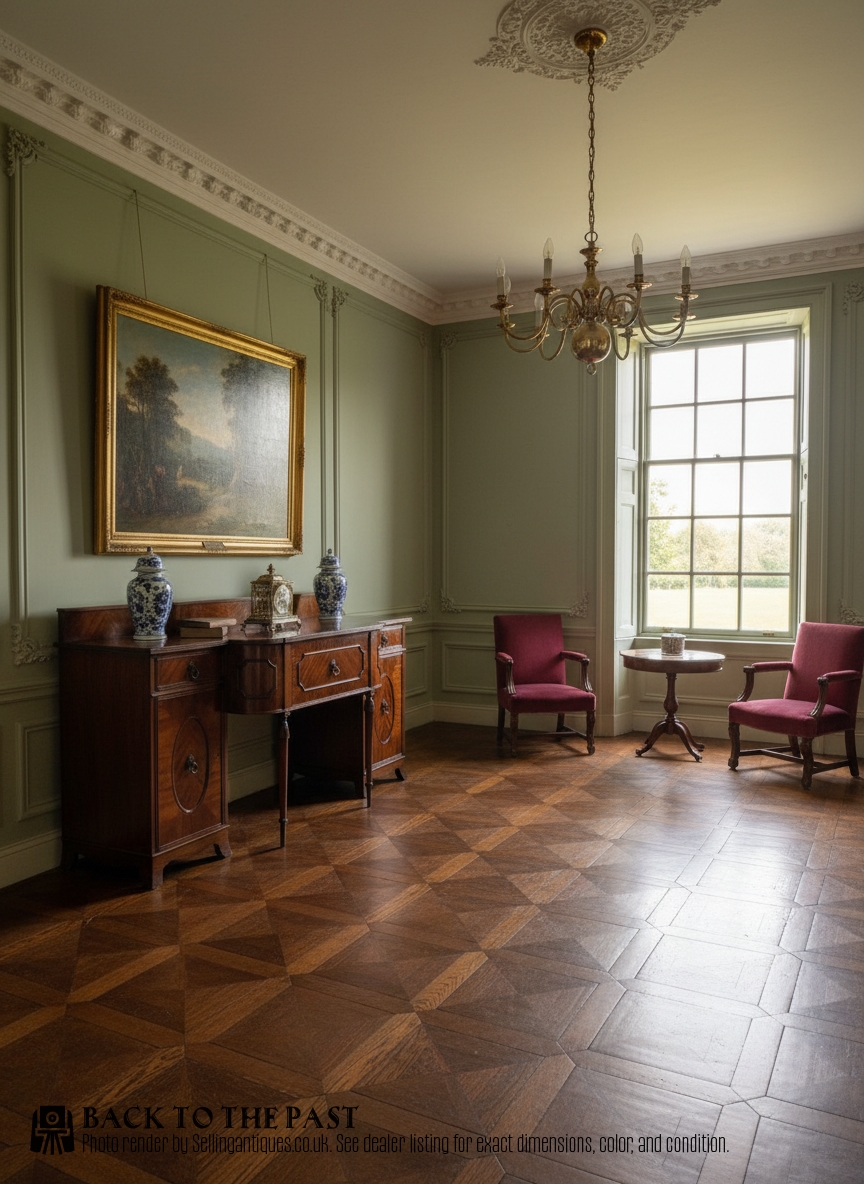
Edwardian Breakfront Sideboard
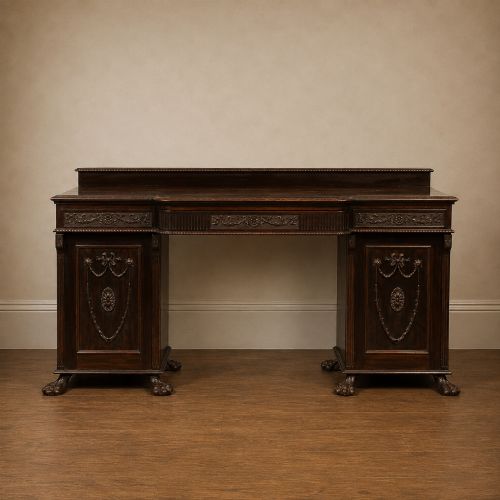
An Edwardian breakfront sideboard stands as a substantial dining room piece featuring a recessed central section flanked by projecting outer wings. This form follows historical revival styles including Sheraton Revival, Chippendale Revival, and Adam Revival.
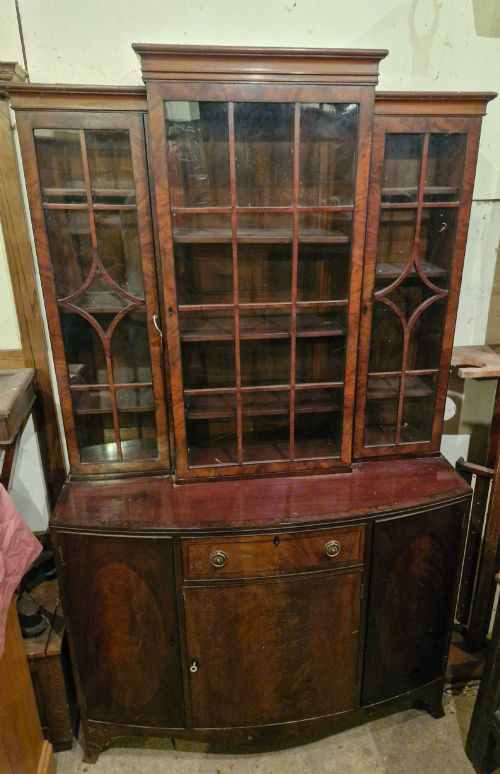
The pieces appearing on this page span Edwardian and Victorian periods through to the early twentieth century, alongside related sideboards, credenzas, and display cabinets. Mahogany, walnut, and burr walnut dominate the construction, often complemented by satinwood and rosewood.
Makers recorded in the archive and current listings include notable firms such as Hewetsons, Edwards & Roberts, Maple & Co., Gillows, Goodall of Manchester, and Liberty of London. These workshops applied traditional cabinet-making skills to produce formal furniture for domestic interiors.
How they were made
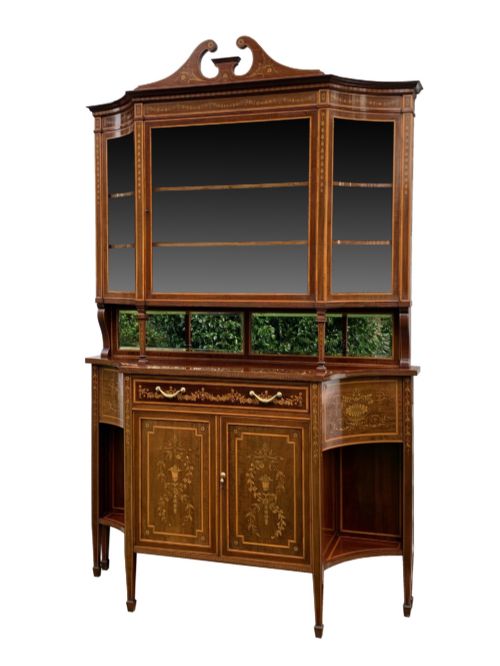
Cabinet-makers constructed these sideboards using solid timbers and decorative veneers such as flame mahogany, burr walnut, and satinwood. Marquetry inlay and painted details frequently adorn the surfaces, showing precise hand-cutting and fitting.
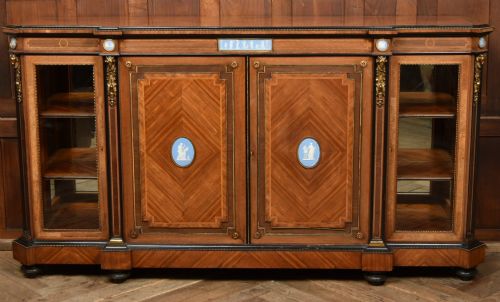
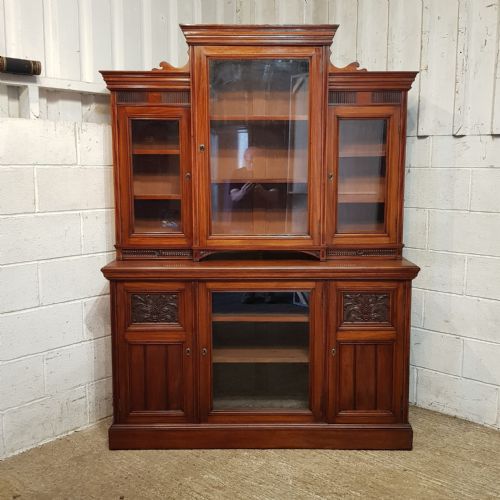
Mounts in ormolu and brass accent doors and galleries, while glass panels feature in breakfront bookcase and display cabinet variants. Carved elements like paw feet appear on larger revival pieces, executed directly into the mahogany or walnut framework.
Listings for this phrase include mahogany, walnut, burr walnut, satinwood, and rosewood, spanning Victorian, Edwardian, and Regency revival styles.
What varies in quality
The caliber of a breakfront sideboard rests upon the choice of timber figures, such as highly figured flame mahogany or dense burr walnut veneers. Master workshops invested greater labour in intricate marquetry patterns and finely chased ormolu mounts.
Structural harmony also marks the distinction between standard production and exceptional commissions by named cabinet-makers. The depth of hand-carving on details like paw feet and the integration of mirror backs or glazed doors demonstrate the makerial ambition of the piece.
Hewetsons London·Edwards & Roberts·Maple & Co·Gillows·Goodall of Manchester·Liberty of London
The Edwardian Breakfront Sideboard Glossary
- Breakfront
- A piece of furniture where the central section projects forward from the flanking wings. This architectural arrangement creates depth and shadow across the front elevation.
- Marquetry
- Decorative veneer work formed from pieces of wood, shell, or ivory fitted together to create pictorial or geometric designs. Craftsmen applied these patterns to door panels and friezes.
- Ormolu
- Gilded bronze mounts applied to furniture for decorative effect. Makers used these cast metal ornaments to highlight corners, key escutcheons, and borders.
- Credenza
- A low side cabinet, often featuring glazed doors or mirror backs, originating as a serving table. Victorian examples frequently incorporate extensive marquetry and ormolu mounts.
- Satinwood
- A pale, hard timber with a natural sheen, prized for inlay work and banding on late nineteenth and early twentieth-century revival furniture.
Edwardian Breakfront Sideboard: Frequently Asked Questions
What is a breakfront sideboard?
A breakfront sideboard is a large storage piece where the middle section steps forward from the sides. This design breaks up a flat wall and creates visual depth in a room.
Cabinet-makers used this configuration across various revival styles to display fine veneers and decorative marquetry.
How do I date an Edwardian sideboard?
Dating relies on stylistic clues, construction methods, and materials recorded across the period. Edwardian pieces often draw on Sheraton and Adam revivals using mahogany or satinwood.
Maker stamps or labels inside drawers provide more precise attribution to firms operating around nineteen hundred.
Where should I place a credenza?
A credenza suits dining rooms, drawing rooms, or wide hallways where its decorative front can be appreciated. Because many examples incorporate display cabinets or mirror backs, placement against a solid wall works best.
Ensure the room has sufficient space for doors to open fully without obstruction.
What is Sheraton Revival furniture?
Sheraton Revival furniture reinterprets the late eighteenth-century designs associated with Thomas Sheraton. These pieces emerged strongly during the Edwardian era using satinwood, painted panels, and delicate inlay.
Makers replicated the light proportions and classical motifs of the earlier Georgian period.
How do I care for walnut veneer?
Walnut veneer requires stable humidity and protection from direct sunlight to prevent fading and lifting. Regular dusting with a soft cloth maintains the polished surface.
Avoid placing damp items directly onto the wood to protect the historical finish.