




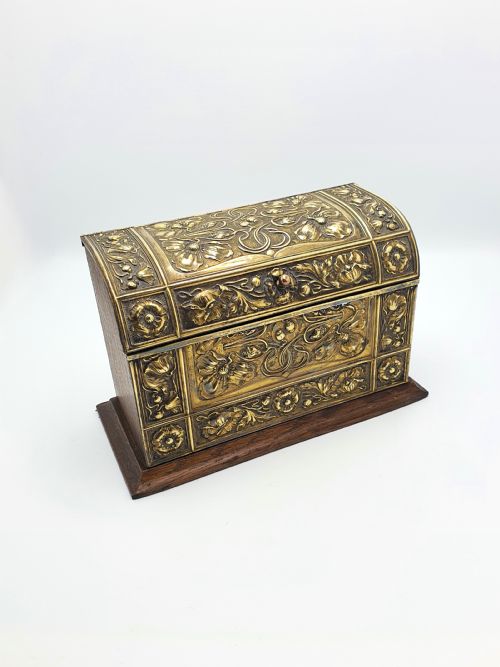
Edwardian Brass Stationery Box
An edwardian brass stationery box organises correspondence with heavy metal mounts and polished timber panels designed for the desk.
Edwardian Brass Stationery Box
When you search for an edwardian brass stationery box, you find desktop containers built to hold letters, envelopes and writing equipment. The selections span various eras and styles, reflecting both Edwardian and Victorian tastes.
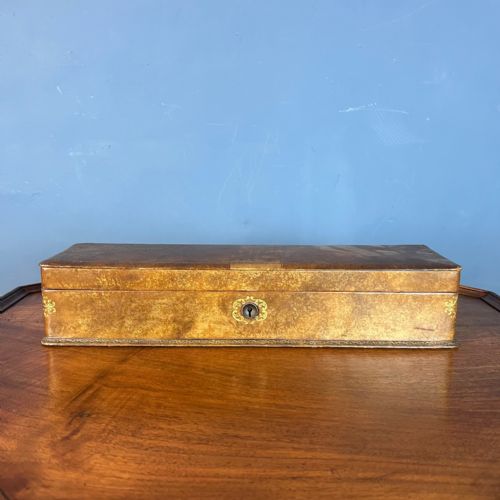
The versions you meet most frequently on this page combine timber bodies with brass mountings, ranging from fall-front desks tidies to document cabinets. Alongside these, related desk accessories such as writing slopes and letter racks appear regularly.
Materials and construction
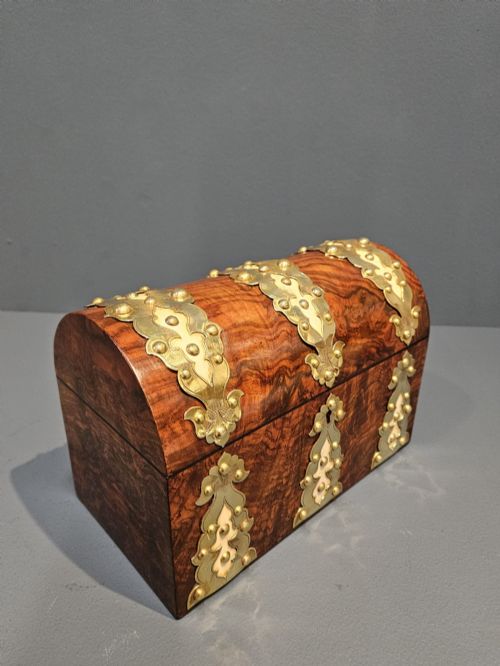
Makers built these pieces using solid or veneered hardwoods, notably oak and walnut, fitted with heavy cast or stamped brass hardware. Corner brackets, strapwork and hinges reinforced the joints while providing decorative contrast against the dark wood.
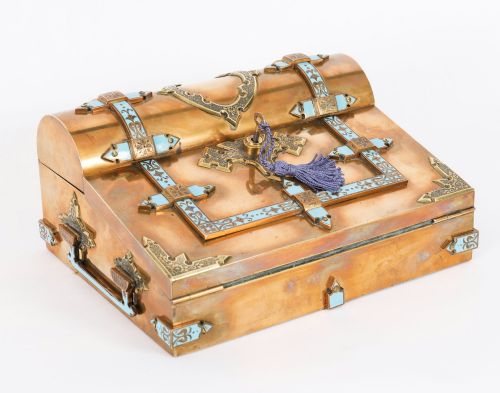
Interiors often featured partitioned ledges and velvet or leather-lined compartments designed to sort correspondence efficiently. Glazed panels, enamel plaques and ormolu mounts occasionally appeared on more elaborate examples.
Edwardian Brass Stationery Box Retail Price Guide 2026
Typical asking prices for edwardian brass stationery box among the pieces listed under this phrase on Sellingantiques today, from the lower quarter to the upper quarter. They describe what is for sale here now, not the wider market.
Some country house letter boxes include miniature brass catches built to save important mail from inquisitive household pets.
Judging quality and build
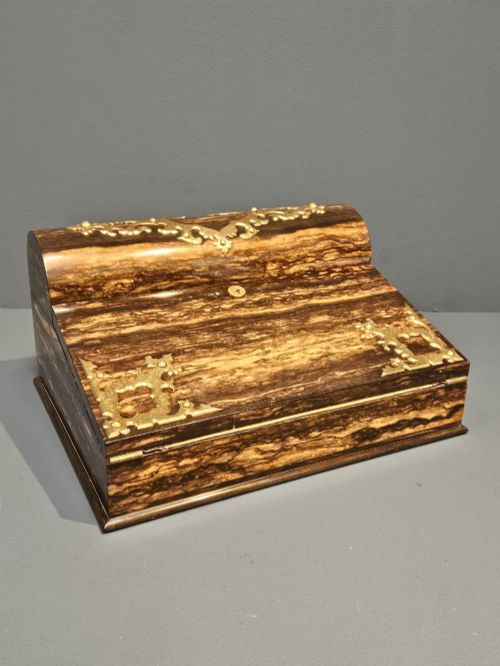
The distinction between standard utility items and finer pieces lies in the weight of the brass mounts and the selection of timber figure. Figured walnut, golden oak and coromandel timbers indicate higher workshop standards.
Joinery detail also separates ordinary boxes from superior examples, seen in tight dovetail corners, well-fitted internal partitions and original locking mechanisms with functional keys.
The Edwardian Brass Stationery Box Glossary
- Stationery box
- A desk accessory designed to hold writing paper and envelopes upright in tiered compartments. These boxes often feature sloping lids or fall-front doors.
- Fall-front
- A hinged front panel that drops forward when opened to grant access to internal letter slots. This mechanism allows quick retrieval of documents without lifting a top lid.
- Writing slope
- A portable box with an angled writing surface that folds open to reveal storage for inkwells and pens. Many examples incorporate brass banding and leather inserts.
- Ormolu
- Gilding technique applying finely ground gold-bronze powder to cast brass mounts. It adds a bright metallic finish to decorative desk items.
Edwardian Brass Stationery Box: Frequently Asked Questions
What is an edwardian brass stationery box?
These pieces are desktop storage containers built to hold writing paper, envelopes and correspondence in an organised manner. They combine wooden construction with brass mounts, hinges and handles.
They serve as decorative and practical items for a desk or study, keeping writing materials tidy and protected from dust.
How were stationery boxes used?
In period households, these boxes sat on writing tables or desks to hold incoming and outgoing mail, stamps and stationery. The internal partitions kept different sizes of paper separated.
Opening the lid or dropping the front panel provided immediate access to daily correspondence before the era of electronic mail.
Where should I place a stationery box?
These boxes suit placement on top of a bureau, library table or desk where they function as practical letter sorters. They also sit effectively on sideboards or console tables as decorative objects.
Keep them away from direct heat sources and strong sunlight to protect the wood polish and brass finishes.
How do I tell Edwardian from Victorian boxes?
Edwardian pieces often display lighter oak timbers and cleaner lines influenced by Arts and Crafts or Art Nouveau aesthetics. Victorian boxes tend to use darker walnut, coromandel or mahogany with heavier brass banding.
Construction details and hardware styles help differentiate the periods, though many country house designs bridge the transition between eras.