




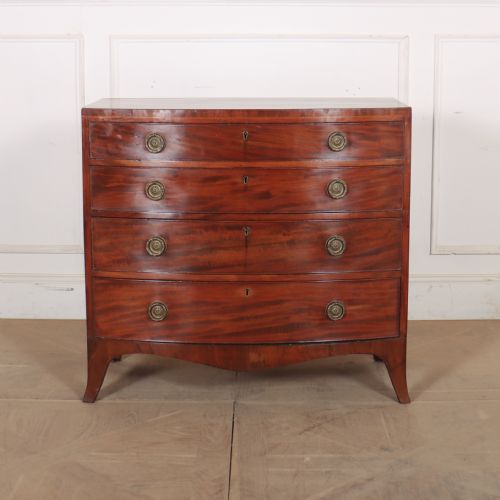


Edwardian Bowfront Drawers
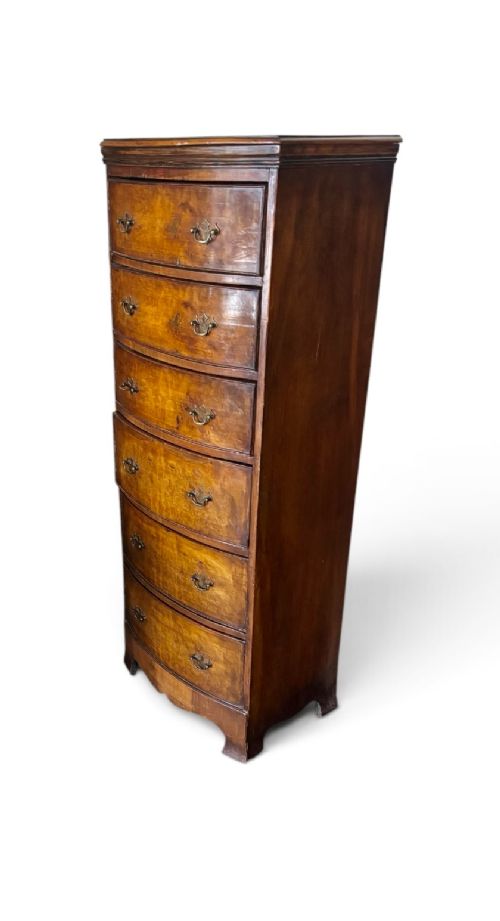
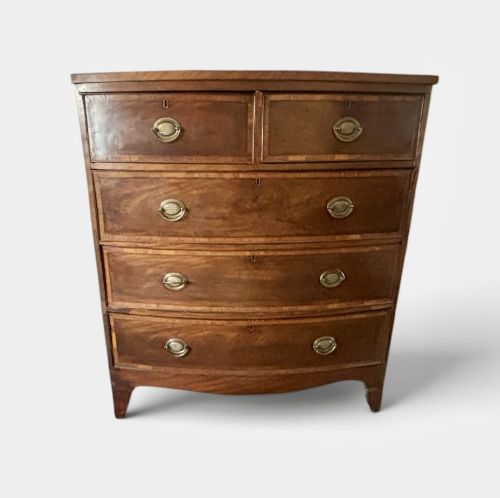
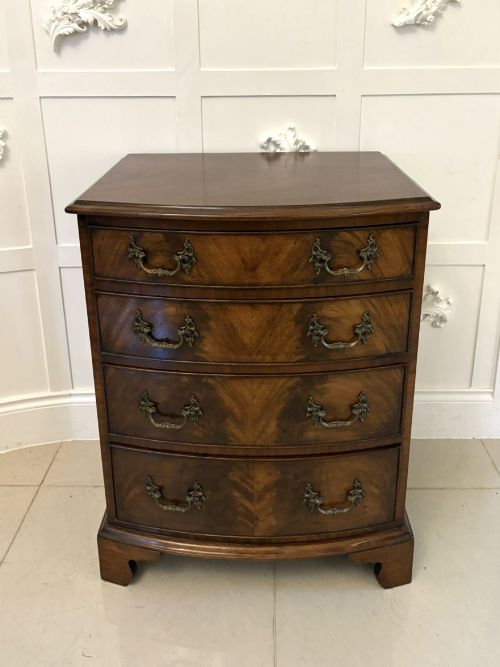
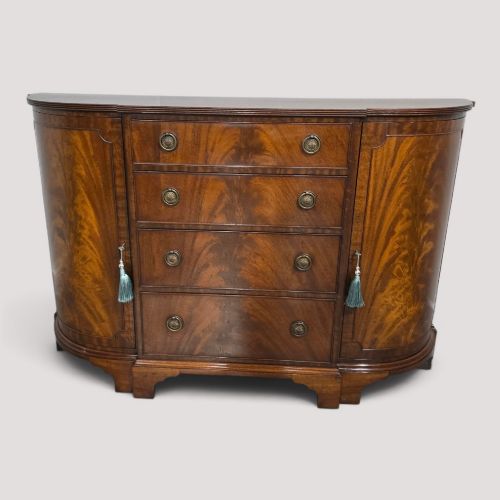
Edwardian bowfront drawers bring curved mahogany elegance to a bedroom, offering generous storage with a softer profile than standard square chests.
What edwardian bowfront drawers are
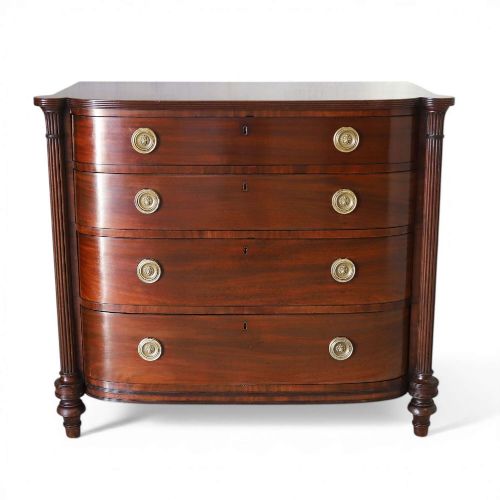
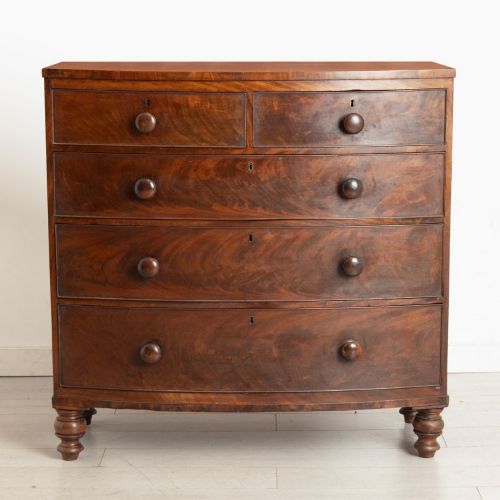
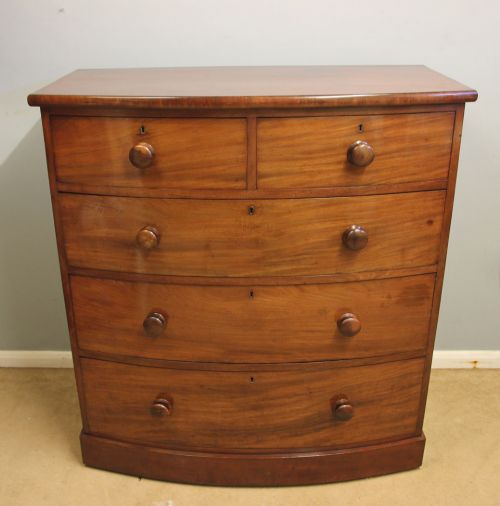
Edwardian bowfront drawers take the classic curving front profile and pair it with the rich timber tones favoured in the early twentieth century. These pieces follow earlier Georgian and Victorian traditions, yet they often appear in neat proportions suitable for modern rooms.
The selection on this page centres primarily on mahogany construction, while archival pieces show similar Edwardian examples alongside Victorian, 19th-century, 1930, 1920, 1910, and 1800 items. Styles span from plain Georgian influences to Queen Anne style and George III interpretations.
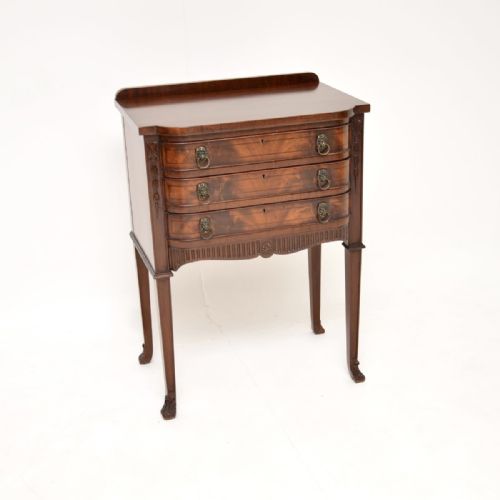
Buyers seeking edwardian bowfront drawers will encounter chest of drawers formats in both standard and smaller sizes. Walnut, burr walnut, and wood veneer appear alongside the dominant mahogany examples, often complemented by original brass hardware.
How they were made
Cabinet makers built these curved chests using solid timber frames combined with fine wood veneers, notably mahogany and burr walnut. The curved front required careful shaping of the drawer rails and drawer fronts to ensure a smooth, uniform sweep.
Joinery traditions of the period relied on dovetailed drawer construction to withstand daily use. Brass fittings, including handles and keyplates, were secured to the drawer fronts to complete the furniture.
Retail Price Guide 2026
Typical UK retail prices for edwardian bowfront drawers, calculated from the Sellingantiques database of over a million retail prices indexed since 2003. This retail price guide relies exclusively on Sellingantiques data; no external sources or auction records are used, so the figures do not describe the wider market.
Some smaller Edwardian chests were specifically ordered for compact London dressing rooms.
What varies in quality
Quality in these chests rests upon the selection of timber and the precision of the curved drawer alignment. Superior examples display well-figured mahogany or burr walnut veneers that wrap fluidly across the front without disruption.
The integrity of the structural joinery and the retention of original brass hardware distinguish finer pieces from heavily restored alternatives. Proportion also plays a role, with neat, smaller-scale versions commanding particular attention for their versatility.
The Edwardian Bowfront Drawers Glossary
- Bowfront
- A convex curving front profile designed to soften the appearance of a standard rectangular chest of drawers. This shape gained popularity during the Georgian period and continued into later eras.
- Veneer
- A thin layer of finely figured wood applied to a secondary timber base to create a decorative surface. Burr walnut and mahogany veneers are typical of this application.
- Dovetail
- An interlocking joint used in drawer construction, prized for its tensile strength and resistance to being pulled apart. Hand-cut dovetails indicate traditional cabinet making methods.
- Escutcheon
- A protective brass plate surrounding a keyhole, often decorative in nature. These fixtures help date the piece depending on their design and original placement.
Frequently Asked Questions
Where should I put edwardian bowfront drawers?
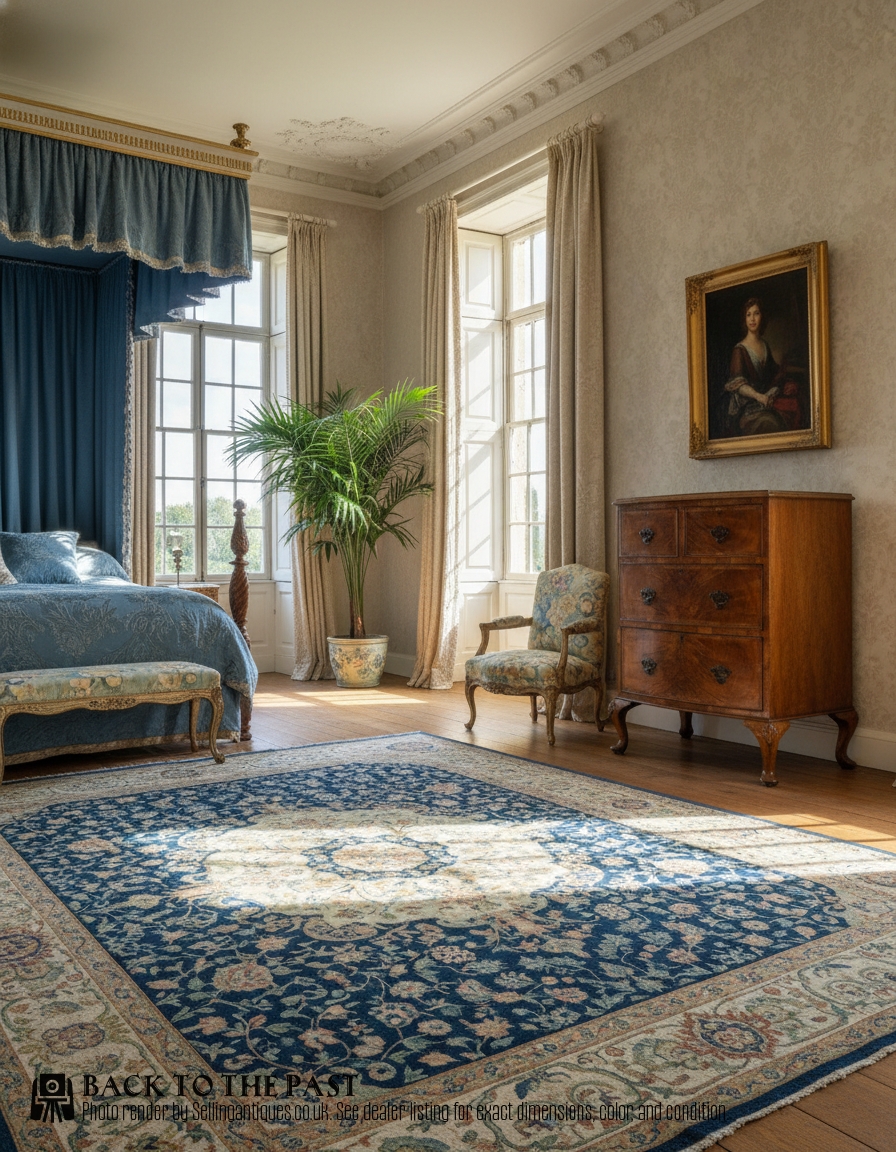
These chests work exceptionally well in bedrooms or hallways where a curved front prevents sharp corners in a walkway. Their moderate footprint allows them to sit comfortably against walls without dominating the room.
Ensure the placement accounts for the clearance needed to pull out the curved drawers fully without obstruction from nearby furniture.
Are these drawers suitable for daily use?
Traditional construction methods make these pieces sturdy enough for everyday storage of folded clothing or linens. The interior depths generally provide ample space for modern garments.
Handle the drawers with care to preserve the original runners and internal framing over years of regular opening and closing.
How do I maintain the wood finish?
Regular dusting with a soft, dry cloth protects the polished mahogany or walnut surfaces from abrasive particles. Occasional application of quality wax feeds the timber and maintains its natural lustre.
Keep the chest away from direct heat sources and strong sunlight to prevent the wood veneer from drying out or fading over time.
What defines the Edwardian style?
Edwardian furniture often borrows heavily from earlier Georgian and Sheraton revival designs, favouring lighter proportions and refined decorative details. Mahogany remains a dominant material choice across this period.
Cabinet makers balanced classical symmetry with practical domestic utility, producing pieces that feel both elegant and accessible.