



Edwardian Book Tower
An Edwardian book tower organises volumes within arm's reach while turning smoothly on a compact footprint.
Edwardian Book Tower
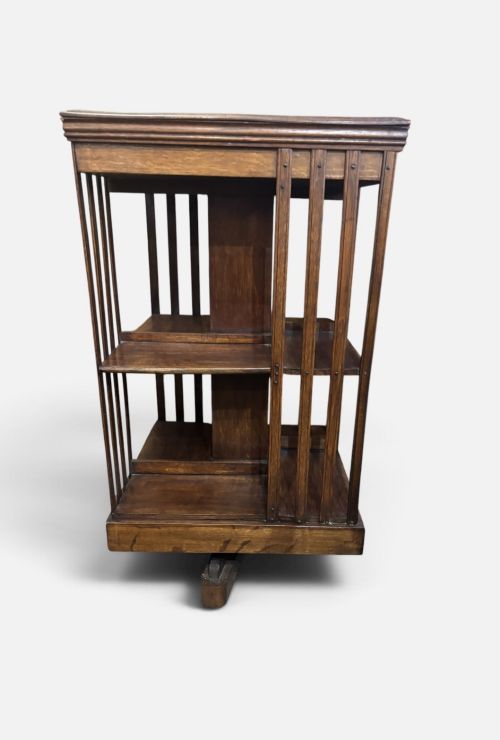
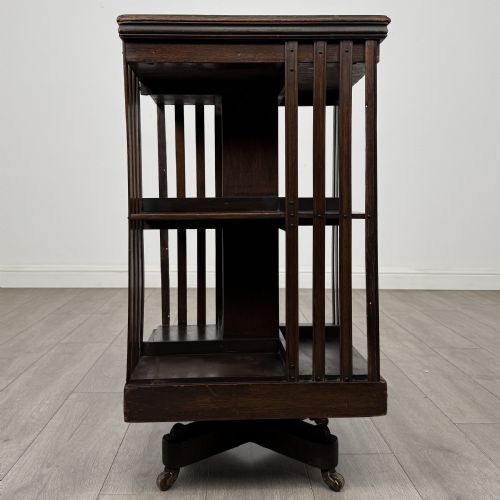
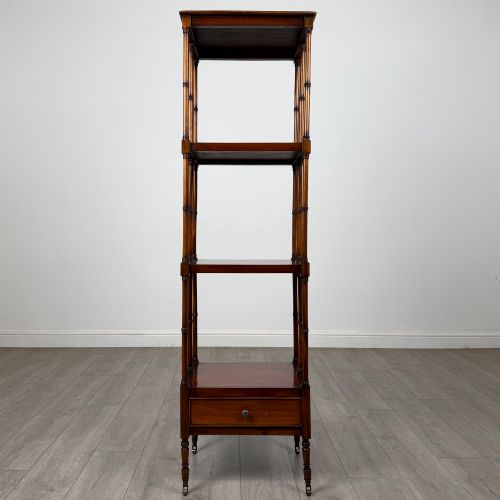
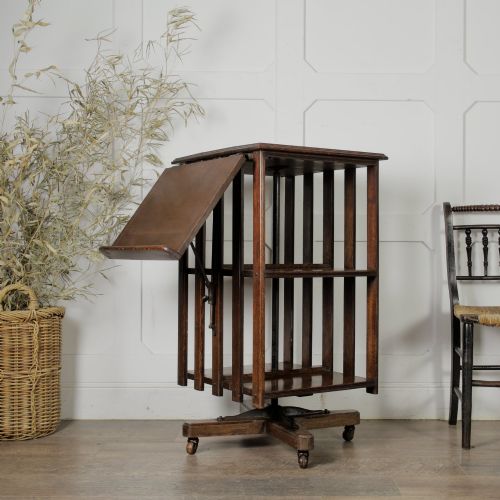
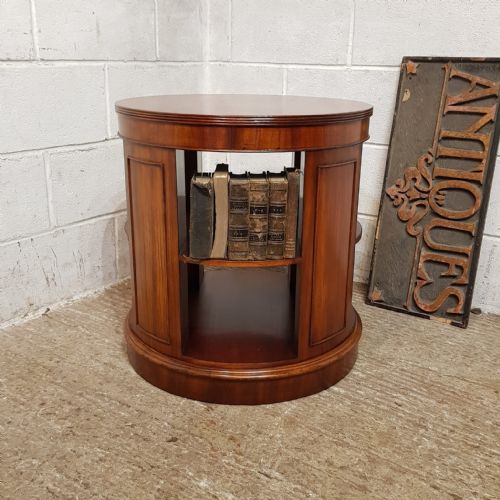
An Edwardian book tower takes the form of a revolving bookcase, designed to hold volumes vertically across multiple tiers while occupying minimal floor space in a study or library. The pieces found here span the Edwardian period alongside examples from the early decades of the twentieth century.
Materials and construction
The primary timbers recorded in the listings are oak and mahogany, supplemented by walnut, satinwood, and fruitwood inlay. Cabinetmakers utilised these sturdy woods to bear the considerable weight of stacked volumes.
Internal mechanisms incorporate brass and cast iron to facilitate the smooth rotation of the revolving tiers. Selected examples display Sheraton-style inlay work and Art Nouveau or Arts & Crafts aesthetic influences.
Edwardian Book Tower Retail Price Guide 2026
Typical asking prices for edwardian book tower among the pieces listed under this phrase on Sellingantiques today, from the lower quarter to the upper quarter. They describe what is for sale here now, not the wider market.
Early twentieth-century readers relied on these revolving towers so heavily that many retain faint ink stains from fountain pens on their top surfaces.
Judging quality
Quality rests upon the selection of timber and the precision of the revolving mechanism beneath the tiers. Solid oak and figured mahogany examples demonstrate a higher grade of manufacture than plain utility pieces.
Refined surface carving, fruitwood inlay, and paired constructions distinguish the finest workshop output from standard production items of the era.
The Edwardian Book Tower Glossary
- Revolving bookcase
- A tiered shelving unit mounted on a concealed rotating base that allows access to books from every angle. This form is central to the edwardian book tower category.
- Sheraton-style
- A neoclassical furniture design idiom characterised by straight lines, symmetrical proportions, and delicate contrasting veneer inlays. Pieces bearing this influence often feature satinwood and mahogany.
- Arts & Crafts
- A design movement prioritising visible construction, honest materials, and functional simplicity over excessive surface ornament. It counters mass-produced factory output from the same era.
- Art Nouveau
- A decorative style defined by organic, flowing lines and natural plant motifs. This aesthetic appears on selected revolving bookcases from the period.
Edwardian Book Tower: Frequently Asked Questions
How do revolving bookcases work?
A concealed metal or wooden pivot mechanism sits beneath the lowest tier, allowing the entire superstructure to turn smoothly on a fixed base. This lets a reader access books on all four sides without moving the piece.
Most mechanisms rely on iron or brass ball bearings housed in a circular track to distribute the weight evenly.
Where should I put a book tower?
These compact pieces suit corners, beside armchairs, or next to a partner desk where immediate access to reference volumes is required. Their small footprint makes them practical for rooms with limited wall space.
Because they rotate, they require clearance on all sides rather than sitting flush against a wall.
Are all these pieces from the Edwardian period?
While the core of the selection dates from the Edwardian era, the listings also include pieces from the nineteen-twenties and thirties that follow the same traditional forms.
Cabinetmakers continued producing revolving bookcases using oak and mahogany long after the reign of Edward VII concluded.
What is the difference between open and revolving bookcases?
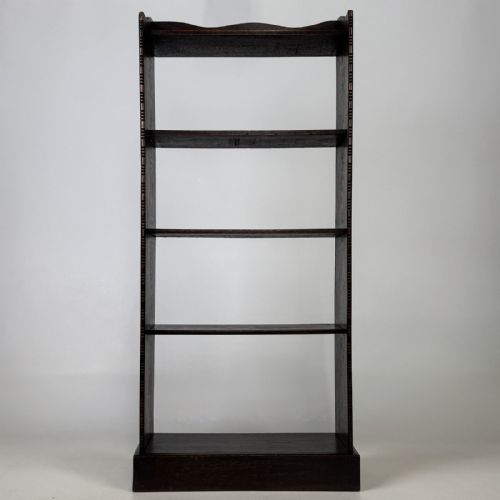
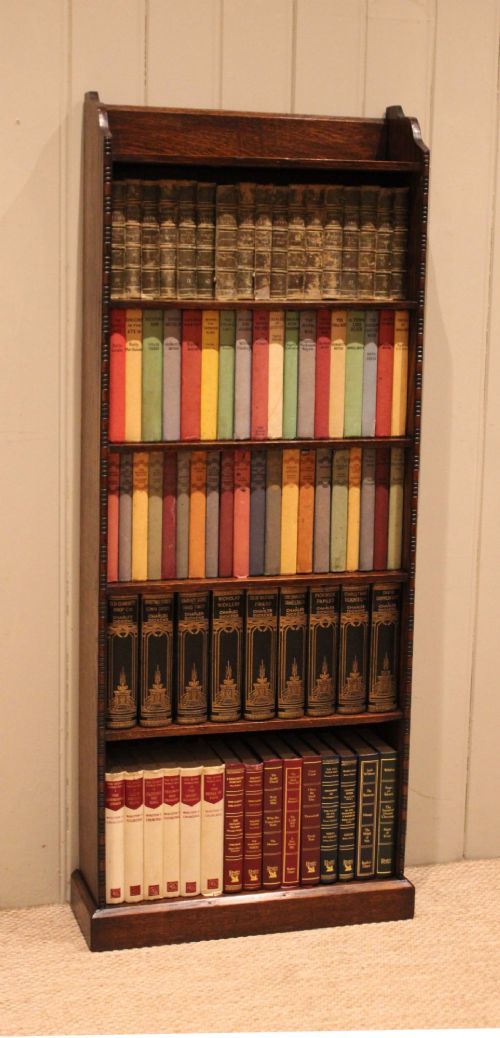
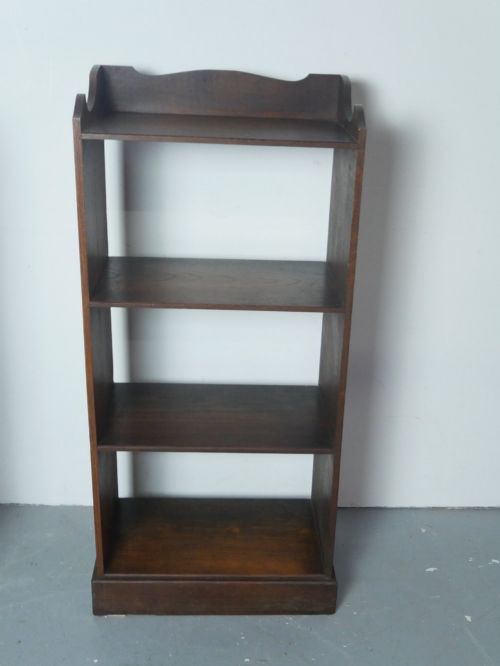
Open bookcases stand against a wall with stationary shelves facing one direction. Revolving book towers are freestanding units designed to rotate, offering multiple tiers of storage in a central room layout.
Revolving versions generally hold smaller octavo and duodecimo volumes compared to large standing bookcases.