


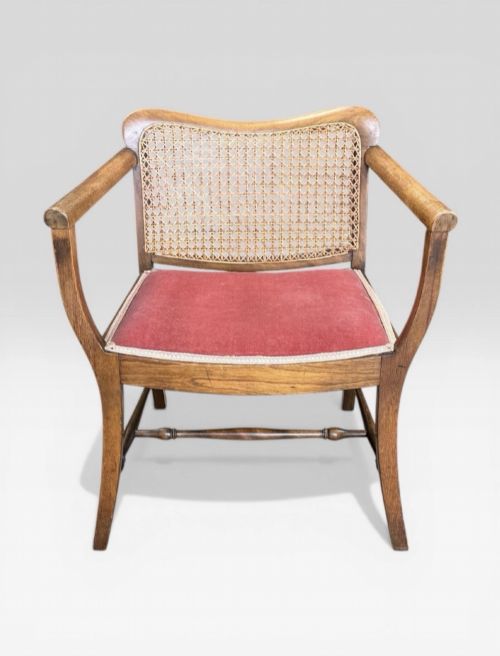


Edwardian Bergere Chair
An Edwardian bergere chair combines woven cane panels with a substantial hardwood frame to create a classic lounge seat.
Edwardian Bergere Chair
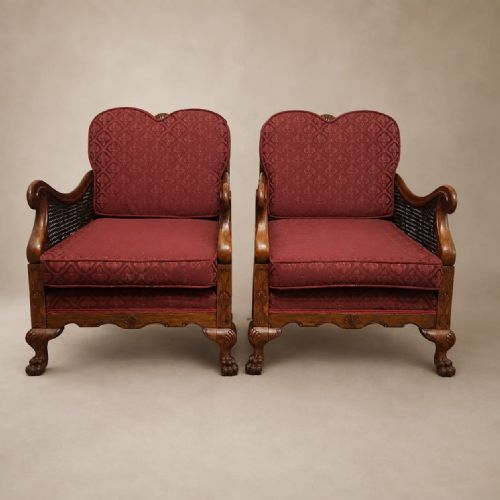
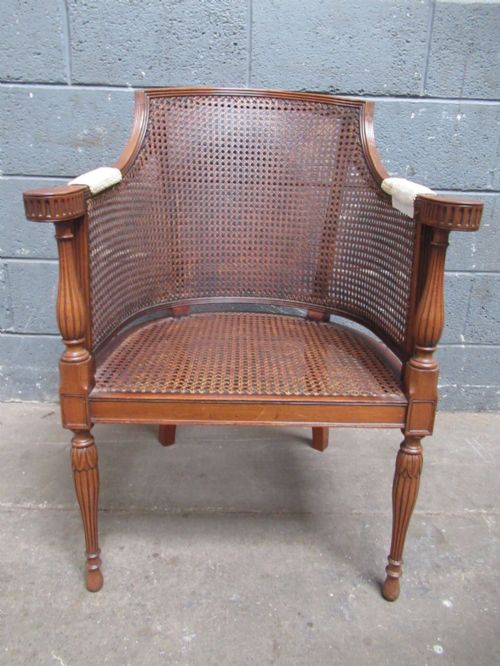
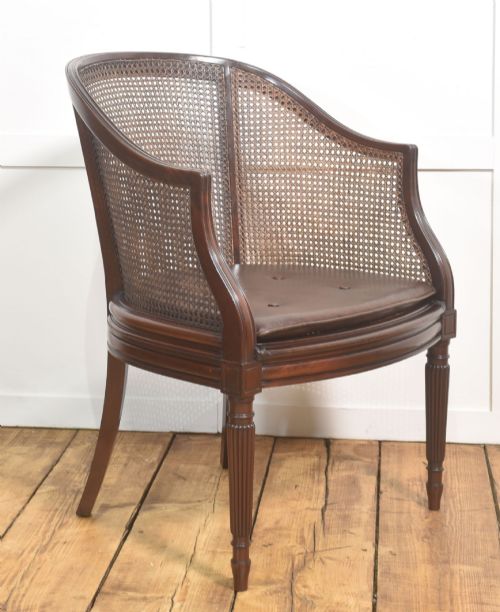
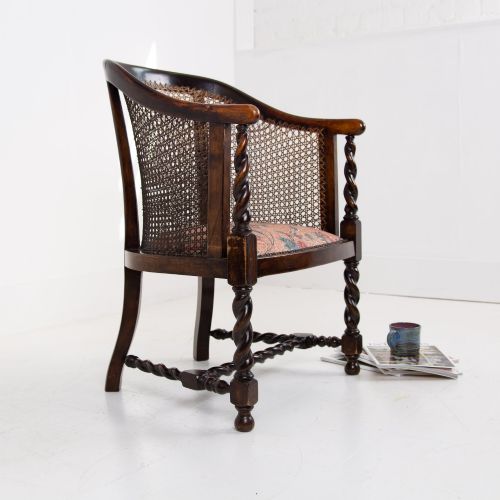
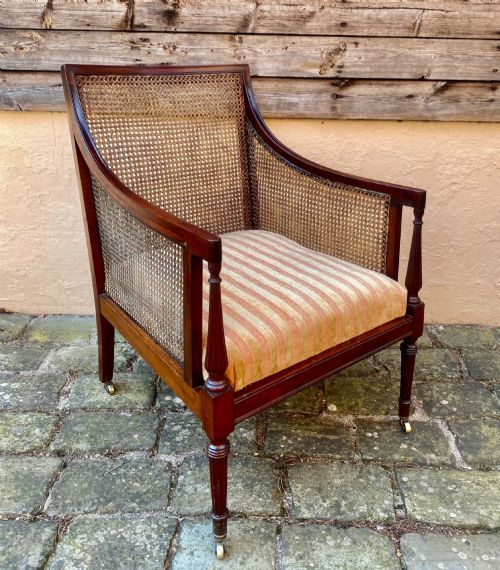
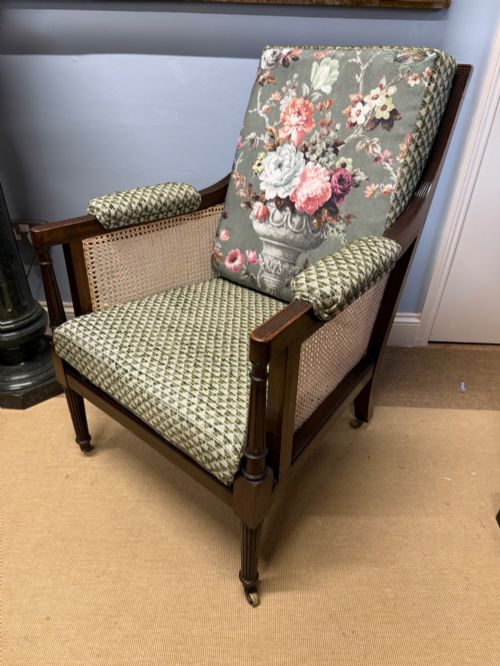
An Edwardian bergere chair is a deep, comfortable lounge seat characterised by cane work woven into the back and sides of the frame. These chairs appear frequently in mahogany and walnut, often accompanied by loose seat cushions upholstered in leather or velvet.
The selections span standard armchairs, library chairs, and fireside seating alongside occasional matching suites. While the Edwardian period dominates the selection, related examples stretch from the nineteenth century into the 1920s with various revival styles.
Buyers look for these pieces to anchor a traditional room with textured cane work and warm timber tones. The forms range from compact tub shapes to large library chairs designed for extended sitting.
How they were made
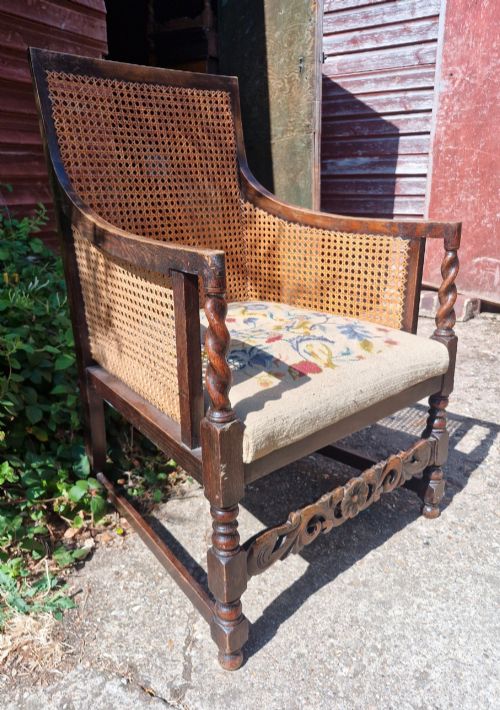
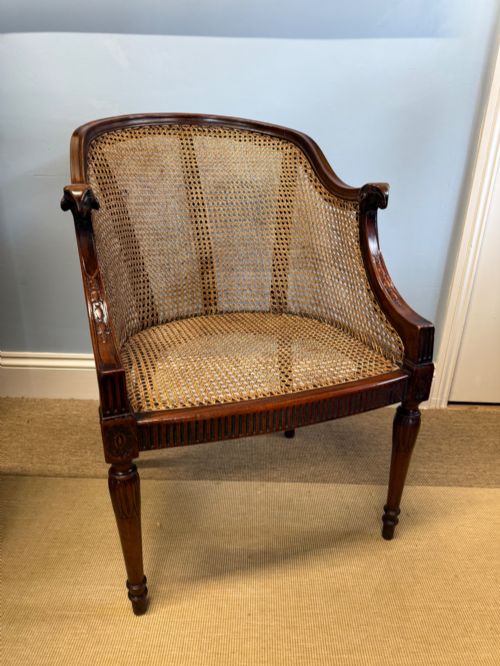
Makers built the structural frames from solid hardwoods like mahogany, walnut, and oak, occasionally incorporating satinwood banding or painted decoration. Selected pieces feature intricate details such as carved arm terminals, barley twist supports, or inlay.
The defining characteristic is the caned body, utilising single or split cane woven tightly through holes drilled in the wooden frame. Upholstered elements rely on traditional materials including leather, velvet, and standard fabric cushions placed over the cane base.
Compact children's high chairs bring miniature cane work and miniature proportions to the tradition of heavy library seating.
What varies in quality
Quality depends heavily on the crispness of the timber framing and the precision of the cane weaving. Finer examples display carefully figured mahogany or walnut, tight and uniform cane work, and balanced proportions across the arms and back.
Substantial library chairs and matched pairs generally represent higher levels of craftsmanship than standard single salon chairs. The integration of decorative elements like fine inlay or carved woodwork further distinguishes top-tier examples from simpler utilitarian seating.
James Shoolbred
The Edwardian Bergere Chair Glossary
- Bergere
- An enclosed upholstered armchair with wooden framing and woven cane panels forming the back and sides. This French-inspired form provides a lighter visual weight than fully upholstered armchairs.
- Cane
- Strips of rattan or peeled bamboo woven into intricate mesh patterns for chair backs and sides. Split cane offers a smooth, flat surface often found on later pieces.
- Tub chair
- An armchair with a continuous curved back and arms forming a rounded enclosure. This shape hugs the sitter and frequently incorporates cane panels.
- Satinwood
- A pale, hard timber with a natural golden sheen often used for banding and decorative highlights on mahogany furniture. It provides a striking contrast on Edwardian frames.
- Library chair
- A heavy, durable armchair designed for reading rooms, typically featuring wide armrests and deep proportions. These pieces prioritise robust construction and comfort.
Edwardian Bergere Chair: Frequently Asked Questions
What is an edwardian bergere chair?
An Edwardian bergere chair is a traditional armchair featuring a wooden frame with woven cane panels on the back and sides. They typically include a loose seat cushion covered in fabric, leather, or velvet.
These chairs were designed for comfortable lounging in drawing rooms, libraries, and conservatories during the early twentieth century. Their distinctive woven construction provides a lighter alternative to heavily padded upholstery.
How do I identify an edwardian bergere chair?
Identification relies on observing the combination of Edwardian styling, hardwood frames in mahogany or walnut, and characteristic cane panels. Many feature subtle inlay work or painted decorations typical of the period.
While similar chairs were produced in the nineteenth century and the 1920s, Edwardian examples often show specific proportions and cabinetmaking techniques associated with that era.
Were these chairs used in libraries?
Libraries and reading rooms frequently utilised larger bergere chairs because their deep seats and supportive frames suited extended reading. These library versions often incorporated wider wooden arms and robust mahogany or oak construction.
Pairs of these chairs frequently appeared alongside matching sofas to create cohesive seating arrangements in formal rooms.
Can I replace the cushion on a bergere chair?
Replacing the seat cushion is a common practice since original loose cushions often wore out or were updated to match changing interior decors. Many surviving pieces retain updated velvet or leather pads resting over the original cane bases.
When replacing cushions, buyers typically choose materials that complement the existing timber frame and the traditional aesthetic of the cane work.