

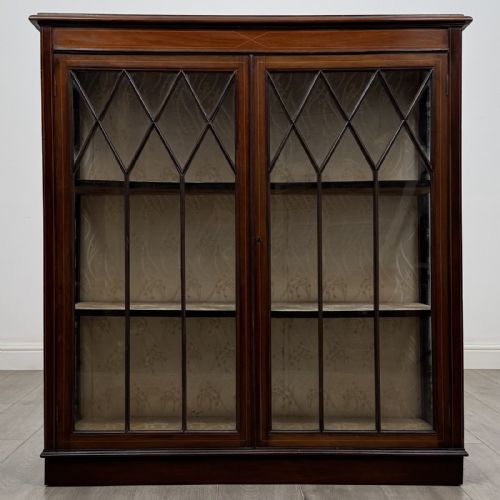
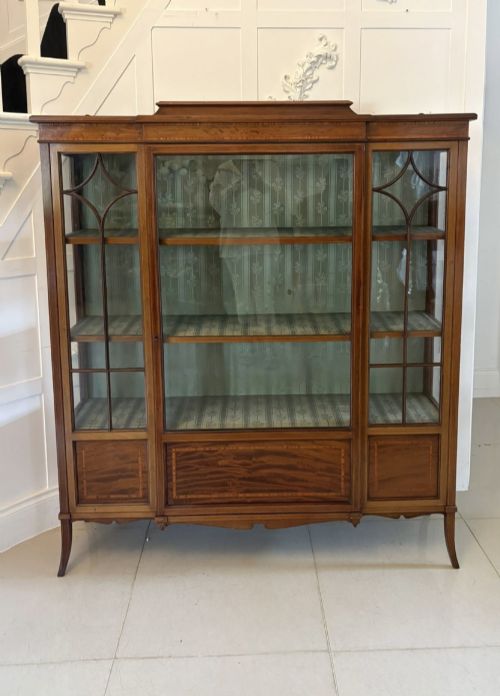
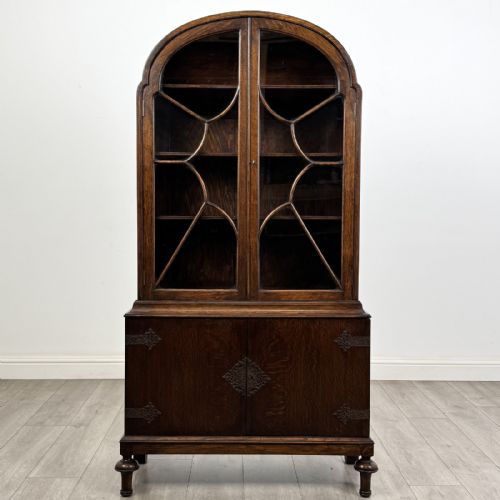
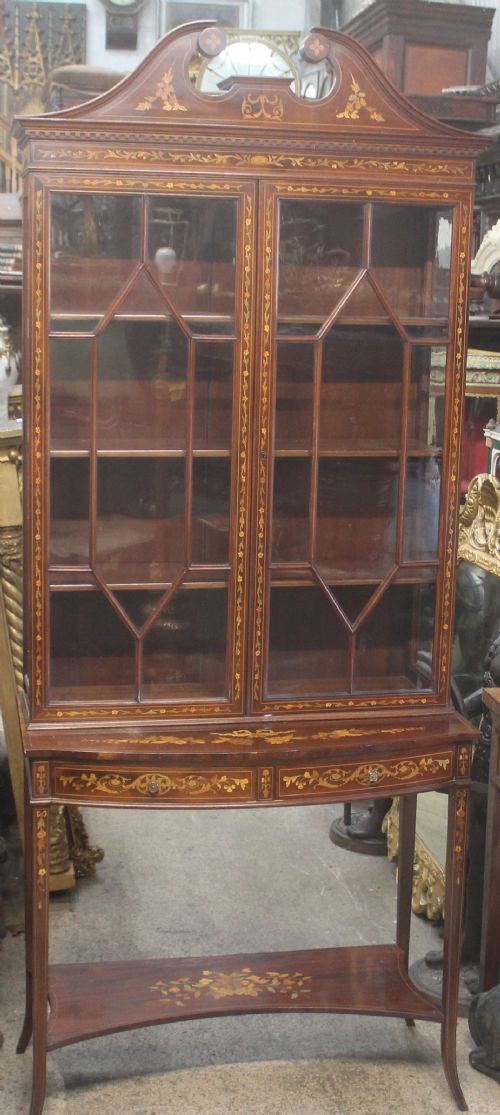
Edwardian Astragal Vitrine
An Edwardian astragal vitrine brings light into a room through delicate wooden glazing bars framing cherished porcelain and small treasures.
Edwardian Astragal Vitrine
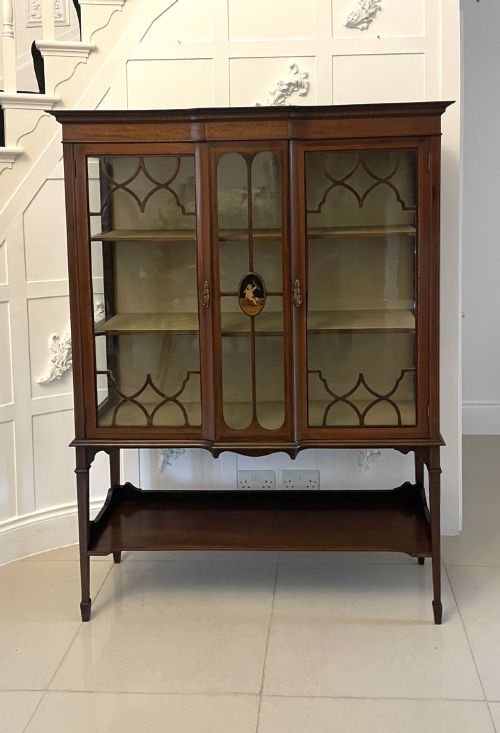
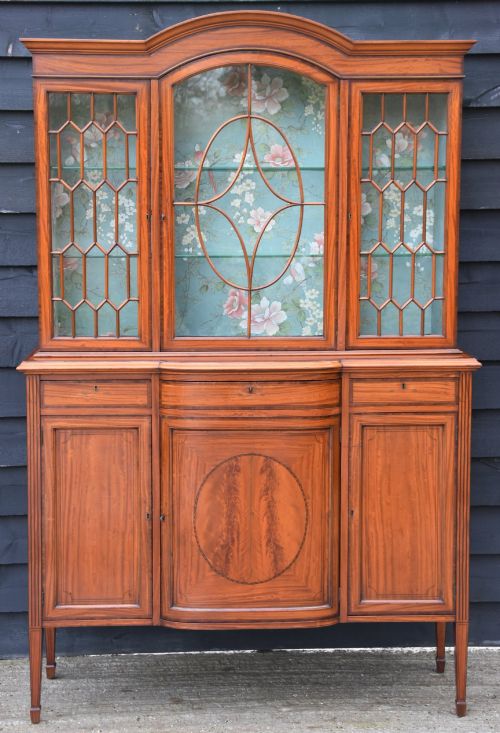
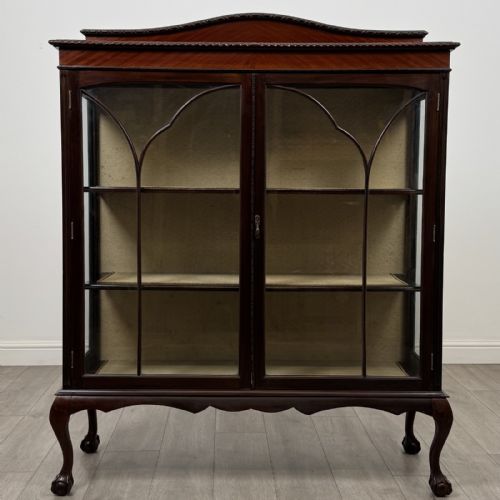
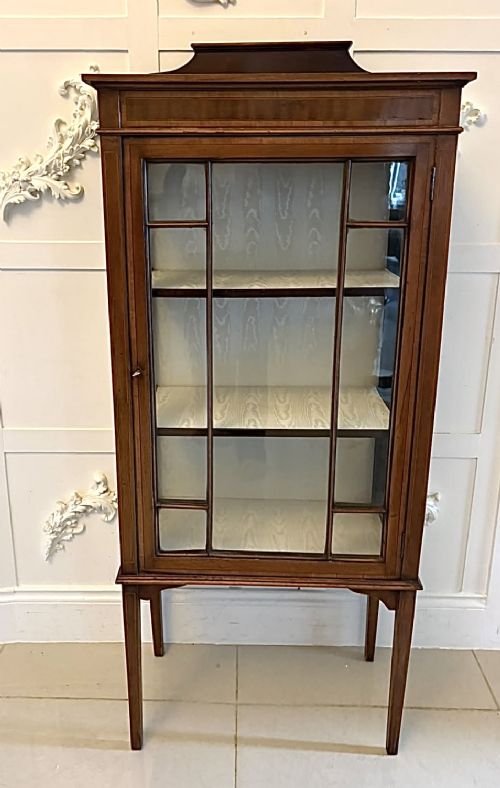
When you search for an edwardian astragal vitrine, you are looking at display cabinets and china cabinets designed to showcase precious items behind glass panels. The pieces on this page originate predominantly from the Edwardian period and the early twentieth century, alongside select examples from the nineteenth century and revival eras.
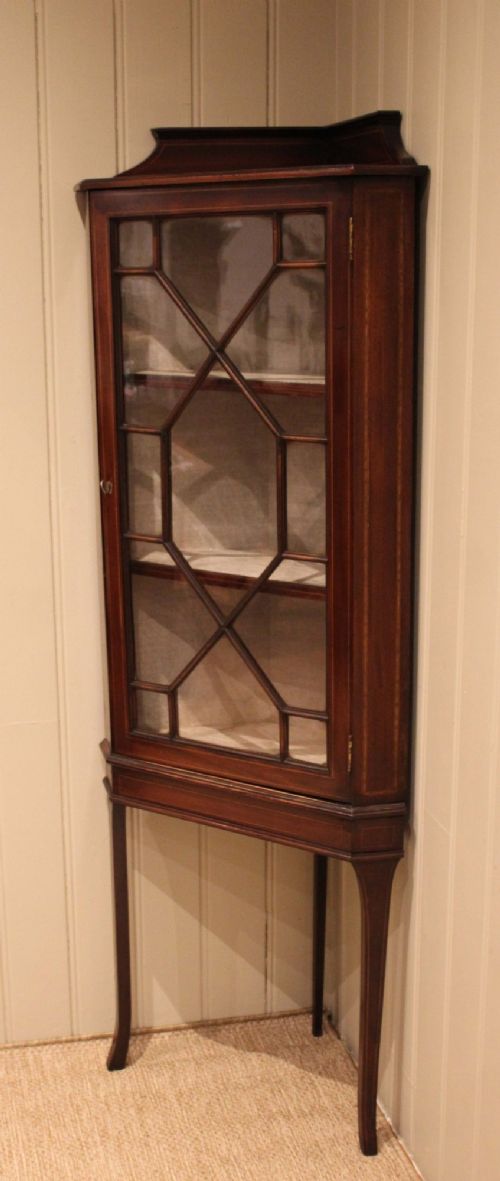
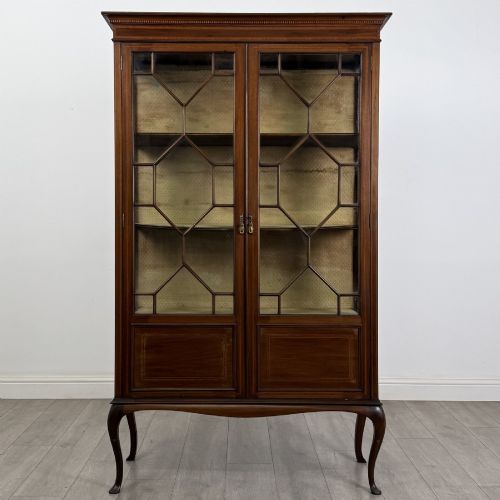
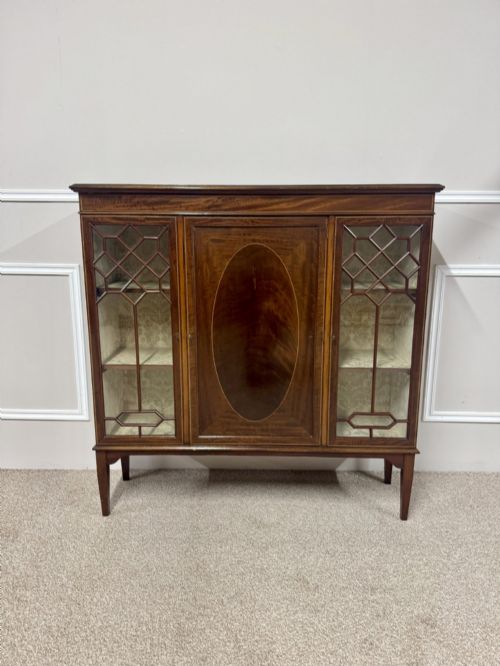
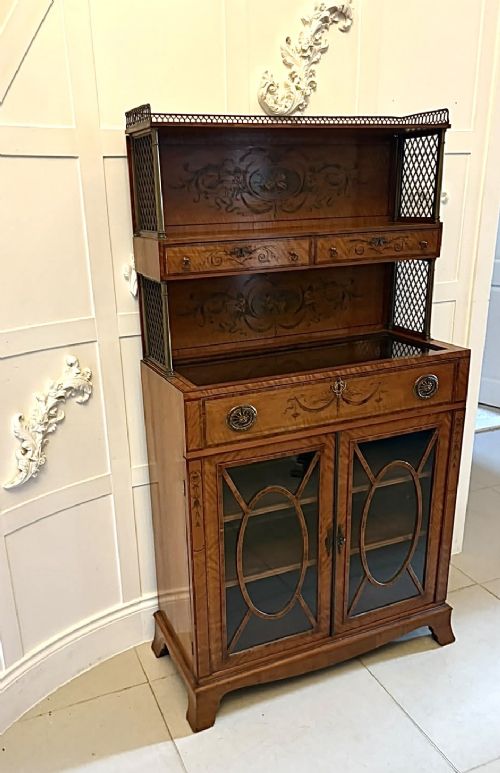
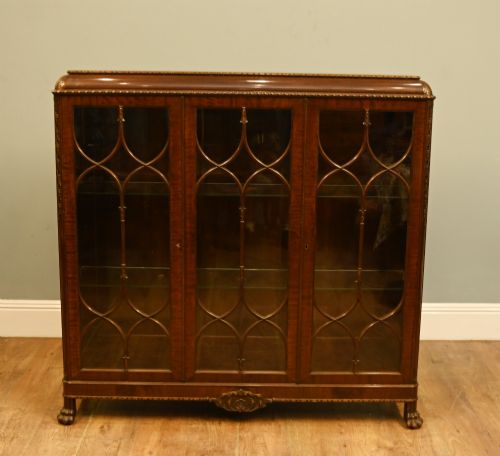
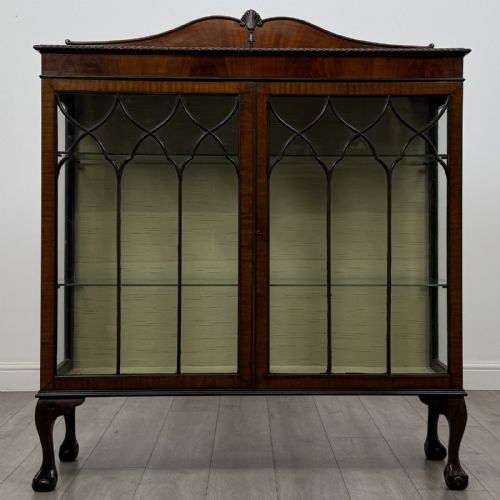
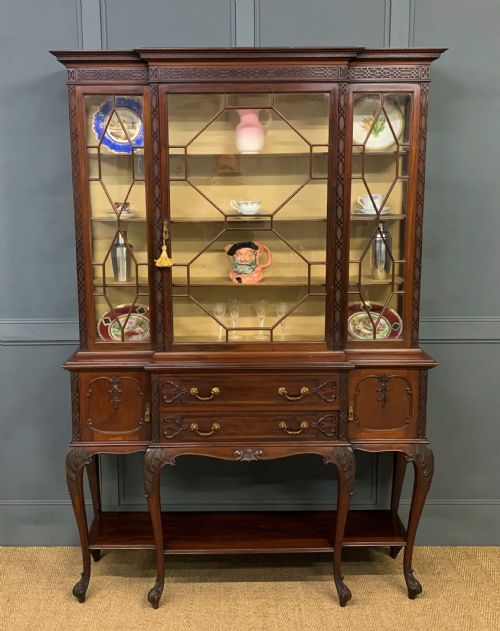
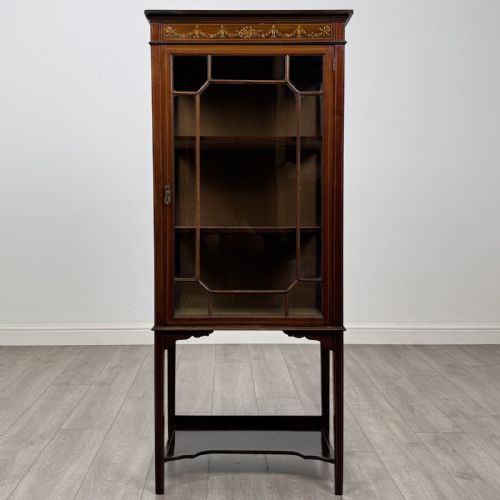
Most pieces you will encounter take the form of floor-standing display cabinets, corner cabinets, and bookcases with glazed doors. Mahogany serves as the primary timber, frequently embellished with satinwood inlay and marquetry, while specific examples incorporate oak or are rendered entirely in satinwood.
Materials and Construction
Cabinet makers constructed the primary carcases of these vitrines using solid mahogany and oak, often applying fine mahogany veneers to large flat surfaces. Satinwood inlay and contrasting stringing were meticulously hand-cut and fitted into the timber to create delicate geometric and floral motifs.
The defining astragal bars were shaped from slender strips of wood to hold individual panes of glass securely within the door frames. Brass hardware, including hinges, key escutcheons, and locks, was fitted to secure the glazed doors and internal shelving.
Internal elements frequently included fabric-lined backboards and shelves designed to cushion delicate china and glass objects. Structural supports ranged from straightforward bracket feet to carved cabriole legs and ball and claw feet.
Edwardian Astragal Vitrine Retail Price Guide 2026
Typical asking prices for edwardian astragal vitrine among the pieces listed under this phrase on Sellingantiques today, from the lower quarter to the upper quarter. They describe what is for sale here now, not the wider market.
Listings demonstrate that Edwardian astragal vitrines predominantly utilise mahogany, frequently enhanced with satinwood inlay and delicate glass panels.
Assessing Quality and Craftsmanship
The refinement of the timber and the precision of the inlay work set exceptional pieces apart from standard production. Cabinets featuring complex satinwood marquetry, bow fronts, or breakfront forms demonstrate a higher level of joinery skill than simple rectangular carcases.
The delicacy of the astragal glazing bars indicates the care taken by the maker, with thinner, well-joined bars requiring greater woodworking proficiency. Additionally, branded or stamped pieces originating from notable workshops command attention for documented craftsmanship.
Warings·Edwards & Roberts
The Edwardian Astragal Vitrine Glossary
- Astragal
- The narrow wooden moulding or glazing bar that divides individual panes of glass within a cabinet door. These bars create geometric patterns across the front of the vitrine.
- Vitrine
- A glass-fronted display cabinet or case designed specifically for exhibiting fine porcelain, curiosities, and decorative objects. The term derives from the French word for glass.
- Sheraton Revival
- A late nineteenth and early twentieth century design movement that reinterpreted the elegant, classical furniture forms of the eighteenth-century designer Thomas Sheraton. Pieces in this style often utilise satinwood inlay and tapered legs.
- Marquetry
- Decorative veneer work arranged in intricate pictorial or geometric patterns using various coloured woods. This technique is frequently seen on the friezes and door panels of finer cabinets.
- Bijouterie cabinet
- A specialised display table or cabinet with a glazed top and sides, designed for viewing small valuable items and jewellery from above.
Edwardian Astragal Vitrine: Frequently Asked Questions
What is an astragal vitrine?
An astragal vitrine is a display cabinet featuring glass doors divided by narrow wooden bars into smaller panes. These pieces were built to showcase delicate porcelain and decorative objects while protecting them from dust.
Cabinet makers used this design extensively during the Edwardian era, drawing inspiration from earlier Georgian aesthetics. The arrangement of the glazing bars adds architectural elegance to the front of the furniture.
Where were these cabinets placed?
These display cabinets typically stood in drawing rooms, parlours, or formal dining rooms where guests could admire the owner's collection of ceramics and glassware. Corner variants were specifically built to utilise awkward room angles efficiently.
Floor-standing models served as major focal points in domestic interiors. Their glass panels allowed natural and candlelight to illuminate the items displayed inside.
How do I style a vitrine at home?
You can style a vitrine by curating a balanced selection of items with varying heights, textures, and colours. Grouping similar pieces of porcelain or glassware prevents the interior from appearing cluttered and maintains visual harmony.
Consider the existing fabric linings and timber tones when choosing what to exhibit inside the cabinet. Soft lighting placed near the glass can enhance the overall presentation of your collection.
How do I distinguish Edwardian from Georgian pieces?
Edwardian cabinets generally feature machine-sawn timbers, lighter internal framing, and characteristic revival detailing such as satinwood stringing. True Georgian pieces from the eighteenth century utilise older construction methods, heavier native timbers, and distinct hand-cut joint practices.
Revival pieces often combine eighteenth-century stylistic elements with turn-of-the-century manufacturing techniques. Examining the secondary timbers inside the carcase usually clarifies the true age of the cabinet.