

Standing Mahogany Vitrine
A standing mahogany vitrine brings architectural glass and warm timber together to show off your collection in style.
Standing Mahogany Vitrine
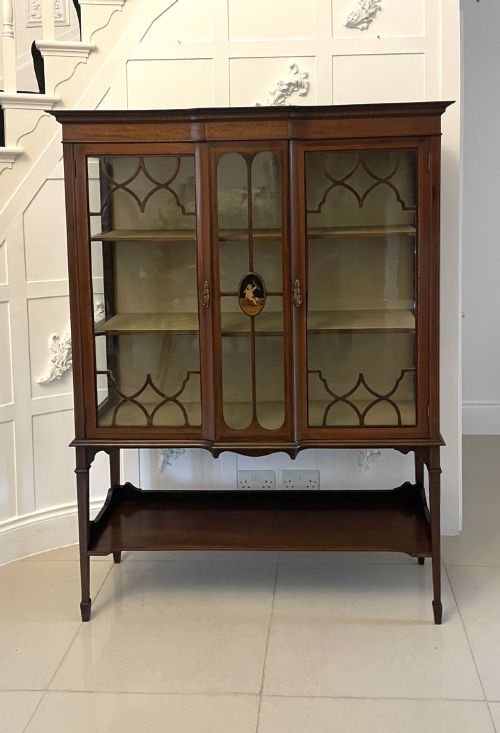
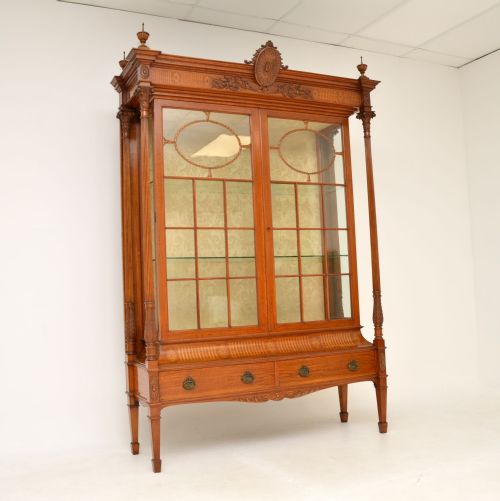
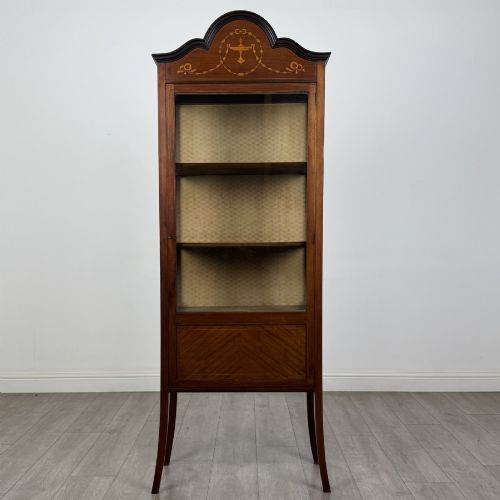
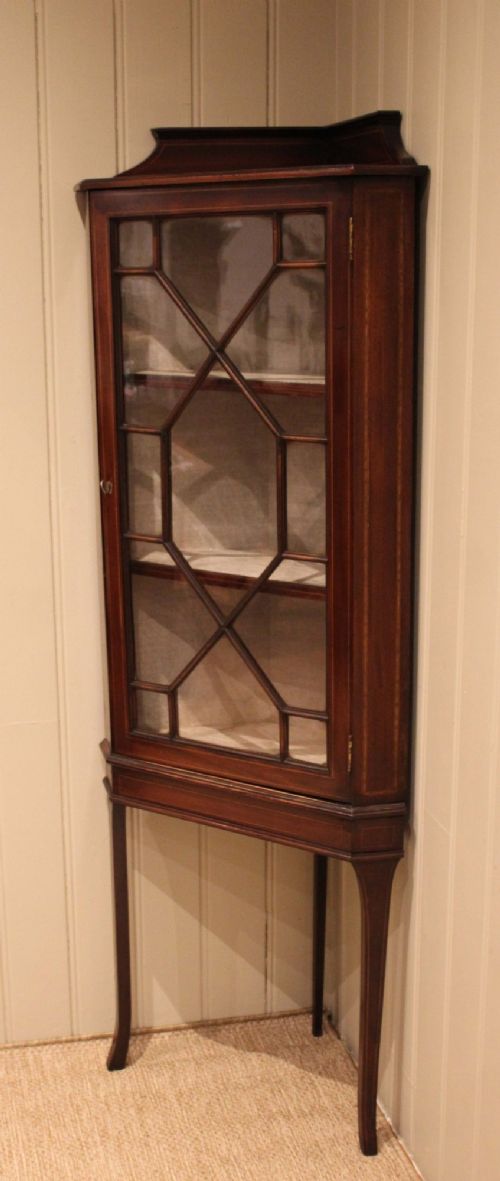
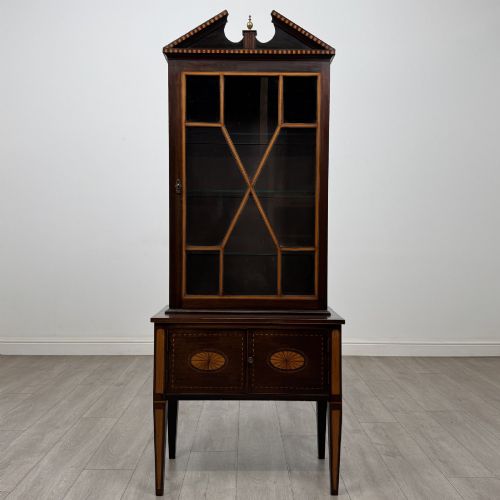
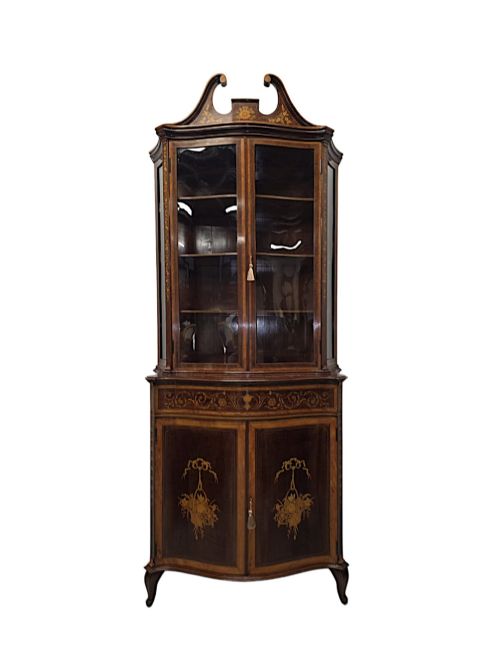
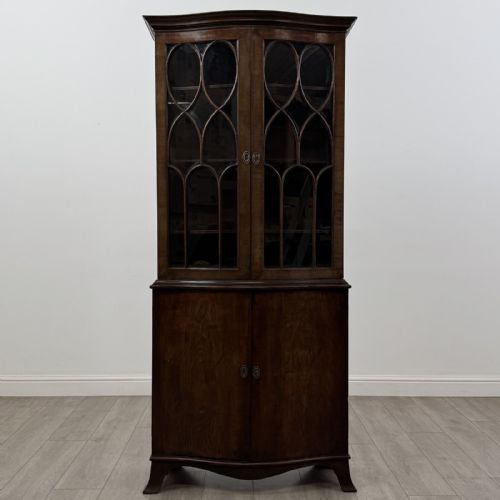
When you search for a standing mahogany vitrine, you enter a world of glazed cabinets designed to protect and display fine objects. These pieces span the Georgian, Victorian, and Edwardian eras, taking the form of upright display cabinets, corner units, and slim bookcases.
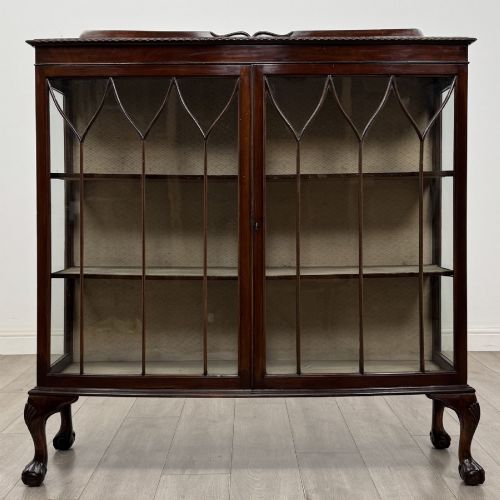
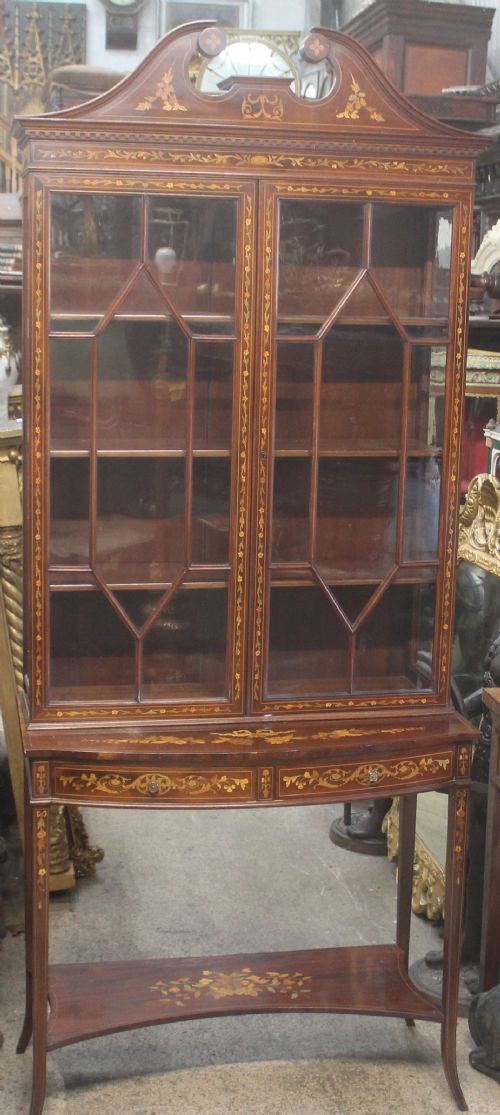
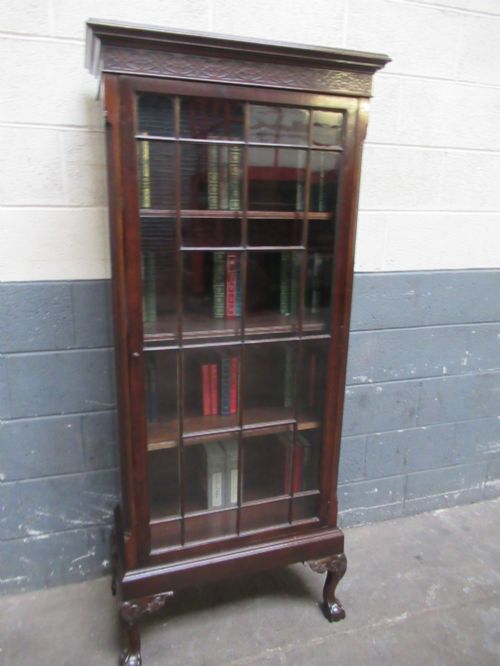
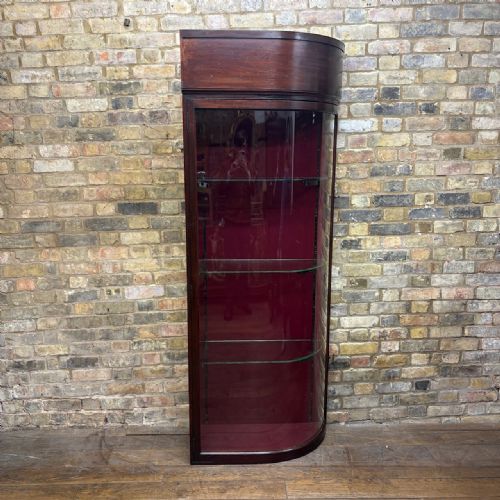
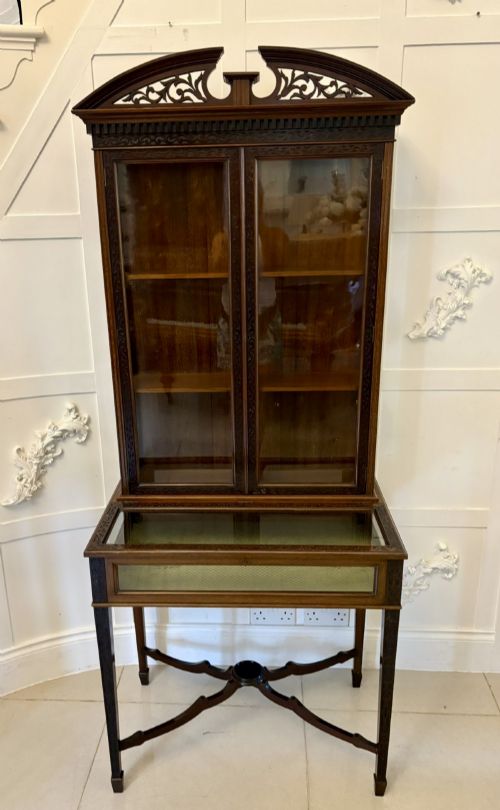
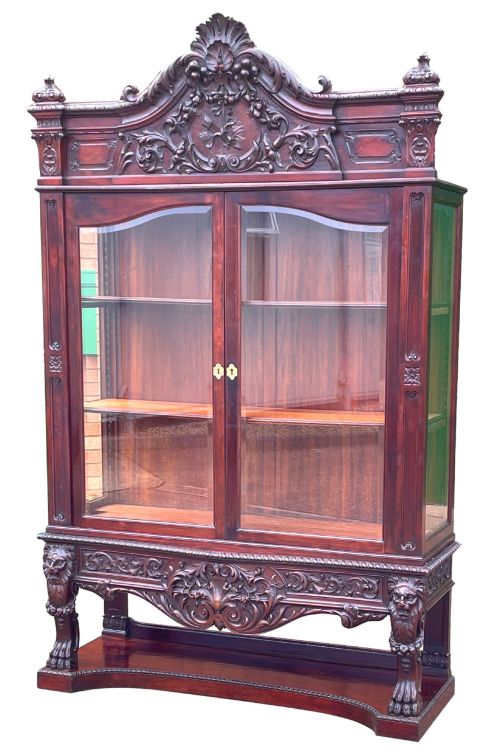
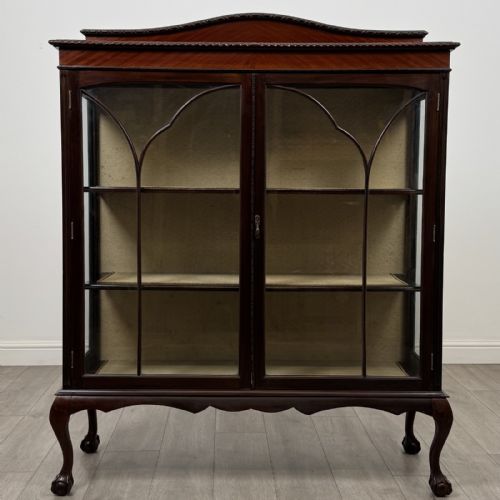
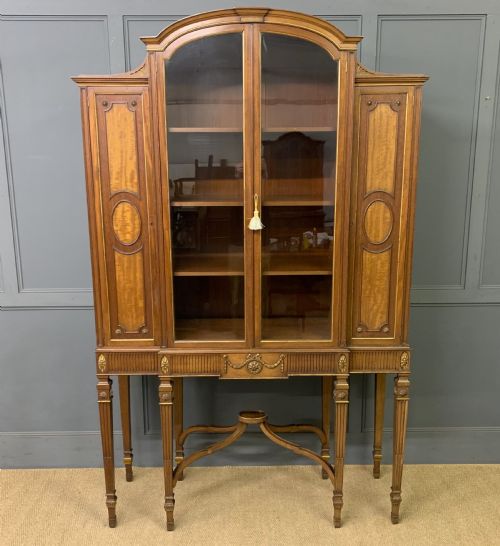
You are most likely to meet Edwardian and Victorian examples on this page, often featuring glazed doors and delicate inlay. They range from bow-ended corner cabinets to large breakfront designs standing on bracket or claw and ball feet.
Materials and construction
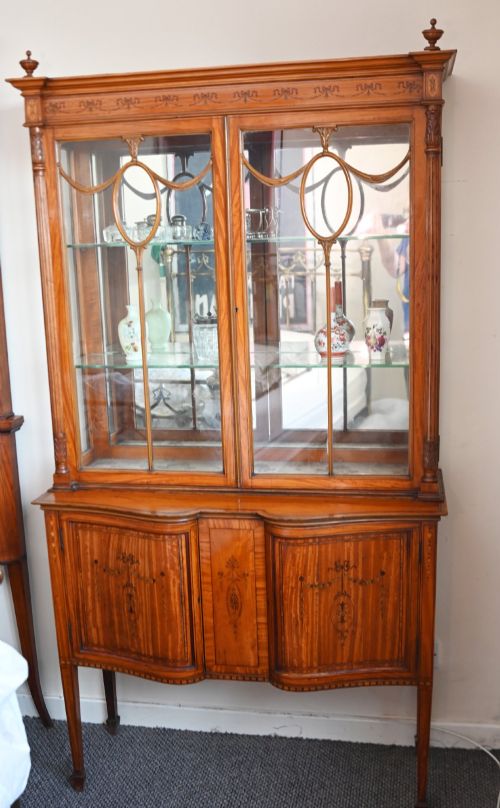
Cabinet makers utilised solid mahogany and mahogany veneers as the primary timber, complemented by glass panels for viewing shelves of porcelain or curiosities. Satinwood inlay, marquetry, and painted decoration frequently embellish the surfaces.
Structural elements incorporate brass hardware, fabric-lined interiors, and occasionally marble tops or carved details. Joinery techniques range from standard cabinet framing to specialised astragal glazing bars holding the glass in place.
Standing Mahogany Vitrine Retail Price Guide 2026
Typical asking prices for standing mahogany vitrine among the pieces listed under this phrase on Sellingantiques today, from the lower quarter to the upper quarter. They describe what is for sale here now, not the wider market.
A cabinet with claw and ball feet lets your porcelain stand upon the carved talons of history.
Distinctions in quality
Quality rests in the crispness of the carving, the precision of the satinwood inlay, and the selection of figured mahogany timber. Superior examples exhibit balanced proportions, original glass, and refined details such as spade feet or carved ball and claw supports.
Lower tiers of quality present plainer timber surfaces with minimal decoration and heavier, less harmonious proportions. Maker attribution, such as work stamped by established firms, elevates the standing of a piece considerably.
Edward and Roberts·Waring and Gillow
The Standing Mahogany Vitrine Glossary
- Vitrine
- A glass-fronted display cabinet used for holding porcelain, books, or decorative objects. These pieces often feature extensive glazing to maximise light exposure on the shelves within.
- Astragal glazing
- Narrow wooden bars that divide a glass pane into smaller segments within a door or window frame. This technique creates a grid pattern common on Georgian and Edwardian cabinet doors.
- Marquetry
- Decorative veneer work forming pictures or geometric patterns using various tinted woods and other materials. It frequently appears on Edwardian and Sheraton Revival cabinet friezes.
- Breakfront
- A large cabinet design where the central section projects forward from the flanking wings. This architectural arrangement adds depth and presence to larger rooms.
Standing Mahogany Vitrine: Frequently Asked Questions
How do I style a vitrine at home?
Place your vitrine against a solid wall in a dining room or drawing room where natural light can strike the glass.
Arrange porcelain, glassware, or small curios on the shelves with adequate spacing to let the timber and glazing frame each object.
How do I date a mahogany display cabinet?
Dating relies on examining the stylistic clues, such as Edwardian satinwood inlay, Victorian carved details, or Georgian proportions.
Cabinet feet, hardware fixings, and glazing bar thickness also offer clear indicators of the manufacturing era.
Are corner vitrines practical for small rooms?
Corner vitrines fit neatly into unused room angles, making them ideal for maximising display space without blocking walkways.
Their triangular footprint utilises vertical wall space efficiently while housing china or books.