

Edwardian Arts Crafts Silver
Edwardian arts crafts silver combines early twentieth-century design principles with sterling silver, enamel, and semi-precious stones to create functional and decorative objects.
Edwardian Arts Crafts Silver
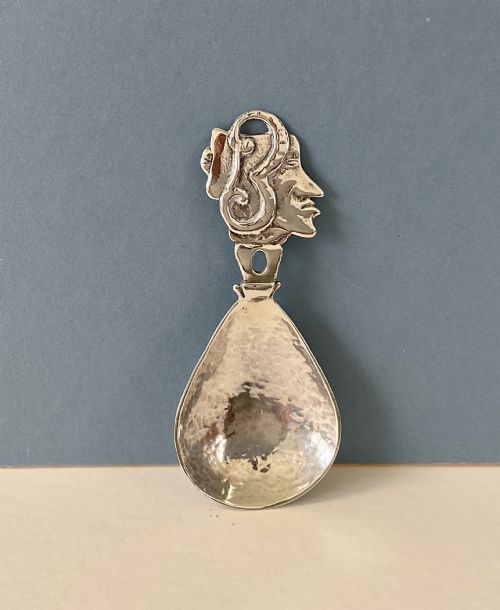
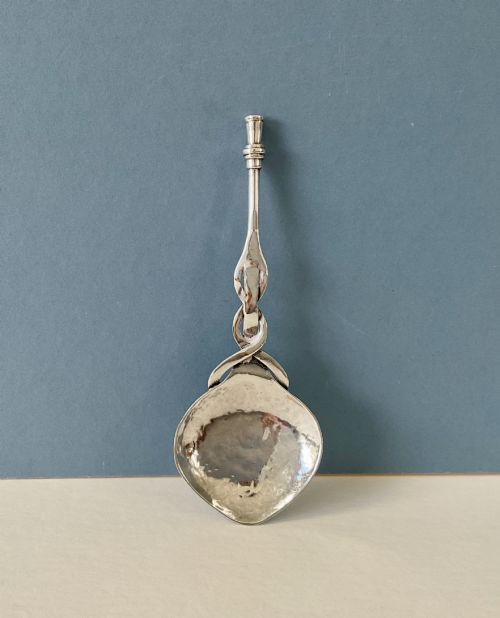
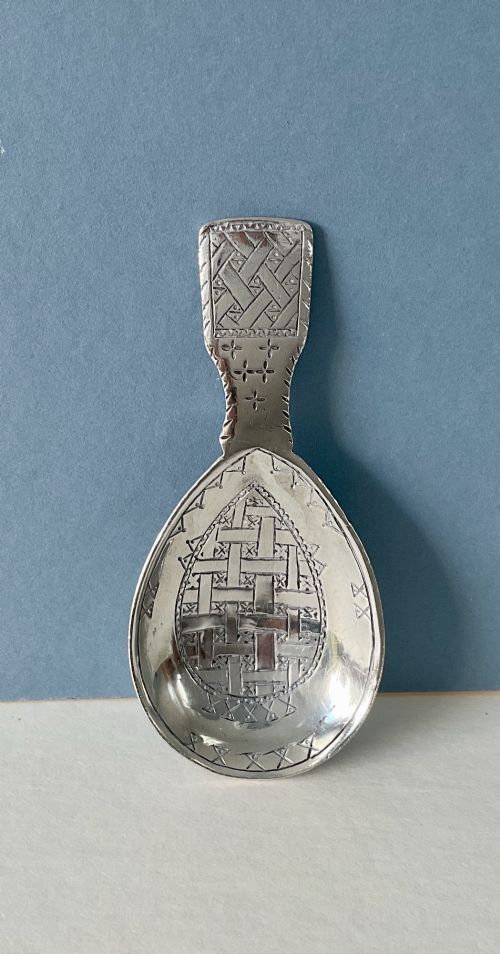
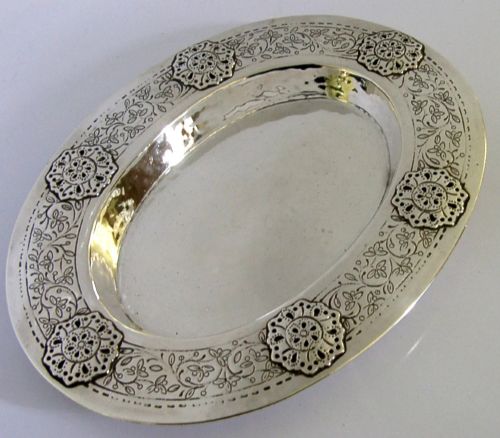
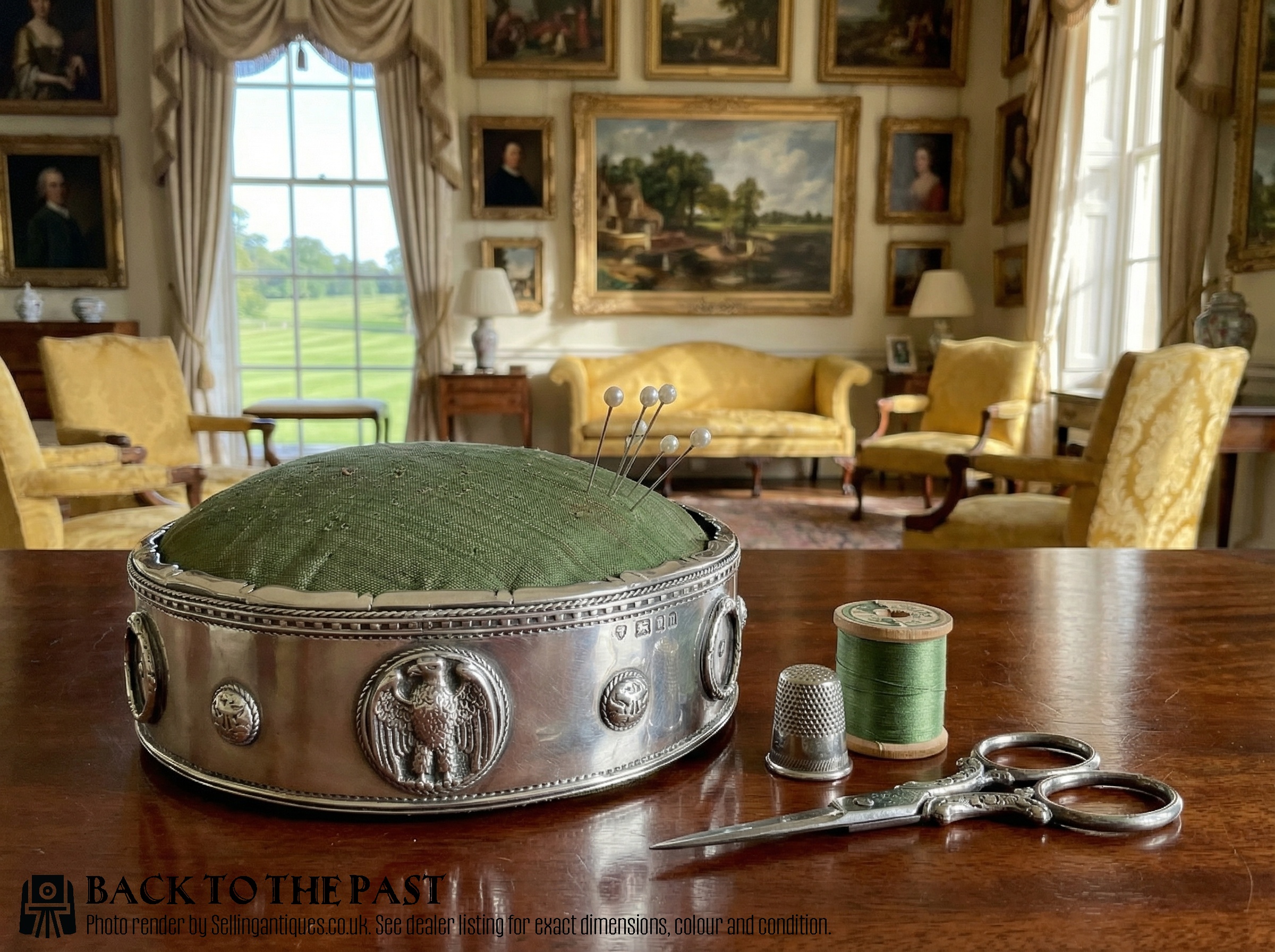
Edwardian arts crafts silver encompasses a wide range of tableware, personal accessories, and decorative items produced around the turn of the twentieth century. When searching for Edwardian arts crafts silver, collectors encounter items such as caddy spoons, brooches, pendants, cream jugs, candlesticks, and desk accessories.
The selection reflects the output of prominent silversmiths, London retailers like Liberty and Co, and independent workshops working in the prevailing stylistic idioms of the period.
How they were made
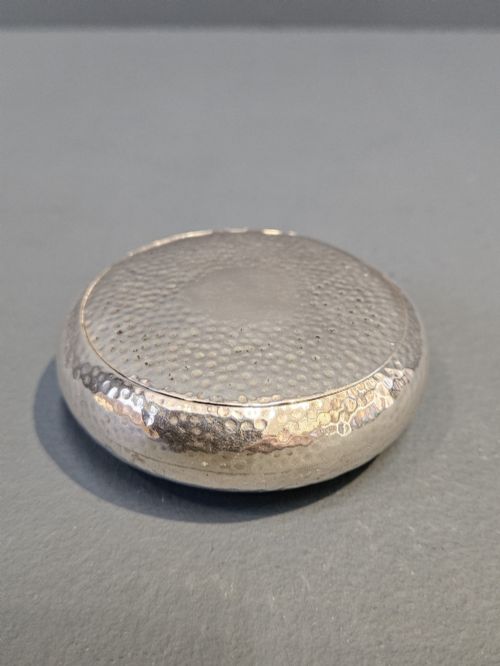
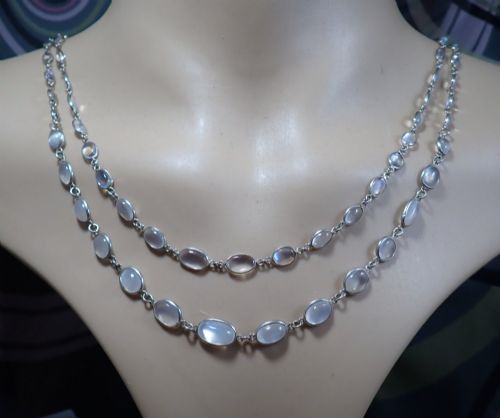
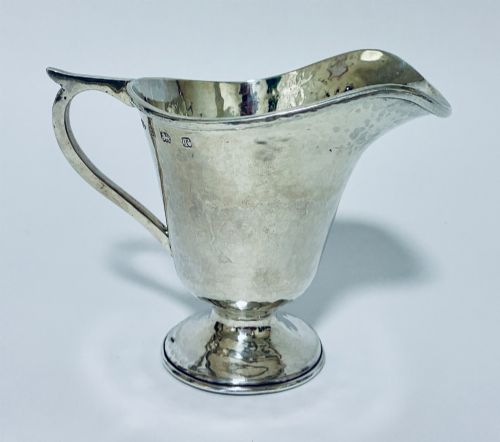
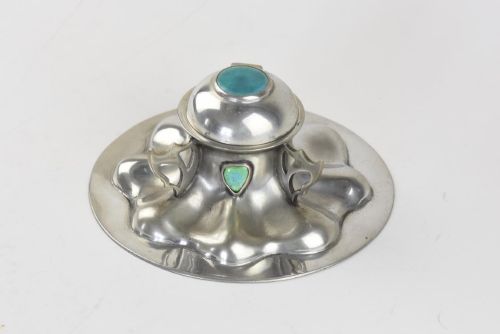
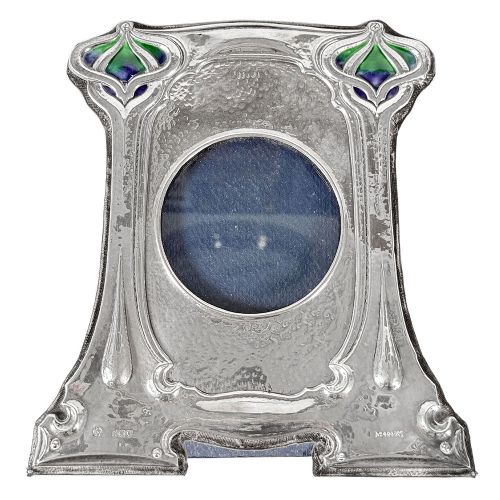
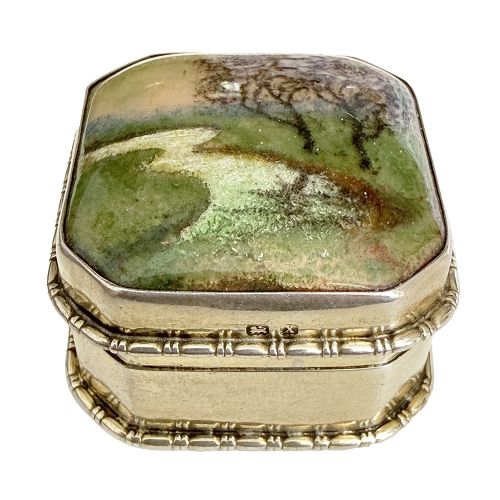
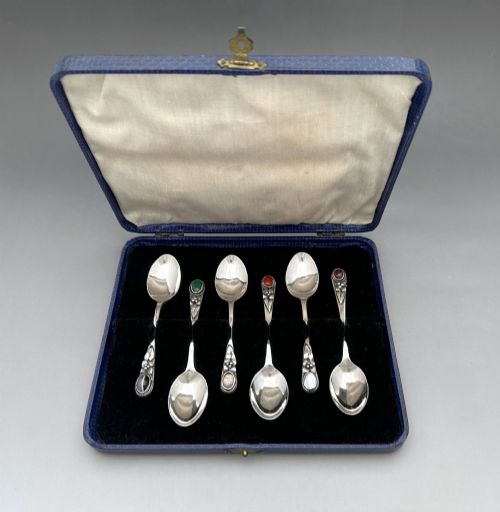
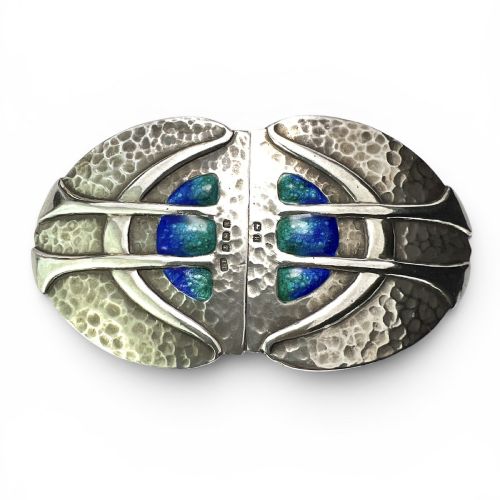
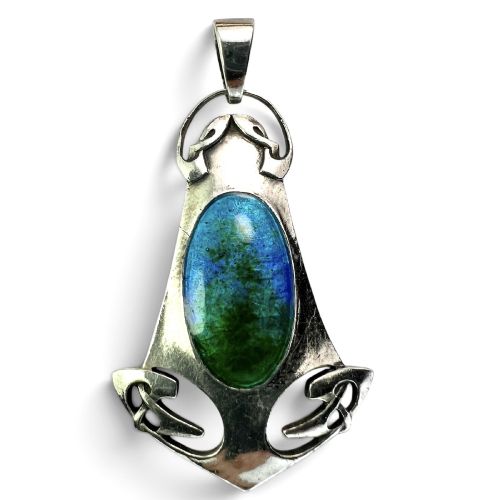
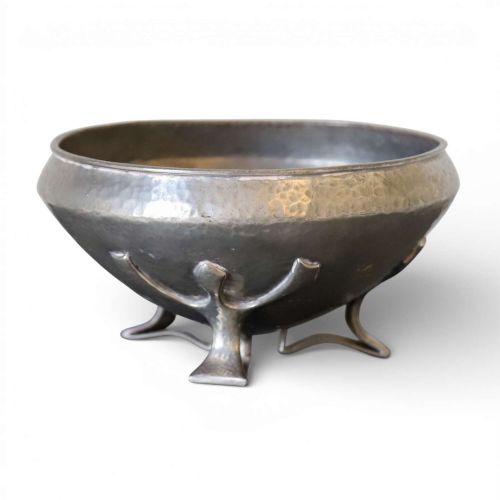
Makers utilised sterling silver and pewter as the primary metals, often shaping forms by hand with visible planishing and hammered textures. Pieces frequently incorporate vitreous enamel, plique-a-jour, and cabochon-cut stones including moonstone, turquoise, amethyst, and pearl.
Workshops employed traditional hand-wrought techniques to reject mass production, relying on skilled smiths and jewellers to assemble components and set decorative cabochons.
Listings feature sterling silver, pewter, and enamel across forms including jewellery, tableware, and desk accessories spanning the early twentieth century.
What varies in quality
The standard of design and execution separates standard production from exceptional workshop output. Pieces designed by notable figures and retailed by premier establishments demonstrate superior craftsmanship in stone selection and enamel work.
The integration of hand-beaten surfaces with well-chosen cabochons indicates the level of care taken during fabrication.
Charles Edwards·Goldsmiths and Silversmiths Company·William Hutton and sons·Fleetwood Varley·James Fenton·Murrle Bennett·Archibald Knox·Oliver Baker·Sampson Morden·Nathan and Hayes·Amy Sandheim·The Gaskins·David Veasey·Johnson, Walker and Tolhurst·Zoltan White
The Edwardian Arts Crafts Silver Glossary
- Planishing
- A metalsmithing technique using a specialised hammer to create a faceted, textured surface on silver. This leaves deliberate small hammer marks that catch the light and show hand-working.
- Cabochon
- A gemstone shaped and polished with a smooth, rounded domed top rather than faceted edges. These stones are commonly bezel-set into mounts on silverwork.
- Plique-a-jour
- An enamelling technique where enamel is applied within a wire framework without a backing, resembling miniature stained glass. Light passes directly through the translucent coloured glass.
- Tazza
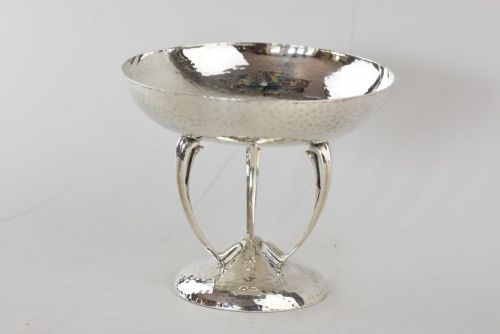
- A small pedestal bowl or dish raised on a stem and foot. They appear frequently in silverwork designed for display or serving.
- Vitreous enamel
- A material made by fusing powdered glass to a metallic substrate by firing at high temperature. It produces a durable, glossy coloured surface.
Edwardian Arts Crafts Silver: Frequently Asked Questions
What defines Edwardian arts crafts silver?
These items are characterised by hand-wrought construction, visible hammer marks, and the use of natural motifs alongside semi-precious stones. They reflect a philosophical shift away from industrial mass production towards artisan craftsmanship.
Objects from this era prioritize simple forms and structural honesty over excessive surface ornamentation, often incorporating coloured enamels and moonstones.
How do I care for silver and enamel?
Clean sterling silver components gently with a specialised soft polishing cloth, avoiding abrasive pastes that can damage softer applied enamels. Keep items away from harsh chemicals and ultrasonic cleaners.
Store pieces in dry conditions, ideally in anti-tarnish bags, to protect delicate stone settings and fragile glass enamels from accidental impact.
Who made these items?
Production involved independent craftspeople, specialised silversmithing firms, and commercial workshops supplying major retailers like Liberty and Co. Prominent designers and makers included Archibald Knox, the Gaskins, and William Hutton.
Many pieces bear hallmarks or workshop stamps that identify the specific maker, assay office, and year of production.
What stones appear on these pieces?
Makers frequently set moonstones, turquoise, amethysts, and pearls into silver mountings. These stones are typically cut as smooth cabochons rather than faceted gems to complement the organic aesthetic.
Enamels in blue, green, and multi-coloured palettes also provide primary colour accents across pendants, brooches, and decorative bowls.