


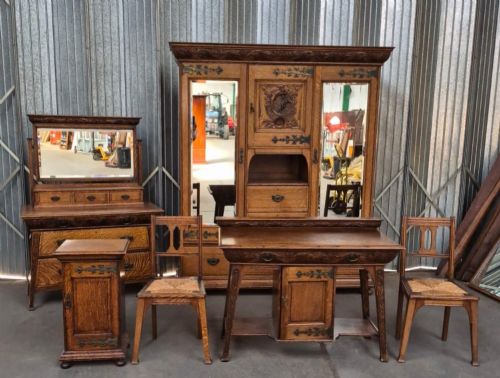
Edwardian Arts Crafts Seating
Edwardian arts crafts seating brings honest construction and straightforward utility into daily domestic life through chairs, benches, and stools.
Edwardian Arts Crafts Seating
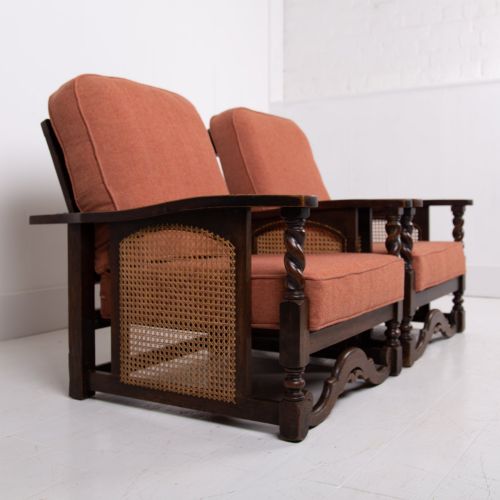
Edwardian arts crafts seating encompasses a variety of practical forms designed for domestic interiors, ranging from single side chairs and dining sets to substantial hall seats, benches, and reclining armchairs. These pieces emerge predominantly from the late nineteenth and early twentieth centuries, reflecting the broader design movements of the period.
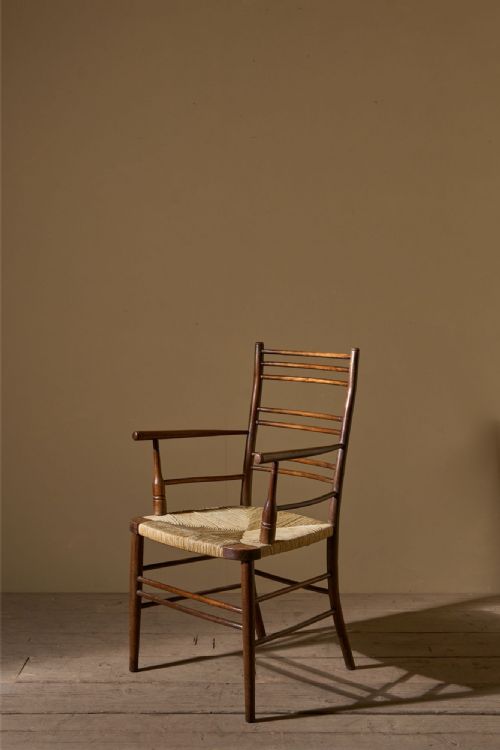
The most common examples encountered on this page are oak dining chairs and low armchairs, frequently accompanied by rush or leather seating surfaces. Makers of the era also produced specialised items such as piano stools, club fenders, and window seats, often drawing on regional aesthetics like the Scottish School or English country traditions.
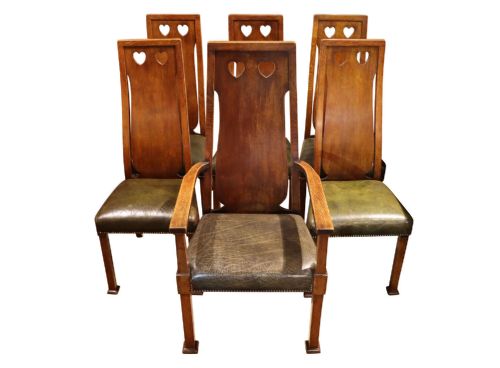
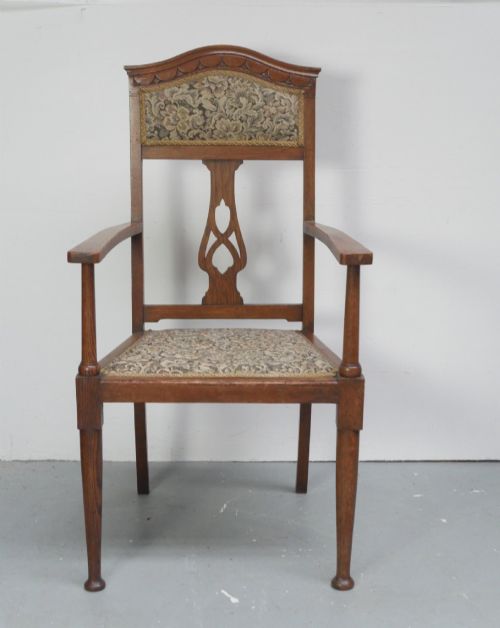
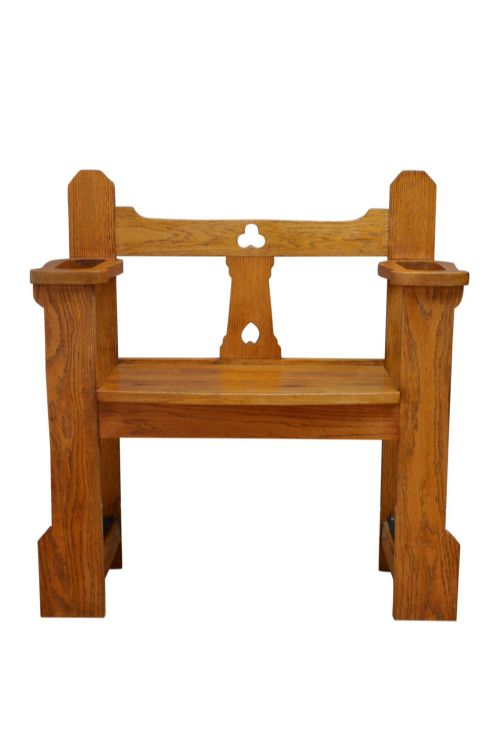
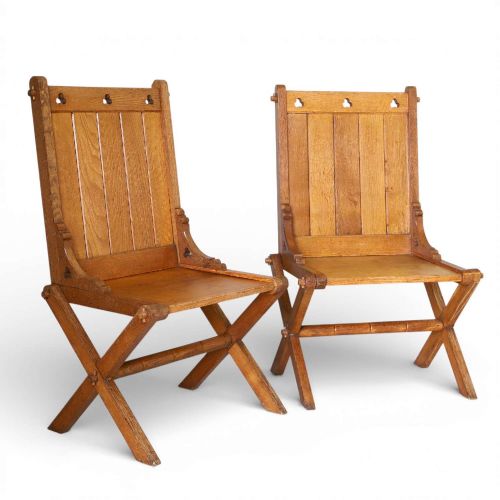
Buyers seeking edwardian arts crafts seating will find pieces that balance utilitarian function with distinctive regional character, such as heart motifs, trefoil details, or structural members left visible. The selection bridges domestic comfort with the architectural severity of the Gothic Revival and Jacobean revival styles.
Materials and Construction
Makers of edwardian arts crafts seating relied heavily on solid timber frames, with golden oak and standard oak appearing most frequently alongside beech, walnut, rosewood, and teak. These woods were chosen for durability and grain character, often left in a natural finish rather than heavily concealed by dark polishes.
Seating surfaces and structural details incorporate woven rush, natural leather, cane, wicker rattan, and various fabrics including velvet and contemporary textiles. Metal accents in brass frequently appear on hardware or adjustable mechanisms, complementing the heavy wooden frames without overwhelming the design.
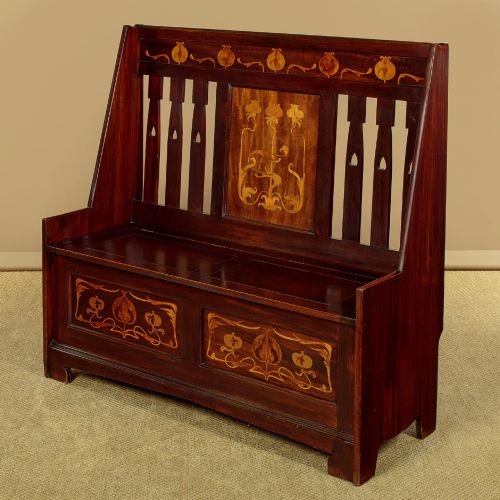
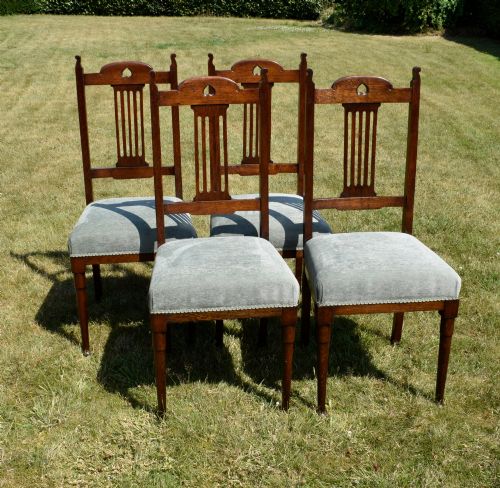
Joinery methods emphasise visible construction, utilising pegged mortise and tenon joints rather than hidden fasteners. Carved details remain restrained, focusing on structural elements, pierced heart motifs, or geometric cut-outs rather than elaborate surface ornamentation.
Listings feature oak as the dominant material, supplemented by beech, walnut, teak, and rosewood across various seating forms.
Distinctions in Quality
The distinction between standard commercial output and superior edwardian arts crafts seating lies in the integrity of the timber selection and the precision of the hand-finishing. Better examples utilise quarter-sawn oak with prominent medullary rays, indicating careful log conversion rather than hurried mass production.
Proportion and structural balance separate simpler utilitarian items from pieces associated with named design houses or progressive schools. A well-proportioned armchair or hall bench maintains comfort and stability through thoughtful angles, whereas lesser examples can feel rigid or heavy-handed.
The treatment of secondary materials also signals quality, from tightly woven rush seats to properly tensioned leather upholstery fixed with traditional decorative tacks. Pieces that retain their original hardware, clever adjustable mechanisms, or documented workshop provenance stand apart in craftsmanship.
William Morris·Rossetti·Liberty & Co·James Shoolbred & Co·Shapland & Petter·Dryad & Co·Wylie Lockhead
The Edwardian Arts Crafts Seating Glossary
- Rush seat
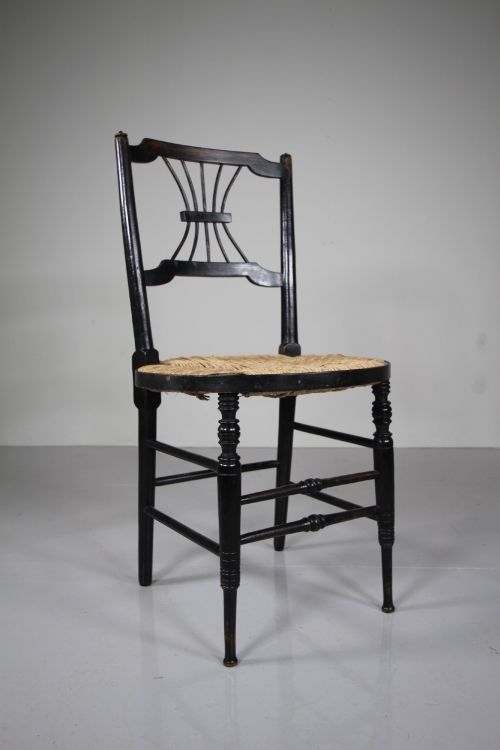
- A seating surface woven from dried marsh grass twisted into cords. This traditional technique provides a resilient and breathable pad common on ladder-back and low armchairs.
- Settle
- A high-backed wooden bench with solid arms and a closed base intended to block drafts. They frequently incorporate storage compartments beneath the seat.
- Quarter-sawn oak
- Timber cut radially toward the centre of the log to reveal distinctive medullary ray patterns. This method produces more stable boards resistant to warping.
- Club fender
- A low, U-shaped hearth seat featuring upholstered top rails above a metal or wooden frame. They often include adjustable components or wire mesh sides.
- Rise and fall
- A mechanical screw or ratchet mechanism allowing piano stools or seating heights to be adjusted vertically. It relies on internal threaded spindles operated by turning the seat top.
Edwardian Arts Crafts Seating: Frequently Asked Questions
How do I identify genuine arts and crafts chairs?
Genuine examples typically display exposed joinery, honest use of solid timber such as oak, and a deliberate avoidance of excessive machine ornamentation. Look for structural pegs, hand-woven rush, or leather pads.
Many pieces also bear maker marks, retailer stamps, or stylistic traits associated with specific regional movements like the Glasgow School or English country workshops.
Were these chairs used at dining tables?
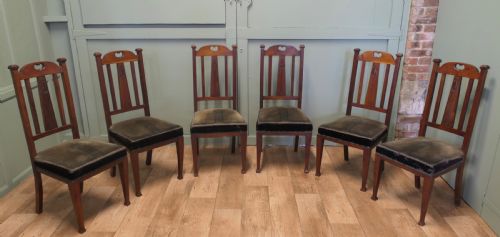
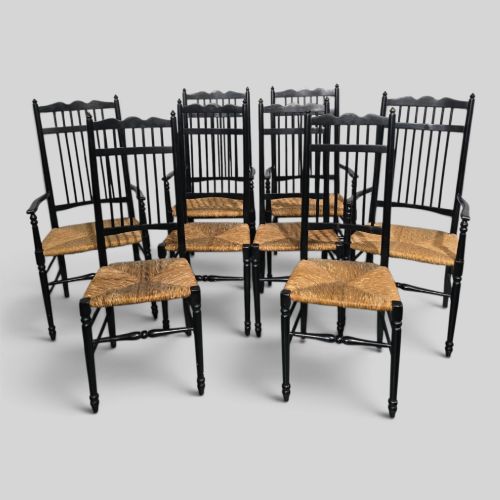
Dining chairs formed a significant portion of workshop production, often sold in matched sets of four, six, or eight. These chairs usually featured ladder backs or solid slats paired with rush or upholstered pads.
They were built for everyday utility, combining sturdy frames with upright postures suited for dining rooms and large farmhouse kitchens.
What is a hall seat?
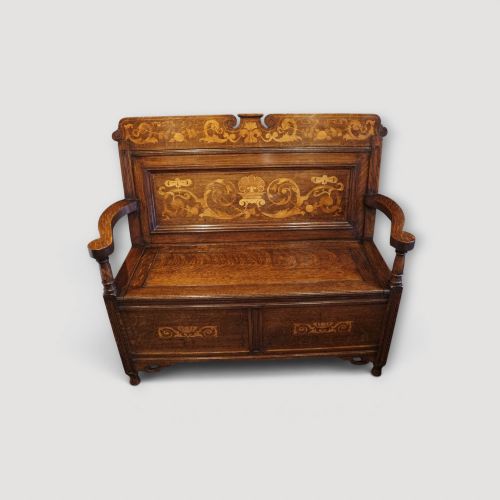
A hall seat or bench served as functional entrance furniture where household members and visitors could remove outdoor footwear. They frequently integrated storage cupboards or high panelled backs.
Proportions were typically narrow to fit tight hallways, and designs often incorporated coat hooks, umbrella stands, or decorative fretwork.
How should I care for rush and leather seats?
Rush seats require a dry environment and occasional cleaning with a soft brush to remove dust from the woven fibres. Avoid excessive moisture, which can cause the marsh grass to rot.
Leather surfaces benefit from periodic conditioning with appropriate balms to prevent drying and cracking, maintaining the natural suppleness of the material.