


Edwardian Aquamarine Jewellery
Edwardian aquamarine jewellery brings together pale blue stones and delicate gold or platinum settings to create pieces that collectors prize for their subtle charm.
Edwardian Aquamarine Jewellery
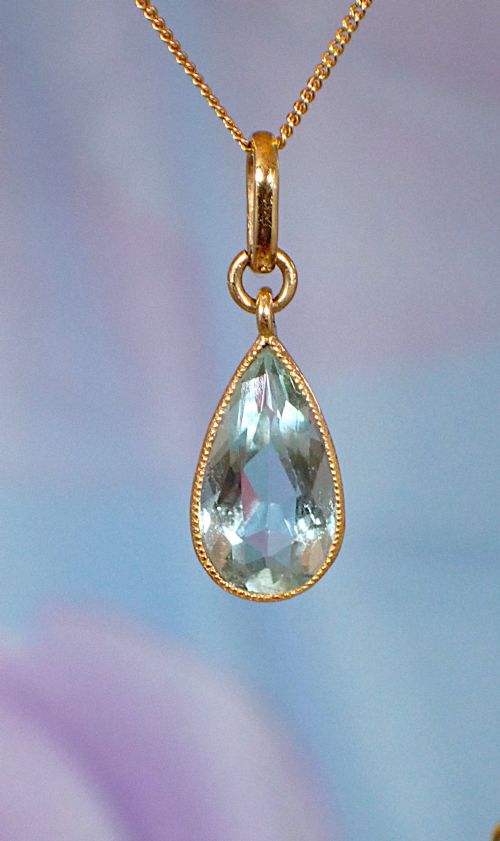
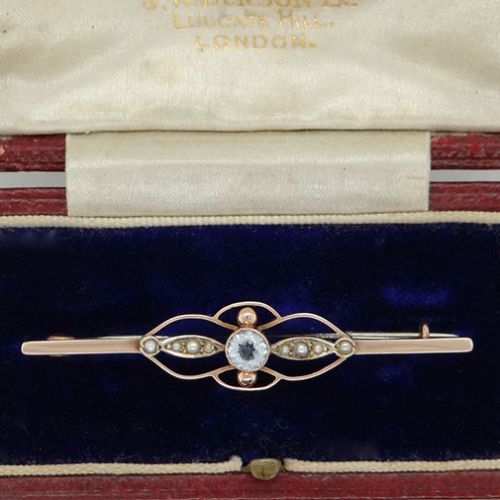
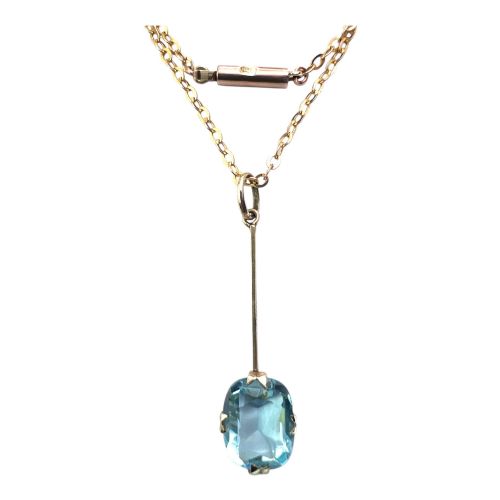
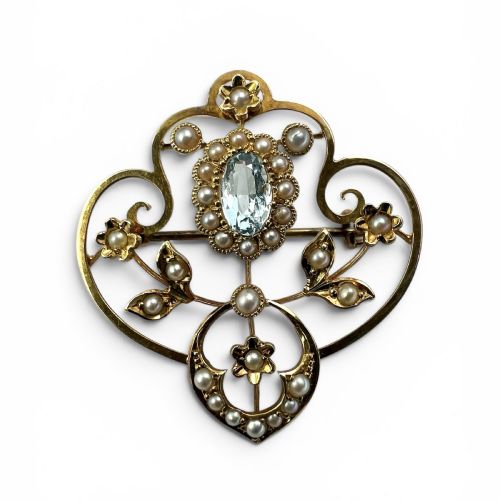
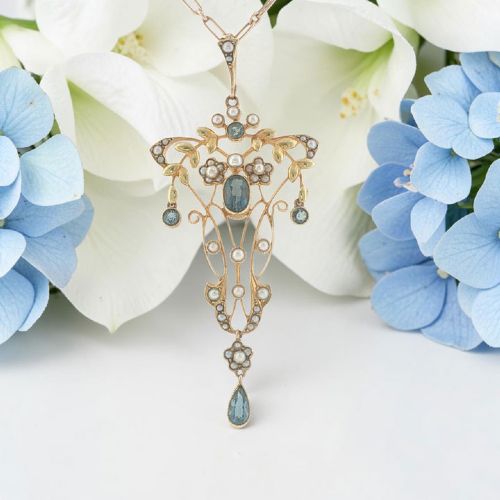
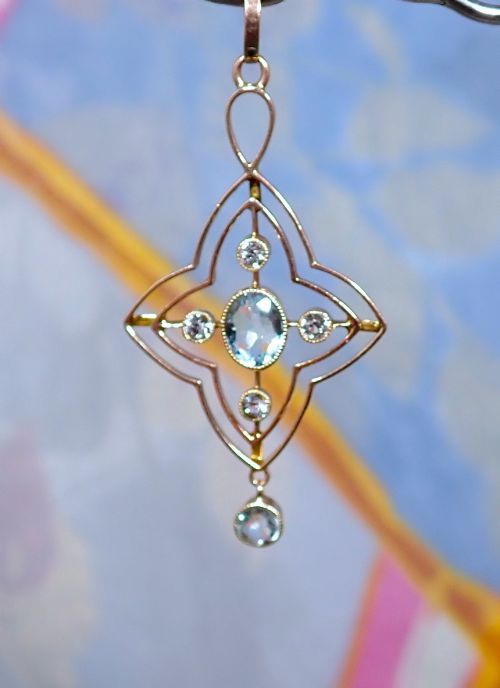
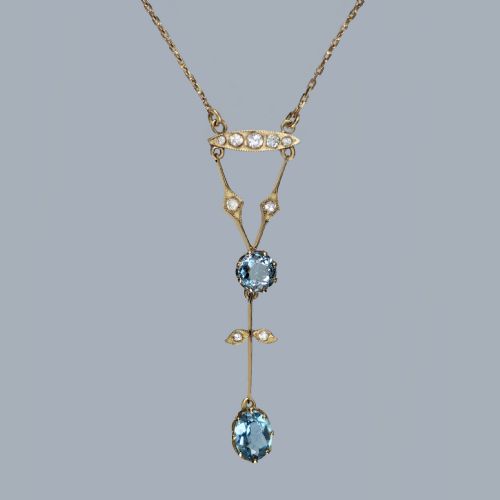
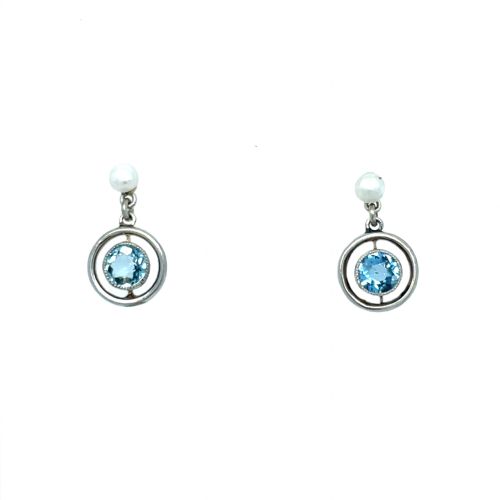
When you search for edwardian aquamarine jewellery, you encounter delicate pendants, drops, brooches, and rings defined by light blue beryl stones. The items on this page span the early twentieth century alongside adjacent periods, showing how makers set cool blue stones into warm yellow gold or bright white platinum.
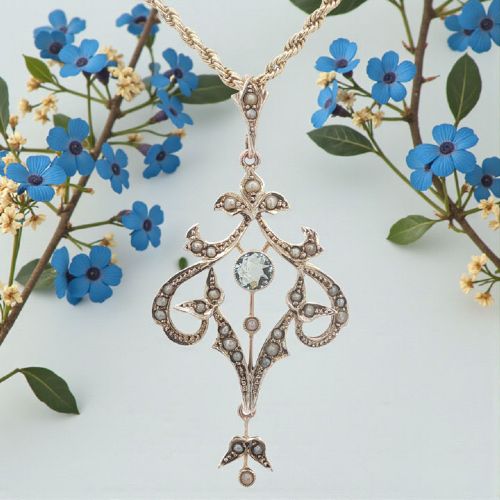
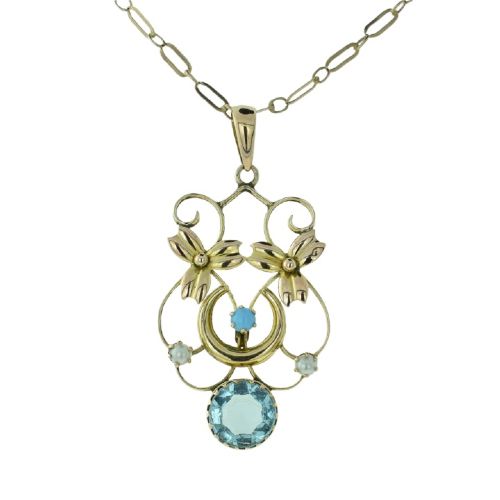
Pendants and drop necklaces dominate the selection, frequently paired with seed pearls or small diamonds in symmetrical Edwardian or flowing Art Nouveau arrangements. Rings and brooches also appear, showing how jewellers balanced substantial central aquamarines with intricate openwork metal designs.
The objects originate primarily from the Edwardian era and the surrounding decades, reflecting a period of transition in jewellery design from organic floral motifs to geometric platinum work. Buyers find both modest 9ct gold pieces and heavier platinum creations set with substantial faceted gems.
Materials and construction
Makers fashioned these pieces using a combination of yellow or rose gold, often in 9ct and 15ct purities, alongside platinum and white gold for later or more elaborate designs. Aquamarines formed the centrepieces, occasionally supplemented by diamonds, seed pearls, tourmalines, and demantoid garnets.
Goldsmiths utilised openwork wireframes, collet settings, and claw mounts to secure the gems while allowing light to pass through the pale blue stones. Artisans balanced structural strength with visual lightness, soldering delicate drops and bar mounts to chains and brooch backs.
A reclining woman forms the golden focal point of an antique Art Nouveau ring.
Distinguishing quality in the range
Quality rests upon the clarity and colour saturation of the aquamarine, alongside the fineness of the metalwork surrounding it. Stones with a deep, even blue hue and minimal inclusions sit at the upper end of the selection.
The skill of the artisan shows in the precision of the openwork, the symmetry of the pearl arrangements, and the secure integration of supporting diamonds. Heavier platinum mountings and higher gold purities typically accompany more ambitious lapidary work.
The Edwardian Aquamarine Jewellery Glossary
- Aquamarine
- A pale blue to light greenish-blue variety of beryl utilised extensively in twentieth-century cluster rings and pendant drops. Its clarity allows light to pass freely through the table facet.
- Seed pearl
- A very small natural or cultured pearl, often drilled and threaded onto fine wire or silk to accent floral and ribbon motifs. These tiny pearls add a soft luminous contrast to bright aquamarines.
- Platinum
- A dense, durable white metal favoured for delicate Edwardian and Art Deco settings because it holds small diamonds securely without adding heavy bulk. Its strength permitted thin knife-edge bars and intricate openwork.
- Collet setting
- A metal collar or band that wraps around the girdle of a gemstone to hold it securely in place. This technique provides a clean outline common in early twentieth-century rings and pendants.
- Lavalier
- A pendant style featuring a main drop suspended from a smaller component, popular during the Edwardian and Art Nouveau periods. These pieces swing freely from fine gold chains.
Edwardian Aquamarine Jewellery: Frequently Asked Questions
How do I care for antique aquamarine jewellery?
Clean these pieces gently using warm soapy water and a soft brush, avoiding harsh ultrasonic cleaners that might dislodge delicate seed pearls. Store them individually in lined boxes to prevent harder gemstones like diamonds from scratching the softer gold or aquamarine surfaces.
Inspect the claw settings periodically to ensure the stones remain firm, especially in older pieces where thin platinum or gold prongs experience regular wear.
Were these pieces worn every day?
Original owners typically wore these delicate necklaces, brooches, and rings for social calls, evening events, and formal occasions rather than heavy daily labour. The presence of fine seed pearls and fragile 9ct or 15ct gold chains means they demand a thoughtful approach to modern daily wear.
Heavier platinum rings and robust bar brooches tolerate regular use much better than openwork pendants adorned with glued seed pearls.
How can I tell an Edwardian piece from a later reproduction?
Examine the construction methods under a loupe to check for hand-finished details, integrated pin stems, and tool marks characteristic of early twentieth-century workshop production. Platinum content, old-cut diamond facets, and natural seed pearls provide strong indicators of period authenticity.
Later reproductions often display uniform modern casting marks, laser welding, or modern brilliant-cut diamonds that do not match the historical manufacturing techniques.
What is the difference between Edwardian and Art Deco settings?
Edwardian designs rely on flowing garlands, lace-like platinum wirework, and organic motifs that frame pale aquamarines with soft grace. Art Deco pieces introduce strict geometrical symmetry, calibrated stones, and bold lines.
While Edwardian makers paired aquamarines with seed pearls and yellow gold, Art Deco jewellers preferred platinum and white gold paired with contrasting onyx or baguette diamonds.