


Edwardian Agricultural Art
Edwardian agricultural art depicts rural labour and landscape through paintings, watercolours and carvings that bring the working countryside indoors.
Edwardian Agricultural Art
Edwardian agricultural art captures rural life, farm workers and heavy horses through paintings, watercolours, etchings and carved wood. These works document the daily rhythms of harvesting, ploughing and tending livestock in the fields.
Watercolours and oil paintings dominate the selection, often framed behind glass or mounted in wood. The subjects range from expansive harvest landscapes to intimate depictions of farm hands and animals at rest.
The pieces span the Victorian period through the Edwardian era and into the early twentieth century, reflecting the enduring appeal of pastoral realism and British Impressionism.
Materials and Techniques
Artists worked primarily with oil on canvas and watercolour on paper, applying pigments to capture the natural light of fields and farmyards. Some works incorporate ink or utilise etching techniques to delineate fine details.
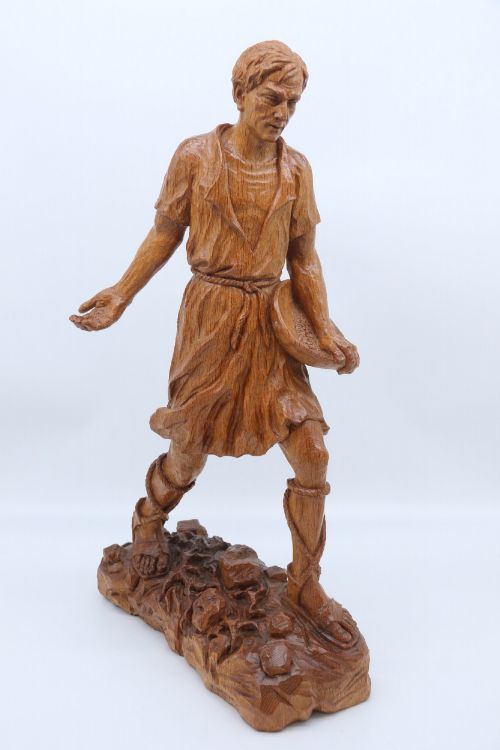
Frames are constructed from wood, including oak, with many pieces preserved beneath glass. Sculptural works utilise hand-carved golden oak to shape figures of farm workers.
The application of paint varies from smooth, controlled watercolours to textured oil strokes that give weight and presence to heavy horses and the landscape.
Listings feature paper, canvas, oak, glass, and ink across paintings, watercolours, and carved wooden sculptures.
Distinctions in Quality
The strength of the composition and the handling of light separate the finer works from simpler representations. Skilled artists render the physical exertion of farm hands and plough teams with anatomical precision and atmospheric depth.
The preservation of the medium plays a part, as watercolours retain their vibrancy when protected properly behind glass, while oil paintings on canvas benefit from stable surfaces and well-maintained wooden frames.
Works by named artists with documented exhibition histories carry greater art historical weight, showing a sure command of British Realism and Pastoral traditions.
Herbert Dicksee·Oswald Garside·James William Booth·George Soper·Arthur Winter Shaw·Vernon Stokes·Herbert Royle·Joseph Kirkpatrick·Ernest Higgins Rigg·Owen Bowen·George Wright
The Edwardian Agricultural Art Glossary
- Watercolour
- A painting method where fine pigment is suspended in a water-based solution, applied to paper. It allows for translucent washes of colour and delicate atmospheric effects.
- Etching
- A printmaking process where lines are incised into a metal plate with acid before ink is applied and transferred to paper. This technique creates sharp, highly detailed lines.
- Oil on Canvas
- Pigment mixed with drying oil applied to a stretched cloth surface. This medium allows for rich colour blending and textured brushwork.
- Pastoral
- A style of art that idealises rural life and agrarian scenes. It focuses on the peaceful coexistence of humans, animals and the natural landscape.
- Arts and Crafts
- A design movement valuing traditional craftsmanship and natural materials. It often incorporates hand-carved woodwork and motifs drawn from rural life.
Edwardian Agricultural Art: Frequently Asked Questions
What subjects appear in Edwardian agricultural art?
These works focus on rural labour, featuring scenes of hay carting, ploughing teams, milking time and farm hands at work. Animals, particularly heavy horses and cattle, frequently share the foreground with human figures.
The settings draw from traditional British farmyards and pastoral landscapes, documenting agricultural practices before mechanisation changed the countryside.
How should I hang these watercolours?
Watercolours and works on paper require protection from direct sunlight to prevent the pigments from fading over time. Glazed frames help shield the paper from environmental moisture and dust.
Position them on interior walls where light levels remain stable and moderate to preserve the integrity of the paper and the framing.
Are these pieces original works?
The selection includes original hand-painted watercolours, oil paintings on canvas, hand-carved wooden sculptures and original etchings. Each piece is a unique creation by the artist rather than a modern reproduction.
Signatures, dates and framing details often accompany the physical work, pointing to its period of origin.
How do I identify the period of a piece?
Dating relies on signatures, artist lifespans, stylistic movements such as British Impressionism, and framing materials. Pieces span the late nineteenth century through the Edwardian era and into the nineteen-twenties and thirties.
Subject matter and technique often align with the established working periods of the artists recorded in the signatures.