




Antique Cattle Portrait
An antique cattle portrait captures the robust dignity of prized livestock in oil on canvas.
Antique Cattle Portrait
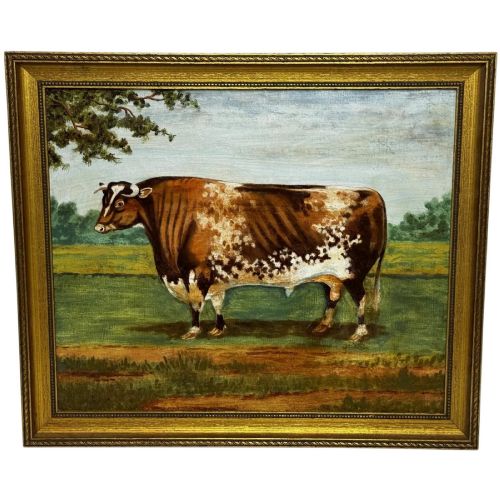
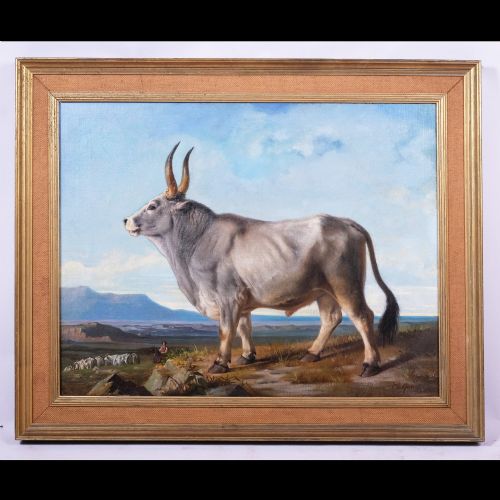
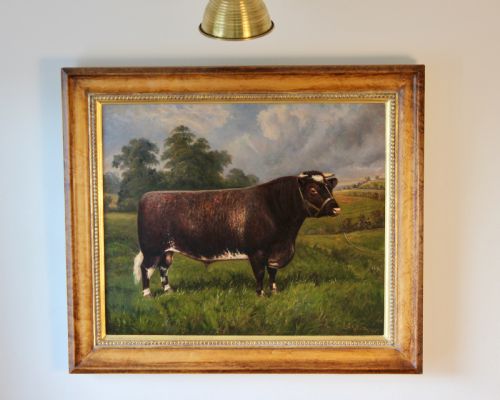
When you search for an antique cattle portrait, you encounter framed canvases depicting bulls, cows, and calves from the nineteenth century and the Edwardian era. These works range from academic representations of shorthorn and Hereford breeds to naive stable scenes and pastoral landscapes.
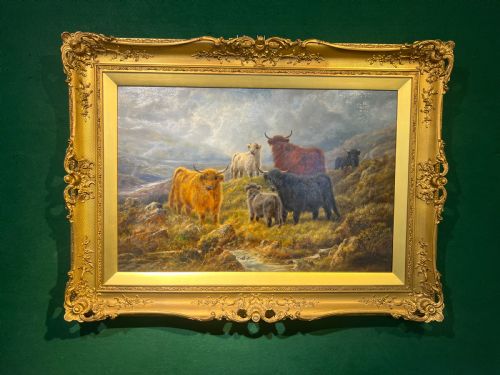
The pieces on this page are predominantly oil paintings executed on canvas, often housed in period giltwood and plaster frames. They reflect both British school realism and continental European artistry, showing animals in fields, snow, and farmyards.
Collectors generally encounter two distinct approaches within this genre: meticulous anatomical studies commissioned by agricultural improvers and broader atmospheric scenes of highland cattle. Both traditions celebrate the centrality of livestock in rural life during the Victorian period.
Assessing quality
Quality rests upon the artist's command of animal anatomy and the specific rendering of the breed, moving from stiff naive interpretations to highly observed naturalism. A successful portrait conveys the weight, muscle structure, and individuality of the beast rather than a generic outline.
Condition of the canvas and the originality of the frame also determine the standing of a piece, alongside the presence of a clear signature or attribution to a recognised painter. Works that retain their untouched nineteenth-century surface hold greater visual coherence.
Several canvas portraits record the exact names of champion beasts, immortalising individual nineteenth-century farm animals forever.
Thomas Sidney Cooper·Heinrich Harder·Charles Jones·Claude Cardon·John W Morris·William Huggins
The Antique Cattle Portrait Glossary
- Oil paint
- A slow-drying paint made by combining pigments with a drying oil, typically linseed. This medium allowed artists to achieve deep tonal gradations and lifelike textures in animal coats.
- Giltwood
- Wood carved and coated with gold leaf or metal leaf, commonly used for nineteenth-century picture frames. It adds a warm reflective border to the painting.
- Canvas
- A heavy woven fabric used as a surface for oil painting, usually stretched tightly over a wooden frame. It forms the primary structural support for these pastoral portraits.
- Naive art
- Art produced by a self-taught painter, characterised by a departure from strict perspective and proportion. These works possess a direct and charming folk quality.
- Recumbent
- Depicting an animal lying down or resting. This pose allowed artists to emphasise the bulk and tranquil nature of prize cattle.
Antique Cattle Portrait: Frequently Asked Questions
What are antique cattle portraits?
These are nineteenth-century and early twentieth-century oil paintings on canvas that focus on bulls, cows, and calves. They range from formal portraits of prize-winning livestock to atmospheric depictions of cattle in rural landscapes.
Many reflect the Victorian interest in agriculture and animal husbandry, capturing specific breeds such as Shorthorns, Herefords, and Highland cattle with varying degrees of academic precision.
Who painted these animal portraits?
The works were created by academic animal painters, regional British and continental artists, and occasionally self-taught folk painters. Some makers specialised entirely in livestock and agricultural scenes.
Signatures or contemporary inscriptions on the canvas or stretcher often identify the painter, though many surviving pieces remain anonymous or attributed to specific regional schools.
How do I hang and care for them?
Display the canvas away from direct sunlight and damp conditions to protect the oil paint and the underlying wooden stretcher. Maintaining stable room temperature prevents the canvas from slackening.
Dust the giltwood frame gently with a dry, soft brush, and avoid using liquid cleaners on either the gilded surfaces or the painted canvas.
How do I tell periods apart?
Victorian examples often combine meticulous realism with detailed pastoral backgrounds or stable interiors, reflecting the era's focus on prize stock. Later Edwardian works sometimes adopt looser brushwork or impressionist tendencies.
Framing styles, canvas stamps from period art suppliers, and stretcher construction also offer reliable clues to the date of execution.