


Edinburgh Furniture
Edinburgh antique furniture brings together sturdy Scottish timbers and refined cabinet-making from Georgian dining rooms down to Art Deco boudoirs.
Edinburgh Furniture
When buyers search for Edinburgh antique furniture, they look for regional Scottish pieces rooted in local workshops from the Georgian period through the early twentieth century. The selection ranges from robust birch and oak seating to mahogany library tables and walnut dressing mirrors.
The versions most commonly met here originate from notable Edinburgh makers such as Whytock and Reid, William Trotter, and Morison and Co. These pieces reflect specific urban design trends, spanning George III forms, Regency card tables, and Victorian cabinets.
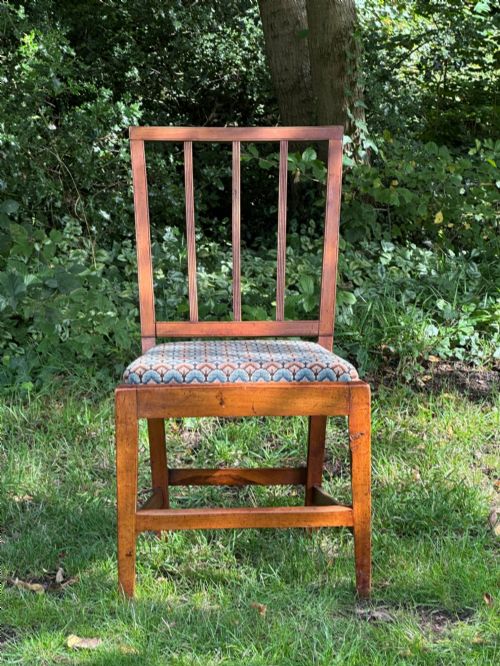
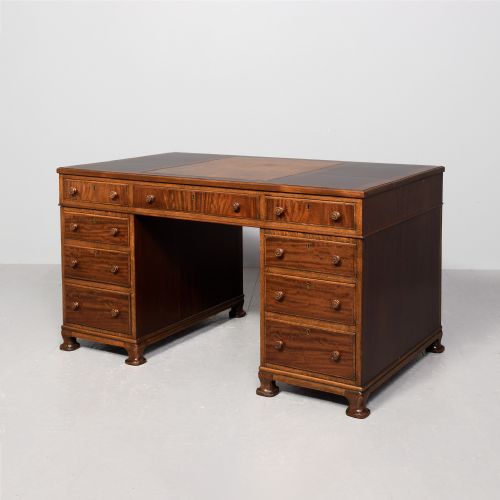
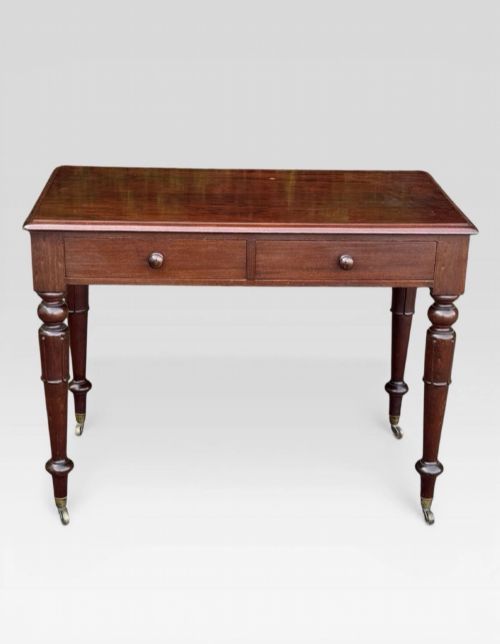
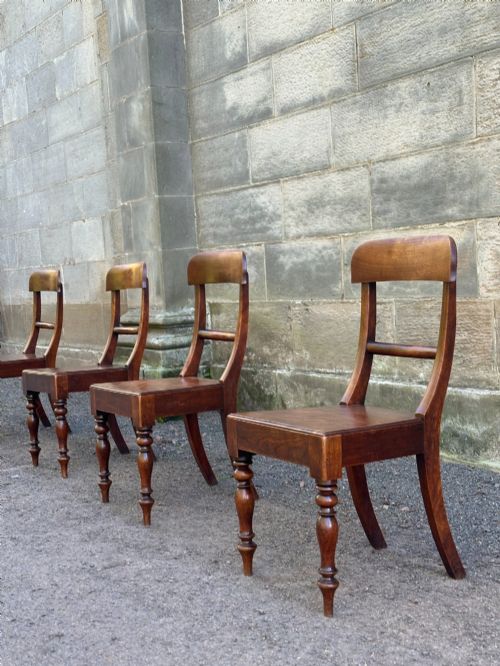
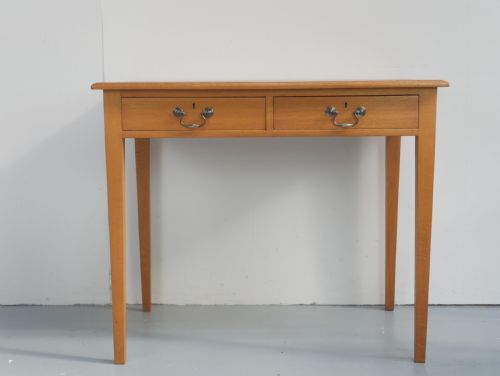
Practical forms dominate the listings, including pedestal desks, side tables, side chairs, and tea tables. Each item demonstrates the distinct character of Scottish cabinet-making traditions alongside broader British stylistic revivals.
Materials and construction
Makers utilised dense native and imported timbers, notably solid birch, oak, walnut, and mahogany, frequently enhanced by lacewood banding or burr oak veneers. These woods provided the structural integrity required for heavy library tables and large pedestal desks.
Joinery techniques relied on traditional framing and dovetailing to support complex forms like secretaire chests of drawers and folio cabinets. Upholstered pieces integrated textiles and velvet over sturdy wooden frames.
Surface finishes respected the natural grain of the timber, whether dealing with a George III hunt table or an Art Deco dressing table mirror. Detail work involved careful carving and turning executed by skilled hands.
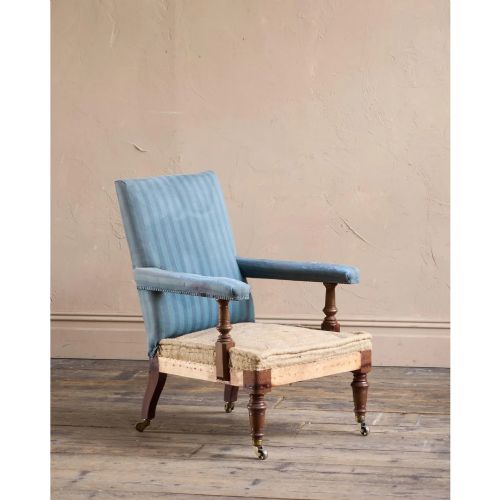
Prie-dieu chairs wait quietly for silent morning devotions, though they now happily host afternoon tea.
Judging quality
Quality rests upon the selection of timber and the precision of the cabinet-maker's construction. Pieces utilising dense burr oak, satinwood, or figured mahogany sit at the top of the range.
Attribution to documented Edinburgh workshops elevates a piece, as seen in labeled or stamped works by William Trotter or Whytock and Reid. The crispness of carved details and the integrity of secondary woods define the tier of craftsmanship.
Whytock and Reid·William Trotter·Morison and Co·John Taylor·J A Mein·R Whytock·Jenners·J and T Scott
The Edinburgh Furniture Glossary
- Birch
- A pale, heavy hardwood favoured by Scottish cabinet-makers for regional chairs and tables. It yields a smooth surface when polished.
- Secretaire
- A cabinet or chest of drawers featuring a fitted writing drawer with a drop-front desk. This form combines storage with a compact workspace.
- Pedestal desk
- A large writing table supported by two banks of drawers. These items formed the centrepiece of nineteenth-century libraries.
- Card table
- A folding table designed for gaming, typically lined with fabric or velvet on the inner surface. Regency examples often display intricate mahogany veneers.
- Library table
- A freestanding wooden table meant for reading and writing, finished on all sides for placement in the middle of a room.
Edinburgh Furniture: Frequently Asked Questions
How do I identify a William Trotter piece?
William Trotter pieces typically date from the late eighteenth to the mid-nineteenth century and display fine Regency proportions. Look for rich mahogany veneers, lacewood banding, and precise cabinet work.
While some bear direct attribution, others are recognised through stylistic comparison with documented Edinburgh examples.
Where were these pieces used?
These items originally furnished Scottish country houses, Edinburgh townhouses, and professional offices. Tables, desks, and chairs served practical daily functions in dining rooms, libraries, and drawing rooms.
Today, they transition easily into modern interiors as functional desks, side tables, and seating.
Are Whytock and Reid items antique?
Whytock and Reid operated across the nineteenth and twentieth centuries, producing pieces from the Victorian era through the Art Deco period. Their earlier items now hold antique status, while later twentieth-century pieces are valued as vintage design.
The firm is particularly noted for high-quality cabinets, desks, and chairs.