



Needlepoint Upholstered Ottoman
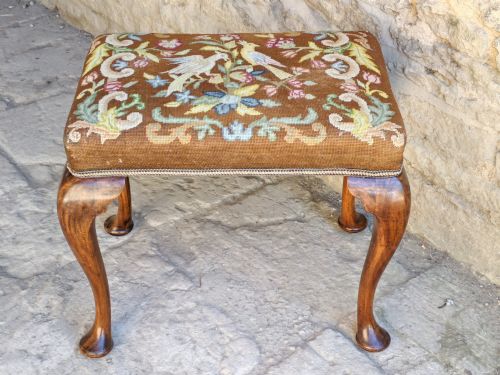
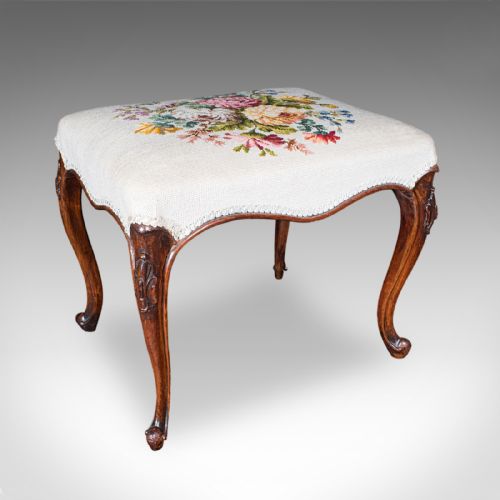
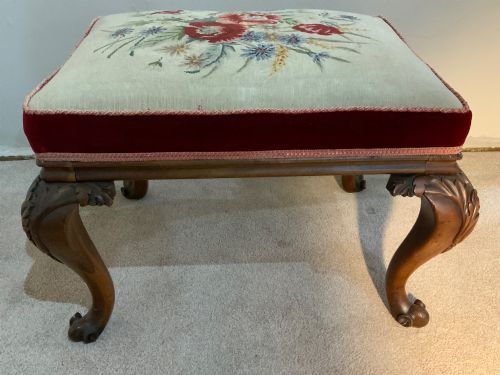
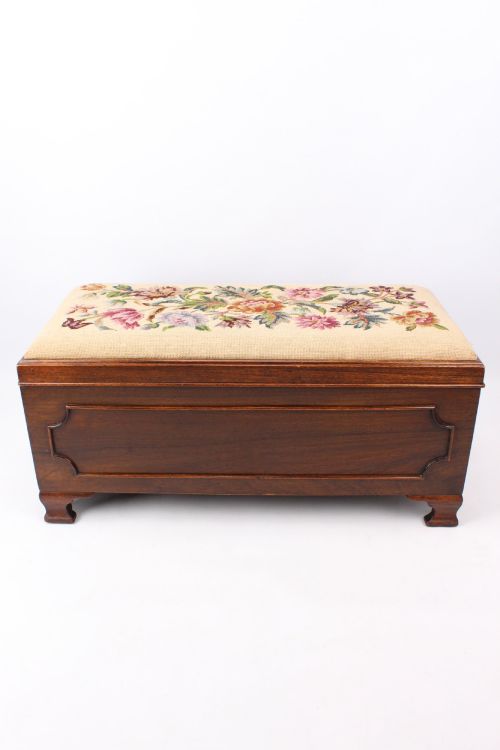
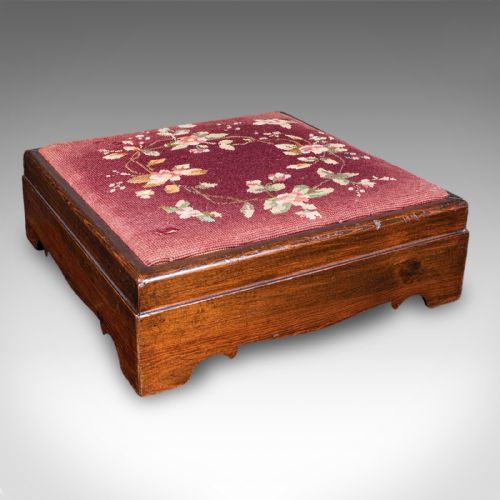
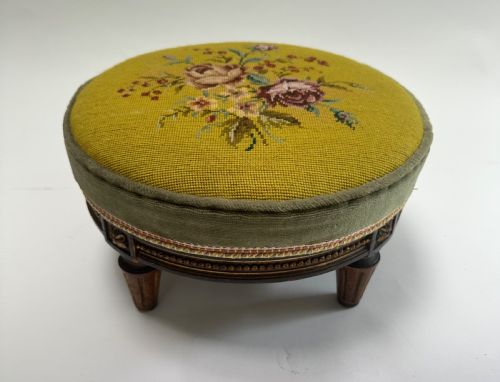
These needlepoint upholstered ottoman examples combine sturdy timber frames with hand-worked textile tops to serve every room.
Needlepoint Upholstered Ottoman
A needlepoint upholstered ottoman brings together traditional seating frames and detailed textile work from the Victorian era onward. You will regularly encounter small fireside footstools, dressing table seats, and larger centre pieces across this selection.
Makers fashioned these pieces in walnut, mahogany, and rosewood, often adopting earlier stylistic revivals such as Queen Anne or Georgian. The range extends from compact footrests to generous long stools designed for the end of a bed.
Materials and Construction
Frames rely on solid hardwoods like walnut, mahogany, rosewood, oak, and pitch pine, shaped with turned legs or carved details. Joinery securely anchors the structure before textile tops are applied.
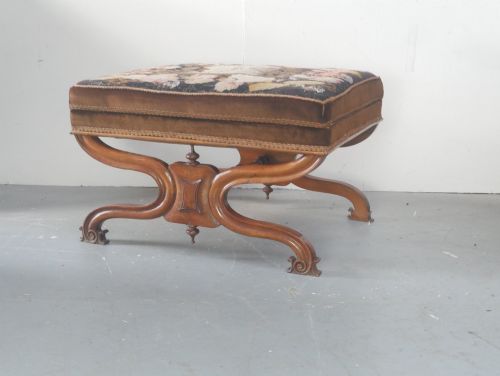
The characteristic upholstery uses wool needlepoint and tapestry work, sometimes mounted over brass detailing or finished with cross stretchers for stability.
Listings span from the 18th century to the 1930s, featuring walnut, mahogany, rosewood, and wool tapestry.
Judging the Standard
Quality rests upon the crispness of the timber carving and the tightness of the frame joinery, alongside the fineness of the needlepoint stitches. Dense woolwork and sturdy hardwoods elevate a piece above simpler utilitarian examples.
Whytock and Reid
The Needlepoint Upholstered Ottoman Glossary
- Needlepoint
- A form of canvas work embroidery executed with wool yarn, creating the durable patterned top found on these stools. It forms the primary decorative surface for this search phrase.
- Cross stretcher
- An intersecting wooden brace between the legs of a stool that adds structural support. This feature appears frequently on larger dressing table and centre examples.
- Tapestry
- A hand-woven or needle-worked textile panel used historically for upholstery. These surfaces display varied floral or geometric motifs.
- Pitch pine
- A resinous softwood utilised in certain regional frames. It provides a robust alternative to standard cabinet timbers.
Needlepoint Upholstered Ottoman: Frequently Asked Questions
Where should I place a needlepoint upholstered ottoman?
These pieces fit naturally beside firesides, beneath dressing tables, or at the foot of a bed where extra seating is useful.
Their compact scale also permits placement in hallways or corners as an accent piece.
How do I care for the needlepoint top?
Gentle vacuuming with a soft brush attachment removes surface dust without catching the wool threads.
Avoid direct sunlight to prevent fading of the traditional dyed yarns.
Are these stools sturdy enough for daily sitting?
Solid hardwood frames built with traditional joinery remain robust for everyday use.
Check that the legs and stretchers feel secure before placing heavy weight upon the seat.
How do I distinguish Victorian from Edwardian pieces?
Victorian examples often feature heavier carved walnut or rosewood frames with ornate detailing.
Edwardian and later pieces frequently employ simpler lines or alternative timbers like pitch pine.