






Ecclesiastical Table Light
An ecclesiastical table light brings architectural gravity and sacred illumination into a domestic interior through repurposed altarware.
Ecclesiastical Table Light
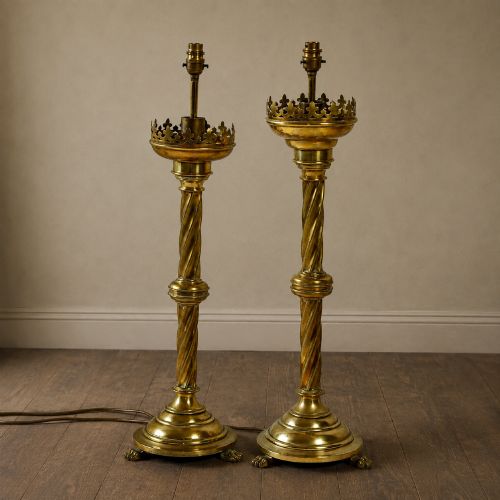
An ecclesiastical table light bridges the gap between liturgical furnishing and domestic illumination, typically originating as altar candlesticks or pricket sticks before later conversion into lamps. Buyers pursuing this aesthetic encounter robust forms rooted in devotional spaces, designed to command attention upon a side table or sideboard.
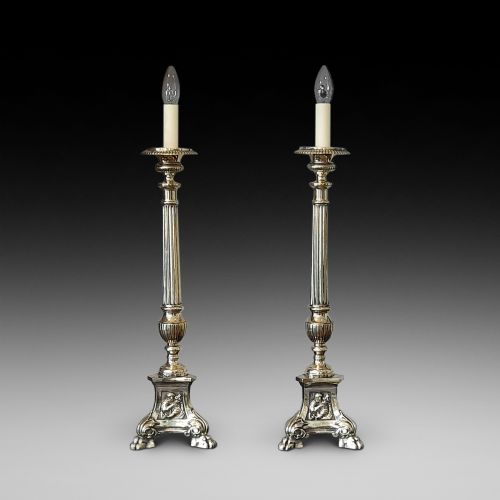
Stylistic markers across the selection include strict Gothic Revival verticality, French ecclesiastical ornamentation, and Spanish Baroque flourishes. These items function as focal points in a room, carrying the patina and solemnity of their original religious contexts into everyday residential schemes.
Materials and Making
Construction relies upon cast and spun brass, heavy giltwood, and carved wood enhanced with gesso and gold leaf. Metal components often display the substantial weight required to steady tall shafts during church services, whilst wooden variants utilise traditional joinery and hand-carved detailing.
Surface treatments combine applied gilding, silver plating, and ormolu finishes over foundational base metals or timber. Many examples integrate later electrical components discreetly through hollow stems or central bores originally designed to hold candle sockets and prickets.
Periods represented span from the 18th century through the Victorian era and into the 1930s.
Quality and Proportion
Quality reveals itself primarily through the crispness of cast metal ornamentation and the depth of hand-carved wood beneath the gilding. Superior pieces maintain harmonious architectural proportions where the base, stem, and capital relate logically to one another without awkward additions.
The integrity of the original material surface - whether aged brass with authentic oxidation or intact gold leaf over gesso - separates finer examples from those with heavily compromised finishes. Conversion methods also matter, as professional adaptations preserve the historic structure whilst ensuring safe electrical operation.
The Ecclesiastical Table Light Glossary
- Pricket
- A sharp metal spike atop a candlestick designed to secure a candle by its base. This form predates standard socket holders in ecclesiastical settings.
- Giltwood
- Timber that has been coated with a thin layer of gold leaf or powder. It provides a luminous surface often found on continental altar pieces.
- Gesso
- A plaster mixture applied to wood surfaces as a smooth base for gilding or painting. It allows for crisp carved details on antique lamp bases.
- Ormolu
- Finely ground high-carat gold applied to a bronze base using a mercury amalgamation process. This technique yields a rich, durable metallic lustre.
- Gothic Revival
- An architectural and decorative style drawing inspiration from medieval forms. It dominates nineteenth-century ecclesiastical metalwork with pointed arches and trefoils.
Ecclesiastical Table Light: Frequently Asked Questions
What is an ecclesiastical table light?
An ecclesiastical table light is a repurposed altar candlestick or church candelabrum adapted to function as an electric lamp. These pieces originate from places of worship and retain their formal, architectural presence.
They bring historical depth and vertical emphasis to domestic interiors, serving as striking focal points on side tables or desks.
How do I date these lamps?
Dating relies upon stylistic clues, material composition, and manufacturing techniques evident in the metal or wood. Nineteenth-century Gothic Revival pieces often display crisp, machine-aided casting alongside hand-finished details.
Earlier eighteenth-century Spanish and Italian examples typically show deeper hand-carving in wood and heavier wear beneath the gilt layers.
Were these originally electric?
None of these pieces were made with electricity in mind; they were designed to burn wax candles upon church altars. Later workshops converted them by running wiring through the centre and adding lamp fittings.
Conversion methods vary, but skilled adaptations respect the original historic material without causing unnecessary structural damage.
How do I style them at home?
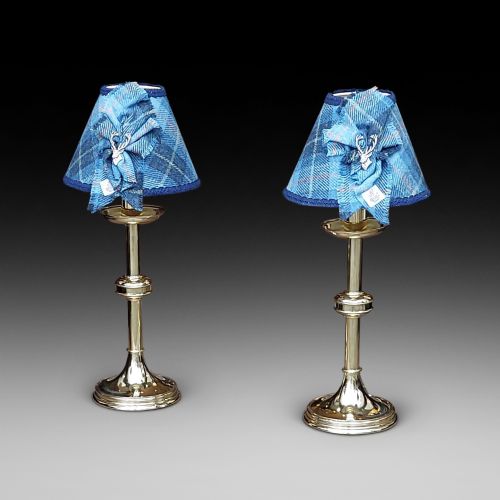
These lamps suit rooms that benefit from strong vertical lines and a mix of historic textures. Pair them with simple fabric shades to balance the heavy metal or giltwood bases.
They anchor dark wood sideboards, classical mantlepieces, or reading corners where their architectural character can stand out.