





Ecclesiastical Revival Furniture
Ecclesiastical revival furniture brings the solemn architecture of chapel and church into domestic interiors through heavy timber and pointed arches.
Ecclesiastical Revival Furniture
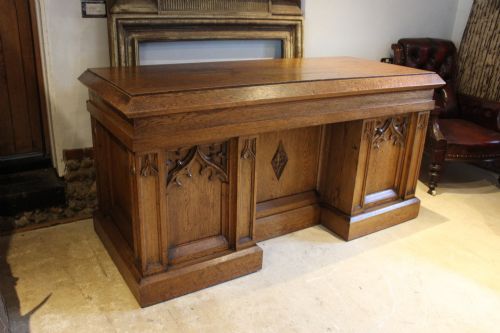
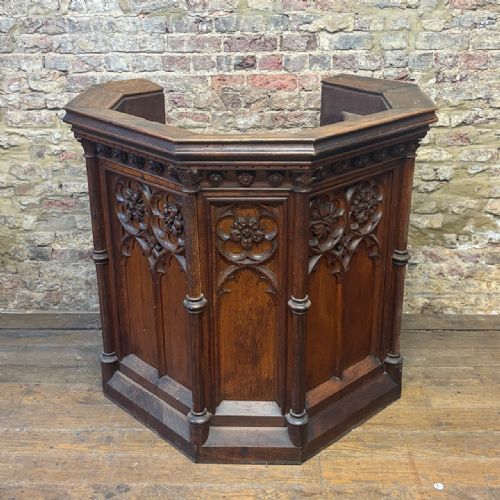
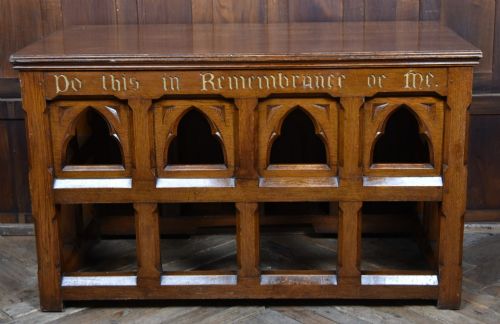
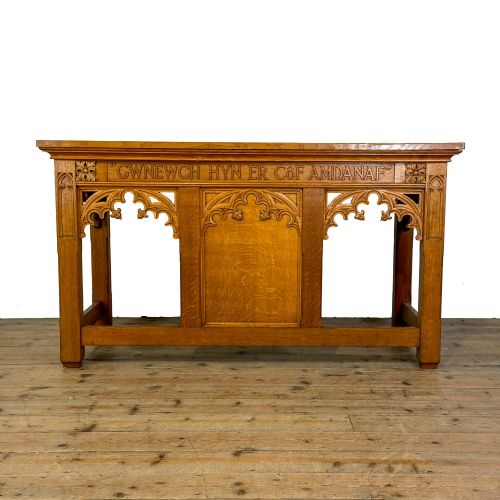
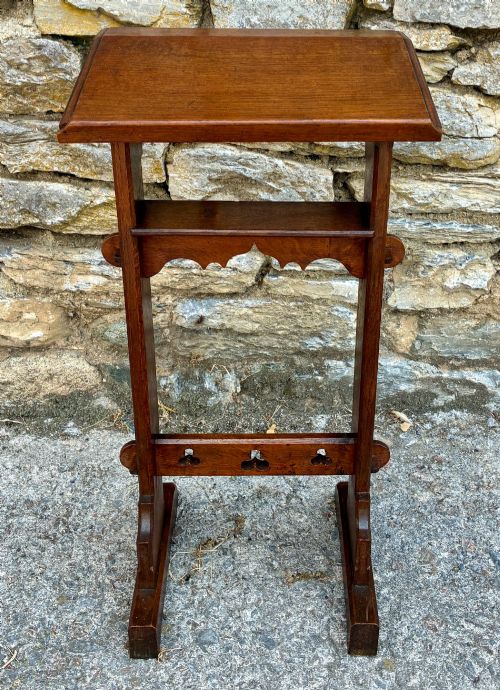
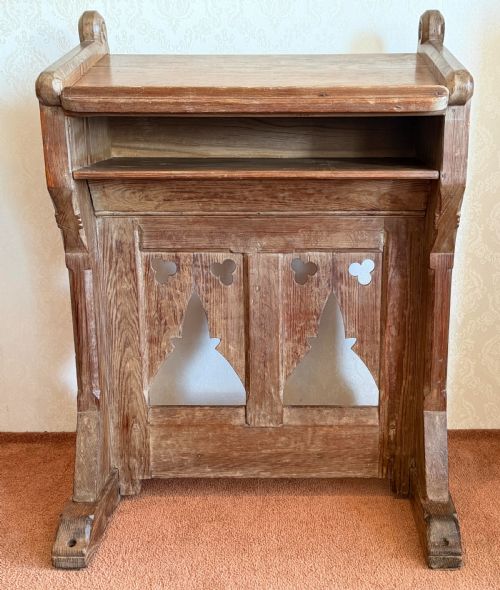
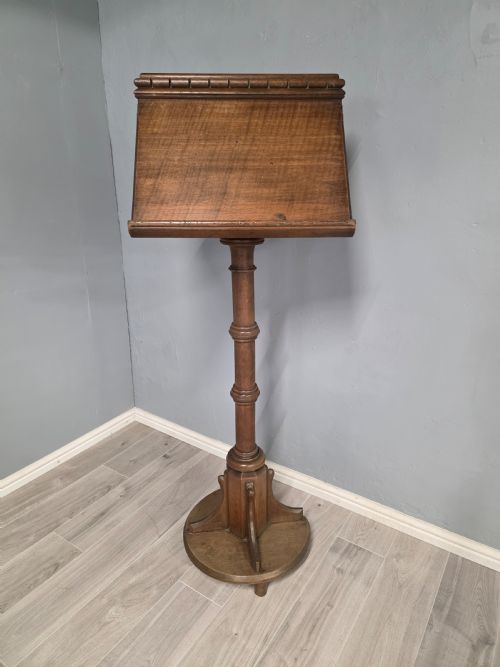
Ecclesiastical revival furniture comprises items shaped by religious architecture and ritual, predominantly originating from the Victorian and Edwardian periods. Buyers encounter pieces designed for liturgical use, such as altars, pulpits, prayer desks, and lecterns, alongside seating adapted for domestic or chapel settings.
The selection on this page centres on oak and pitch pine objects executed in the Gothic revival style. Armchairs including Glastonbury chairs and church chairs appear alongside reading desks and hymn boards, reflecting the nineteenth-century passion for medieval design.
Materials and Construction
Makers utilised solid timbers, principally oak and pitch pine, chosen for their durability and capacity to hold deep hand-carved relief work. Brass appears in utilitarian elements and decorative rails, whilst gold leaf occasionally heightens architectural details.
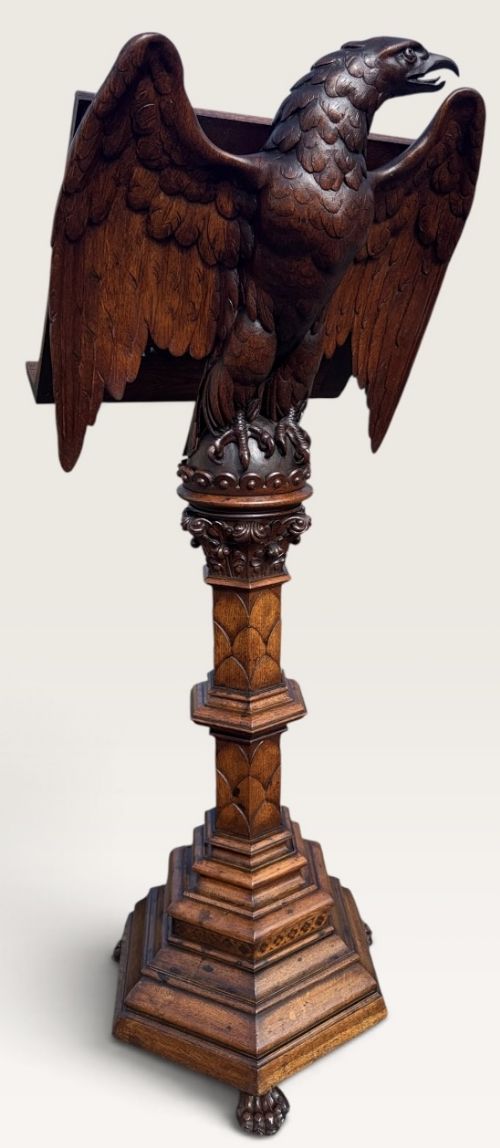
Construction relies on traditional joinery methods suited to heavy church furnishings, combining exposed tenons with panelled and carved assemblies. Surfaces display the tool marks of the woodworker, whether in the plumage of a carved eagle lectern or the chamfered edges of a pew end.
Ecclesiastical Revival Furniture Retail Price Guide 2026
Typical asking prices for ecclesiastical revival furniture among the pieces listed under this phrase on Sellingantiques today, from the lower quarter to the upper quarter. They describe what is for sale here now, not the wider market.
Several reading desks feature carved wooden eagles large enough to hold heavy service books without losing their dignified posture.
Craftsmanship and Proportion
Quality rests in the crispness of the hand-carving and the architectural integrity of the design. Superior pieces demonstrate confident handling of Gothic motifs like tracery and pointed arches, whereas lesser examples rely on mechanical stamping or simplistic surface decoration.
Proportion and timber selection further distinguish the work, as denser oak and well-figured pitch pine yield a more convincing architectural presence. The integration of structural joinery with decorative carving dictates whether a piece holds its historical character.
The Ecclesiastical Revival Furniture Glossary
- Gothic Revival
- A design movement drawing inspiration from medieval ecclesiastical architecture, marked by pointed arches, trefoils, and heavy timber construction.
- Prie-Dieu
- A devotional desk or chair designed for kneeling while praying, often incorporating a sloped shelf for books.
- Glastonbury Chair
- A type of wooden armchair with an X-framed base and sloped back, inspired by medieval models associated with Glastonbury Abbey.
- Pitch Pine
- A durable resinous softwood utilised extensively for nineteenth-century church interiors and institutional furniture.
- Pew End
- The visible vertical panel at the end of a church pew, frequently decorated with linenfold carving or tracery.
Ecclesiastical Revival Furniture: Frequently Asked Questions
How do I use a church chair at home?
Church chairs and Glastonbury chairs fit naturally around dining tables or as desk seating. Their sturdy frames provide reliable daily support while adding a strong architectural accent.
Pair them with simpler modern tables to let the carved details and timber grain stand out.
Where were these pieces originally placed?
Many items originated in Victorian and Edwardian parish churches, chapels, and monastic institutions. Lecterns, altars, and pulpits served specific liturgical functions during services.
Other items like writing tables and hall furniture adapted chapel aesthetics for domestic vicarages and secular halls.
How can I tell the Victorian pieces apart?
Victorian examples rely heavily on Gothic revival motifs executed in solid oak or pitch pine. Examining the joinery and the depth of the hand-carving helps distinguish the period.
Later pieces from the Edwardian era or the early twentieth century often display simpler lines whilst retaining traditional timber construction.