



Ecclesiastical Oak Armchair
These heavy timbers give an ecclesiastical oak armchair its undeniable presence, offering substantial seating rooted in centuries of church history.
Ecclesiastical Oak Armchair
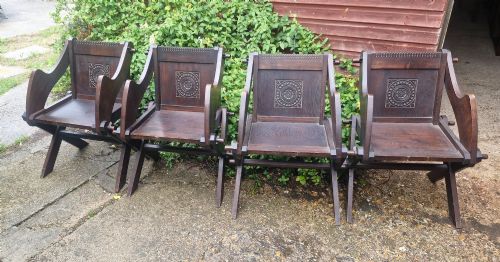
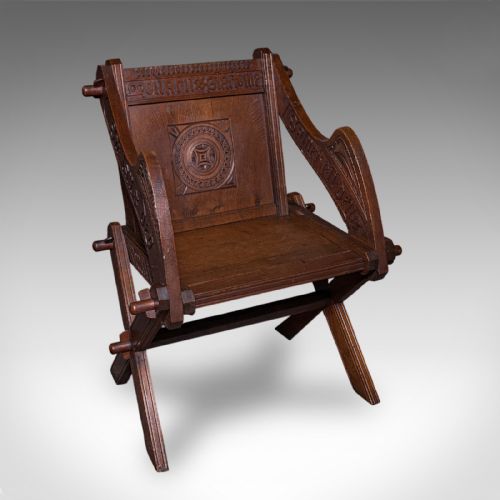
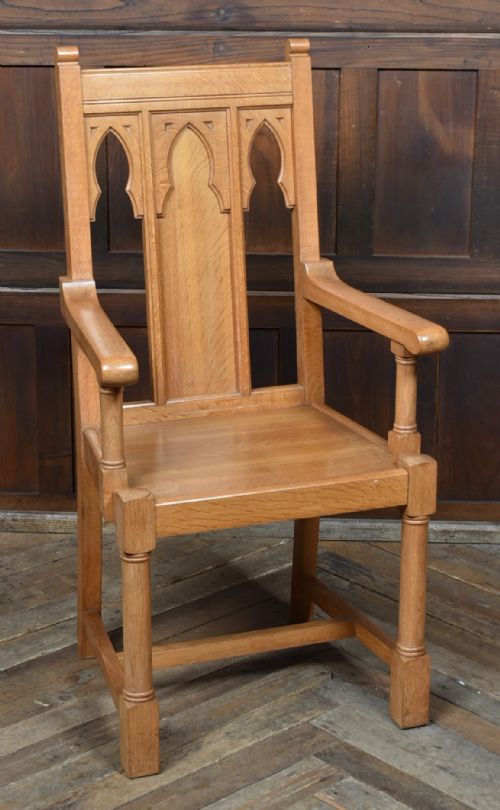
An ecclesiastical oak armchair draws heavily on medieval church architecture, incorporating pointed arches, linenfold panelling, and traceried backs into domestic and institutional seating. When you search for an ecclesiastical oak armchair, you meet robust heavy seats that often take the form of Glastonbury chairs or towering throne-like proportions.
The pieces seen here span from the nineteenth century through the Edwardian period and into the nineteen-twenties, showing styles rooted firmly in Gothic Revival and Victorian Gothic taste. English, Welsh, and Scottish origins appear frequently, alongside rarer chapel and church specific seating forms.
Armchairs and elbow seats dominate the selection, frequently upholstered in fabric or featuring turned arm supports and inscribed woodwork. Whether you choose a low Glastonbury chair or an imposing chapel throne, each piece brings architectural weight directly into a room.
Construction and materials
Solid timber forms the foundation of these pieces, with oak serving as the primary material for frames, backs, and legs. Joinery relies on traditional pegged mortise and tenon joints to withstand the heavy loads placed on church and hall furniture.
Metal elements such as brass appear occasionally in hardware or decorative accents, complementing the dark tones of the aged wood. Upholstered sections incorporate fabric pad seats, while other examples rely entirely on carved wooden planking for the seat base.
Ecclesiastical Oak Armchair Retail Price Guide 2026
Typical asking prices for ecclesiastical oak armchair among the pieces listed under this phrase on Sellingantiques today, from the lower quarter to the upper quarter. They describe what is for sale here now, not the wider market.
Listings for this phrase include examples in oak, fabric, and brass, spanning the Victorian period up to nineteen-twenty.
Assessing quality and character
Depth of carving and clarity of Gothic detail separate simpler utilitarian seating from grander architectural interpretations. Crisp tracery, well-defined chamfers, and balanced proportions reveal the hand of a skilled cabinet maker working within the Gothic Revival idiom.
Timber selection and ageing also define the character of the piece, as rich patination and tightly grained oak elevate the visual weight of the chair. Retained inscriptions, original fabric elements, and documented church provenances add historical depth that elevates certain examples above standard production.
The Ecclesiastical Oak Armchair Glossary
- Glastonbury chair
- A folding-style armchair with X-framed legs and a sloping back, popularised during the Gothic Revival and frequently constructed in oak.
- Gothic Revival
- An architectural and decorative style drawing inspiration from medieval forms, characterised by pointed arches, trefoils, and heavy structural timbers.
- Elbow seat
- A traditional term for an armchair, particularly one with solid wooden arms designed for a hall or ecclesiastical setting.
- Throne chair
- An imposing armchair with a high panelled back and architectural canopy or cresting, designed to command authority in a chapel or chancel.
- Carver armchair
- A sturdy wooden armchair, often used at the head of a dining table or in a hallway, matching a set of simpler side chairs.
Ecclesiastical Oak Armchair: Frequently Asked Questions
Where were these chairs used originally?
Many of these chairs served in churches, chapels, and vestries for clergy or senior congregation members.
Others found their way into Victorian and Edwardian domestic halls and libraries, where the Gothic taste remained fashionable.
How do I care for antique oak?
Keep the wood away from direct heat sources and sudden humidity changes to prevent the timber from splitting.
Apply a traditional wax polish occasionally to nourish the surface and maintain the natural lustre of the grain.
Are Glastonbury chairs comfortable to sit in?
The sloped wooden back and angled seat offer a surprisingly supportive upright posture for short periods of sitting.
Some examples feature upholstered pads that soften the seat, though the primary focus of the design remains architectural presence.
How can I tell the period of the chair?
Nineteenth-century examples often display exuberant Gothic Revival carving, heavy Victorian proportions, and visible tool marks.
Later pieces from the early twentieth century tend to show simpler vernacular interpretations or cleaner architectural lines.