



Oak Glastonbury Chair
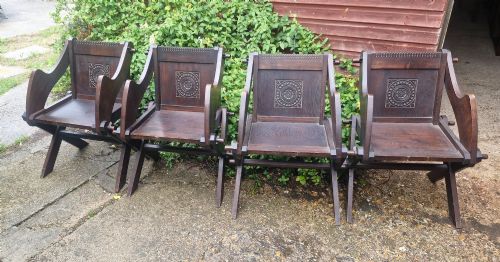
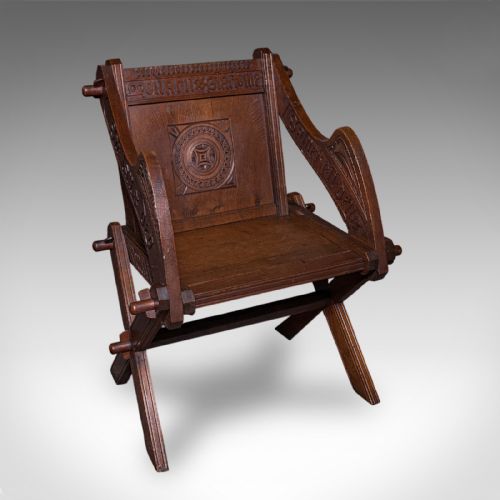
These solid oak Glastonbury chairs are heavy folding armchairs built in the Gothic Revival style, prized for their traditional ecclesiastical presence.
Oak Glastonbury Chair
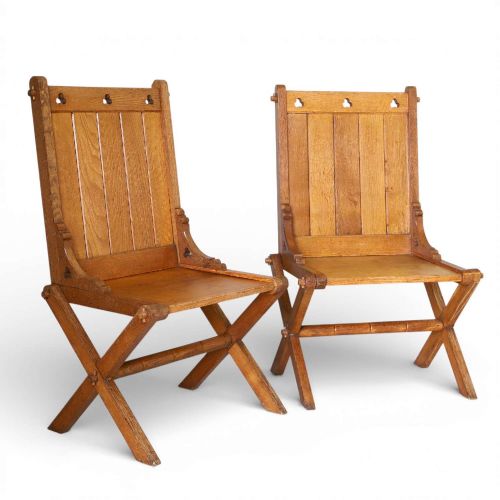
Most examples function as library or study armchairs, while some smaller or side variants appear as hall chairs. English and Welsh workshops dominate the origin of these pieces, often incorporating carved details such as trefoils or religious motifs.
Buyers encounter single examples alongside matched or formal pairs, occasionally including larger sets suitable for dining or ecclesiastical use. The distinctive X-frame construction allows the chair to be dismantled or folded, maintaining the practical utility of the original medieval prototypes.
Judging the quality of a Glastonbury chair
The standard of carving dictates the visual success of the piece, separating plain utilitarian examples from deeply sculpted specimens. Crisp, well-defined rendering of Gothic motifs indicates a higher grade of craftsmanship by the maker.
Timber selection and structural stability also mark the division between standard production and superior examples. Solid oak with a rich, uniform colour and tight grain commands greater attention than timber with heavy warping or poorly executed modern repairs to the cross-frame.
Oak Glastonbury Chair Retail Price Guide 2026
Typical asking prices for oak glastonbury chair among the pieces listed under this phrase on Sellingantiques today, from the lower quarter to the upper quarter. They describe what is for sale here now, not the wider market.
All recorded listings for this search phrase use solid oak as the primary material, spanning the Victorian period and the early twentieth century.
The Oak Glastonbury Chair Glossary
- Gothic Revival
- An architectural and decorative style popular during the nineteenth century that revived medieval forms, pointed arches, and ecclesiastical motifs. This style heavily influences the carved details found on these chairs.
- Cross-frame
- A structural base formed by two interlocking diagonal members that support the seat and arms. This arrangement provides the distinctive folding capability of the Glastonbury design.
- Trefoil
- A three-lobed decorative ornament resembling a clover leaf, commonly pierced or carved into the woodwork of Gothic Revival furniture. It appears frequently in the backrests and panels of these chairs.
- Elbow seat
- A traditional term for an armchair, particularly those with low, flat armrests designed for resting the elbows. These chairs are frequently described as elbow seats in nineteenth-century records.
- Ecclesiastic armchair
- A seating form designed with church-inspired ornamentation, often featuring religious symbols such as the Crown of Thorns. These pieces reflect the medieval clerical origins of the chair type.
Oak Glastonbury Chair: Frequently Asked Questions
How do you date an antique Glastonbury chair?
Dating relies on examining the timber characteristics, construction methods, and the style of the carved ornamentation. Pieces from the Victorian period often display deep Gothic Revival motifs and heavy patination.
Chairs from around 1900 or the early Edwardian period may show slightly lighter construction or Arts and Crafts influences. Comparing the joinery with dated comparative pieces helps narrow down the decade of manufacture.
Were these chairs actually made in Glastonbury?
The name derives from a famous medieval chair preserved at Glastonbury Abbey rather than a specific manufacturing location. Nineteenth-century cabinet makers across England and Wales produced these revival pieces in their workshops.
As a result, regional variations appear in the carving depth and specific oak selection while retaining the iconic cross-frame architecture.
How should I live with a Glastonbury chair?
These solid oak chairs function well as statement armchairs in studies, libraries, or hallways where their architectural silhouette can be appreciated. Because of their wooden panelled seats, adding a loose cushion can increase sitting comfort.
Maintenance involves keeping the timber away from direct heat sources and applying a traditional wax polish to preserve the natural grain of the oak.