



Ecclesiastical Hall Chair
An ecclesiastical hall chair brings the solemn architecture of the church into domestic spaces through pointed arches and sturdy timber.
Ecclesiastical Hall Chair
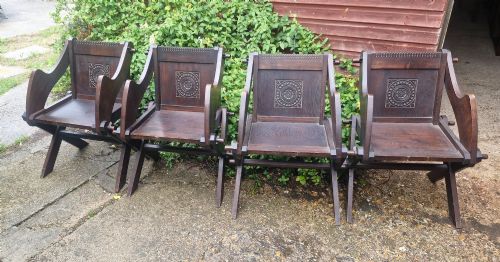
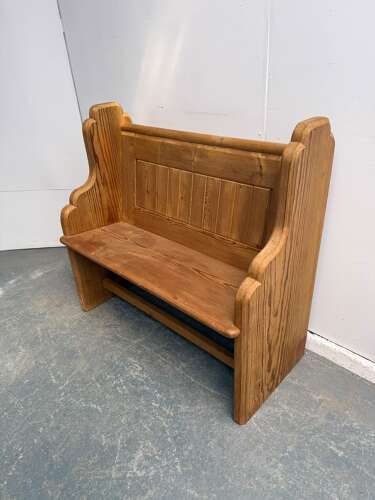
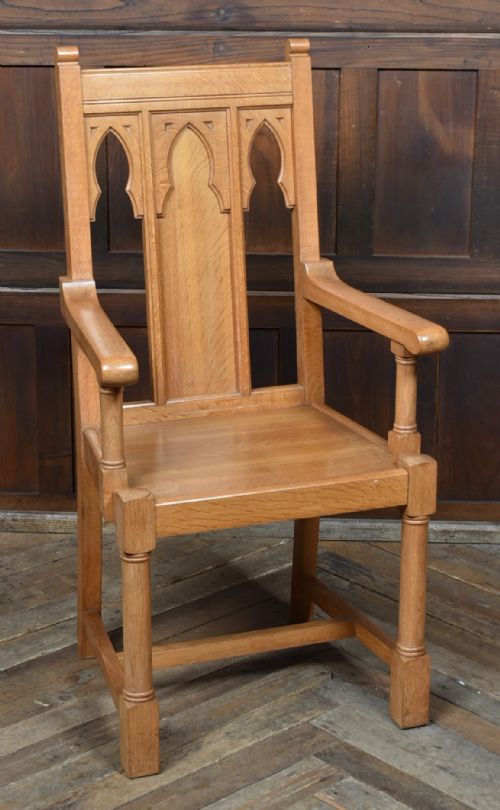
The ecclesiastical hall chair draws heavily on church architecture, taking shape as armchairs, side chairs, and substantial throne seats. When you search for an ecclesiastical hall chair, you encounter sturdy seating designed with steep angles and architectural motifs rather than domestic comfort.
Most examples originate in the Victorian era and the early twentieth century, spanning periods from the early nineteenth century through to the nineteen-twenties. These pieces frequently manifest in Gothic Revival styles, utilising forms modelled on medieval church furnishings and chapel seating.
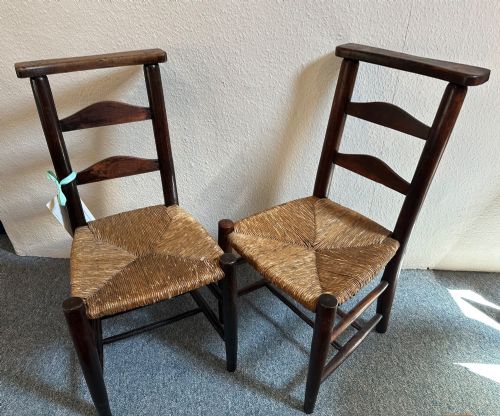
Makers constructed these chairs in oak, pitch pine, and standard pine, occasionally incorporating rush seats or fabric upholstery. Surviving pieces often include specific regional English and Welsh items, alongside items marked for institutions such as St Paul's Cathedral.
Materials and construction
Cabinet makers relied primarily on English, Welsh, and Scottish oak, alongside pitch pine and pine, shaping heavy timbers to withstand institutional use. These woods received wax finishes or paint to protect the surfaces while accentuating the dense grain of the timber.
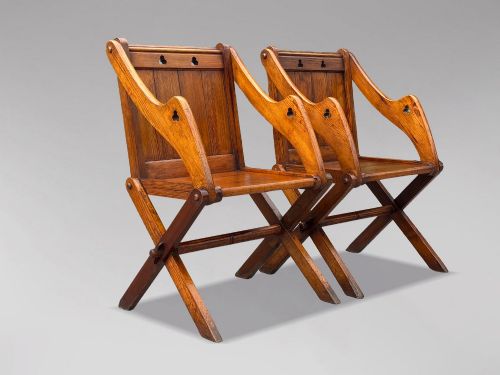
Joinery methods focused on structural endurance, employing thick stretchers and pegged joints to support the weight of throne chairs and armchairs. Details such as trefoil piercings and engraved plaques were carved directly into the structural wood or applied with brass fixings.
The inventory records dates spanning from eighteen hundred through to the nineteen-twenties, with a strong concentration of Victorian and Edwardian examples.
Judging quality in church seating
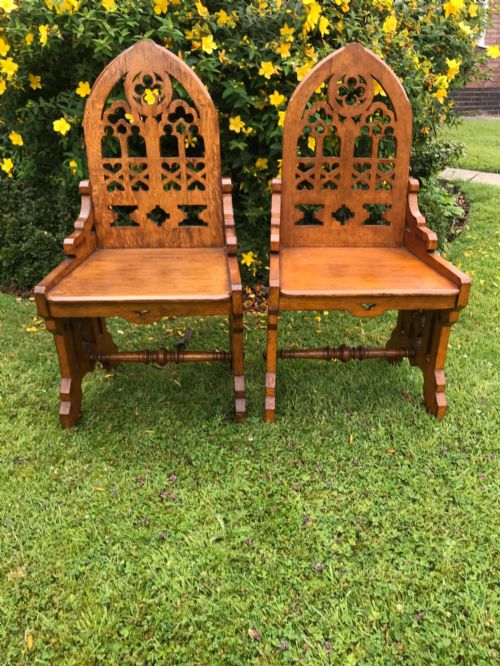
Quality rests on the depth of the timber carving and the architectural ambition of the Gothic detailing. Pieces featuring crisp trefoil cutouts, substantial proportions, and original marked institutional provenances sit at the upper end of the scale.
Construction integrity dictates daily utility, separating robust chapel thrones from lesser utilitarian seating. Chairs retaining their original brass plaques, wax finishes, or early fabric elements demonstrate superior preservation.
The Ecclesiastical Hall Chair Glossary
- Gothic Revival
- An architectural and decorative style drawing inspiration from medieval forms, featuring pointed arches and heavy vertical lines. This aesthetic defines the primary visual language of church seating.
- Glastonbury chair
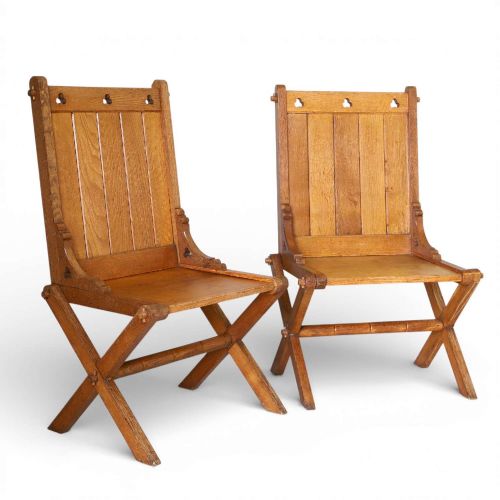
- A specific nineteenth-century armchair type with an X-framed base and a sloping panel back, derived from medieval prototypes. These items frequently appear in oak and pitch pine.
- Trefoil
- A three-lobed decorative ornament resembling a clover leaf, commonly pierced through the wooden backs of ecclesiastical chairs. Carvers used this motif to echo Gothic stonework.
- Throne chair
- An imposing, high-backed armchair designed for clergy or dignitaries, built with substantial proportions and architectural canopy work. These pieces represent the grandest scale of ecclesiastical seating.
- Pitch pine
- A resinous North American pine species utilised extensively by Victorian makers for institutional furniture due to its strength and distinct grain pattern.
Ecclesiastical Hall Chair: Frequently Asked Questions
Where were these chairs originally used?
Many ecclesiastical chairs served within cathedrals, chapels, and churches for clergy or congregation members. Others furnished domestic entrance halls in a deliberate Gothic taste.
Institutional pieces sometimes carry direct markings or plaques from their original foundations, such as London cathedrals.
Are these chairs comfortable for daily sitting?
Ecclesiastical seating prioritises architectural presence and upright posture over modern cushioned comfort. The wooden seats and rigid panel backs demand an upright seating position.
Adding loose squabs or cushions makes them suitable for regular use in a study or hallway.
What wood is most common?
Oak dominates the surviving inventory, sourced from English, Welsh, and Scottish workshops. Pitch pine also appears frequently in Victorian examples.
Makers occasionally employed standard pine, painted wood, and incorporated rush or fabric elements.
How do I date an ecclesiastical chair?
Dating relies on timber selection, construction techniques, and stylistic markers associated with the Gothic Revival movement. Mid-nineteenth-century pieces display heavier proportions and deep hand-carving.
Edwardian and later twentieth-century iterations often show lighter framing while retaining medieval architectural motifs.