




Ecclesiastical Church Silver
Ecclesiastical church silver brings sacred craft into the home, offering chalices, communion sets, and candlesticks forged for ritual use.
Ecclesiastical Church Silver
Ecclesiastical church silver encompasses sacred vessels and altar ware created for religious services, ranging from towering chalices to complete communion sets. When exploring ecclesiastical church silver on this page, buyers frequently encounter nineteenth-century pieces alongside mid-century examples and earlier adaptations.
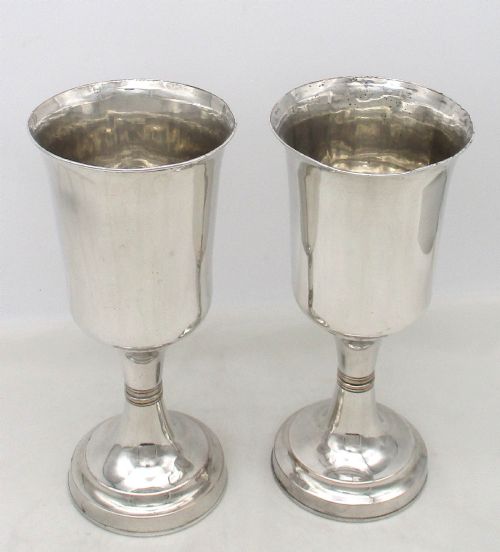
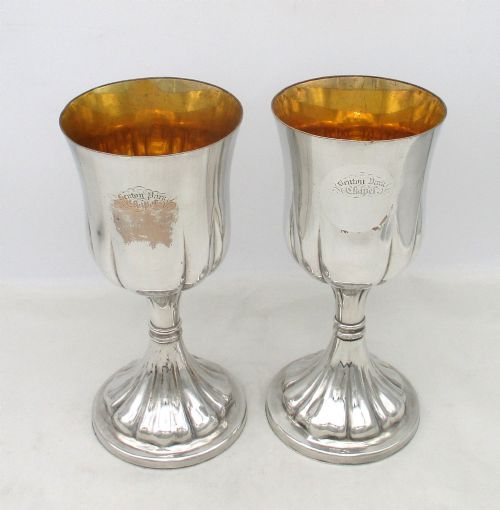
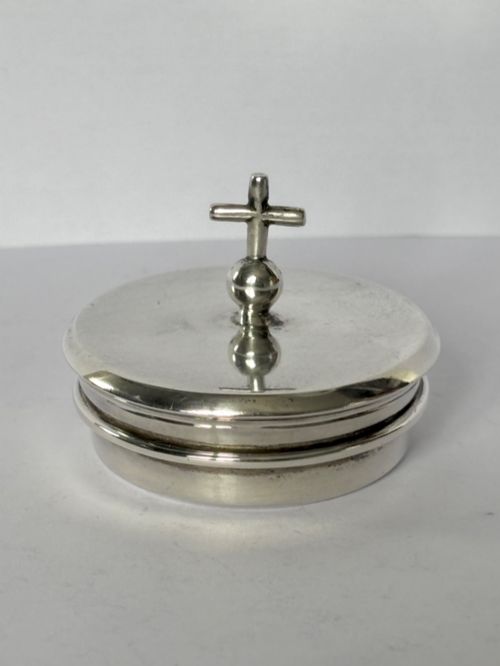
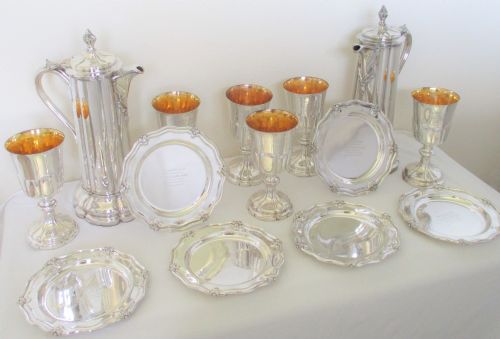
The selection centres heavily on liturgical vessels such as chalices, communion goblets, and pyx boxes, often produced in pairs or matched sets. Alongside traditional silver plate and sterling silver, the inventory includes allied devotional objects like carved wooden candlesticks and brass or cast iron rests.
Origins span British workshops from London and Westminster, alongside French and Italian examples that bring continental flair to liturgical design. These pieces bridge centuries of devotional craft, reflecting shifts from Gothic Revival austerity to mid-century ecclesiastical modernism.
Materials and methods of manufacture
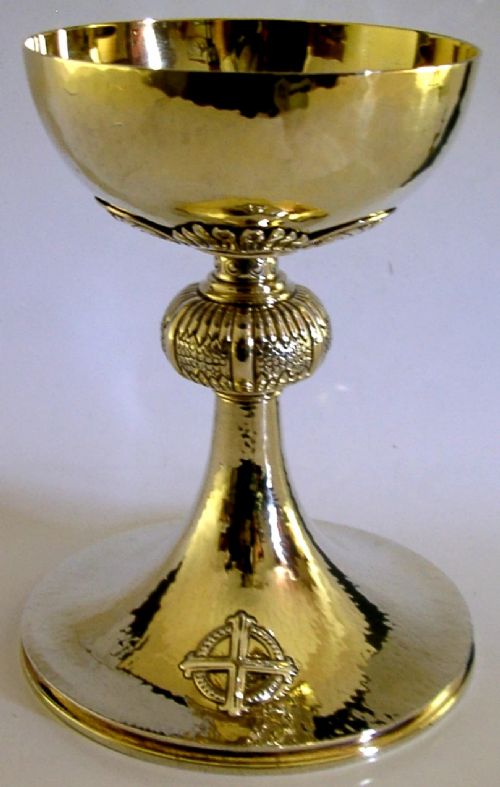
Makers utilised sterling silver and silver gilt for high-altar vessels, applying rich gilding to the interior bowls of chalices. Old Sheffield plate and standard silver plate provided durable alternatives for larger communion services and processional items.
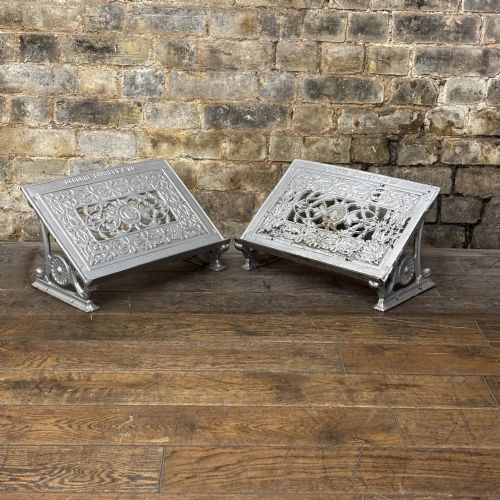
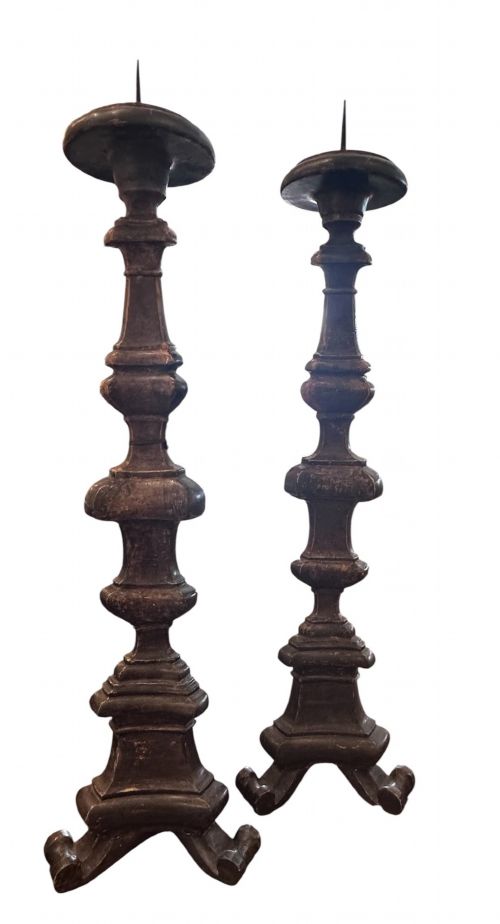
Wood served as a primary base for altar candlesticks and prickets, frequently finished with silver leaf or painted decoration to mimic solid metal. Cast iron and copper supported functional accessories such as book rests and lamps.
Silversmiths employed casting, hammering, and chasing techniques to produce crisp Gothic Revival tracery and neoclassical motifs. Makers marked their creations with workshop stamps, providing clear attribution for boxes and chalices.
Listings feature nineteenth-century items alongside mid-century pieces, spanning materials from sterling silver and Old Sheffield plate to carved wood and cast iron.
Distinctions in craftsmanship and survival
Quality rests in the crispness of chased ornament and the structural integrity of cast components, particularly on high-use vessels like chalices. Superior examples retain their original gilding and bear clear silversmith marks.
The integrity of the base metal significantly affects the standing of plated items, with Old Sheffield plate showing distinct fused copper layers compared to later electroplate. Complete boxed communion sets with matching components command greater interest than assembled or partial groups.
Surface wear tells the history of liturgical use, though excessive loss of silver leaf on wooden items or heavy pitting alters the visual impact of an altar piece.
F Osbourne And Co London·Osborne Garrett And Co·Elkington Mason·Rouillard Angers
The Ecclesiastical Church Silver Glossary
- Chalice
- A consecrated cup used to hold sacramental wine during communion services. These vessels typically feature a knopped stem and a wide foot for stability.
- Pyx
- A small round box used to carry the eucharist. They are frequently fashioned from sterling silver with gilt interiors.
- Communion set
- A portable collection of vessels required for administering the sacrament outside a church. Sets often include a chalice, paten, and cruet housed in a fitted box.
- Old Sheffield plate
- A composite material made by fusing a sheet of silver to a copper ingot. This technique predates modern electroplating and produces a warm tone as the copper undertles minor wear.
- Pricket
- A sharp metal spike atop a candlestick designed to secure a large wax taper or candle. They are common on traditional altar sticks.
- Gilt
- A thin layer of gold applied to the surface of silver or base metal. In liturgical vessels, the interior bowl of a chalice is frequently gilt to protect the silver from acidic wine.
Ecclesiastical Church Silver: Frequently Asked Questions
What is a church chalice used for?
Church chalices serve as the primary drinking vessels for consecrated wine during communion and mass. Their deep bowls and raised stems were engineered for ritual elevation by the clergy.
Over time, many of these vessels transitioned from active altars into private collections or decorative interior display pieces.
How do I clean silver plated church items?
Silver plated and sterling pieces require gentle cleaning with a soft microfibre cloth and a mild, non-abrasive silver polish. Avoid aggressive scrubbing that might wear through thin plating or antique silver leaf.
For items with gilt interiors, take care to avoid applying polish directly to the gold wash to preserve the finish.
What is Old Sheffield plate?
Old Sheffield plate is an early nineteenth-century material created by thermally fusing a sheet of silver onto a heavier copper core. This results in a durable metal where the copper may occasionally show softly through high points of wear.
It differs entirely from nineteenth-century electroplate, possessing a distinct weight and method of construction appreciated by collectors.
How old are these church artifacts?
The pieces span from the late eighteenth century through the Victorian era and into the mid-twentieth century. Stylistic clues like Gothic Revival arches or maker marks help narrow down the decade of production.
Dating relies on recorded hallmarks, structural materials, and documented workshop timelines.
Can antique communion sets still be used?
While many antique communion sets retain their structural integrity and functional design, modern owners primarily use them as display objects, mantel focal points, or historical study pieces. The presence of original fitted boxes makes them exceptional cabinet items.
Using silver-gilt chalices for dining requires careful checking of the interior surfaces and adherence to food safety standards.