

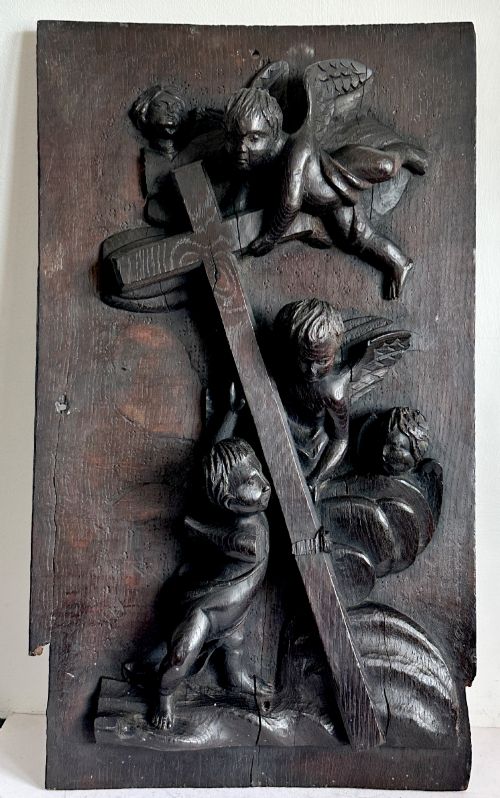

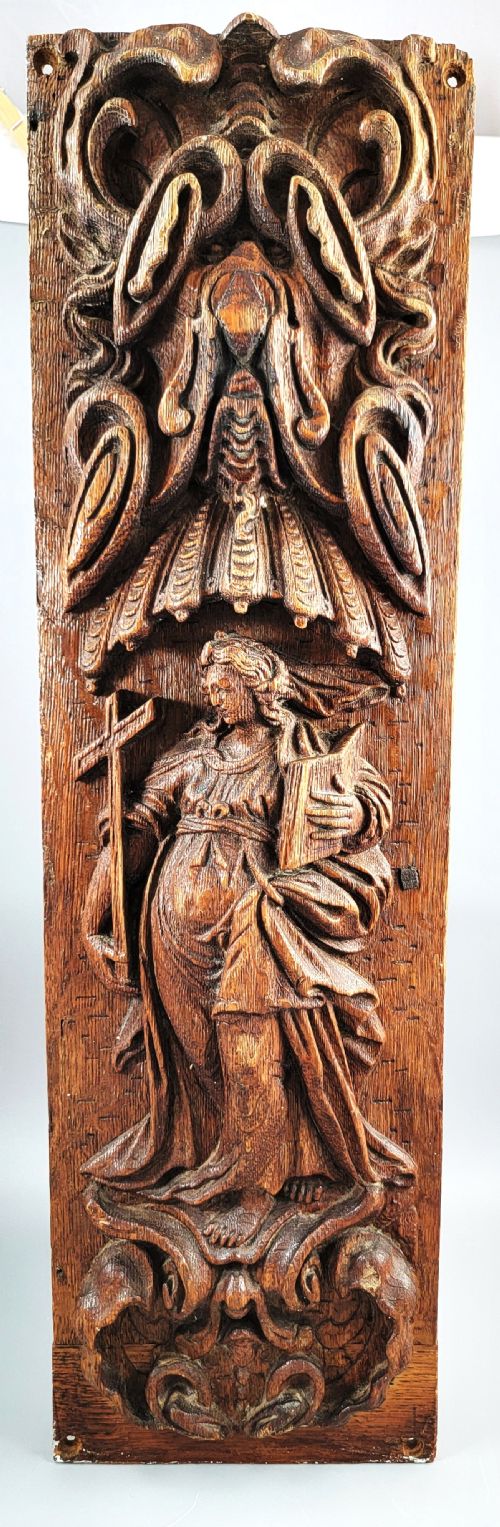


Ecclesiastical Carved Oak Panel
These pieces of ecclesiastical carved oak panel bring centuries of devotional art and architectural history directly into your interior.
Ecclesiastical Carved Oak Panel
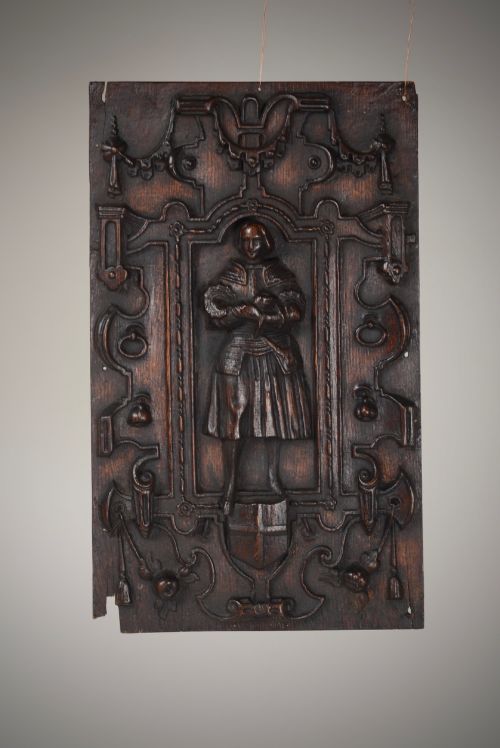
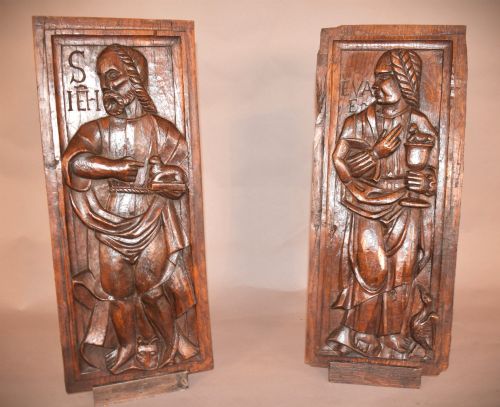
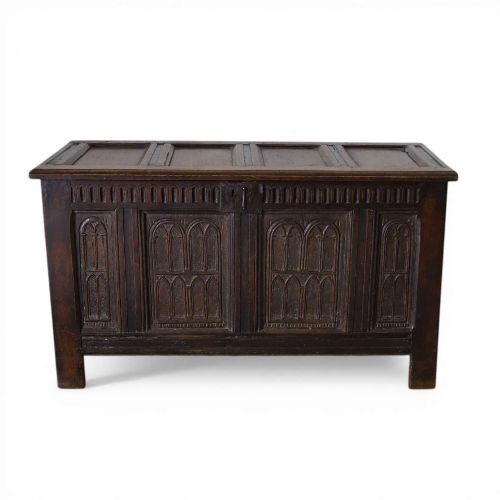
An ecclesiastical carved oak panel represents sacred narrative, figures, and tracery originally housed within churches, altarpieces, and monastic furnishings. When you search for this phrase, you encounter architectural fragments, wall reliefs, and coffer fronts spanning several historic centuries.
The versions most frequently met on this page date from the seventeenth and sixteenth centuries, alongside Victorian revivals and earlier mediaeval survivals. These objects range from framed saints and biblical scenes to pierced tracery fragments designed for display upon walls.
The forms shift between flat relief carvings, standing altarpiece elements, and structural components integrated into later furniture. Each piece reflects the devout craftsmanship of its period, utilising robust timber to preserve intricate devotional iconography.
Assessing Quality
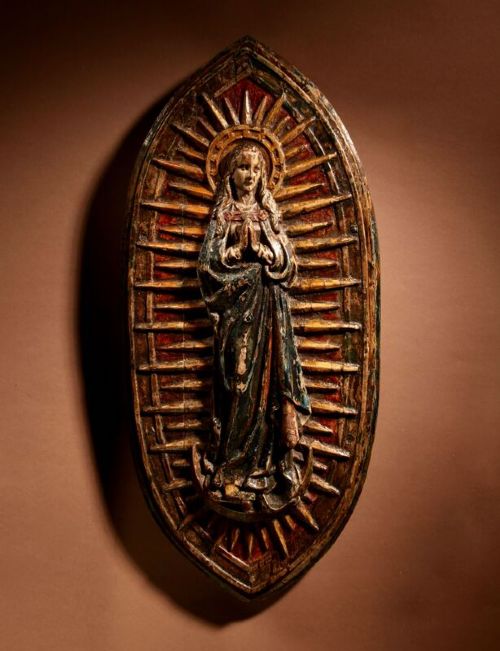
The survival of original surface finishes, such as polychrome paint or gold leaf, elevates a piece by preserving its authentic historical appearance. Integrated context, including legible iconography like identifiable saints or narrative scenes, further distinguishes the finer examples in this range.
Ecclesiastical Carved Oak Panel Retail Price Guide 2026
Typical asking prices for ecclesiastical carved oak panel among the pieces listed under this phrase on Sellingantiques today, from the lower quarter to the upper quarter. They describe what is for sale here now, not the wider market.
Listings span periods from pre-sixteenth century mediaeval work through the seventeenth century to Victorian Gothic revivals.
The Ecclesiastical Carved Oak Panel Glossary
- Tracery
- Architectural stone or woodwork ornamentation characterised by openwork elements and geometric patterns. This technique frequently appears in mediaeval and Gothic church screens and paneling.
- Relief
- Sculptural technique where the sculpted elements remain attached to a solid background of the same material. High relief projects boldly from the flat plane, creating deep shadows.
- Coffer
- A large wooden chest or box used historically for storage of valuables and documents. These sturdy containers often incorporated carved panels on their front elevations.
Ecclesiastical Carved Oak Panel: Frequently Asked Questions
Where were these panels originally placed?
These panels originated inside churches, abbeys, and private chapels as components of altarpieces, choir stalls, rood screens, and wall linings. They served to instruct and inspire congregations through visual depictions of saints and biblical narratives.
Over the centuries, many ecclesiastical interiors were altered or dismantled, allowing individual panels and architectural fragments to be removed and repurposed as decorative wall art.
How do I hang a heavy oak panel?
Due to the substantial weight of dense historical timber, wall mounting requires secure fixing directly into wall studs or masonry using appropriate brackets. Professional framing or heavy-duty mirror plates are commonly utilised to support the balanced load of the sculpture.
Ensuring the panel's weight rests securely prevents strain on the ancient oak frame or structural joinery.
How can I tell a sixteenth-century panel from a nineteenth-century revival?
Sixteenth-century and seventeenth-century pieces display authentic hand tool marks, natural timber shrinkage, and period-specific wear patterns accumulated through centuries of use. The carving style exhibits the organic irregularities characteristic of early hand production.
Nineteenth-century Gothic revival works often utilise machine-sawn timber elements alongside hand finishing, reflecting Victorian interpretations of mediaeval aesthetics rather than contemporaneous production.
Should I clean polychrome paint on an old panel?
Original painted surfaces and traces of gold leaf are fragile and easily damaged by moisture or improper cleaning agents. Dusting gently with a soft, dry brush is the only recommended maintenance for preserved polychrome details.
Conservative preservation protects the remaining historical pigments from flaking or fading over time.