



Ecclesiastical Brass Pricket
These ecclesiastical brass pricket pieces bring historic altar and church lighting into domestic spaces with dramatic spike mounts and heavy metal presence.
Ecclesiastical Brass Pricket
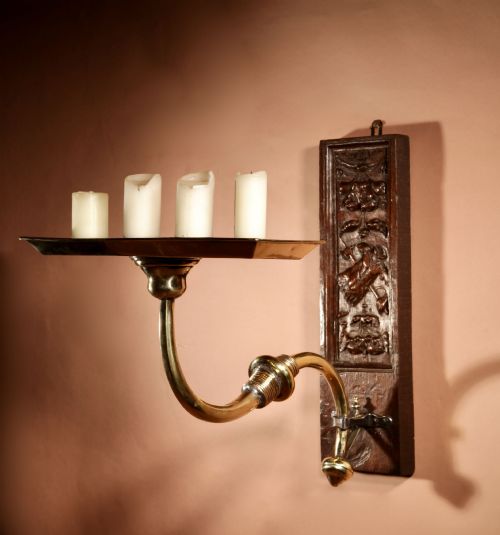
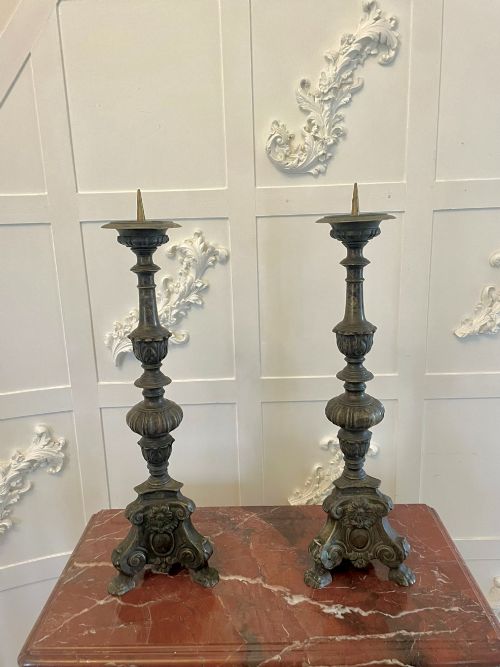
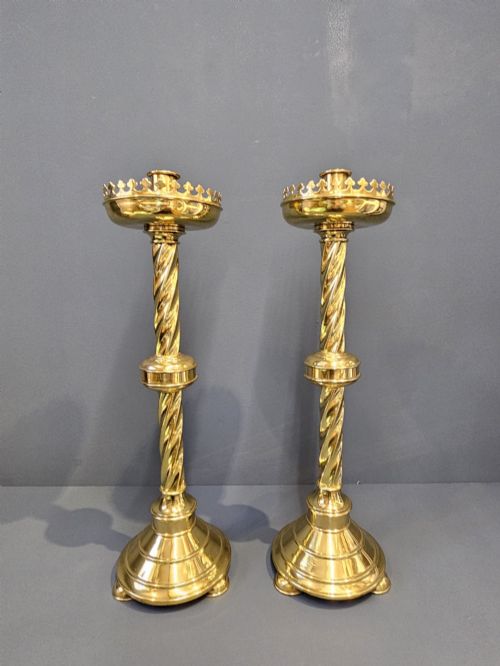
An ecclesiastical brass pricket is a form of altar or church candle holder featuring a sharp central spike rather than a traditional socket to secure large wax candles. The examples found here span the nineteenth century into the early twentieth century, taking the form of candlesticks, table lamps, wall sconces, and floor standing pieces. Most items belong to the Gothic Revival or Victorian Gothic styles, reflecting the ecclesiastical origins of church metalwork.
Buyers will most frequently encounter pairs of heavy brass candlesticks alongside occasional single tall floor stands and wall-mounted holders. Materials stretch beyond standard brass to include bronze, gilt brass, cast brass, and ormolu, sometimes paired with oak, iron, or glass components. These utilitarian items served devotional purposes in churches before finding new life in domestic interiors, occasionally converted to table lamps.
Quality differences
Quality in these pieces is dictated by the weight of the metal casting and the crispness of the decorative ornament. Finer examples display deeply chased surface detail and heavy gauge brass or bronze that provides structural stability for tall floor or table stands.
The distinction between standard production and top tier work rests on proportion, balance, and material purity. Pieces utilising gilt brass, ormolu, or combined bronze and oak demonstrate higher ambition in design than simpler cast brass counterparts.
Ecclesiastical Brass Pricket Retail Price Guide 2026
Typical asking prices for ecclesiastical brass pricket among the pieces listed under this phrase on Sellingantiques today, from the lower quarter to the upper quarter. They describe what is for sale here now, not the wider market.
Some nineteenth-century altar lights found new careers on modern sideboards, quietly trading solemn hymns for ambient dinner party glow.
The Ecclesiastical Brass Pricket Glossary
- Pricket
- A sharp metal spike on a candlestick designed to impale the base of a large candle. This traditional method preceded the socket candlestick.
- Gothic Revival
- An architectural and decorative style popular during the nineteenth century that revived medieval forms. It heavily influenced ecclesiastical metalwork with pointed arches and ornate tracery.
- Ormolu
- Finely ground high-carat gold-bronze applied to metal objects. This technique creates a rich decorative surface seen on altar pieces.
- Ecclesiastical
- Relating to the Christian Church or its clergy. Items described thus originate from places of worship.
- Altar Candlestick
- A large candle holder placed upon or near an altar for ceremonial use. These objects often form matched pairs.
Ecclesiastical Brass Pricket: Frequently Asked Questions
What is a pricket candlestick?
A pricket candlestick is a lighting device that uses an upward-pointing metal spike to hold a candle in place. This design was standard for large church candles before socket holders became common.
These spikes require candles with a pre-drilled base or a soft enough composition to press onto the metal point securely.
How do I date these pieces?
Dating relies on stylistic markers such as Gothic Revival detailing, manufacturing techniques like sand casting, and documented periods spanning the Victorian era and early twentieth century. Comparing base construction and decorative motifs helps narrow the timeframe.
Many pieces bridge decades between eighteen eighty and nineteen hundred, reflecting continuous church furnishing traditions.
Were these used in homes originally?
Most of these pieces were manufactured for use in churches, chapels, and cathedrals as altar furnishings. Their large scale and heavy metal construction served ceremonial functions rather than domestic lighting.
Today, collectors adapt them for domestic interiors, sometimes with electrical conversions for modern table lamps.
Can I use normal candles on a pricket?
Standard domestic candles will not sit properly on a pricket spike because they lack the necessary central indentation. Using these holders safely usually requires church candles or specially prepared tapers.
Alternatively, many buyers choose to display them unlit as sculptural metalwork or purchase examples that have been converted to lamps.