



Ebony Writing Table
An ebony writing table brings dark wood and polished lines to a room, offering a surface for correspondence that carries history in every grain.
Ebony Writing Table
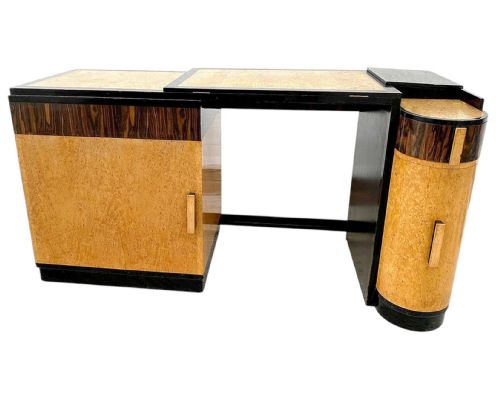
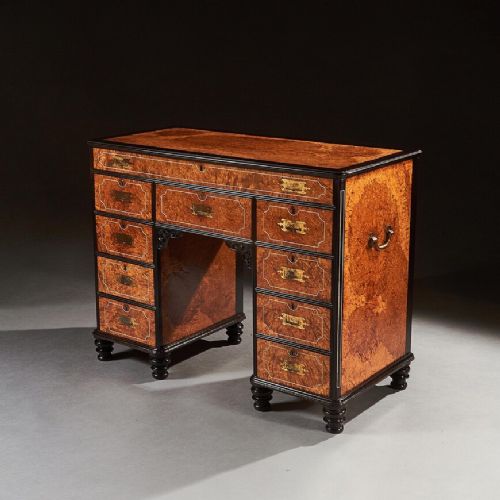
An ebony writing table is a dedicated piece of furniture designed for drafting letters and keeping papers, appearing in forms ranging from compact side tables to substantial kneehole desks. These tables surface across the nineteenth century, taking shape during the Regency and Victorian eras alongside occasional Art Deco and earlier Dutch neoclassical designs.
The materials span solid exotic timbers and rich secondary woods, with genuine ebony appearing alongside ebonised wood, mahogany, satinwood, amboyna, and burr thuya. Makers incorporated contrasting inlays of boxwood or brass stringing, and several examples feature leather-lined writing surfaces.
Form and function intertwine closely in these pieces, which occasionally double as centre tables, console tables, or work tables. A buyer encounters diverse stylistic influences, including Chinese Export, Louis XVI style, and the Aesthetic Movement.
Materials and Construction
Cabinetmakers constructed these tables using dense hardwoods such as mahogany, walnut, and oak as structural carcases, applying expensive timbers like ebony, amboyna, and satinwood as veneers or solid edgings. The natural weight of the materials provided stability for daily use.
Inlay work required precise hand-cut channels filled with contrasting woods, ivory, or brass stringing to outline drawers and borders. Surface finishes relied on French polishing to build a deep sheen that highlighted the grain of the ebony and secondary timbers.
Ebony Writing Table Retail Price Guide 2026
Typical asking prices for ebony writing table among the pieces listed under this phrase on Sellingantiques today, from the lower quarter to the upper quarter. They describe what is for sale here now, not the wider market.
Listings feature pieces from the Regency and Victorian periods alongside Art Deco and Louis XVI style examples.
Assessing Quality and Execution
The distinction between standard workshop production and top-tier cabinetmaking rests on the crispness of the brass and wood stringing and the depth of the timber selection. Finer pieces employ solid exotic woods or thick, beautifully matched veneers rather than simple painted ebonising.
Structural integrity reveals itself in the smooth operation of drawer runners and the integration of secondary woods like oak or mahogany within the carcase. Attribution to known makers or documented workshops elevates the standing of a piece significantly.
Paul Sormani·Gillows·George Oakley·Marsh & Tatham·Soubrier
The Ebony Writing Table Glossary
- Ebony
- A dense, heavy black or very dark brown wood yielded by several species of tropical trees, prized for its smooth finish and dark tone. It was frequently used for solid mouldings, stringing, or complete cabinet construction.
- Ebonised wood
- Timber, such as pearwood or beech, that has been stained or painted black to imitate genuine ebony. This technique allowed cabinetmakers to achieve a similar visual effect at a lower material cost.
- Stringing
- Thin lines of contrasting wood or metal inlaid into the surface of furniture to create geometric borders or decorative outlines. It appears frequently in Regency and Victorian pieces to frame drawer fronts and table tops.
- Kneehole desk
- A desk featuring a central recess for the user's knees, flanked by pedestals containing banks of small drawers. This form provided organised storage while maintaining a formal presence in a room.
Ebony Writing Table: Frequently Asked Questions
What is an ebony writing table?
An ebony writing table is a piece of antique furniture designed for correspondence, constructed using solid ebony or accented with ebony veneers and stringing. These tables date primarily from the nineteenth century and encompass various regional styles and forms.
They serve as both functional desks and decorative centre pieces, often featuring leather inserts and mahogany or satinwood carcases.
How do I date an ebony writing table?
Dating relies on examining the secondary timbers, construction methods, and prevailing decorative styles of the period. Regency pieces often display neoclassical restraint with brass ring handles, while Victorian examples embrace richer burls and Aesthetic Movement details.
Hardware types, dovetailing techniques, and drawer construction also offer reliable clues to the decade of manufacture.
Where should I place a writing table?
These tables adapt well to studies, drawing rooms, or as freestanding centre pieces where all sides can be admired. Because many finished the backs to match the fronts, they do not need to sit against a wall.
Positioning them near natural light preserves their original purpose as writing surfaces while highlighting the contrast of the ebony inlay.
How do I care for antique ebony?
Antique ebony and its polished surfaces require stable room humidity and protection from direct sunlight to prevent timber shrinkage and finish cracking. Occasional dusting with a soft, dry cloth maintains the lustre without building up wax residues.
Harsh chemical cleaners should be avoided to protect the delicate French polish and any inlaid brass or boxwood stringing.