

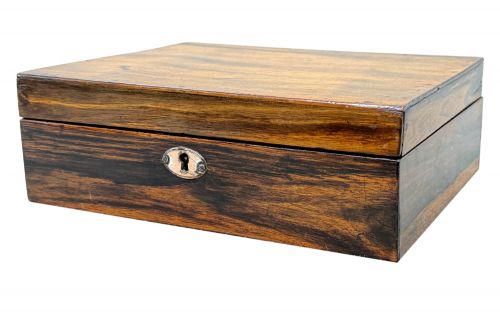

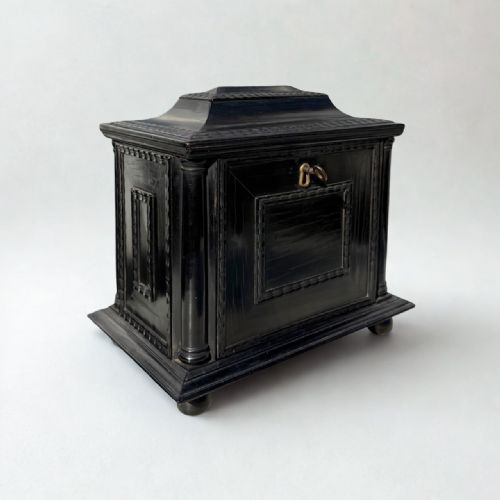


Ebony Document Box
An ebony document box brings heavy dark timber and polished brass into a room, made to hold letters and private papers.
Ebony Document Box
When you search for an ebony document box, you encounter heavily timbered receptacles designed to secure letters, papers, and valuables. The examples found here span several centuries, originating from European workshops as well as colonial centres like Ceylon and Anglo-India.
You are most likely to meet Victorian writing boxes and slopes fashioned from dark tropical hardwoods. These pieces often incorporate hinged lids and fitted interiors meant for stationery and inkwells.
The forms range from compact table caskets to large writing boxes and campaign slopes. Makers utilised dense exotic woods to project status and durability in study rooms and offices.
How they were made
Cabinet makers built these boxes using solid ebony, coromandel, and kingwood over sturdy timber frames. They frequently reinforced the corners and edges with brass banding and recessed carrying handles.
Surface decoration relies on contrasting materials rather than paint or varnish. Artisans set mother-of-pearl, bone inlay, and porcupine quill directly into the dark wood, alongside intricate parquetry and reeded carvings.
Ebony Document Box Retail Price Guide 2026
Typical asking prices for ebony document box among the pieces listed under this phrase on Sellingantiques today, from the lower quarter to the upper quarter. They describe what is for sale here now, not the wider market.
Materials recorded across the inventory include ebony, coromandel, kingwood, brass, mother-of-pearl, porcupine quill, and bone inlay.
What varies in quality
The distinction between standard boxes and exceptional pieces lies in the precision of the parquetry and inlay work. Superior items display meticulous alignment where bone, brass, and contrasting woods meet the dark ebony ground.
Interior fittings also define the grade of a piece. Boxes featuring complete velvet-lined writing slopes, secret drawers, and original brass hardware command greater appreciation among collectors than altered or stripped examples.
The Ebony Document Box Glossary
- Ebony
- A dense, heavy black or very dark brown wood prized for its fine texture and durability. It takes a high polish and serves as the primary material for these boxes.
- Parquetry
- Geometric wood mosaic work used to create decorative patterns on box lids and surfaces. Artisans fit small pieces of contrasting timbers together precisely.
- Writing slope
- A box with a slanted lid that opens to reveal a desk surface and storage compartments for paper and pens. These were essential portable desks for travellers and writers.
- Porcupine quill
- Quills utilised in decorative work, particularly on pieces originating from Ceylon. They are arranged in geometric patterns against the dark wood background.
Ebony Document Box: Frequently Asked Questions
How were they used?
Owners used them to keep correspondence, legal papers, and writing materials organised and private. The slope versions provided a tilted writing surface for penning letters.
Many included compartments for inkwells, nibs, and stamps, functioning as portable desks for home or travel.
How to live with them?
Place them on sturdy tables or desks where their dark wood and brass details can be appreciated. Keep them out of direct sunlight to protect the polished timber and delicate inlay.
Use the internal compartments for storing small items like letters, keys, or modern stationery.
How to date them?
Examine the construction methods, secondary woods, and decorative styles to determine the period. Pieces range from seventeenth-century Flemish caskets to nineteenth-century Victorian and colonial items.
Characteristics like bone inlay, porcupine quill work, and brass campaign mounts help align pieces with specific regional and historical eras.