




Ebony and Silver
Ebony and silver pieces combine dense dark wood and lustrous metal to form walking sticks, tea sets, and desk accessories spanning multiple centuries.
Ebony and Silver
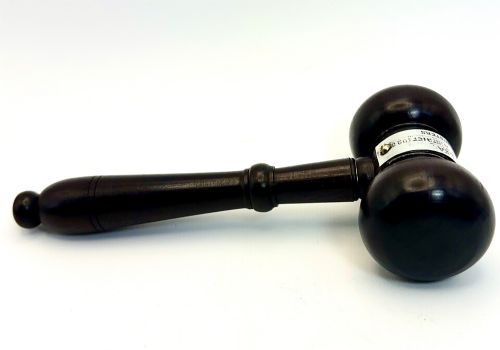
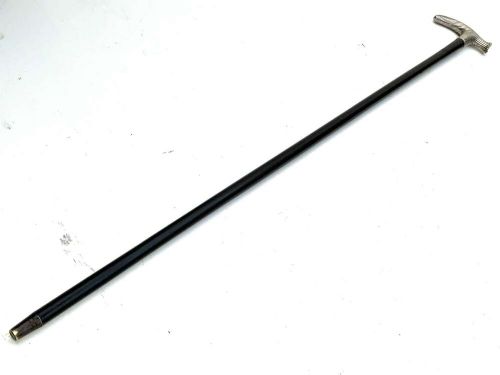
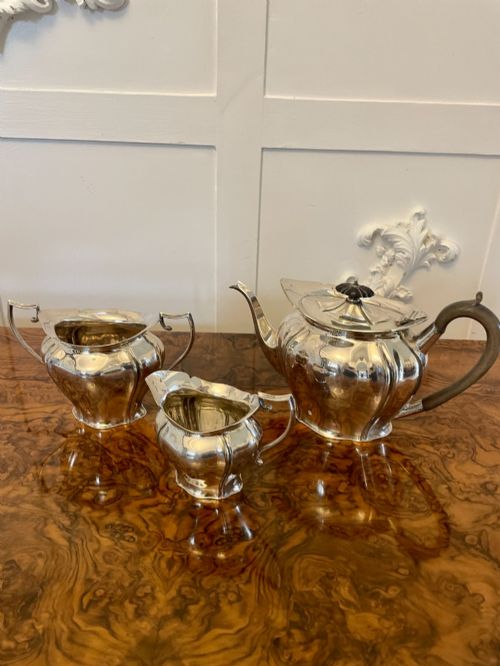
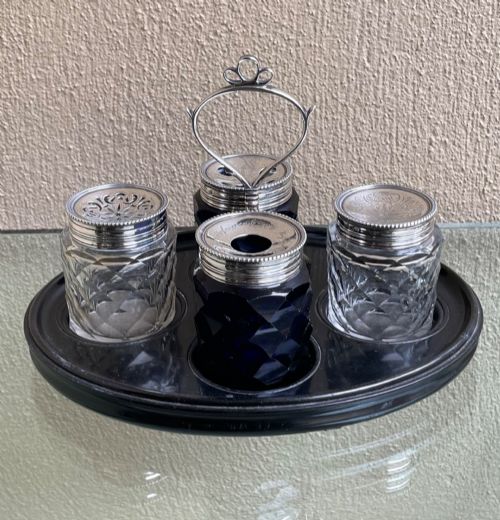
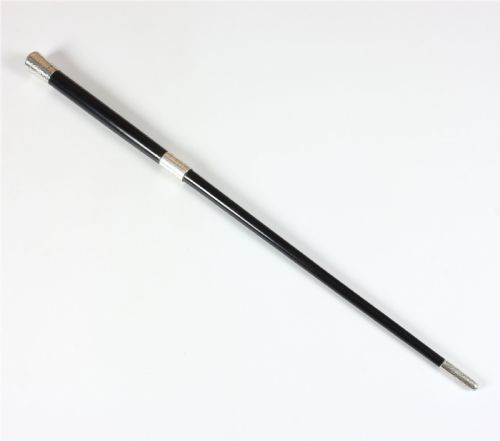
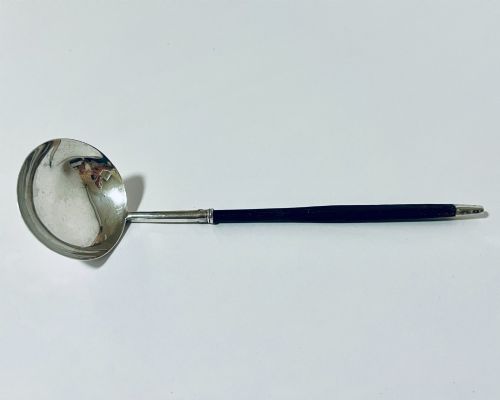
When you search for ebony and silver, you encounter objects spanning the Georgian, Victorian, and Edwardian periods, stretching from the seventeenth century through to the art deco era. The most frequent forms on this page are walking sticks, canes, and tea services, alongside smaller desk accessories and table clocks.
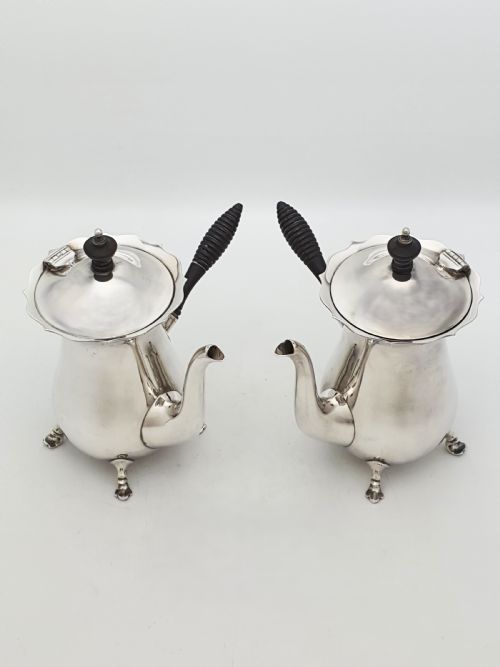
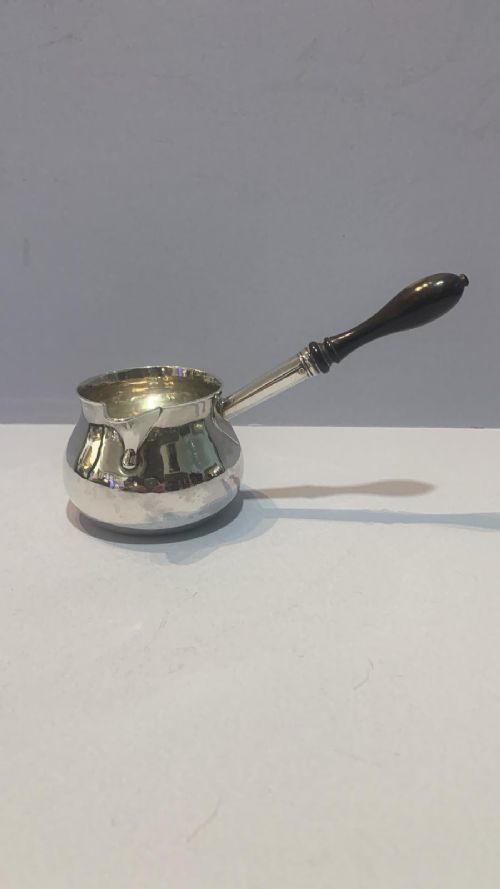
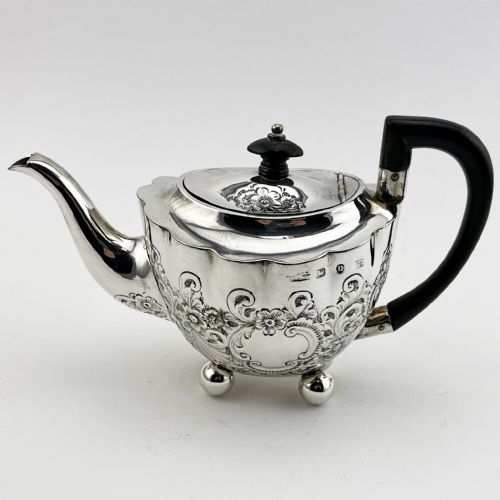
Walking sticks often incorporate silver mounts, handles, or specialised mechanisms like sword sticks and snuff boxes. Tea services and coffee pots appear in both sterling silver and silver plate, frequently complemented by wooden handles or ebonised elements.
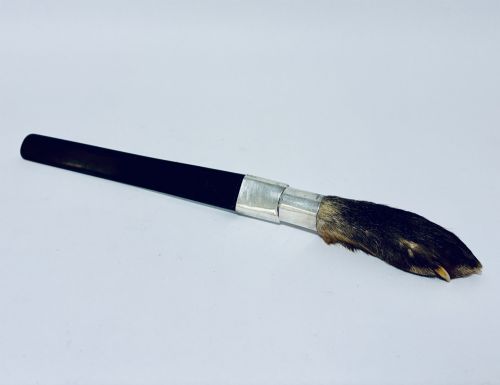
Desk accessories and scientific instruments also utilise this pairing, merging the deep, dark tones of ebony or ebonised wood with bright sterling silver or brass mountings. Pieces range from nineteenth-century page turners and magnifying glasses to seventeenth-century basket-top table clocks.
How they were made
Makers shaped dense ebony wood or ebonised wood on the lathe or by hand, carving walking canes, clock cases, and baton shafts to a smooth, dark finish. This timber provided a strong, heavy foundation that contrasted sharply against the bright metals applied to it.
Silver components, whether sterling or silver plate, were cast, embossed, engraved, or mounted onto the wooden cores. Craftsmen secured mounts with pins or adhesives, uniting the organic grain of the timber with polished metallic elements.
Ebony and Silver Retail Price Guide 2026
Typical asking prices for ebony and silver among the pieces listed under this phrase on Sellingantiques today, from the lower quarter to the upper quarter. They describe what is for sale here now, not the wider market.
Some gentleman's walking sticks hid unexpected surprises inside their ebony shafts, doubling as concealed swords or tiny compartments for snuff.
What varies in quality
The distinction between standard items and superior examples lies in the crispness of the metal chasing and the structural integrity of the wooden shaft or body. Finer pieces display detailed engraving, secure mounting without visible gaps, and well-balanced proportions between the dark wood and the bright silver.
Maker execution dictates the upper tier of the range, where signed works by established silversmiths or clockmakers demonstrate superior precision in assembly. Lesser items show simpler construction, plainer mounts, and less refined finishing on the wooden elements.
Wang Hing and Company·Jonathon Lowndes·William Speakman·P H Vogel and Co·Harrison Brothers and Howson·Henry Borlase Stevens·Dominique Peccatte·Fenton Brothers
The Ebony and Silver Glossary
- Ebony
- A dense, hard, dark wood traditionally prized for its deep colour and smooth finish when polished. It forms the dark shafts and bodies of many canes, batons, and clock cases.
- Silver plate
- A base metal coated with a thin layer of silver through electroplating or older techniques. It appears frequently on tea services and spirit kettles from the Victorian and Edwardian periods.
- Sterling silver
- An alloy containing ninety-two point five percent silver by mass, with the remainder composed of other metals for durability. It is the standard grade of silver used for high-quality teapots, inkstands, and mounts.
- Ebonised wood
- Timber treated with a dark stain or finish to imitate natural ebony. It provides a similar dark visual contrast against silver mounts at a different cost.
- Page turner
- A handheld implement used for separating uncut pages in books, often constructed with a silver handle and an ebony, ivory, or bone blade.
Ebony and Silver: Frequently Asked Questions
How do I date a silver mounted piece?
Dating relies primarily on hallmarks stamped into the silver components, which indicate the assay office, the maker, and the year of manufacture. Stylistic cues such as Georgian engraving or Edwardian teapot shapes also help narrow down the period.
Construction methods further assist in dating, as machine-tooled elements generally point towards the later nineteenth and twentieth centuries. Unmarked pieces require comparison of their overall form and materials with known dated examples.
How were ebony and silver tea sets used?
These sets, comprising teapots, coffee pots, sugar basins, and milk jugs, were employed in formal domestic tea service. The use of silver and silver plate reflected the host's social standing during afternoon gatherings.
Wooden or insulated handles prevented heat transfer from the hot liquid to the pourer's hand. They formed part of a coordinated table arrangement often displayed on a matching tray or spirit kettle stand.
How do I care for ebony and silver items?
Maintenance requires keeping the pieces away from direct sunlight and extreme humidity changes to protect the wood. Regular dusting and careful polishing of the silver elements preserve the surface finish without harming the adjacent timber.
Harsh chemical dips should be avoided near wooden joints to prevent moisture damage or staining. Gentle cleaning with a soft cloth keeps both materials stable over time.