

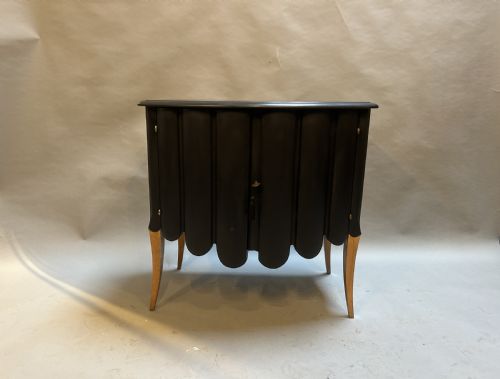
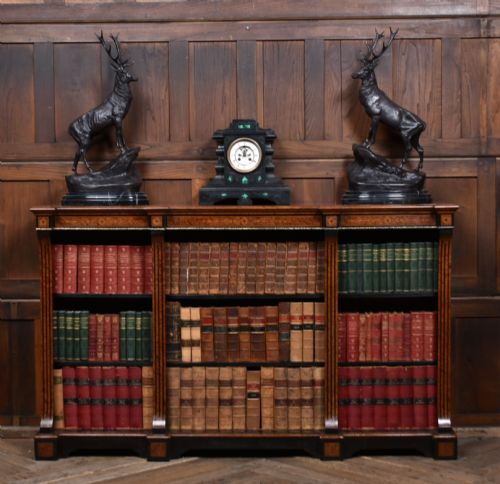
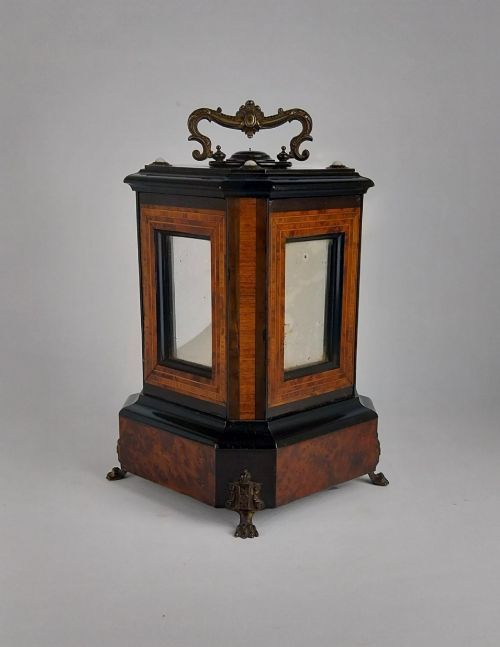


Ebonised Wooden Cabinet
An ebonised wooden cabinet brings dark, dramatic presence to a room, offering both display space and refined storage.
Ebonised Wooden Cabinet
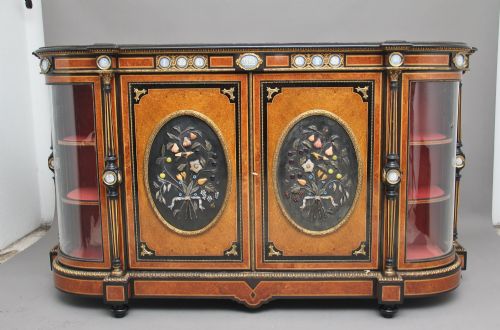
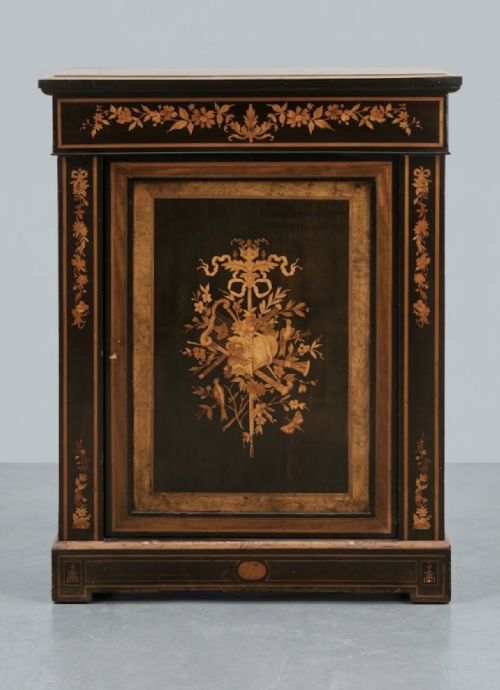
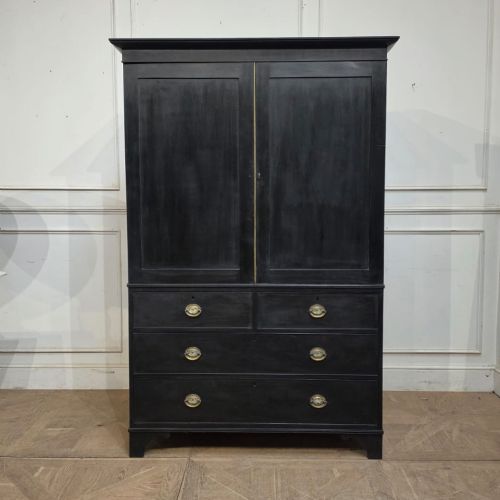
When you search for an ebonised wooden cabinet, you enter a domain of dark finishes and striking decorative details spanning several centuries. The pieces collected here include side cabinets, credenzas, bookcases, and smaller table cabinets originating from periods such as the nineteenth century, the Victorian era, and the art deco years.
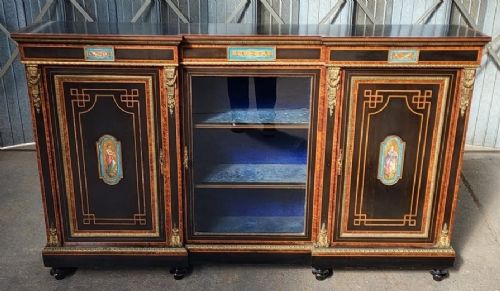
You are most likely to meet nineteenth-century and Victorian examples on this page, often featuring contrasting inlay, glazed doors, or gilt mounts. Makers and cabinetmakers utilised ebony or stained timber to achieve the characteristic deep black surface that mimics solid exotic wood.
Materials and construction
The foundational wood is frequently stained or painted to create the ebonised finish, sometimes paired with contrasting timbers such as walnut, amboyna, burr walnut, and kingwood. Craftsmen applied these dark surfaces to give common timbers the luxurious weight and appearance of solid ebony.
Metal mounts in ormolu, brass, and gilt bronze appear alongside glass panels and inlaid parquetry. These additional materials highlight the dark woodwork, framing the structured silhouettes of sideboards, credenzas, and writing desks.
A solitary night porter needs a secure place for keys, proving that even modest nineteenth-century staff had their own designated wooden cupboards.
Judging quality and execution
The distinction between ordinary and exceptional pieces lies in the precision of the inlay, the crispness of any carved elements, and the integrity of the ebonised finish. Finer examples display meticulous parquetry, tightly fitted doors, and well-chosen secondary woods like burr walnut or amboyna.
Hardware and secondary decorative additions also dictate the tier of a piece. Ormolu mounts, Pietra Dura panels, and original glass securely fitted into glazed doors separate standard storage furniture from exhibition-quality cabinets.
Henry Ogden and Son·A Pollard·Gordovil Spain
The Ebonised Wooden Cabinet Glossary
- Ebonised
- Wood finished to resemble ebony by staining, painting, or chemical darkening. This technique became particularly popular during the Victorian and aesthetic movement periods.
- Credenza
- A low dining-room cabinet or sideboard, frequently featuring three doors and delicate decorative mounts. Victorian examples often incorporate glass panels and rich wood veneers.
- Parquetry
- Geometric mosaic woodwork used for decorative floors or cabinet surfaces. Skilled artisans arrange small pieces of contrasting timber to form intricate patterns.
- Ormolu
- Gilded bronze furniture mounts and decorative accents cast in metal. It frequently frames the doors and corners of nineteenth-century French and English cabinets.
- Pietra Dura
- Inlaid work using cut and fitted polished coloured stones to create images. This technique appears on the most luxurious nineteenth-century credenzas.
Ebonised Wooden Cabinet: Frequently Asked Questions
What is an ebonised wooden cabinet?
An ebonised wooden cabinet is a storage or display piece made from wood treated with a dark stain or finish to imitate solid ebony. These pieces range from large credenzas to compact table cabinets.
They draw on styles spanning the eighteenth, nineteenth, and twentieth centuries, often featuring contrasting veneers like burr walnut or amboyna.
How do I date a Victorian ebonised cabinet?
Dating relies on examining the construction methods, timber choices, and decorative motifs present on the piece. Victorian examples frequently combine ebonised surfaces with ormolu mounts, ceramic inlays, or glazed doors.
Reference points include aesthetic movement influences and specific joinery traits characteristic of the mid-to-late nineteenth century.
Where should I place a credenza in my home?
A credenza suits dining rooms, living spaces, or wide hallways where its horizontal proportions provide substantial surface and interior storage. The dark ebonised finish works well against lighter walls to create strong visual contrast.
Ensure the room has balanced lighting to highlight the intricate details of the wood grain and any metal mounts.
How do I care for ebonised wood?
Maintain ebonised wooden surfaces by dusting gently with a soft, dry cloth and avoiding harsh chemical cleaning agents. Direct sunlight should be minimised to prevent the dark finish from fading over time.
Occasional waxing with appropriate furniture polish preserves the sheen without building up a cloudy residue on the dark timber.