



Ebonised Urn Stand
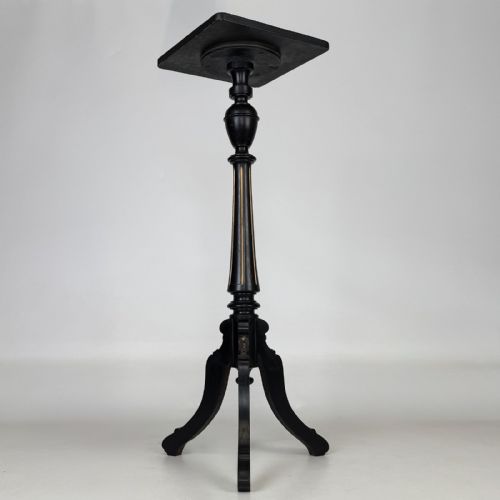
These ebonised urn stand pieces are dark, turned or carved supports for display, offering sturdy elevation for vases and planters.
Ebonised Urn Stand
An ebonised urn stand is a dedicated piece of furniture designed to elevate decorative vessels, plants, and lamps within a room. When searching for this phrase, a buyer encounters forms that function as occasional tables, plant stands, pedestals, and columns.
The pieces appearing on this page span the nineteenth century into the early twentieth century, showing influences from Victorian, Arts and Crafts, and Chinese Export styles. Makers such as Druce and Co London and Liberty of London contribute to the variety of lamp tables and plant stands.
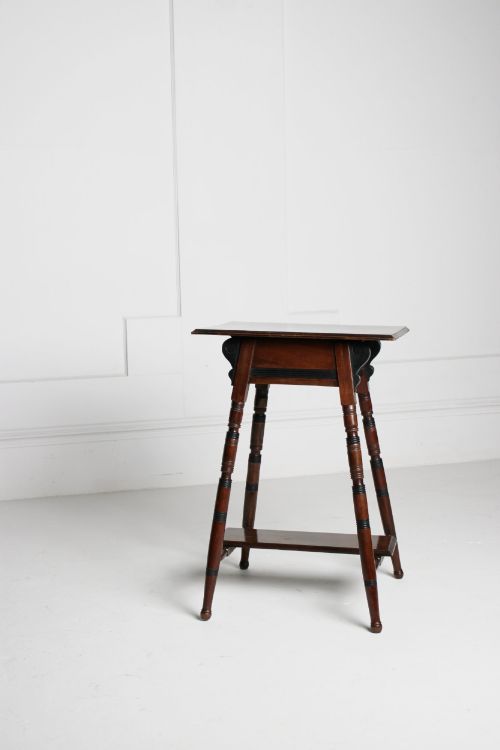
Forms range from simple ebonised occasional stools to intricate carved oriental jardiniere stands fitted with inset marble tops. Buyers will find these works rendered in ebonised hardwood, walnut, and mahogany, often accented with brass or rouge marble.
How they were made
The construction relies heavily on hardwoods such as walnut, mahogany, and dedicated ebonised timber, finished to achieve a deep, dark surface mimicking ebony. Artisans applied this dark stain or finish to lesser-cost woods or utilised naturally dense timbers to create a formal appearance.
Many examples incorporate contrasting insets of rouge marble or white marble within the wooden top, providing a durable and cool surface for damp flower pots or heavy bronze urns. Carved elements, particularly on Chinese export and Oriental pieces, demonstrate hand-tooling on hardwood frames.
Structural support often involves turned columns, portico frames, or tripod bases secured with traditional joinery. Brass detailing, including handles or feet, appears on specific forms like spirit kettles and side tables to complement the dark woodwork.
Ebonised Urn Stand Retail Price Guide 2026
Typical asking prices for ebonised urn stand among the pieces listed under this phrase on Sellingantiques today, from the lower quarter to the upper quarter. They describe what is for sale here now, not the wider market.
Listings feature pieces spanning the 19th Century through to 1930, utilising ebonised hardwood, walnut, and rouge marble.
What varies in quality
Quality in these stands rests upon the integrity of the ebonised finish and the selection of the underlying timber. Superior examples use dense hardwoods that hold a sharp carved edge and maintain a stable foundation over decades of use.
The integration of inset marble tops marks a division in craftsmanship, where tight, flush fitting into the rebated wooden frame signifies careful workshop production. Lesser pieces may show shrinkage gaps or loose joints where the top meets the columnar support.
The precision of hand-carved ornamentation, such as the foliage on Oriental jardiniere stands or the turnery on Victorian lamp tables, separates mass-produced items from bespoke commissions by firms like Liberty of London or Druce and Co.
Druce and Co London·Liberty of London
The Ebonised Urn Stand Glossary
- Ebonised
- Wood treated with a stain, dye, or polish to give the appearance of ebony. This finish became popular in Victorian and Anglo-Japanese furniture to create high-contrast interiors.
- Jardiniere stand
- A decorative piece of furniture designed specifically to hold a plant container or pot. These often feature water-resistant tops such as marble or glazed tiles.
- Portico
- An architectural framework style featuring vertical columns supporting a lintel. Used in furniture design to give a classical, monumental appearance to smaller tables and stands.
- Chinese Export
- Items manufactured in China specifically for Western markets during the nineteenth and early twentieth centuries. These pieces frequently combine traditional Asian carving techniques with European furniture forms.
- Rouge marble
- A deep red variety of limestone marble with white or grey veining. It was frequently used for the inset tops of nineteenth-century side tables and urn stands.
Ebonised Urn Stand: Frequently Asked Questions
What is an ebonised urn stand used for?
These pieces were built to elevate heavy items such as bronze urns, large vases, and potted plants above floor level for better visibility. They also served as lamp tables and occasional stands in Victorian drawing rooms.
Today, they function well in domestic interiors as bedside tables, plant pedestals, or surfaces for small lamps and decorative objects.
How do I identify the period of a stand?
Dating relies on stylistic clues, timber selection, and the presence of retailer labels. Victorian examples often feature heavy ebonised turnery, while pieces from 1900 to 1930 may show Arts and Crafts simplicity or Chinese Export carving.
Examining the underside of the top and the joints helps determine whether the piece belongs to the nineteenth century or the early twentieth century.
How should I care for ebonised wood?
Ebonised surfaces require gentle dusting with a dry, soft cloth to prevent the accumulation of grit that can scratch the dark finish. Avoiding direct sunlight and excessive moisture preserves the depth of the dark stain.
Wax polish suited for dark woods can be applied sparingly to maintain the sheen without causing a cloudy buildup on the surface.