
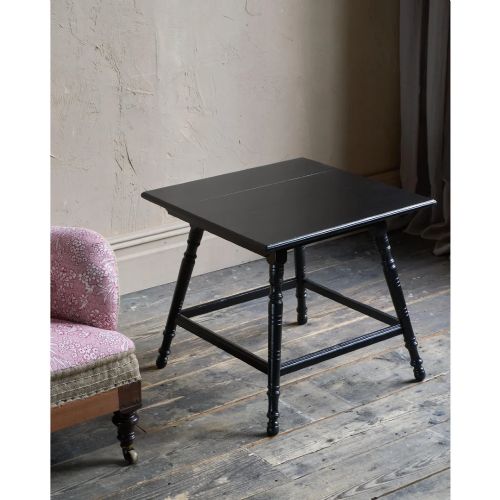
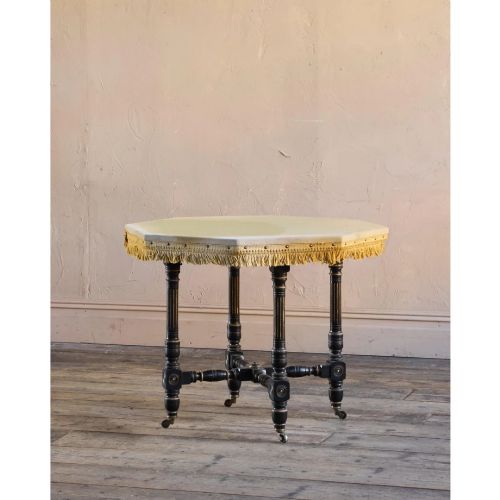
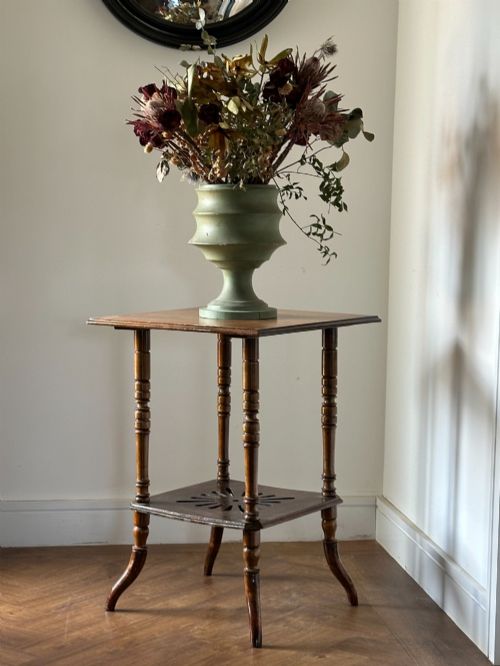
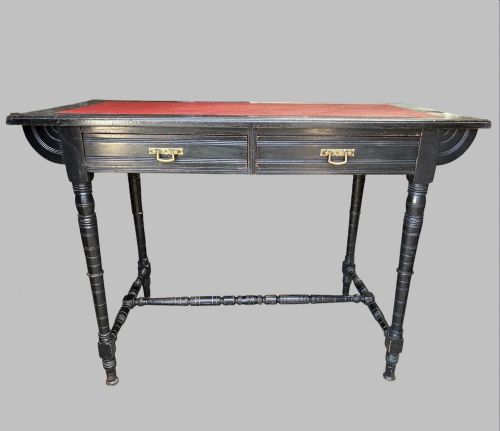
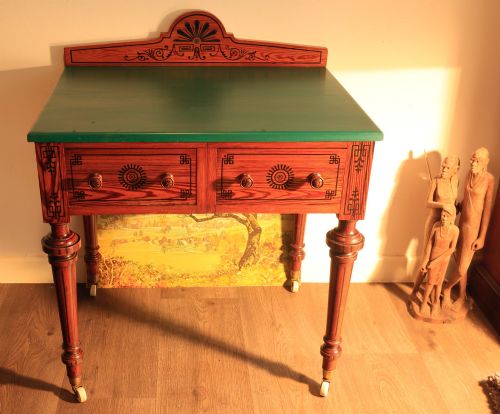


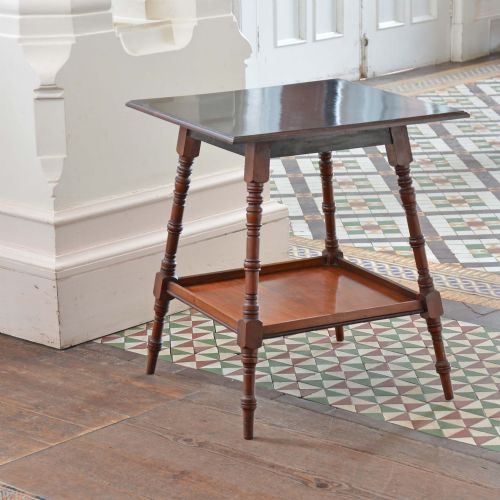


Ebonised Turned Leg Table
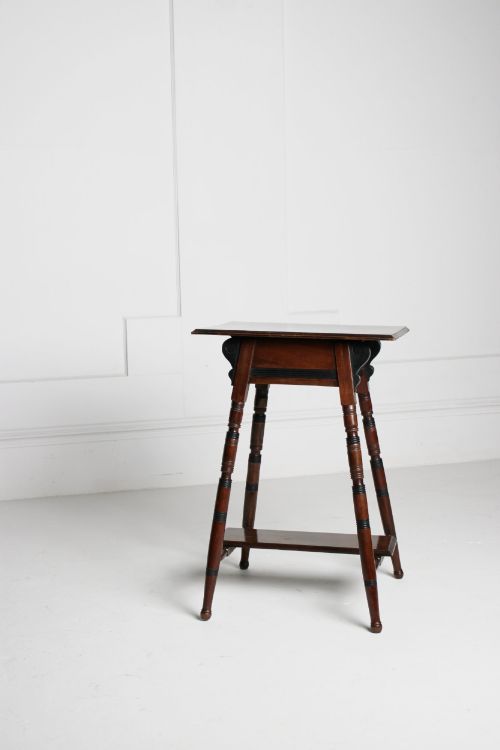
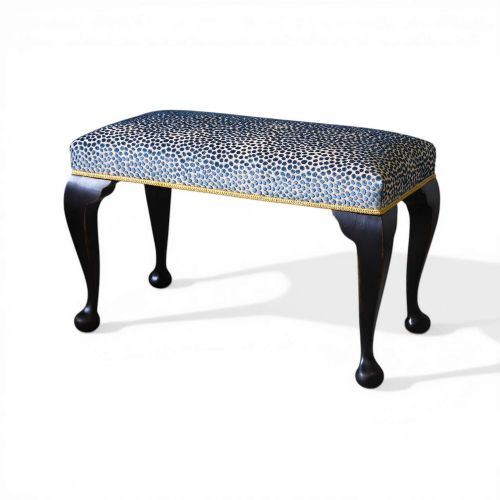
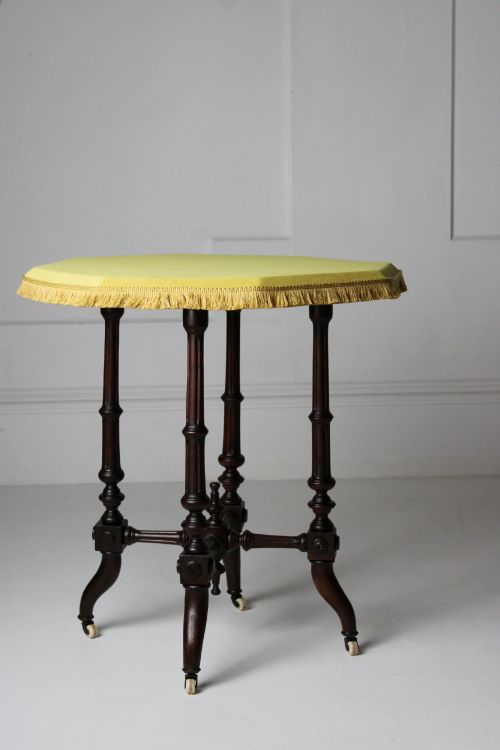
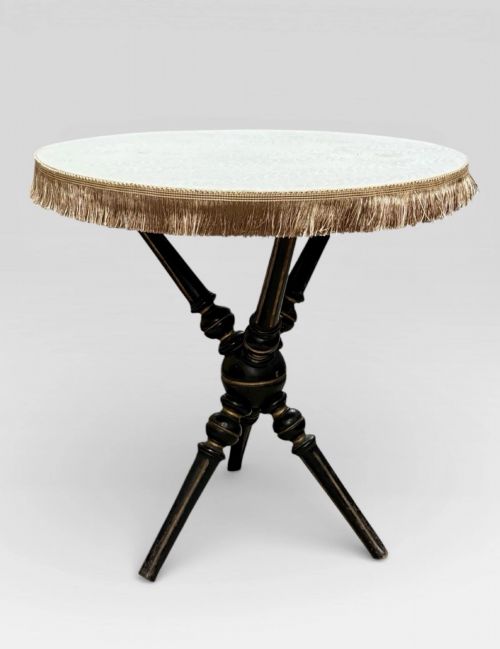
An ebonised turned leg table brings dark, sharp geometry to a room, offering a distinct contrast to lighter woods.
Ebonised Turned Leg Table
When you search for an ebonised turned leg table, you encounter diverse forms ranging from side tables and occasional tables to centre tables and desks. The 19th Century and Victorian periods supply the majority of these pieces, particularly within the Aesthetic Movement style.
You are most likely to meet occasional tables and side tables featuring characteristic dark finishes and shaped supports. These pieces served versatile roles in period interiors, functioning as card tables, writing desks, or small display surfaces.
Makers and designers of the period drew inspiration from Japanese design and classical forms, creating balanced proportions. The integration of ebonised surfaces with turned woodwork defines this group of domestic furniture.
Materials and construction
Cabinet makers utilised dense hardwoods, applying ebonised finishes to achieve a uniform black surface that emulated costly ebony. Secondary timbers such as mahogany, walnut, and satinwood often formed the underlying structure of these tables.
Turning lathes shaped the legs into slender, cylindrical profiles, sometimes incorporating reeding or spiral details. Brass fittings, ceramic castors, and gilt highlights frequently complemented the dark wooden frames.
Surface decoration included hand-painted details, parcel gilding, and inset fabric tops such as velvet. These techniques required precise craftsmanship to maintain crisp lines and durable finishes across various table types.
Several tables here invite you to roll the dice on a card game or pen a secret note beneath velvet-lined tops.
Assessing quality and craftsmanship
The distinction between standard production and superior work lies in the execution of the ebonisation and the crispness of the turned legs. Finer examples display meticulous preparation of the wood before finishing, ensuring an even tone without obscuring the grain underneath.
Structural integrity depends on the joinery connecting the turned legs to the top and rails. Tables with well-balanced proportions and tight joints demonstrate the hand of skilled makers rather than mass production.
Hindley and Sons·Druce & Co London·Bertram & Son·S&H Jewell·Gillows
The Ebonised Turned Leg Table Glossary
- Ebonised
- Wood stained or painted black to imitate true ebony. This finish gained immense popularity during the Victorian era for furniture inspired by Japanese design.
- Turned leg
- A wooden support shaped on a lathe by rotating the material against cutting tools. This technique produces symmetrical columns, spindles, and baluster forms.
- Aesthetic Movement
- A late 19th-century design style that rejected heavy Victorian ornamentation in favour of simplicity and Japanese artistic influences. It often manifested in ebonised furniture with delicate proportions.
- Occasional table
- A small, movable table designed for specific, intermittent uses such as holding lamps, books, or drinks. These versatile items appeared in various rooms of the Victorian home.
- Parcel gilt
- Portions of an object highlighted with thin layers of gold leaf. This technique added subtle contrast to darkened ebonised surfaces.
Ebonised Turned Leg Table: Frequently Asked Questions
What is an ebonised turned leg table?
An ebonised turned leg table is a piece of wooden furniture treated with a dark finish to resemble ebony, featuring legs shaped on a lathe. These tables date predominantly from the 19th century and Victorian periods.
Such tables encompass forms like side tables, occasional tables, and writing desks. They reflect design movements that favoured dark, contrasting silhouettes.
How were these tables used originally?
These tables served multiple domestic functions in Victorian and Edwardian homes, acting as surfaces for lamps, writing, or playing cards. Their modest scale allowed owners to move them easily between rooms as needed.
Drawing rooms and parlours typically housed occasional or centre tables for display and social activities. Console and hall tables stood against walls to receive callers and store small items.
How do I care for ebonised wood?
Preserving an ebonised finish requires dusting with a soft, dry cloth and avoiding modern chemical polishes that can degrade the surface. Keep the wood away from direct sunlight and excessive moisture to prevent fading or warping.
Occasional applications of appropriate wax maintain the sheen without building up heavy residues. Handle joints and turned elements with care during placement.
How can I distinguish an Aesthetic Movement table?
Aesthetic Movement tables often feature ebonised wood combined with slender turned legs, simple geometric lines, and occasional Japanese-inspired motifs. They contrast sharply with the heavier, carved furniture styles of early Victorian decades.
Look for refined proportions, hand-painted details, or subtle parcel gilding. These design choices emphasise form and visual harmony over ostentatious decoration.