



Ebonised Spindle Armchair
An ebonised spindle armchair offers a striking silhouette and dark timber finish, bringing distinctive nineteenth-century design straight into a modern interior.
Ebonised Spindle Armchair
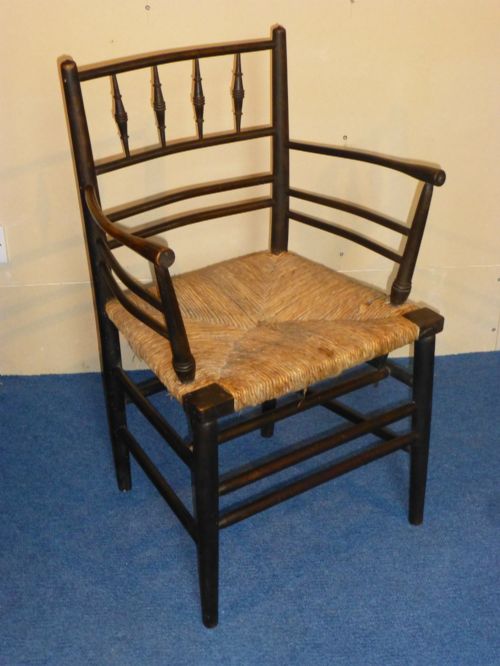
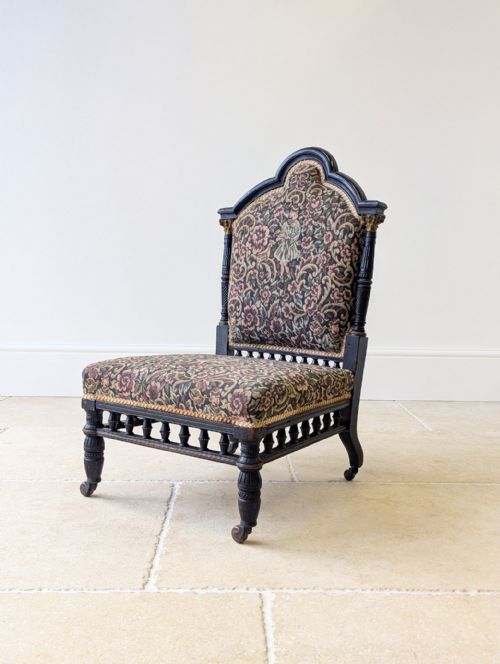
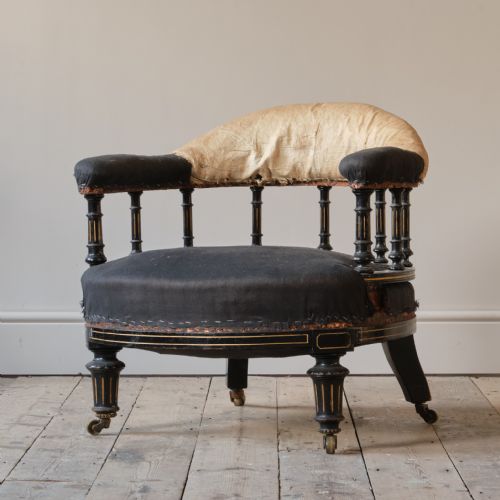
The ebonised spindle armchair draws upon nineteenth-century design movements, featuring upright turned posts and darkened wooden frames that echo the aesthetic and arts and crafts ideals. These chairs emerge most frequently from the Victorian period, often bearing the characteristic spindle backs and slender profiles typical of salon and easy seating.
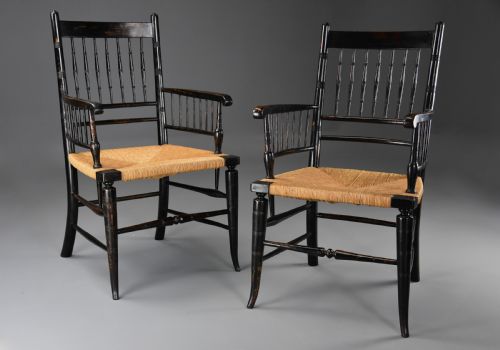
Makers such as Morris and Co. and Gillows defined this form, producing pieces that range from low salon chairs to paired 'His' and 'Hers' variants. Alongside these sophisticated English works, related regional forms appear, including Welsh turned chairs and Swedish examples from the same broader timeframe.
Seat options vary considerably across the selection, moving between simple rush weaves, painted finishes, and luxurious upholstery fabrics complemented by textile trim and brass details. Buyers also encounter child chairs and rocking variants, each adapting the core spindle framework to domestic comfort.
How they were made
Woodturners shaped the slender spindles and structural framing on a lathe, utilising native hardwoods before applying an ebonised finish to mimic costly exotic ebony. Paint and dark stains created the uniform black surface characteristic of the style.
Upholstered versions integrated webbing, springs, and stuffing covered in velvet or patterned textiles, often secured with decorative trim. Regional examples relied on traditional carpentry joinery to unite turned wooden components without complex mechanical fasteners.
Ebonised Spindle Armchair Retail Price Guide 2026
Typical asking prices for ebonised spindle armchair among the pieces listed under this phrase on Sellingantiques today, from the lower quarter to the upper quarter. They describe what is for sale here now, not the wider market.
The listings span from the eighteenth century to the late nineteenth century, encompassing Victorian, Arts and Crafts, and Swedish Neo-Classical styles.
What varies in quality
The sophistication of the turning work and the precision of the joinery separate standard vernacular seating from pieces produced by prominent design firms. Crisp detailing on the spindles and well-balanced proportions indicate superior craftsmanship.
Original surface finishes and surviving upholstery treatments preserve the historical integrity of the chair, whereas heavily restored or later painted surfaces alter its original character. Maker attribution and documented provenance further elevate the standing of individual pieces.
Morris and Co·Philip Webb·Gillows
The Ebonised Spindle Armchair Glossary
- Ebonised
- Wood treated with stain or paint to achieve the deep, dark appearance of ebony. This finish became especially popular during the nineteenth century for furniture influenced by Japanese and classical design.
- Spindle
- A slender, turned wooden rod used repetitively to form an open back or undercarriage. These elements provide structural support while maintaining a light, transparent visual presence.
- Aesthetic Movement
- A late nineteenth-century design trend prioritising visual beauty over narrative content or moral purpose. Furniture from this circle often embraces simplified forms and ebonised surfaces.
- Arts and Crafts
- A movement advocating traditional craftsmanship and simple forms in reaction to machine production. It heavily influenced the development of vernacular-inspired seating.
- Rush
- A strong wetland plant material woven into traditional seating surfaces. It provides a durable, textured base for chairs of various regional origins.
Ebonised Spindle Armchair: Frequently Asked Questions
What is an ebonised spindle armchair?
An ebonised spindle armchair is a nineteenth-century seating form featuring turned wooden spindles and a dark, black-stained finish. These chairs were championed by designers of the Aesthetic and Arts and Crafts movements.
They combine structural lightness with decorative impact, making them versatile additions to both period and contemporary rooms.
How do I identify an Aesthetic Movement chair?
Aesthetic Movement chairs typically display clean architectural lines, ebonised wood surfaces, and Japanese-inspired decorative motifs. They prioritize artistic form over heavy ornamentation.
Look for slender turned spindles and contrasting upholstery fabrics that reflect the progressive design ideas of the late nineteenth century.
Were these chairs used in parlours?
Yes, low salon chairs and easy chairs were designed specifically for nineteenth-century reception rooms and drawing rooms. Their relatively compact proportions made them suitable for social gatherings.
They offered comfortable seating without dominating the floor space of a formal parlour.
How should I care for ebonised wood?
Ebonised wood requires gentle maintenance to preserve its dark finish. Dust regularly with a soft, dry cloth and avoid harsh chemical cleaners that can strip the surface stain.
Keep the timber away from direct sunlight and excessive moisture to prevent fading and warping.