
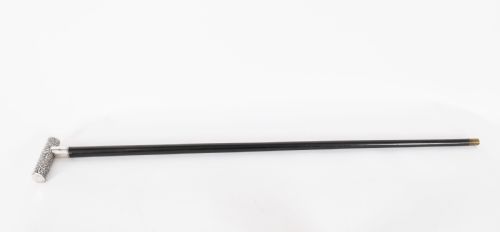
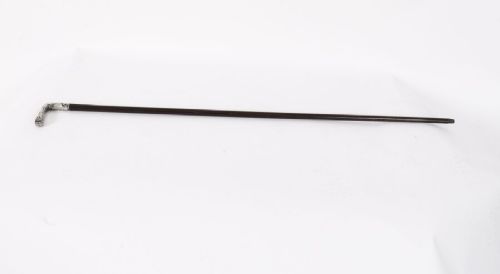
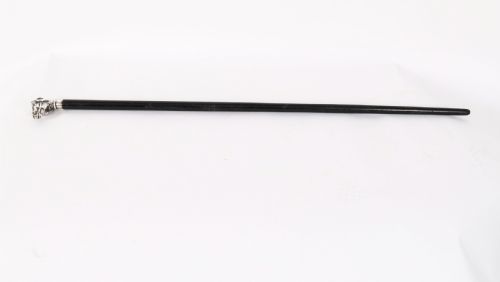
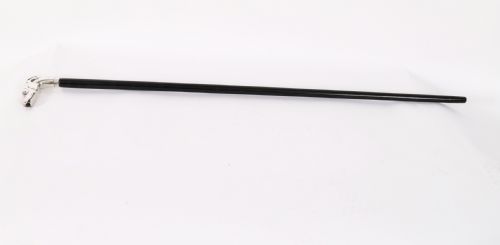
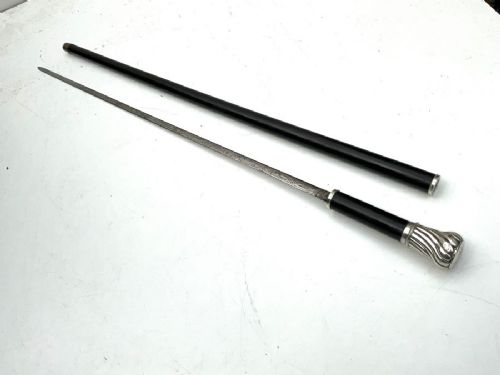


Ebonised Silver Walking Stick
An ebonised silver walking stick is a dapper accessory combining dark wood and precious metal mounts, designed for steady stride or formal display.
Ebonised Silver Walking Stick
When you search for an ebonised silver walking stick, you encounter gentlemanly walking canes fashioned with darkened wooden shafts and precious metallic fittings. These sophisticated items served practical outdoor purposes as well as urban fashion statements across the nineteenth and early twentieth centuries.
The selections available here range from sturdy Edwardian oak examples to ornate Victorian pieces and continental imports. You frequently meet shafts paired with intricate silver handles shaped like horse heads, greyhounds, or golf clubs, alongside functional concealed sword sticks.
Originating largely from British, French, Chinese export, and Burmese workshops, these canes demonstrate considerable diversity in handle design. The typical specimen unites a deeply stained wooden shaft with a robust silver mount or full figural grip.
Materials and construction
Makers produced these shafts predominantly from dense hardwoods such as oak or standard timber treated with an ebonising process to achieve a deep black finish. Craftsmen then fitted these dark wooden bodies with sterling silver mounts, silver plate, or occasionally horn details.
Handles were cast or hand-beaten from silver, sometimes incorporating complex functional elements like watch movements or concealed steel blades. Metal collars and ferrules secured the ends, protecting the timber from splitting during everyday use.
Assessing quality and craftsmanship
Superior examples distinguish themselves through the weight and purity of the metalwork, particularly where handles are intricately modelled into animal or figural forms rather than simple pommels. The density and finish of the ebonised wood also dictate the overall calibre of the piece.
Finely executed hallmarks, maker's marks, and integrated complications like functional watch inserts elevate an item well beyond standard utilitarian production. The balance of the cane and the snugness of fit in sword sticks or operational mechanisms reflect the original artisan's skill.
Kendall And Sons·Thomas Peter Hewit·John Coakley
The Ebonised Silver Walking Stick Glossary
- Ebonised
- Wood treated to resemble expensive ebony, typically by staining or painting to achieve a dark, uniform black surface.
- Ferrule
- The protective metal cap fitted to the bottom of a walking stick to prevent wear against the ground.
- Hallmark
- An official stamp applied by an assay office to indicate the purity of precious metal and often the year of manufacture.
- Opera cane
- A specialised walking stick featuring a built-in mechanical watch or compartment located within the handle.
- Sword stick
- A covert walking cane containing a concealed steel blade housed securely within the wooden shaft.
Ebonised Silver Walking Stick: Frequently Asked Questions
How were these walking sticks used?
Owners carried them during urban strolls, formal outings, and social visits to complete a polished gentleman's attire.
Certain specialised versions doubled as hidden sword sticks or incorporated functional pocket watches within the handle itself.
How do I care for my stick?
Keep the piece away from excessive moisture and direct heat to protect both the ebonised wood finish and the underlying timber.
Polish the silver mounts gently with a soft cloth while avoiding harsh chemical cleaners that might damage the dark wooden shaft.
How do I identify the period?
Examine the style of the handle work, the proportions of the shaft, and any accompanying metal hallmarks or maker stamps.
Assay office stamps and specific Victorian or Edwardian design motifs provide clear chronological markers for dating each cane.