
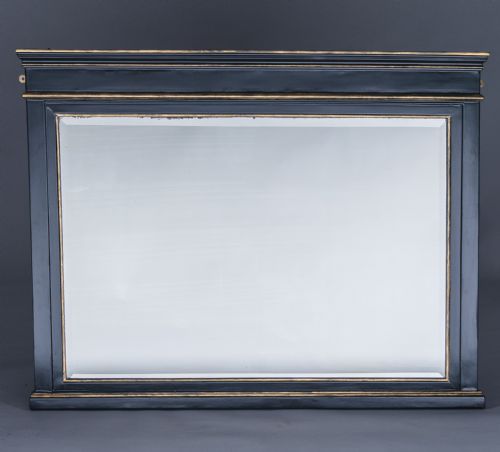
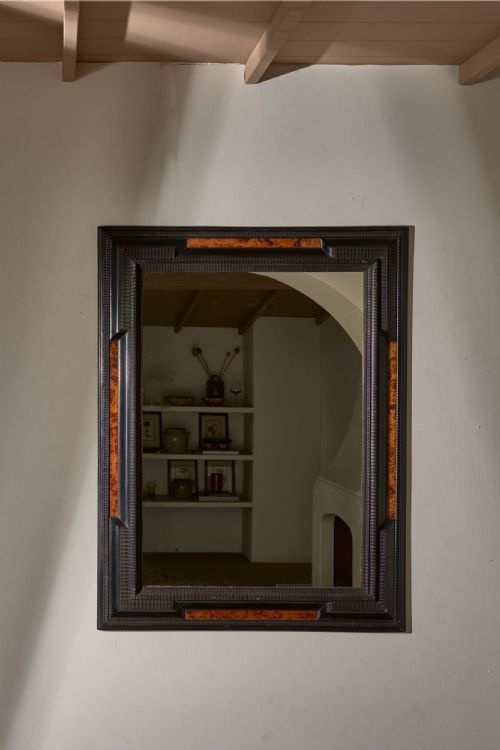
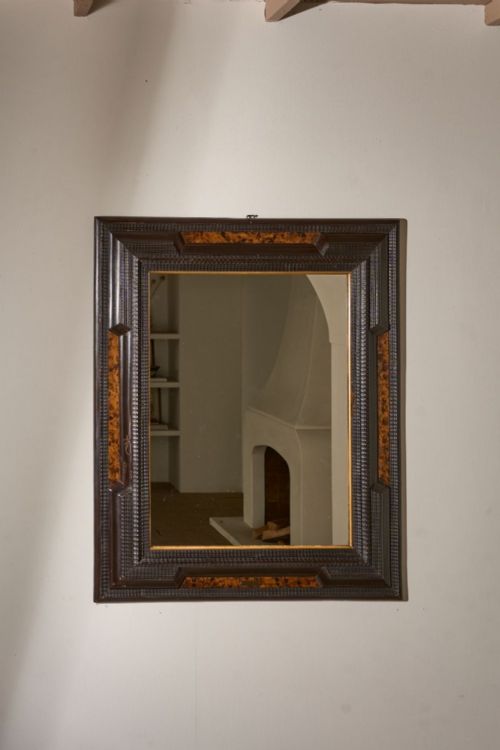


Ebonised Rectangular Wall Mirror
An ebonised rectangular wall mirror brings dark gravity and sharp linear presence to a room, drawing the eye instantly.
Ebonised Rectangular Wall Mirror
When you search for an ebonised rectangular wall mirror, you are looking at dark, dipped or stained timber frames formed in straight-edged formats designed for wall hanging or overmantel placement. These pieces span the Victorian, Edwardian, and Regency periods, alongside Italian Baroque Revival and Neoclassical styles.
The versions you are most likely to meet on this page include large overmantle mirrors finished in ebonised wood combined with gilt or silver accents. They range from simple Victorian designs to ornate Italian faux tortoiseshell examples dating from the nineteenth century.
How they were made
The construction relies on solid wood bases treated to achieve a dense black ebonised finish, often paired with applied gesso details. Artisans incorporated gilt, silver, and faux tortoiseshell elements to create contrast against the dark timber.
Mirrors feature glass, mirror glass, or etched and engraved rectangular glass panels set securely within the frames. Surviving pieces demonstrate period joinery and hand-finishing techniques typical of nineteenth and early twentieth-century workshops.
Some nineteenth-century Italian makers cleverly painted ordinary pine to mimic exotic tortoiseshell just to satisfy Victorian tastes.
What varies in quality
Quality reveals itself in the depth of the ebonised finish and the crispness of the applied gesso mouldings. Finer examples display meticulous integration of gilt or silver leaf alongside well-preserved faux tortoiseshell effects.
The calibre of the glass plate itself defines the upper tier, particularly where bevelling, etching, or engraving remains clear and undisturbed by excessive foxing.
The Ebonised Rectangular Wall Mirror Glossary
- Ebonised
- Wood treated with stain or polish to resemble genuine ebony. This dark finish gained immense popularity during the Victorian and Aesthetic Movement periods.
- Gesso
- A plaster-based mixture applied to wood frames and carved or moulded into decorative reliefs. It frequently serves as a base for subsequent gilding.
- Overmantle
- A large mirror designed to hang specifically above a fireplace mantelpiece. These pieces often feature horizontal proportions.
- Faux tortoiseshell
- A painted or treated surface finish that imitates the mottled, amber-and-brown shell of a sea turtle. Italian makers utilised this technique on nineteenth-century frames.
- Giltwood
- Timber that has been coated with a thin layer of gold leaf or gold paint. It provides bright contrast against ebonised surfaces.
Ebonised Rectangular Wall Mirror: Frequently Asked Questions
Where should I hang an ebonised wall mirror?
These mirrors suit principal reception rooms, hallways, and above mantelpieces where their dark frames can anchor the wall space.
Ensure the wall fixings match the substantial weight of nineteenth-century timber and glass constructions.
How do I clean an antique mirror glass?
Use a soft, dry cloth to remove dust from the glass and frame without disturbing the aged surface.
Avoid commercial liquid cleaners that might seep behind the plate and damage historic silvering.
What periods do these mirrors come from?
The selection includes pieces from the eighteenth, nineteenth, and early twentieth centuries. Victorian and Edwardian examples appear frequently alongside Regency and Italian Baroque Revival styles.
Each period brings distinct proportions and decorative treatments to the ebonised frame.
Are these mirrors heavy?
Many examples utilise solid wood frames combined with thick glass plates, resulting in considerable weight.
Professional wall mounting into secure studs or masonry is strongly advised for safety.