


Ebonised Dark Wood Mirror
An ebonised dark wood mirror brings deep, dark tones and striking presence to a room, offering both history and decorative impact.
Ebonised Dark Wood Mirror
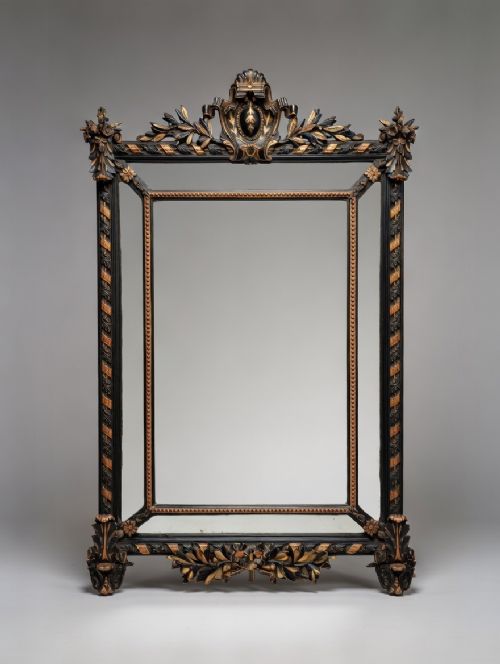
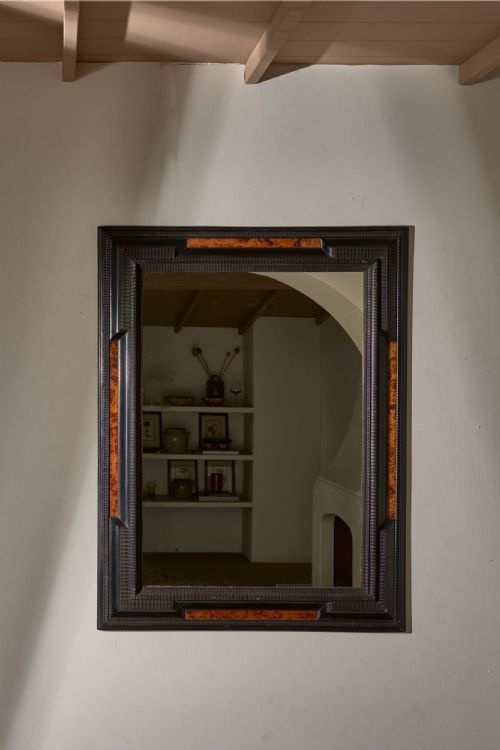
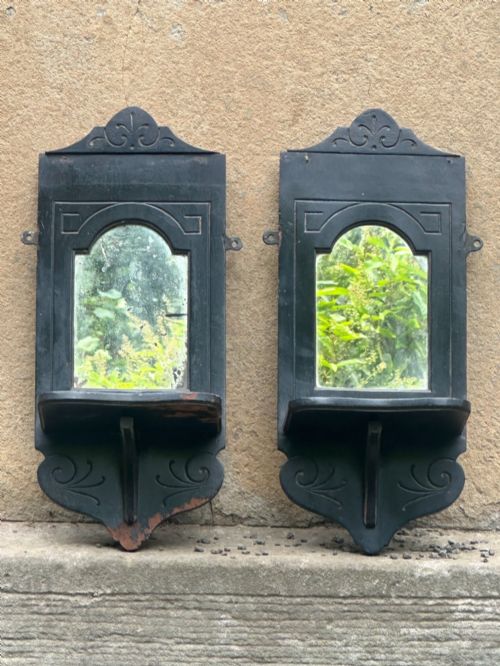
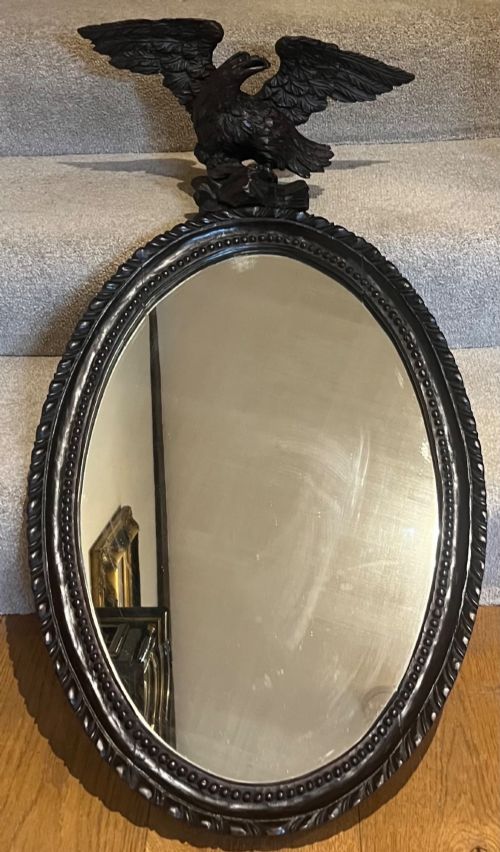
When you search for an ebonised dark wood mirror, you are looking at dark-finished wall furniture originating mainly from the nineteenth century, including Victorian examples. These pieces range from simple hall mirrors to more ornate forms featuring carved details or gilded accents.
On this page, you are most likely to meet nineteenth century wall mirrors, including items influenced by the Aesthetic Movement and revival styles. The selection also includes specialised forms like girandoles and carousel mirrors alongside standard wall-hanging designs.
How they were made
Maker's workshops built these frames using woods treated with ebonising techniques to achieve a deep, dark finish that mimics ebony. Gesso and veneer applied to a wooden base often provided the foundation for subsequent gilding or painting.
Reflective surfaces utilised standard mirror glass, sometimes paired with decorative elements such as gold leaf, silver gilt, or cut glass pediments. Carved details and faux tortoiseshell finishes further enhanced the visual texture of the wood.
What varies in quality
The standard of carving and surface finish largely separates finer examples from simpler production. Crisp execution in carved wood elements and the careful application of gold leaf or silver gilt indicate higher workshop skill.
The integrity of the ebonised finish and the preservation of original mirror glass or cut glass pediments also distinguish better pieces. Finer mirrors show deliberate stylistic ambition, whether through Aesthetic Movement design or revival ornamentation.
Cottier & Co.
The Ebonised Dark Wood Mirror Glossary
- Ebonised
- Wood treated to give the appearance of ebony. This dark finish was popular during the Victorian era for furniture and mirror frames.
- Gesso
- A plaster-like mixture applied to wood as a base for painting or gilding. It allows for intricate, moulded decorative details on the frame.
- Girandole
- A branched wall mirror designed to hold candles. The reflective glass enhances the candlelight within the room.
- Pediment
- The decorative crown above the mirror plate. Some nineteenth century examples feature cut glass or carved woodwork in this upper section.
Ebonised Dark Wood Mirror: Frequently Asked Questions
What is an ebonised mirror?
An ebonised mirror is a piece of wall furniture featuring a wood frame treated to resemble solid ebony. This dark, uniform finish gained immense popularity during the nineteenth century.
Craftsmen often combined the dark wood with gold leaf, silver gilt, or carved details to create contrast. These mirrors served both functional and decorative purposes in period interiors.
How old are these mirrors?
The pieces available span the nineteenth century, primarily featuring Victorian designs and specific revival styles. Dates range from the middle decades of the eighteen-hundreds through to the eighteen-nineties and early twentieth century.
Makers working during the Aesthetic Movement and later Victorian periods produced many of the surviving examples. Stylistic details and construction methods help place them within this broad nineteenth-century timeline.
Where were they used?
These mirrors found places in various rooms of nineteenth-century homes, from grand reception spaces to smaller hallways. Hall mirrors were particularly common for final checks before stepping outside.
Lighter or smaller versions hung in parlours, while larger gilded and ebonised wall mirrors anchored principal living areas. Their dark frames provided a strong focal point against patterned Victorian wallpaper.
How do I hang a heavy antique mirror?
Hanging a heavy nineteenth-century mirror requires locating secure wall studs or using heavy-duty wall anchors suitable for the weight of the wood and glass. Professional installation is often recommended for larger framed pieces.
Ensuring the fixings match the weight distribution of the specific frame protects both the wall and the antique structure. Once secured properly, the mirror remains stable against the wall.