





Ebonised Marble Top Table
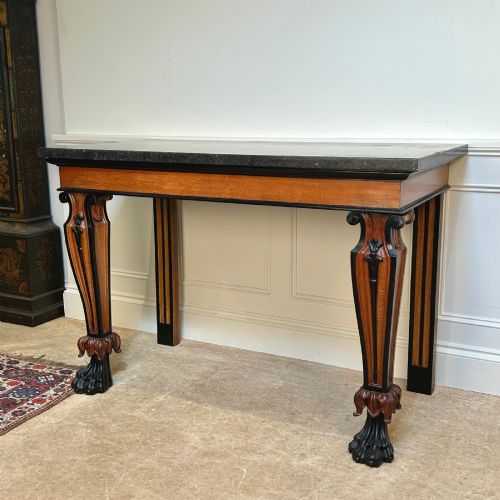
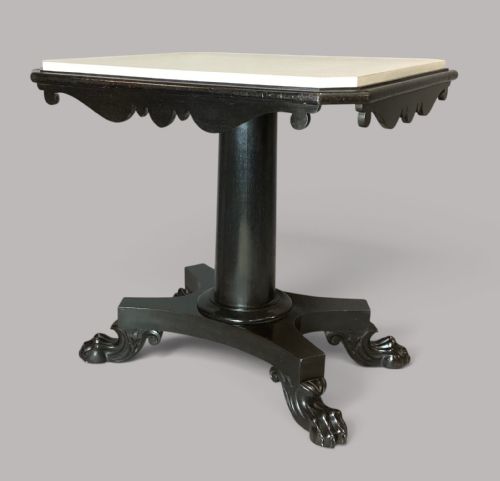
An ebonised marble top table brings a dark, striking contrast to a room through its polished stone surface and deeply stained or blackened timber.
Ebonised Marble Top Table
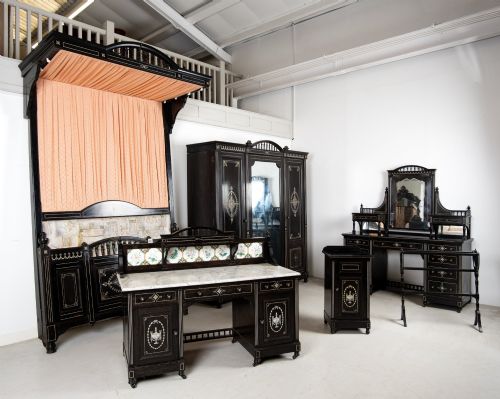
When you search for an ebonised marble top table, you encounter a variety of forms spanning the nineteenth century alongside select Georgian and later interpretations. Side tables, console tables, and occasional tables dominate the selection, often pairing a heavy stone slab with a dark wooden frame.
The nineteenth-century examples frequently channel French Neoclassical, Regency, or Victorian Aesthetic Movement tastes. You also meet Chinese export pieces featuring inset marble within carved ebonised hardwood frames, showing the global scope of this design tradition.
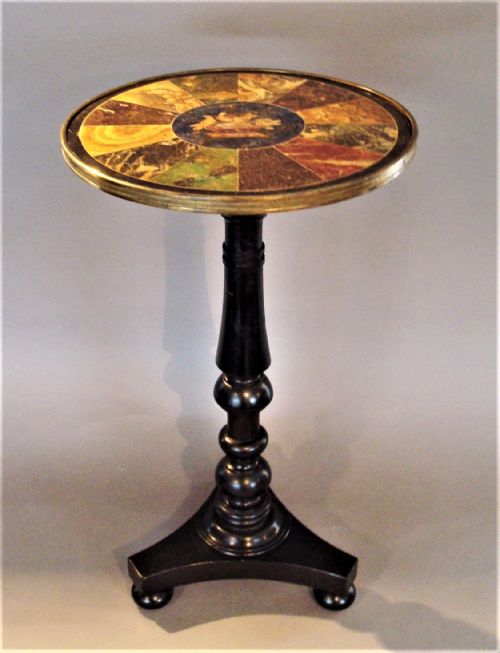
Most pieces on this page lean towards French Empire, Louis XVI style, or Victorian production dates. These range from grand centre tables designed for principal rooms to smaller plant stands and lamp tables meant for tighter corners.
Materials and construction methods
Makers utilised dense timbers such as mahogany, walnut, oak, and general hardwood, applying a dark ebonisation process to mimic costly ebony. This blackened finish often received gilt highlights, or ormolu mounts made from cast bronze, adding metallic warmth to the dark frames.
The tabletops consist of heavy marble, including white, rouge, or complex specimen and micro-mosaic varieties. These stone slabs rest directly upon the wooden structures, sometimes secured by moulded lips or fitted aprons depending on whether the piece functions as a console, centre table, or commode.
Ebonised Marble Top Table Retail Price Guide 2026
Typical asking prices for ebonised marble top table among the pieces listed under this phrase on Sellingantiques today, from the lower quarter to the upper quarter. They describe what is for sale here now, not the wider market.
Some nineteenth-century makers cleverly ebonised ordinary fruitwood to trick the eye into seeing solid tropical ebony.
Distinctions in craftsmanship and material grade
Quality reveals itself in the depth of the ebonised finish and the crispness of any carved detailing or applied ormolu mounts. Finer examples display meticulous joinery and substantial timber scantlings that support the immense weight of the stone without sagging.
The marble itself dictates the upper tier of quality, with thick, well-figured slabs, complex specimen stone arrangements, or intricate micro-mosaic work far outstripping plain utilitarian stone. The integration between the heavy stone top and the supporting wooden base determines the overall structural integrity.
Paul Sormani·Befort Jeune
The Ebonised Marble Top Table Glossary
- Ebonised
- Wood treated with a chemical stain, dye, or paint to imitate natural ebony. This finish gained immense popularity during the Victorian period and nineteenth-century revival movements.
- Guéridon
- A small French round table supported by one or more columns or figures. These pieces frequently feature marble tops and ebonised frames.
- Ormolu
- Gilded bronze mounts applied to furniture for decorative contrast. The technique involves coating cast bronze with a gold amalgam.
- Specimen Marble
- A tabletop composed of various coloured marbles arranged in geometric patterns or pictorial designs. Italian workshops specialised in this intricate stonework during the nineteenth century.
Ebonised Marble Top Table: Frequently Asked Questions
What rooms suit an ebonised marble top table?
These tables find a natural home in hallways as console tables or in sitting rooms as centre and occasional pieces. Their dark finishes and stone surfaces anchor lighter interior colour schemes.
The cool touch of marble and the dramatic dark wood also suit bedrooms and dressing rooms, functioning well as lamp stands or bedside surfaces.
How do I care for the marble top?
Marble is a soft, porous stone that reacts to acids found in wine, fruit juice, and vinegar. Wipe spills promptly with a damp cloth and mild soap.
Avoid abrasive cleaners or harsh scouring pads that dull the polished finish. Regular dusting keeps the stone and ebonised timber in sound condition.
How do I distinguish French styles from English ones?
French pieces often display ornate ormolu mounts, gilt bronze details, and Neoclassical lines reminiscent of Louis XVI or Empire periods. Chinese export versions incorporate carved hardwood and distinct Asian motifs.
English variants from the Regency or Victorian eras tend to lean towards restraint, utilising simpler ebonised turnings and occasional brass inlay.