
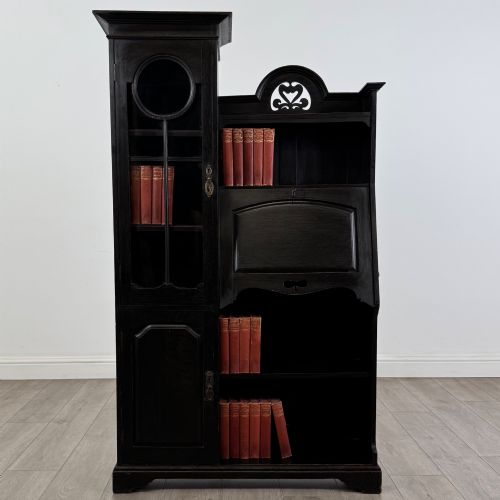
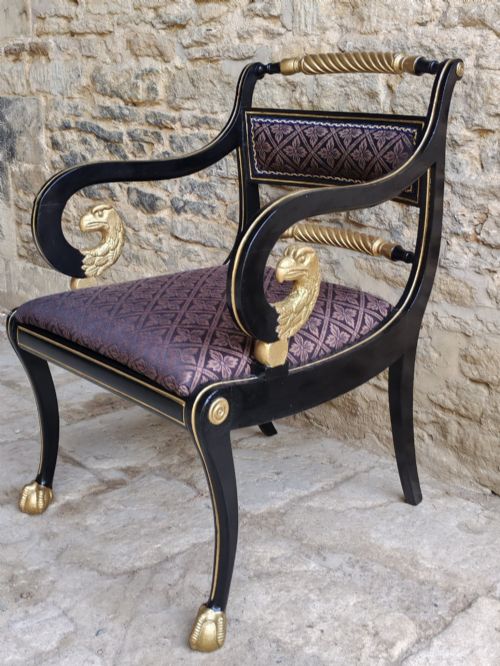
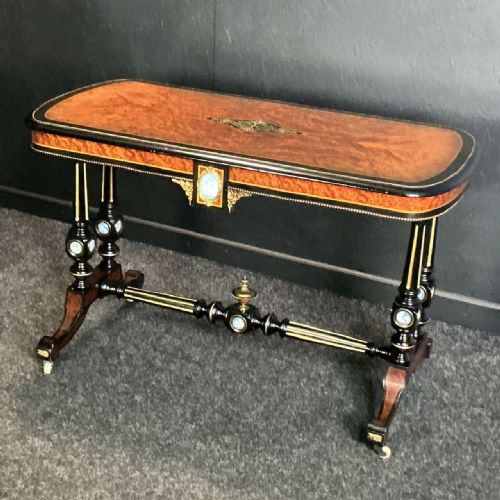
Ebonised Library Desk
An ebonised library desk brings dark, polished contrast to a room, offering a functional writing surface rooted in nineteenth-century and later traditions.
Ebonised Library Desk
An ebonised library desk is a dedicated writing or working surface finished with a dark, often black, stain or lacquer designed to simulate ebony. These pieces span the nineteenth century through the interwar years, encompassing Victorian, Edwardian, and Regency revivals alongside Aesthetic Movement productions.
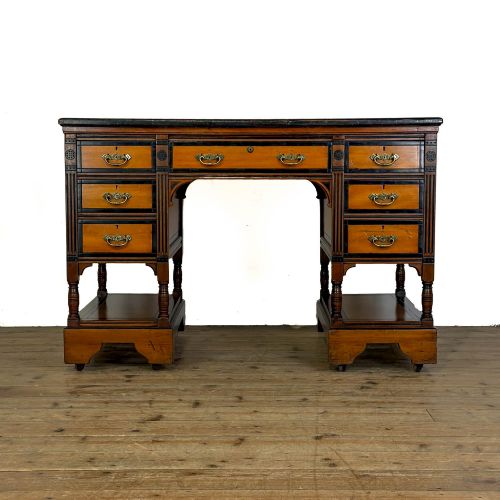
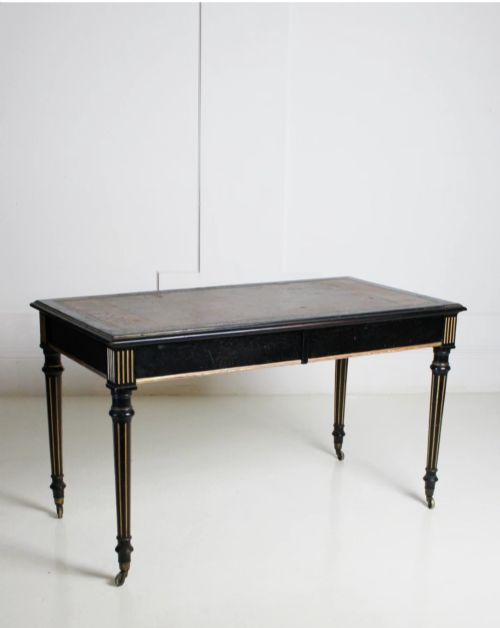
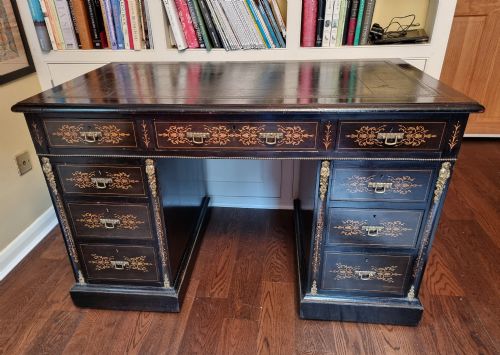
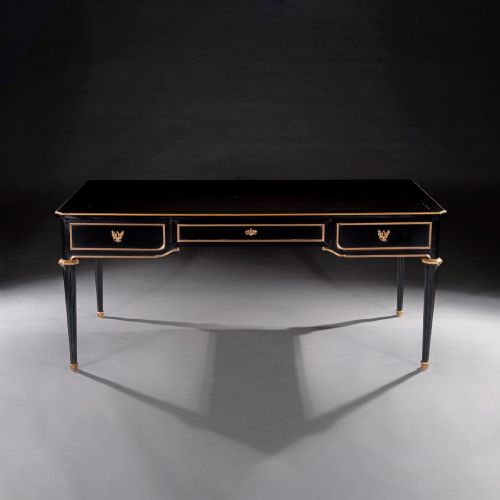
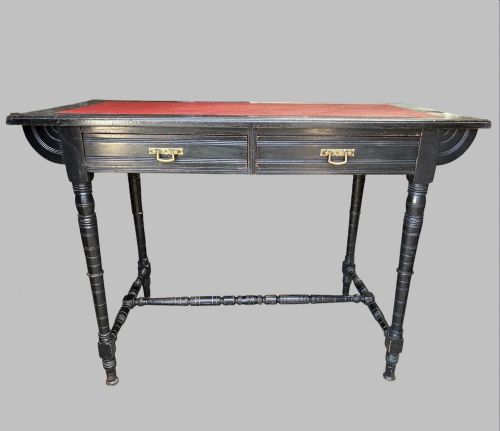
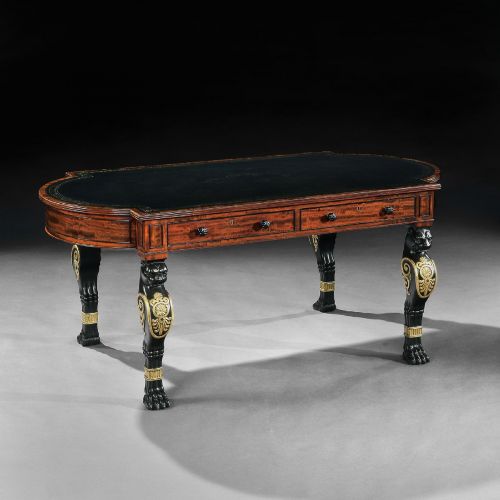
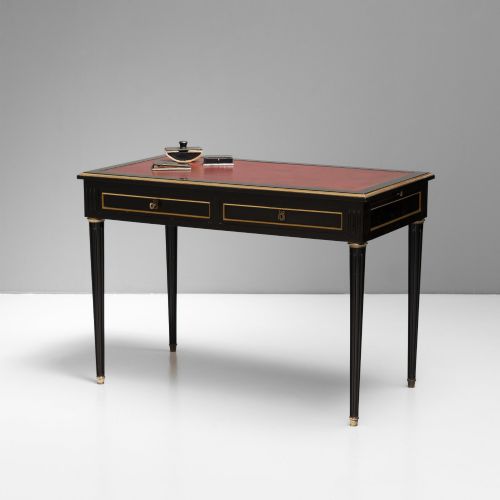
The items found in this category include double-sided partners desks, bureau plat writing tables, and side tables that double as compact writing spaces. Many examples incorporate inset leather tops, brass mounts, and occasional marquetry or inlay work.
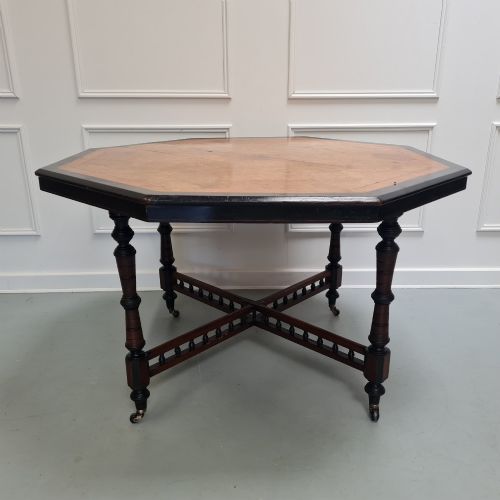
Victorian and late nineteenth-century iterations dominate the selections, frequently displaying the restrained ornamentation of the Aesthetic Movement or the bolder curves of French Napoleon III and Empire styles.
Materials and construction
Cabinet makers utilised dense hardwoods such as oak, walnut, and mahogany as foundations before applying a deep ebonising stain to the exterior surfaces. This process achieved the desired dramatic dark finish without requiring solid exotic timber throughout.
Fine details often involved brass, ormolu, and hand-tooled leather writing surfaces inset into the timber frame. Workshops employed marquetry, inlay, and carved black lacquer to add texture and visual depth to the panels and borders.
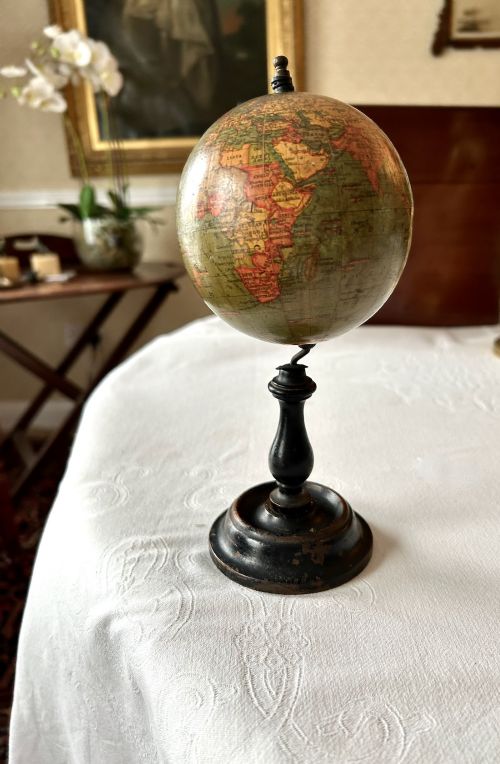
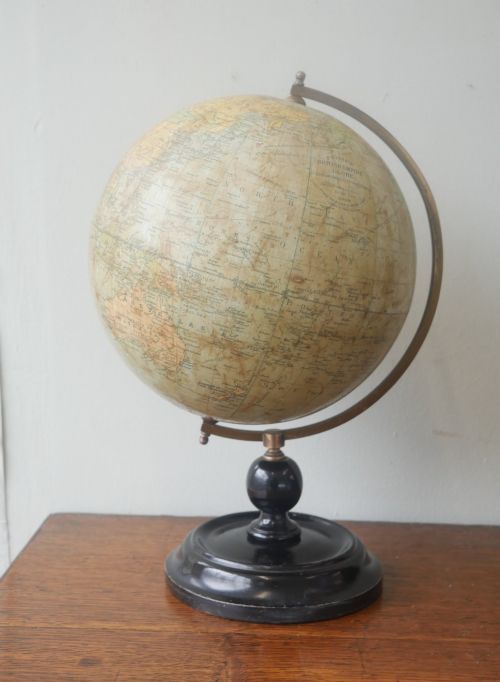
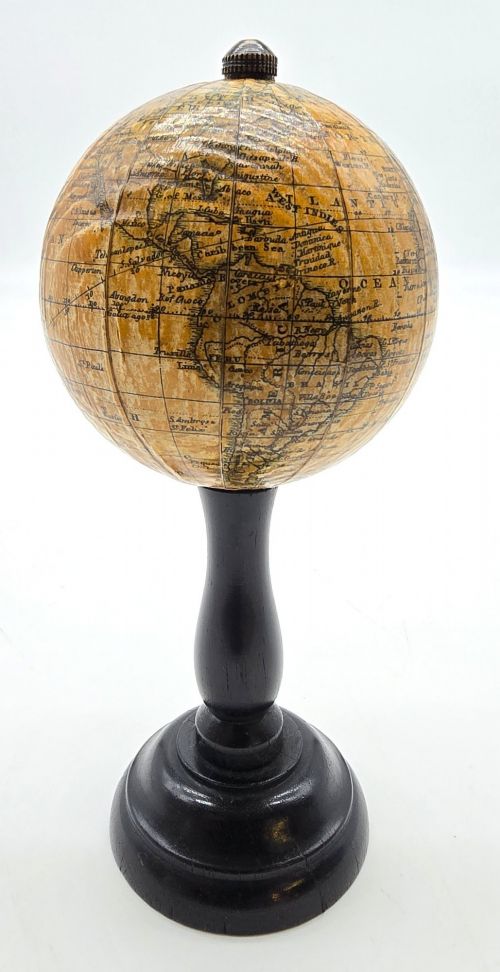
Several globes appear alongside these desks, ready to map out the entire British Empire while you write your letters.
Defining quality in execution
The grade of an ebonised library desk depends heavily on the crispness of the timber preparation and the depth of the ebonised finish. Superior pieces show an even, hand-polished lustre that reveals the grain subtly underneath rather than a flat, opaque paint layer.
Hardware choice and secondary wood selection separate standard utility pieces from high-workshop outputs. Finely cast ormolu mounts, original tooled leather inserts, and meticulous dovetailing in the drawer construction indicate superior cabinet-making pedigree.
Edwards & Roberts·Maison Millet·Diehl Paris·Gillows
The Ebonised Library Desk Glossary
- Ebonised
- Wood treated with a stain or polish to resemble solid ebony. This technique gained immense popularity during the Victorian and Aesthetic Movement periods for creating high-contrast furniture.
- Bureau plat
- A freestanding French writing table featuring a rectangular top and drawers in the frieze. These tables are finished on all sides so they can sit in the centre of a room.
- Partners desk
- A large double-sided desk designed for two people to work opposite one another. They typically feature drawers and cupboards accessible from both sides.
- Ormolu
- Gilt bronze mounts applied to furniture for decorative effect. This technique was favoured in French Napoleon III and nineteenth-century revival pieces.
Ebonised Library Desk: Frequently Asked Questions
What is an ebonised library desk?
An ebonised library desk is a writing table finished with a dark, polished stain intended to mimic costly ebony timber. These pieces range from compact Victorian writing tables to large nineteenth-century partners desks.
They serve as both practical writing surfaces and striking visual centrepieces within a study, library, or drawing room.
How do I style an ebonised desk?
The dark finish pairs well with traditional leather-bound books, brass desk accessories, and rich textiles. Placing the desk centrally in a room allows its finished back and side details to remain fully visible.
Contrasting the deep black wood with lighter wall colours or patterned rugs highlights the architectural form of the furniture.
Are these desks suitable for daily work?
Many historical examples provide generous surface areas and stable drawer storage suitable for modern writing or laptop use. Original leather inserts offer a durable writing plane, though some surfaces require gentle handling.
Ensuring the writing height matches your chair is the primary consideration for daily comfort.
How do I identify the period of a desk?
Dating relies on examining construction methods, secondary timbers, and stylistic markers such as brass mounts or marquetry. Aesthetic Movement and Victorian pieces often display geometric incised lines or ebonised surfaces characteristic of the late nineteenth century.
Earlier Regency examples tend to feature cleaner architectural lines and differing hardware styles.