

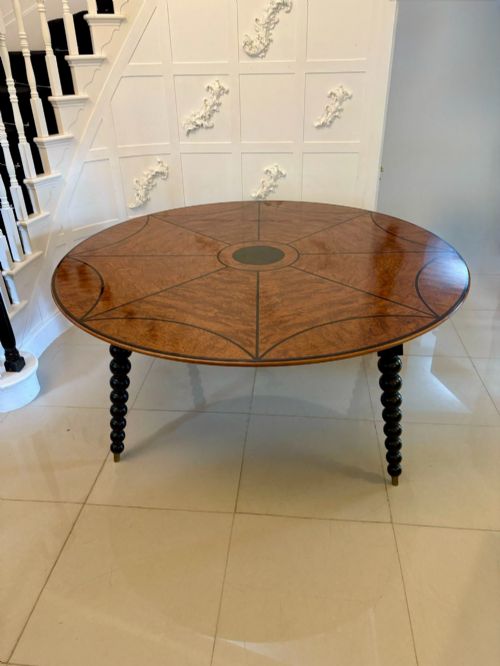
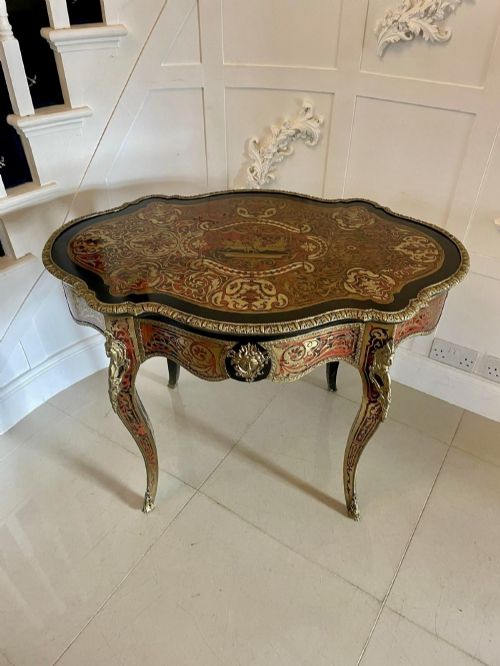
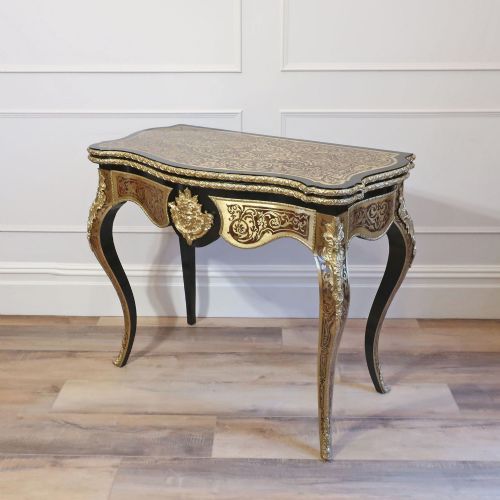
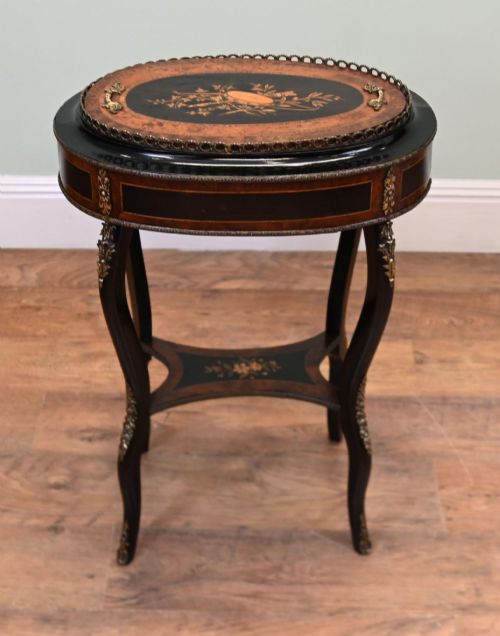
Ebonised Inlay Table
An ebonised inlay table brings deep dark timber and contrasting metal or bone work together into a striking surface for a drawing room or study.
Ebonised Inlay Table
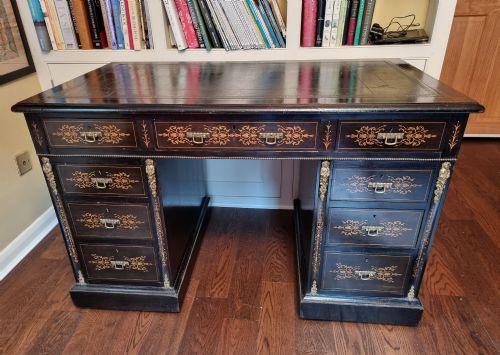
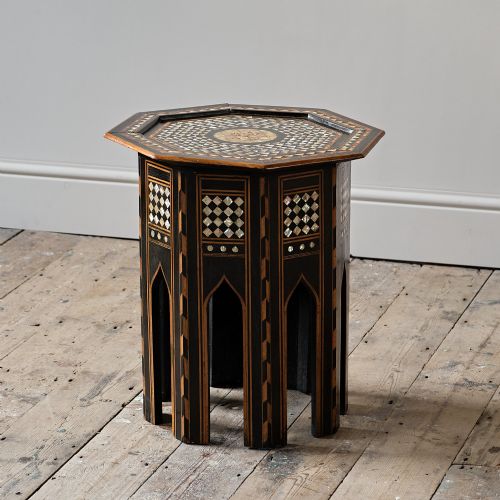
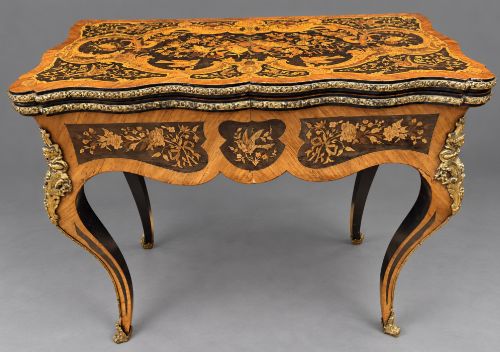
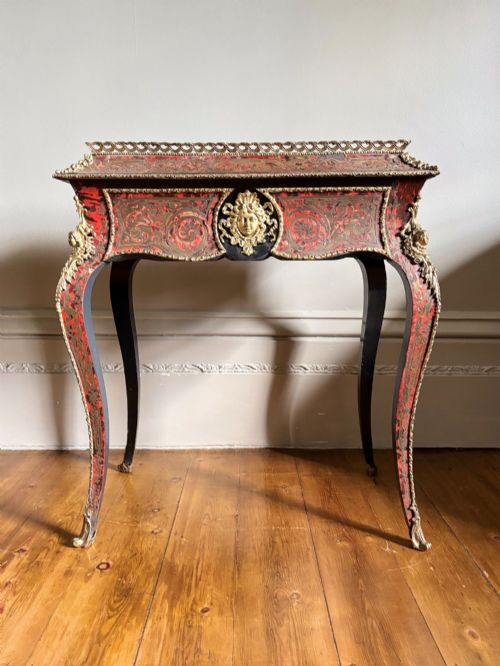
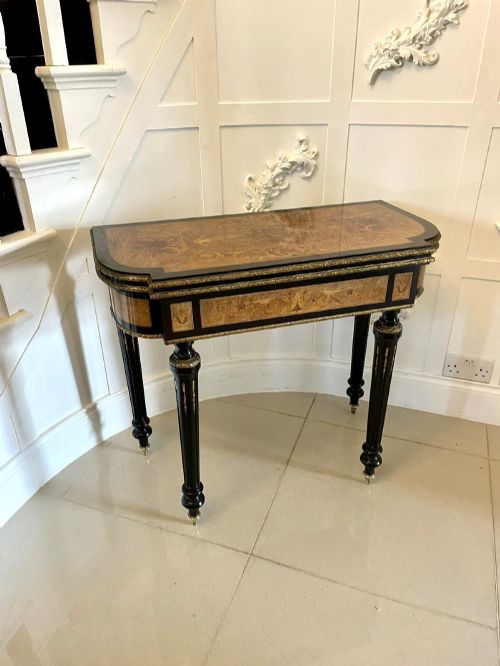
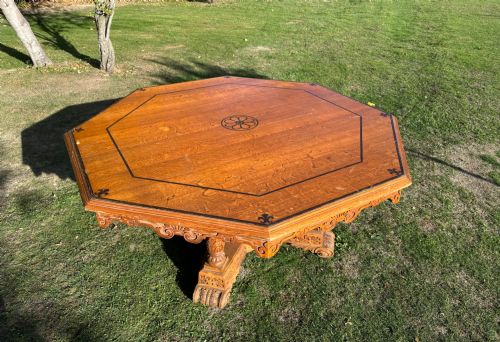
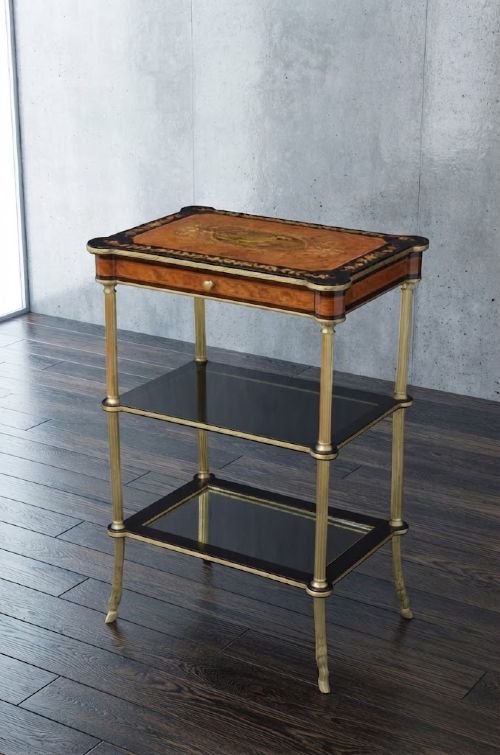
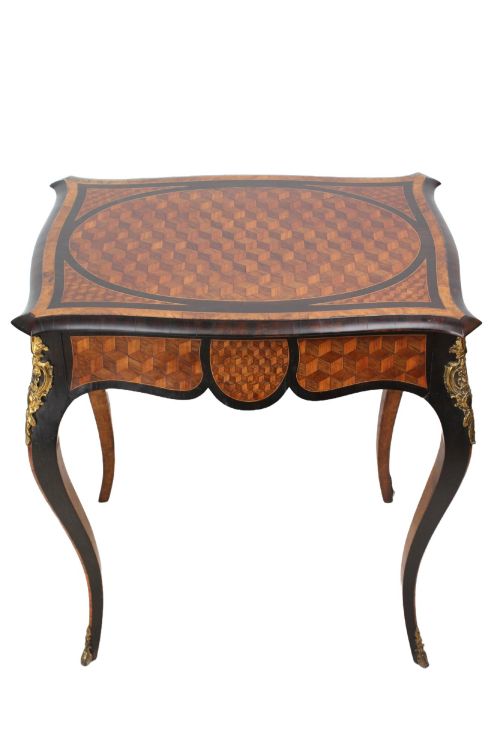
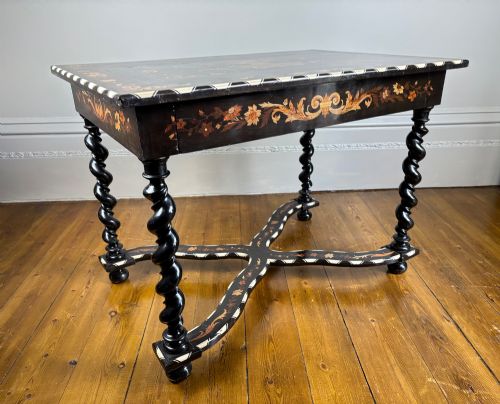
An ebonised inlay table typically appears as a centre table, occasional table, or games table originating from the nineteenth century. These pieces display dark ebonised wood surfaces punctuated by intricate decorative contrasting details.
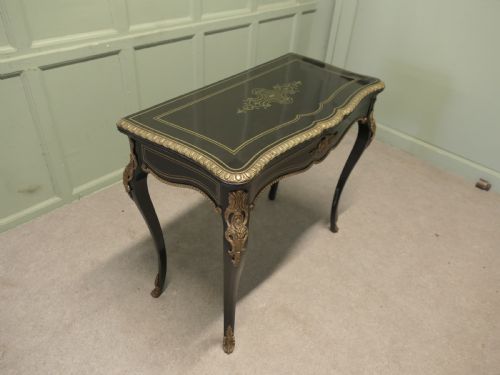
Makers working in the Victorian and Napoleon III periods produced many of these items, drawing on French revival styles and the Aesthetic Movement. Buyers frequently encounter pieces featuring brass, ormolu, or bone ornamentation set into the darkened timber frame.
Materials and technique
Craftsmen used native or fruitwood timbers treated with dark stain or polish to achieve the dense ebonised finish, providing a dramatic backdrop for lighter decorative elements. Into this blackened surface, artisans cut precise recesses to receive delicate marquetry, brass stringing, or bone inlay.
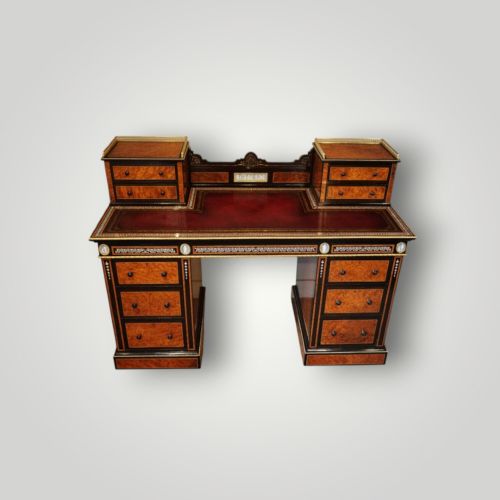
Mounts in gilt bronze or ormolu frequently edge the tables, while secondary timbers such as walnut or amboyna appear within the internal construction and patterned top surfaces.
Ebonised Inlay Table Retail Price Guide 2026
Typical asking prices for ebonised inlay table among the pieces listed under this phrase on Sellingantiques today, from the lower quarter to the upper quarter. They describe what is for sale here now, not the wider market.
Nineteenth-century makers combined ebonised wood with bone and tortoiseshell to create striking contrasts on occasional and centre tables.
Craftsmanship and design
The distinction between standard production and top tier work lies in the precision of the marquetry and the crispness of the cast bronze mounts. Superior examples exhibit seamless integration where metal and bone meet the dark timber without visible gaps.
Subtlety of form and the choice of secondary luxury woods underneath or flanking the ebonised finish separate exceptional tables from simpler commercial pieces of the period.
Maison Millet·JAS Shoolbred·Jackson and Graham·Edwards and Roberts·Liberty and Co
The Ebonised Inlay Table Glossary
- Ebonised
- Wood treated with stain or polish to imitate genuine ebony, producing a dense black finish popular in nineteenth century furniture.
- Marquetry
- The art of applying pieces of veneer to a structure to form decorative patterns, frequently using various coloured woods and bone.
- Ormolu
- Gilt bronze ornamentation applied to the mounts and edges of fine furniture, characteristic of French revival pieces.
- Boulle
- A type of marquetry using brass and tortoiseshell inlay, named after the renowned French cabinetmaker André Charles Boulle.
- Aesthetic Movement
- A late nineteenth century design style that emphasised visual beauty over narrative content, often incorporating ebonised finishes and geometric decoration.
Ebonised Inlay Table: Frequently Asked Questions
How do I clean an ebonised surface?
Dust the timber regularly with a soft, dry cloth to prevent particulate buildup on the dark polish. Avoid harsh chemical cleaners or excessive moisture which can damage the delicate inlay.
Apply a microcrystalline wax sparingly if the finish requires nourishment, buffing gently to maintain the soft sheen characteristic of nineteenth-century pieces.
Where should I place my table?
Position the piece away from direct sunlight and heat sources, as extreme temperature fluctuations cause the ebonised wood and fitted inlay to warp or crack. Centre tables suit prominent reception spaces where light catches the metallic or bone details.
Occasional and games tables function well beside seating areas or against walls, allowing the decorative top surface to remain visible.
Are these tables sturdy enough for daily use?
Nineteenth-century tables were built for drawing room entertaining rather than heavy domestic duty, so treat them with reasonable care. Avoid placing heavy objects or liquids directly onto antique marquetry surfaces without protective coasters.
Check the joints and pedestal bases periodically to ensure the structure remains stable under normal conditions.
How do I distinguish French and English pieces?
French tables from the Napoleon III period often feature heavier ormolu mounts, exuberant curves, and intricate Boulle work. English examples from the Victorian era frequently lean towards geometric Aesthetic Movement designs or restrained revival styles.
Examining the internal secondary timbers and construction methods often reveals regional workshop practices.