



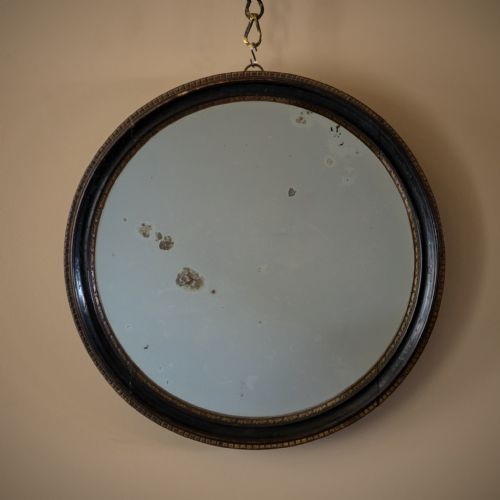
Ebonised Frame Wall Mirror
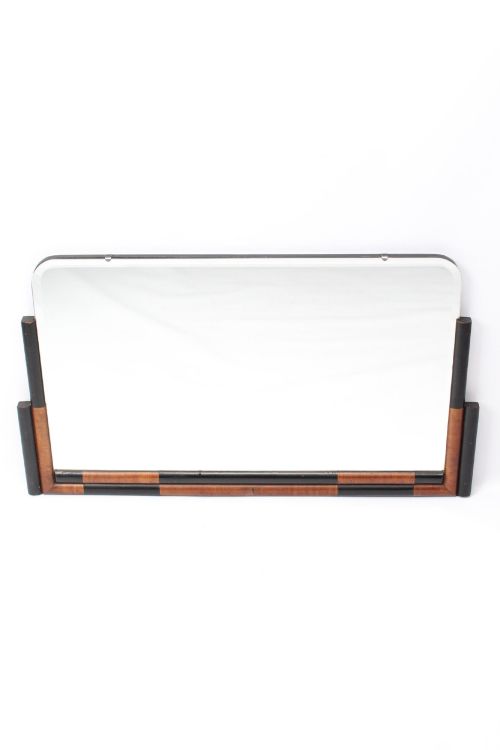
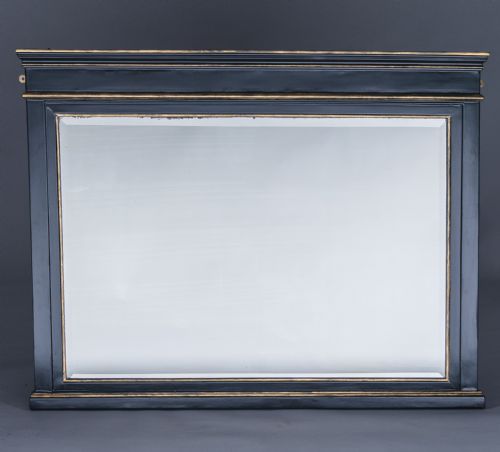
An ebonised frame wall mirror brings deep contrast and structural presence to a room, drawing the eye directly to the dark timber finish.
Ebonised Frame Wall Mirror
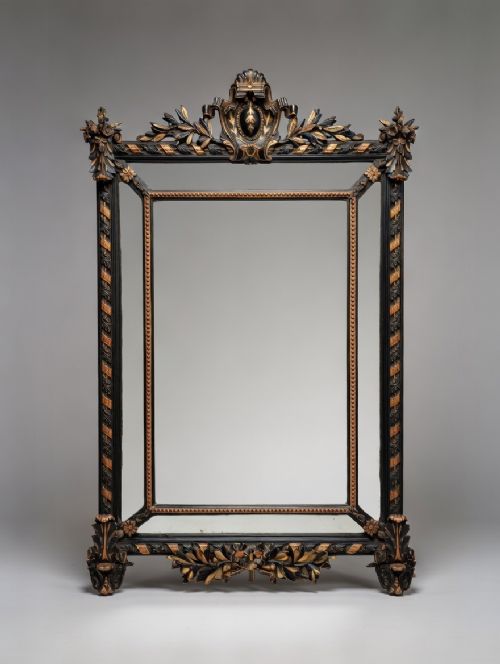
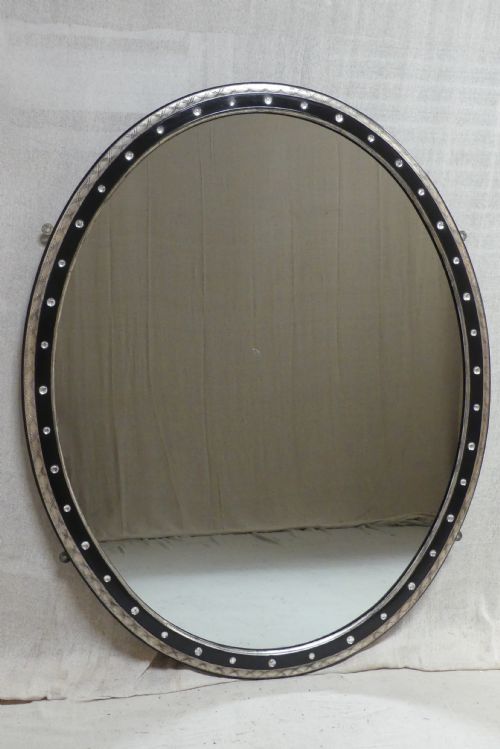
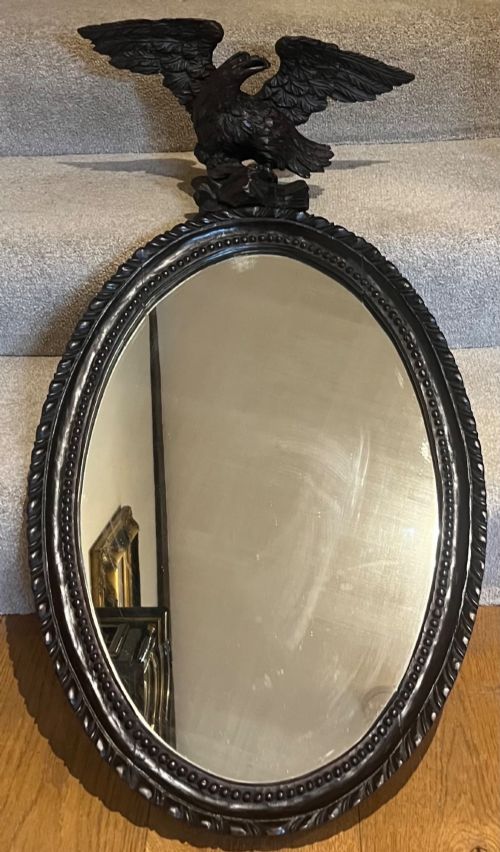
When searching for an ebonised frame wall mirror, buyers encounter a range of forms spanning the nineteenth and early twentieth centuries, including grand overmantels, tall pier mirrors, and smaller oval shapes. These pieces derive from periods such as the Victorian era, the Regency period, and the Aesthetic Movement, bringing distinct historic character to domestic spaces.
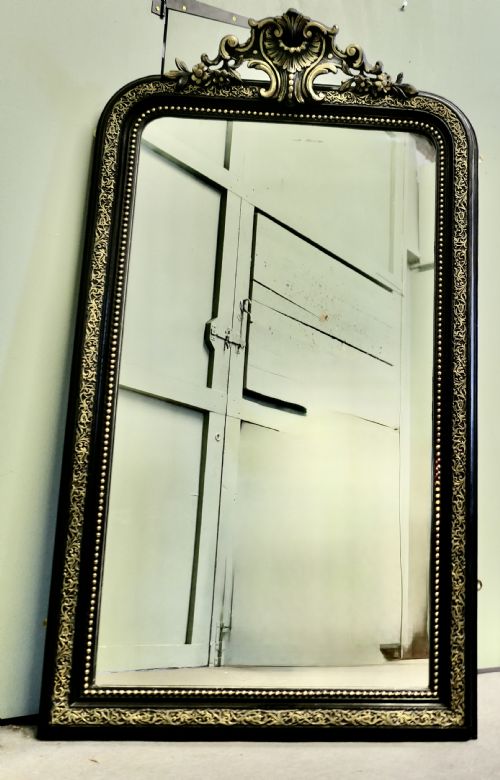
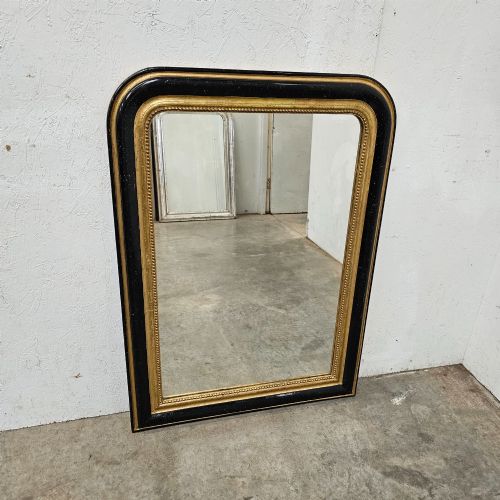
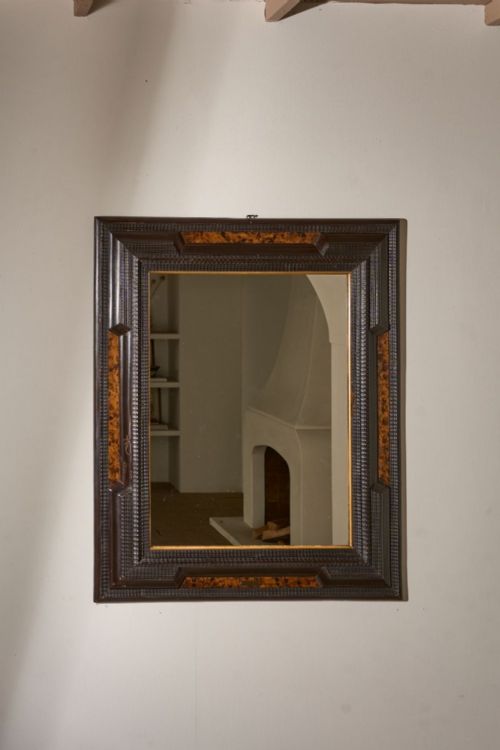
The most common examples on this page combine darkened timber with parcel-gilt or gilt highlights, often showing rectangular, arch-top, or cushion profiles. Makers utilised ebonised finishes to imitate more expensive tropical hardwoods like ebony, creating a striking visual impact that suits both traditional and modern interiors.
What varies in quality
The standard of an ebonised frame wall mirror depends heavily on the depth and execution of the finish, where careful preparation of the underlying wood and gesso creates a lasting sheen. Superior examples display crisp definition in carved details and harmonious balance between the dark ebonised surfaces and the applied parcel-gilt highlights.
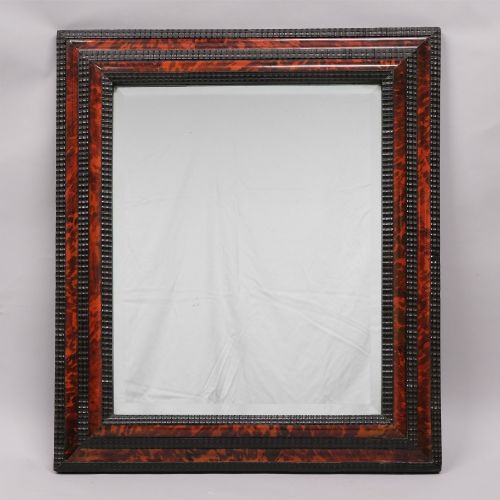
Structural integrity also separates standard pieces from finer works, particularly in how securely large overmantel frames and heavy glass plates are joined. The crispness of ripple mouldings and the preservation of original mirror glass contribute significantly to the overall distinction of the object.
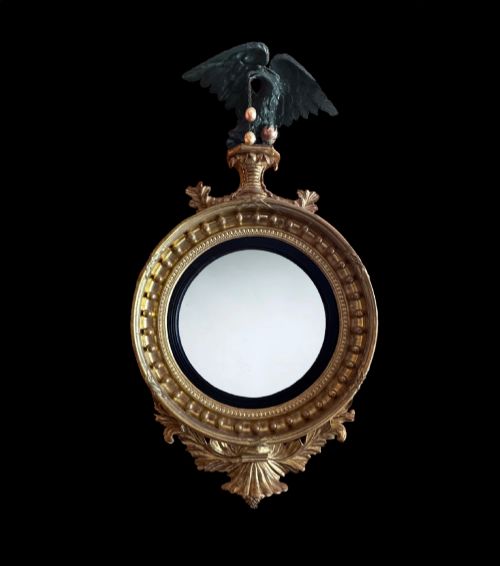
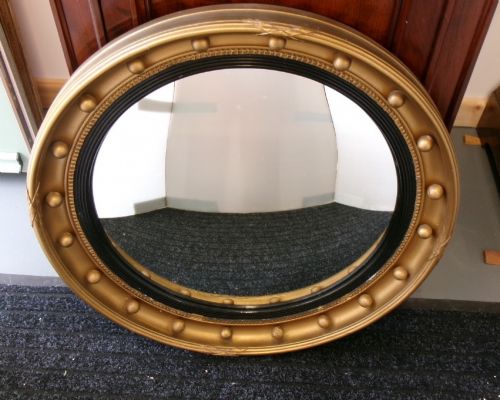
Early convex mirrors were sometimes called sorcerers mirrors because their curved glass captured an entire room in a single strange globe.
Rowley Gallery
The Ebonised Frame Wall Mirror Glossary
- Ebonised
- Wood treated with a stain, dye, or paint process to simulate the dark, dense appearance of genuine ebony timber. This finish became particularly popular during the Victorian period and the Aesthetic Movement.
- Parcel-gilt
- A decorative technique where only specific parts of an object are gilded with gold leaf, leaving the rest of the surface in its primary finish. It frequently highlights carved details on dark wooden frames.
- Gesso
- A plaster-like mixture applied to wooden frames as a smooth base for painting or gilding. It allows craftsmen to carve intricate relief ornaments before applying surface finishes.
- Overmantel mirror
- A large wall mirror designed specifically to hang on the wall directly above a fireplace mantelpiece. These pieces often feature wide proportions to match the scale of the hearth below.
- Convex mirror
- A circular looking glass with a curved, bulging surface that provides a wide-angled reflection of the room. These are often framed by ornate gilt balls or moulded bezels.
Ebonised Frame Wall Mirror: Frequently Asked Questions
Where should an ebonised frame wall mirror be hung?
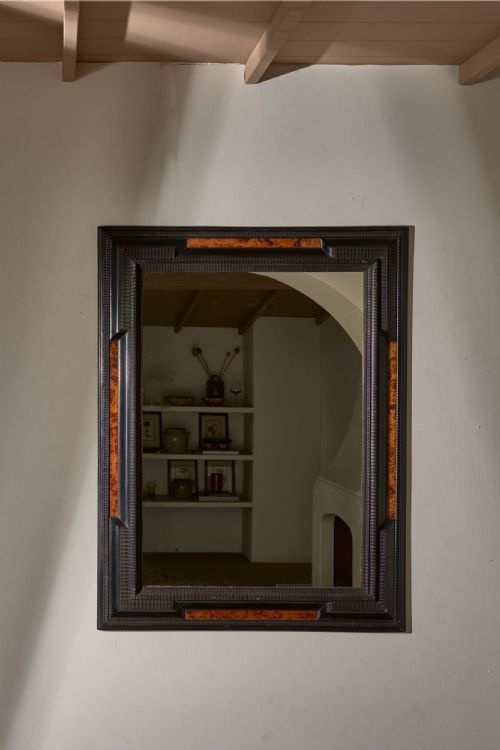
These mirrors work effectively above fireplaces, in entrance hallways, or as central statement pieces on living room walls. Their dark frames anchor lighter interior colour schemes.
Position the mirror where it can catch and reflect natural light from windows, which helps to brighten darker corners of a room while displaying the contrasting gilt details.
How do I identify a Victorian ebonised mirror?
Victorian examples often feature deep architectural moulding, arch tops, and parcel-gilt highlights applied over a solid wooden base. They frequently appear as large overmantels or cushion mirrors.
Examining the backboards, fixings, and the composition of the gesso underlayer helps confirm the nineteenth-century origins of the piece.
What is a parcel-gilt finish?
Parcel-gilt refers to a decorative method where only selected portions of a frame receive a covering of gold leaf. On ebonised mirrors, this technique highlights carved edges and raised motifs.
The contrast between the dark black wood and the bright gilded areas creates the distinctive aesthetic seen in Aesthetic Movement and Victorian pieces.
Can I use an overmantel mirror on a normal wall?
Overmantel mirrors were originally designed for placement above fireplaces, but they function well on any large, sturdy wall. Their generous proportions make them suitable for dining rooms or reception spaces.
Ensure the wall structure and hanging hardware can support the substantial weight of these large nineteenth-century frames and glass plates.